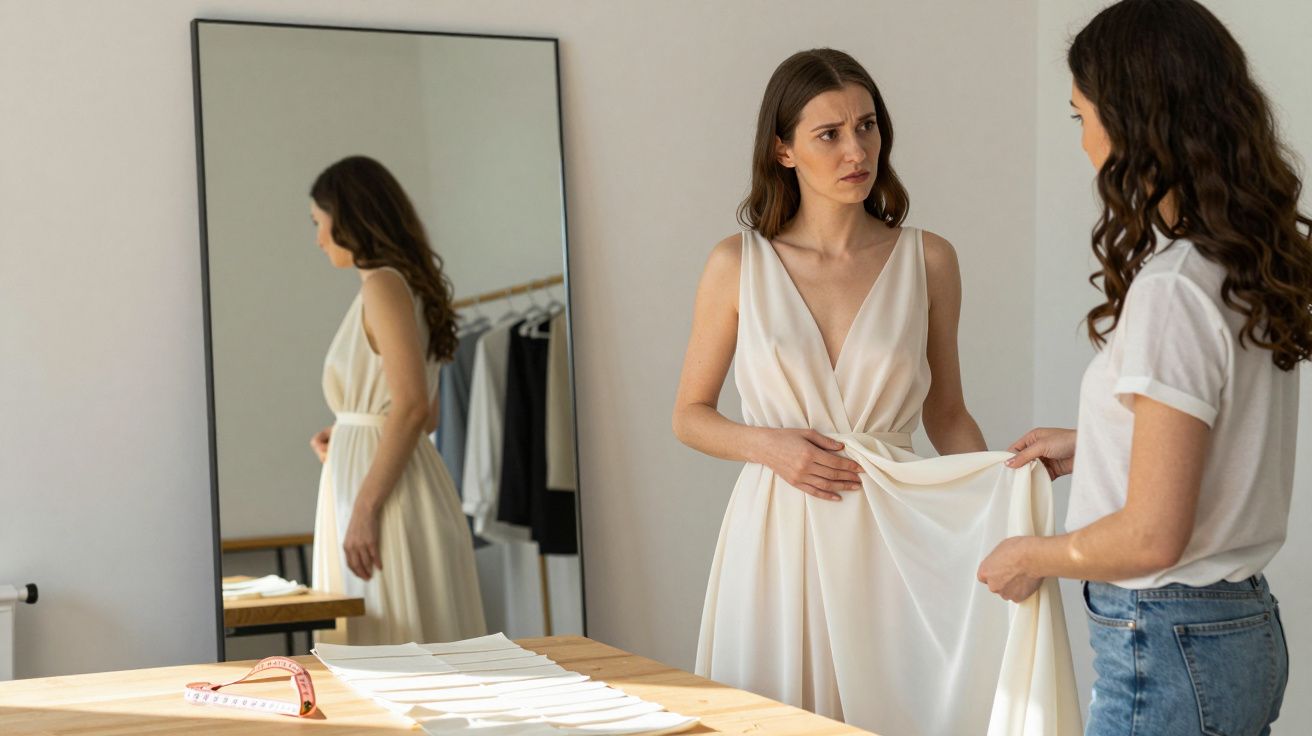
Choosing wedding dress fabrics for a long summer ceremony is less about tradition and more about seasonal comfort. You’ll be wearing it through photos, vows, hugs, dinner and dancing, often in heat you can’t fully control. Bridal tailors see the same pattern every year: the right cloth makes a gown feel weightless; the wrong one turns a beautiful day into a constant internal negotiation.
Heat isn’t just temperature, either. It’s sun on shoulders, warm church air that won’t move, a marquee that holds onto humidity, and the way fabric behaves once it’s sat against skin for six hours.
What bridal tailors look for in “all-day” summer cloth
Tailors talk about summer gowns the way chefs talk about fish: it’s mostly about freshness, structure and timing. In fabric terms, that means breathability, how quickly it dries, and whether it will hold shape once it’s warmed up by your body.
The aim isn’t “the coolest possible dress”. It’s a fabric that stays stable while you move, sit, sweat lightly and get hugged a hundred times.
A quick checklist tailors use before they even discuss silhouette:
- Airflow: can air move through it, or does it trap heat?
- Weight: does it hang without needing heavy linings?
- Recovery: will it crease and stay creased, or bounce back?
- Skin feel: will it feel sticky as the day goes on?
- Photographic behaviour: does it go shiny in sunlight, or photograph matte and clean?
The best fabrics for long summer ceremonies
Silk chiffon: the heat-friendly over-layer
Silk chiffon is the fabric tailors reach for when a bride wants movement without added warmth. It floats away from the body, lets air through, and works brilliantly as sleeves, overlays, skirts and soft drapes.
The key is construction. Chiffon on its own can be too revealing, so tailors often pair it with a lighter lining (or place it strategically) rather than defaulting to thick underlayers that undo the comfort.
Best for: outdoor ceremonies, destination weddings, soft A-lines, cape veils, flutter sleeves.
Watch-outs: snags easily; needs careful handling and a good steam, not aggressive pressing.
Silk organza: crisp, breathable structure
If you like shape-defined skirts, sculpted bodices, clean volume-silk organza is a summer workhorse. It holds form like a proper “dress fabric” but stays surprisingly airy compared with heavier satins.
Tailors also like it because it can add architecture without adding lining bulk. A well-cut organza gown can feel stable in photos and still give you airflow at the waist and hips, where heat builds.
Best for: ballgown silhouettes in warm weather, structured sleeves, layered skirts that don’t feel oppressive.
Watch-outs: can feel slightly firm against bare arms if edges aren’t finished thoughtfully.
Lightweight crepe (especially silk crepe): sleek without the cling
Crepe gets recommended a lot, but tailors make a distinction: weight matters. A lighter crepe can skim rather than squeeze, and it tends to photograph beautifully-smooth, matte, modern.
For long ceremonies, crepe wins when it’s properly underpinned. Tailors will often add targeted support in the bodice so you don’t need heavy shapewear (which is often the real culprit in summer discomfort).
Best for: minimalist dresses, slip silhouettes with better structure, modern tailoring.
Watch-outs: some crepes show moisture; ask for a sweat-test and consider discreet dress shields.
Cotton lace and cotton-blend lace: old-school breathability, modern cut
Not all lace is the same. Synthetic lace can trap heat and feel plasticky by hour three; cotton-based lace tends to breathe and stay soft. Tailors often recommend cotton lace for brides who want sleeves in summer without feeling wrapped.
It’s also forgiving during a long day. Cotton fibres handle warmth better, and the texture prevents that “cling and slide” feeling you get with smoother synthetics.
Best for: church ceremonies, long-sleeved looks, vintage silhouettes, boho dresses that still look polished.
Watch-outs: cotton lace can read more matte and less “glossy luxe”-which many brides actually prefer in bright sunlight.
Linen-silk blends: for genuinely hot destinations
Pure linen creases-everyone knows that-but linen blended with silk (or viscose) behaves differently. Tailors use it when the brief is honest: we’re getting married in serious heat and I need to feel like myself by dinner.
It’s not the default “bridal salon” choice, yet in the right design it looks intentional, editorial, and very expensive in a quiet way. The weave does the cooling for you.
Best for: beach ceremonies, courthouse weddings in heatwaves, relaxed tailoring, detachable overskirts.
Watch-outs: embrace some creasing; it’s part of the charm. Build the silhouette so creases look natural, not messy.
Fabrics that often feel worse than expected (even when they look perfect)
Tailors rarely ban fabrics outright, but they do warn brides about a few repeat offenders when the ceremony is long and warm. The problem isn’t the fabric in isolation-it’s what it requires underneath to behave.
- Heavy duchess satin: stunning, but can be warm and unforgiving if fully lined.
- Thick polyester satin: traps heat and can go shiny in photos.
- Fully beaded overlays: beautiful, but weight + friction adds up fast.
- Stiff tulle in multiple layers: can hold warmth and itch, especially at the waist.
If you love the look, a tailor may suggest a compromise: lighter lining, fewer layers, a different understructure, or moving weight to areas that don’t sit against the body all day.
Small tailoring choices that change everything
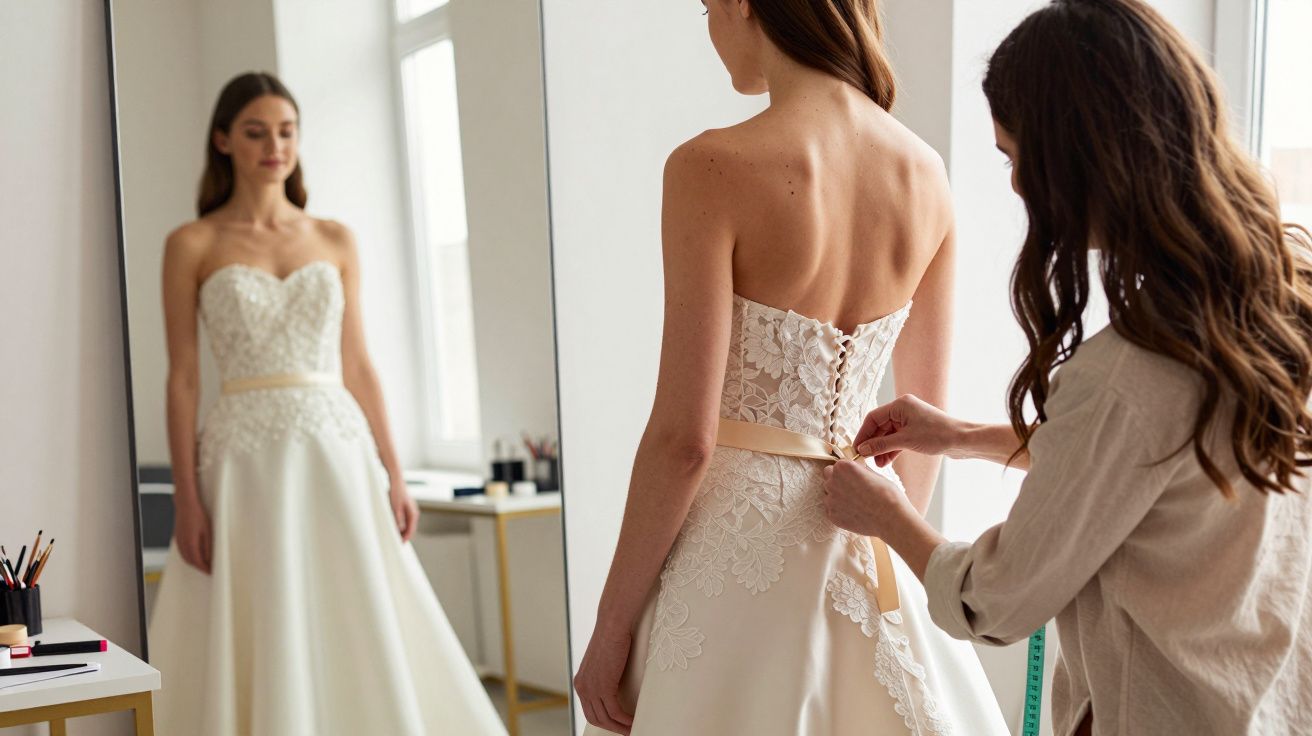
Two dresses can be “the same fabric” and wear completely differently. Tailors focus on hidden decisions: what touches skin, where air can circulate, and how you’ll manage temperature without constantly adjusting your bodice.
Practical upgrades tailors often suggest:
- Half-lining or selective lining (lining the bodice, leaving parts of skirt lighter)
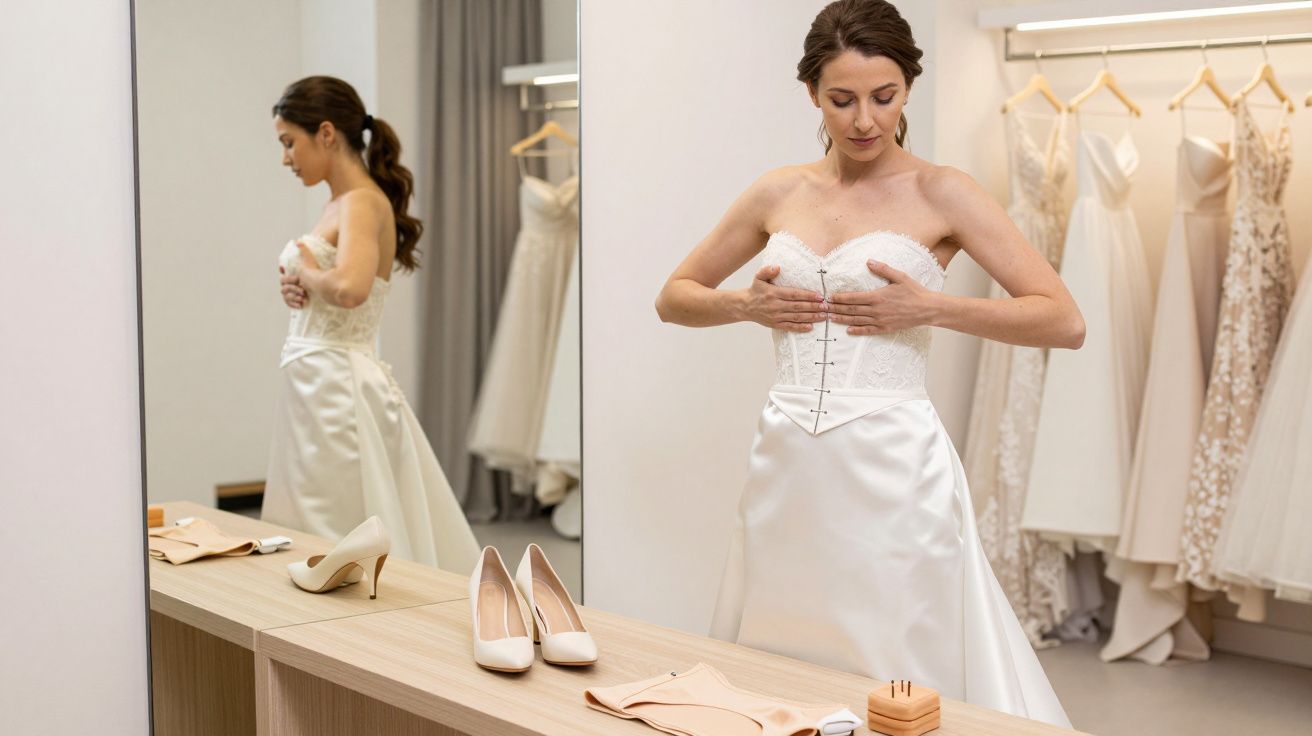
- Bodice support built into the dress so you can skip heavy shapewear
- A breathable corsetry layer rather than thick foam cups
- Underarm dress shields if you’re worried about marks on crepe or silk
- Detachable elements (overskirt, sleeves, cape) to change the heat-load after the ceremony
The most comfortable summer gowns are rarely the simplest inside. They’re the most considered.
Quick comparison guide
| Fabric | Why tailors like it in summer | Best use case |
|---|---|---|
| Silk chiffon | Airy, dries quickly, moves beautifully | Overlays, sleeves, floaty skirts |
| Silk organza | Structure without heaviness | Sculpted silhouettes, layered volume |
| Lightweight silk crepe | Skims, matte in photos, modern feel | Minimal gowns, clean tailoring |
How to choose in one fitting (a simple test)
You don’t need to guess. Tailors often do a quick “wearability check” in the changing room that tells the truth faster than a mirror.
- Sit down and stand up three times. If it rides up or sticks, that’s a long-day warning.
- Hold your arms forward as if hugging someone. Notice underarm comfort and whether seams rub.
- Walk briskly for one minute. Feel for static, cling, or heat build-up at the waist.
- Ask what’s lining the bodice. If the fabric is “summer” but the lining is heavy, you’ll still feel warm.
If your ceremony is outdoors, ask to step into daylight. Some fabrics look serene indoors and suddenly go reflective or sheer in sun, which affects both comfort and confidence.
FAQ:
- Is silk always cooler than polyester? Often, yes, because many silks breathe better and feel less clammy, but weave and lining matter more than fibre alone. A synthetic fabric with a breathable construction can outperform a silk that’s heavily lined.
- What’s the most breathable option if I want sleeves? Tailors often point to silk chiffon sleeves over a well-supported bodice, or cotton-blend lace sleeves if you prefer texture and coverage.
- How can I avoid sweat marks on a minimalist crepe dress? Choose a slightly heavier (but still light) crepe, add discreet underarm shields, and make sure the bodice support is built-in so you’re not relying on tight layers underneath.
- Do I need a second dress for the evening? Not necessarily. Detachable sleeves or an overskirt can create the same relief if the base fabric is already summer-friendly.


Comments (0)
No comments yet. Be the first to comment!
Leave a Comment