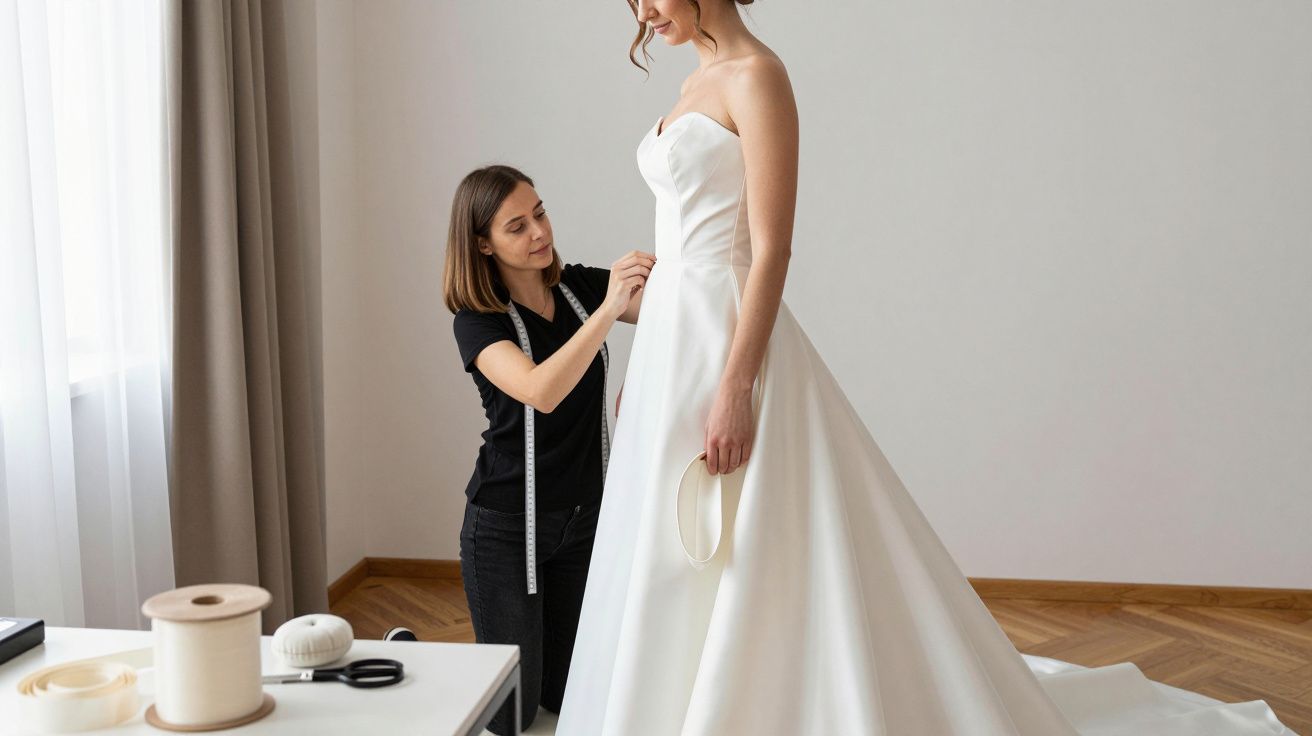
You can fall in love with a dress in a calm boutique, then realise on the day that standing, sitting, hugging and dancing in it is a different sport entirely. That is where wedding dress alterations come in: small, precise changes that create genuine comfort enhancement without changing the look in photos. The goal is not to “redo” the gown, but to make it behave like it was made for your body and your plans.
Most discomfort is not dramatic. It’s a strap that nicks after an hour, a waist that feels fine until you eat, a hem that becomes a trip hazard when you pick up pace. A good seamstress reads those problems early and fixes them quietly, with techniques that disappear once the dress is on.
Why dresses feel uncomfortable (even when they fit)
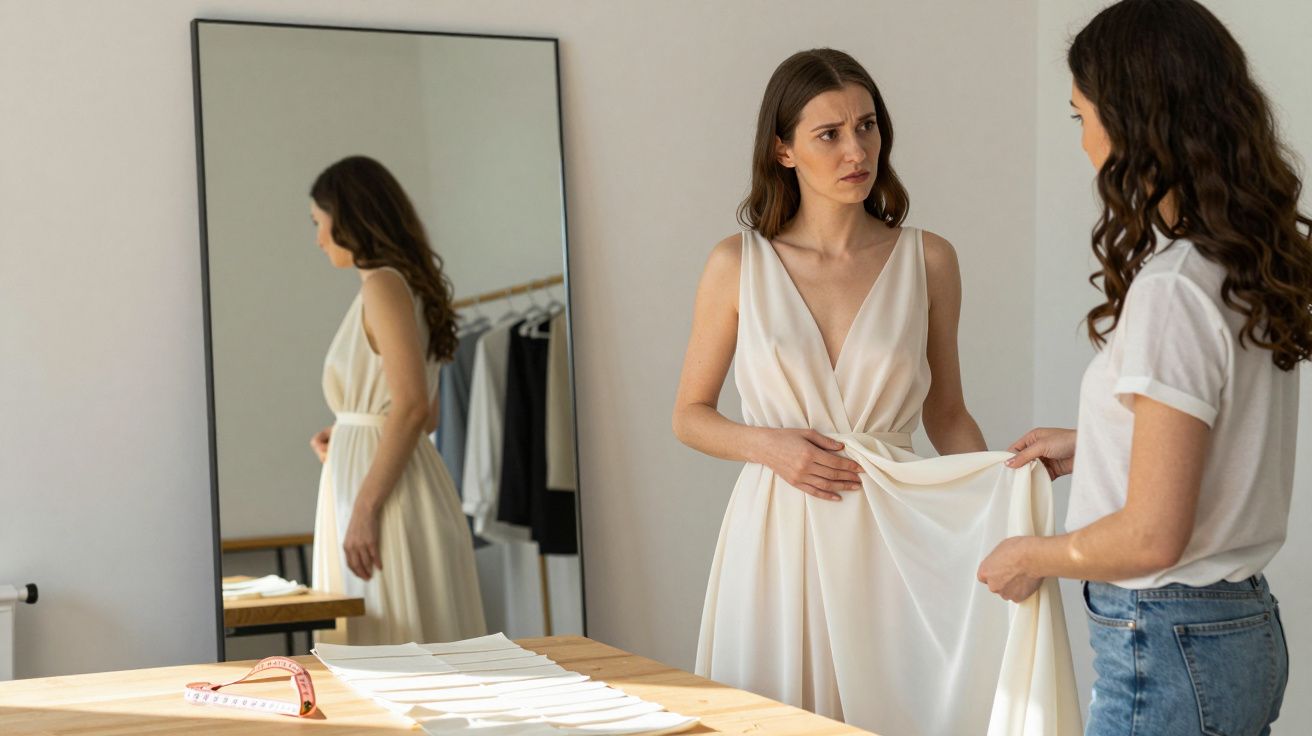
A wedding dress can fit in the mirror and still fight you in motion. Bridal fabrics are structured, seams are often heavily finished, and the dress is expected to stay in position through heat, nerves and a long schedule. Comfort issues usually come from pressure points, friction, weight distribution, or the way the dress shifts when you move.
There is also the “event factor”. You will sit in a car, lean forward for vows, raise your arms for photos, and dance with people stepping on your train. Alterations that prioritise movement-without changing the silhouette-tend to be the difference between enduring your dress and forgetting you’re wearing it.
Think like a hotel housekeeper polishing taps: it’s not about adding more, it’s about removing what gets in the way, then finishing so problems don’t come straight back.
The best invisible alterations for comfort (that keep the same look)
1) Lift and balance the dress properly (micro-adjustments at the waist and bust)
When a gown feels heavy, it often isn’t the weight-it’s where the weight sits. A tiny lift at the waist seam, a subtle reshaping of bodice darts, or a slightly firmer waist stay can redistribute pressure so the dress stops sliding and you stop “holding yourself” to keep it up.
This is especially effective on strapless or off-the-shoulder styles, where the bodice must anchor without bruising. Done well, it looks identical from the outside; it just stops demanding constant posture correction.
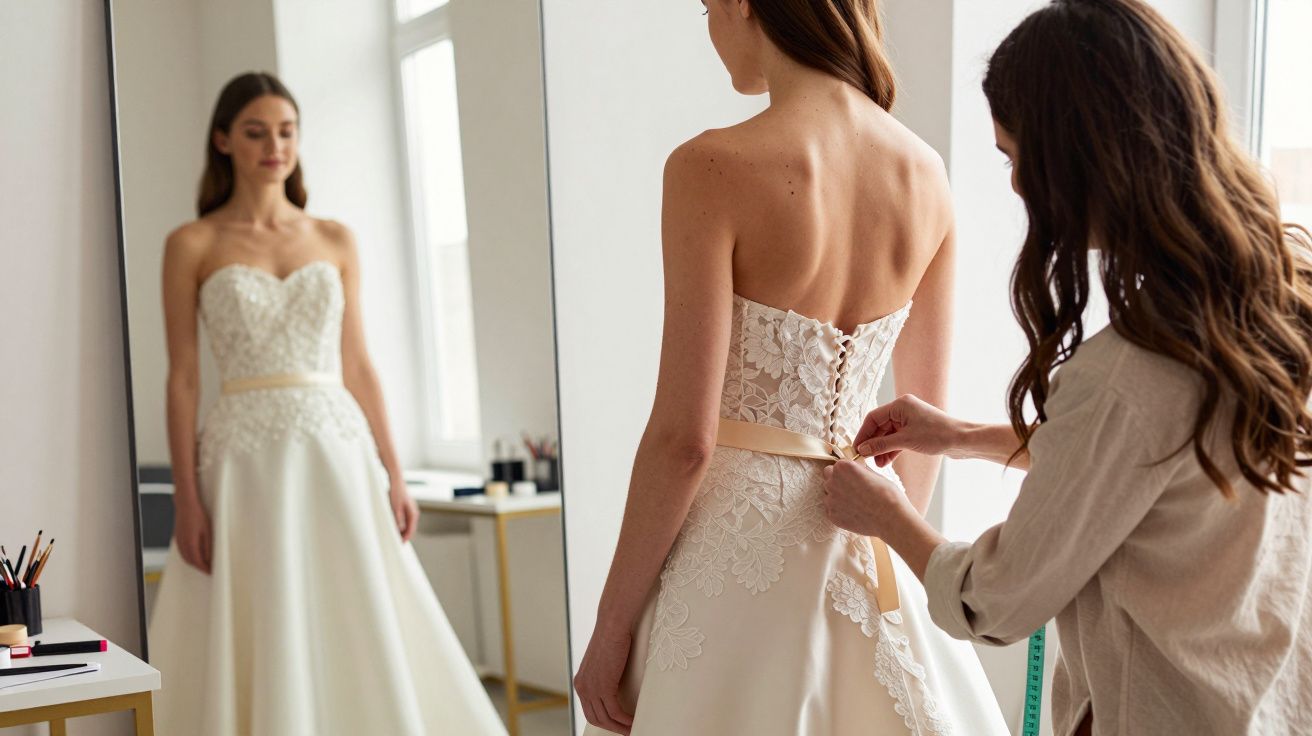
2) Add a waist stay (the comfort upgrade nobody sees)
A waist stay is an internal ribbon (usually grosgrain) that fastens snugly around your natural waist under the bodice. It takes strain off the zip, buttons and boning, and it reduces that creeping “I’m falling down” feeling.
It’s also a quiet fix for breathing room. Instead of over-tightening the outer closure to feel secure, you get stability from the inside and softness on the outside.
3) Soften the inside: lining, seam covers, and anti-chafe panels
Many gowns are beautifully finished on the outside and surprisingly scratchy within. Lace edges, boning channels, and seam allowances can rub once your skin warms up. Comfort-focused wedding dress alterations often include:
- Adding a softer lining layer (or replacing a stiff one in high-friction areas)
- Covering scratchy seams with a silky bias binding
- Sewing in small “comfort shields” under arms or along the waist edge
These changes do not alter the exterior at all, but they can turn a two-hour tolerance into an all-day yes.
4) Reposition straps (instead of tightening them)
Straps that slip are often set too wide, not too loose. Pulling them tighter can dig into shoulders and distort the neckline. A better fix is moving the strap attachment point by a few millimetres so it sits where your shoulder actually is.
This is one of those alterations that feels too small to matter until you wear the dress for a full hour. Then it matters a lot.
5) Adjust armholes and sleeves for movement
If you can’t comfortably raise your arms, the issue is usually the armhole shape or sleeve cap-not your body. A seamstress can open the armhole slightly, reshape the sleeve, or add a hidden gusset (a small fabric insert) that gives reach without changing the visible sleeve.
This is particularly helpful with fitted lace sleeves, illusion netting, or dresses where the bodice is firm and the sleeve has no “give”. You’ll still look sculpted; you’ll just be able to hug people properly.
6) Convert closures for comfort while keeping the same finish
Buttons are gorgeous and can be annoying. Zips are easy and can feel rigid. There are in-between solutions that preserve the look:
- Replace a stiff zip with a softer one and add a modesty placket to stop pinching
- Convert decorative buttons to “loop-and-snap” so they look traditional but fasten faster
- Add a small hook-and-bar at the top so the closure doesn’t strain when you sit
If you want the back to look exactly the same, say so. A good atelier will treat the closure as architecture: strong, flat, and invisible under the design.
7) Hem and train work that stops tripping, snagging, and overheating
Hems aren’t just about length; they’re about how fabric moves. A thoughtful hem alteration can reduce the “shoe catch” effect by evening the layers properly and ensuring the underlayers are slightly shorter than the outer layer.
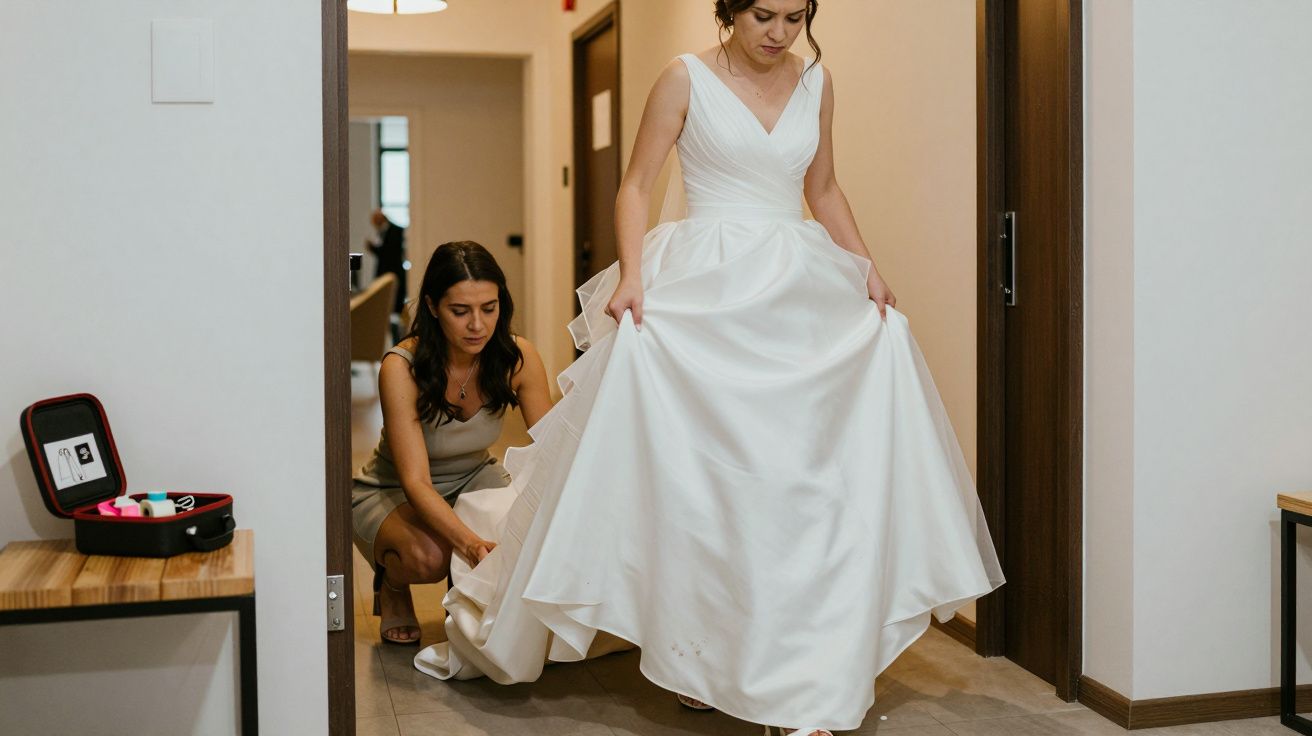
For trains, comfort can improve dramatically with the right bustle plan. Not all bustles are equal: some swing, some pull, some add weight exactly where you don’t want it. Testing the bustle while walking and dancing (not just standing) is what keeps the look and removes the nuisance.
8) Add a dance loop or wrist strap (tiny, practical, photo-safe)
If you have a train and you’ll move around a lot, a hidden wrist loop can be a lifesaver. It lets you lift the train naturally without bunching fabric in your fist, which protects delicate lace and keeps you cooler.
From the front, nothing changes. In motion, everything changes.
A quick “comfort-first” fitting checklist
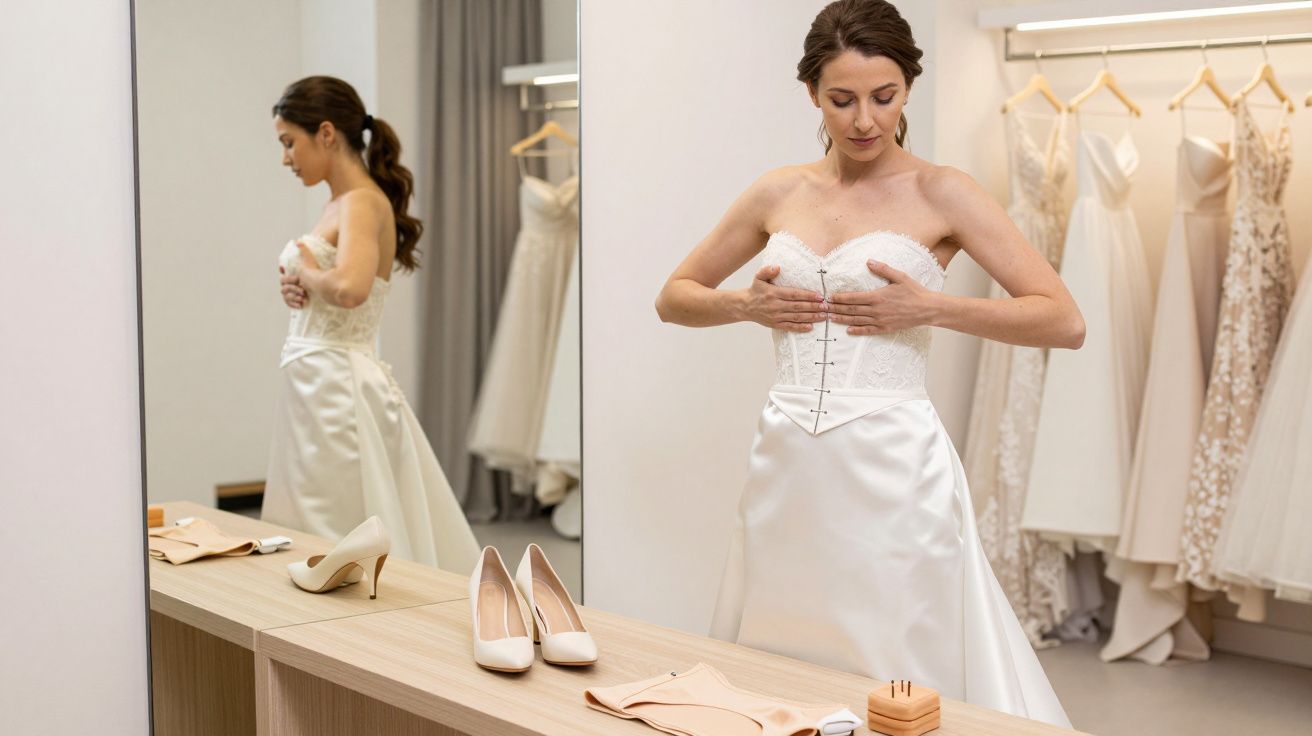
Bring shoes, underwear, and any shapewear you’ll actually wear on the day. Then test the dress like you mean it. In the fitting room, do the boring things that become urgent later:
- Sit down and stand up three times without adjusting the bodice
- Raise both arms as if for a group photo
- Take ten walking steps, then turn sharply
- Practise a slow dance hold (one arm up, one around a waist)
- Eat a few bites of something and see how the waist feels
If any issue appears after five minutes, it will be louder after five hours. Mention it early; comfort alterations are easiest when there’s time.
What to avoid if you don’t want the look to change
Some alterations improve comfort but can quietly rewrite the design if they’re done in the wrong order. Common missteps include over-taking the side seams (which can shift lace motifs), shortening from the waist when it changes proportion, or tightening straps to “fix” a bodice that actually needs internal support.
Also be cautious with last-minute, high-impact changes. Adding cups, boning, or reshaping a neckline close to the wedding can create new pressure points you won’t have time to test. Comfort is a system: support, softness, and movement working together.
Where to focus first (if you only do a few things)
| Problem you notice | Best alteration | Why it helps without changing the look |
|---|---|---|
| Bodice slips, feels heavy | Waist stay + bodice balance | Takes strain off closures and stops sliding |
| Itches, rubs, pinches | Lining/seam covers | Removes friction without altering silhouette |
| Can’t move arms freely | Armhole/sleeve adjustment | Adds reach while keeping sleeve appearance |
FAQ:
- How many fittings do I need for comfort-focused alterations? Commonly two to three: one to assess movement and pin changes, one to refine, and a final check in full outfit. Complex beading, lace matching, or sleeve work can add a fitting.
- Will adding a waist stay make the dress feel tighter? It can feel snug at first, but it usually reduces overall discomfort because the outer bodice doesn’t need to be over-tightened to stay put.
- Can you improve comfort in a strapless dress without changing the neckline? Yes. Internal support (waist stay, boning tweaks, grip tape, cup positioning) can stabilise the bodice while keeping the neckline exactly as designed.
- Is a bustle purely cosmetic? No. A well-planned bustle is a comfort and safety alteration: it reduces tripping, prevents snags, and makes the dress easier to manage during dancing and toilets.
- When should I bring my wedding shoes to alterations? As early as possible, ideally the first hem-related fitting. Hem comfort depends on real heel height and how you actually walk in them.


Comments (0)
No comments yet. Be the first to comment!
Leave a Comment