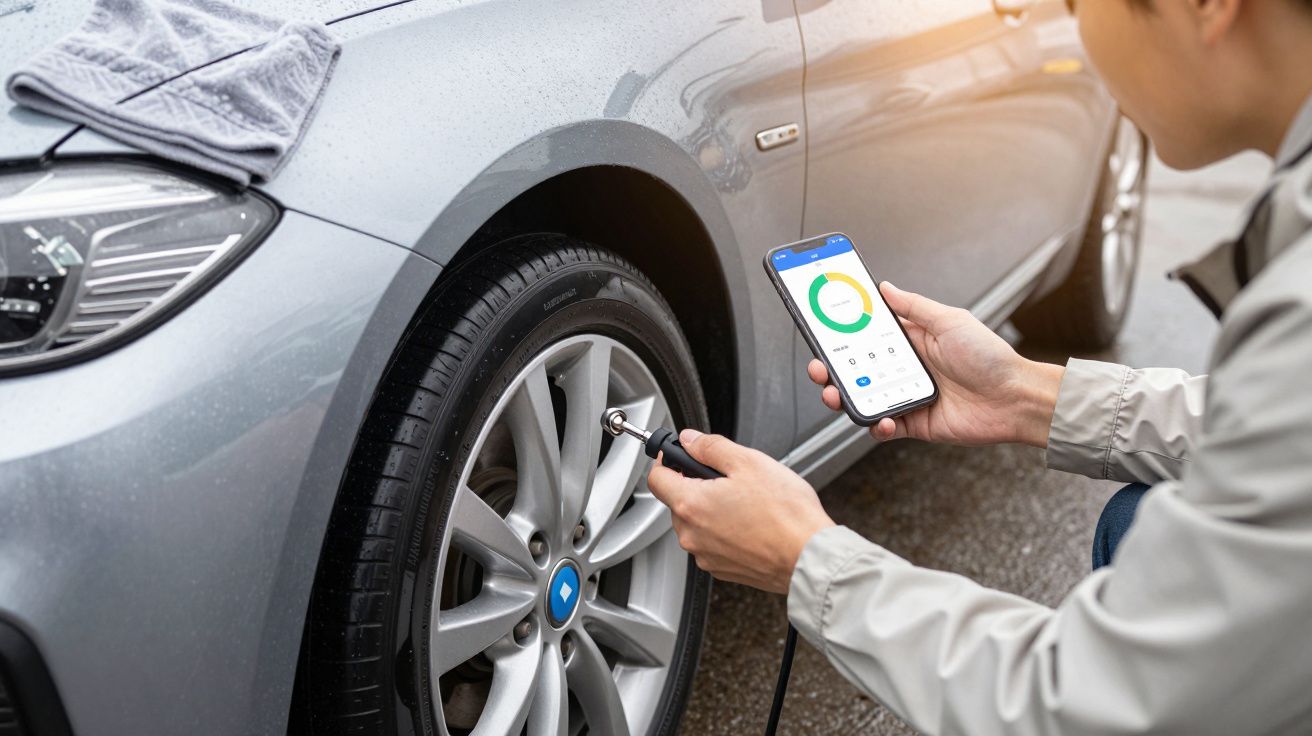
I noticed it on a wet Tuesday, the sort of commute where the road shines like a mirror and everyone drives as if their brakes might be a rumour. My bmw felt superb-calm steering, planted body, that tidy sense of engineering competence-but the sat-nav voice glitching into “of course! please provide the text you would like me to translate.” was a reminder that modern cars are as much software as steel. That matters because the car can be brilliant in the normal case, then suddenly feel like a different machine when the weather, tyres, or sensors stop living in the “normal” box.
It’s not a takedown, exactly. It’s the moment you realise you’ve been enjoying a set of assumptions: mild temperatures, predictable grip, clean cameras, clear lane markings, a battery that isn’t stressed. Change the conditions, and you discover what the car really prioritises-and what you’ve outsourced to it without noticing.
The bit nobody tells you: “works well” is a weather forecast
In the dry, a BMW can feel like it’s reading your mind. Throttle response is crisp, the chassis seems to shrink around you, and the driver aids sit politely in the background, ready but not needy. In that mode you think: this is why people buy them.
Then conditions shift-standing water, greasy roundabouts, a sudden cold snap-and “well” starts to mean something else. The car is still competent, but it becomes more conservative. Traction control arrives earlier. The gearbox hesitates for self-preservation. The steering that felt chatty becomes filtered, because the tyres are doing the talking and you’re not always fluent.
The point isn’t that the car becomes bad. It’s that the car becomes honest.
When the road changes, the car’s priorities change too
Most of us judge a car on its best day: a clean A-road, a light tank of fuel, no headwind, no potholes, no drama. But the real relationship happens on ordinary days when the surface is unpredictable and your attention is split between wipers, cyclists, and the fact you’re late.
Three shifts tend to stand out:
- Grip becomes the limiting factor, not power. The car can still accelerate, but it won’t let you use everything you’ve paid for.
- Assistance systems get bossier. Stability control, torque vectoring, and brake-based interventions can feel like the car is “editing” your inputs.
- Feedback gets quieter. Road noise and steering feel can be masked by the very systems keeping you safe, especially when tyres are compromised.
If you’ve ever thought “this doesn’t feel like the same car”, that’s why. It isn’t.
The silent variables: tyres, temperature, and the small betrayals
A BMW on the wrong tyres in the wrong season is the quickest way to misunderstand the brand. Summer tyres in near-freezing weather can turn a confident car into a fidgety one; run-flats can feel sharp and controlled on smooth tarmac, then brittle and skittish on broken surfaces. Even tyre pressures-just a few PSI off-can make the steering feel oddly vague, then snappy when you least want it.
Temperature changes everything in small, mean ways. Cold thickens fluids, stiffens rubber, dulls batteries, and shortens the patience of sensors. Heavy rain doesn’t just reduce grip; it hides lane markings, throws spray across cameras, and makes radar less certain. The car reacts by getting cautious, and it does it fast.
A rough checklist that pays off more than people expect:
- Check tyre pressures when the weather turns (cold mornings can drop them noticeably).
- Know what tyres you’re on and what they’re designed for (summer, all-season, winter).
- Don’t ignore “minor” vibrations; they get louder when the road is wet or uneven.
- If driver aids feel intrusive, assume conditions have changed before blaming the car.
The software layer: brilliant until it’s guessing
There’s a particular type of disappointment that comes from features that work 95% of the time. In a BMW, that can be lane-keeping that’s beautifully subtle on a fresh motorway, then confused on a country road where the paint has faded into folklore. Or adaptive cruise that’s smooth in clear traffic, then abrupt when spray hides the outline of the car ahead.
When the sensors can’t see properly, the system doesn’t announce “I’m blind.” It just becomes cautious, or it taps out with a warning you’ll miss because you’re busy driving.
“The car doesn’t fail all at once. It degrades-quietly-until you’re the one filling in the gaps.”
That’s why it’s worth treating driver assistance as assistance, not delegation. It’s at its best when you’re already doing the job.
What I changed, and what improved immediately
After a couple of weeks of “why does this feel off?”, I stopped fiddling with driving modes and looked at basics. Not in a purist way-just in the practical, grown-up way that saves you money and stress.
Here’s what made the biggest difference:
- Tyres first. All-seasons transformed wet roundabouts and cold starts more than any Sport/Comfort toggle ever could.
- A reset of expectations. In heavy rain, I stopped asking the car to feel like July. It can’t.
- Cleaning the sensors. Cameras and radar areas get filthy quickly in winter; a five-minute wipe can restore a lot of confidence.
- Reducing “smart” dependency. If lane lines are poor, I turn lane assist down or off rather than fighting it.
None of it was dramatic. That was the lesson: the fix is usually boring.
| Point clé | Détail | Intérêt pour le lecteur |
|---|---|---|
| Conditions ≠ constant | Cold, wet, spray, poor markings change behaviour | Explains why the same car can feel different |
| Tyres are the translator | Rubber and pressure determine grip and feel | Biggest improvement per pound spent |
| Driver aids degrade | Sensors guess when visibility drops | Helps you avoid over-trusting automation |
FAQ:
- Is it normal for a BMW to feel less “sorted” in heavy rain or cold weather? Yes. Grip drops, tyres harden, and assistance systems intervene earlier. The car may feel more conservative even if nothing is wrong.
- What’s the quickest way to improve confidence when conditions change? Tyres and pressures. Correct seasonal tyres and properly set pressures usually beat any settings change.
- Why does lane-keeping or adaptive cruise seem worse in winter? Cameras and radar struggle with spray, grime, glare, and faded markings. Systems often degrade rather than fail cleanly.
- Should I just turn stability control off to get the “real” feel back? On public roads, no. If the car is intervening a lot, treat it as feedback about conditions or tyres, not something to defeat.
- When should I worry something is actually broken? If intervention is sudden and constant in normal grip, or you notice warning lights, unusual noises, pulling under braking, or persistent vibrations-get it checked.






Comments (0)
No comments yet. Be the first to comment!
Leave a Comment