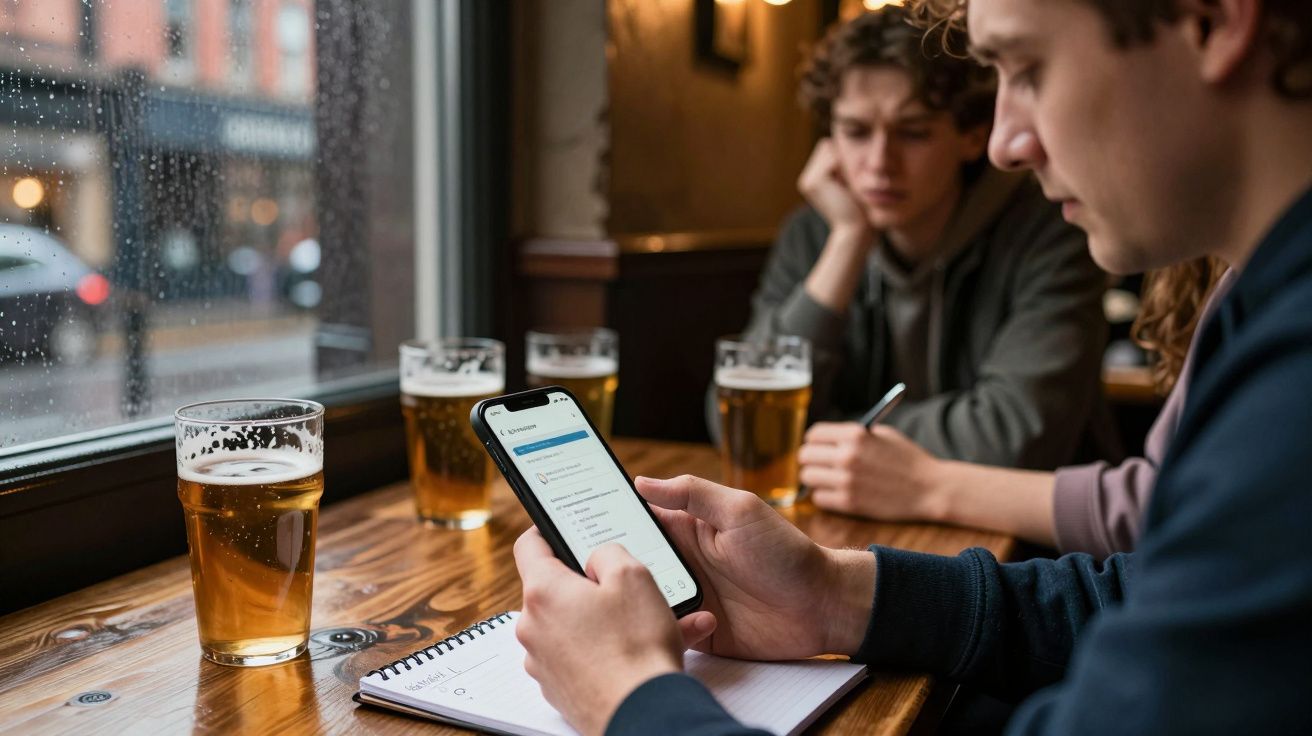
It started, oddly enough, with a screenshot doing the rounds on group chats: a cheery “of course! please provide the text you want me to translate.” sitting beneath what looked like a BrewDog customer reply. BrewDog is back in focus because it’s a brand that lives online as much as it does in bars, and small slips in tone and process can travel faster than any new IPA launch. For anyone who buys the beer, works in hospitality, or just cares about how big names treat people, it’s a reminder that “brand voice” is only believable when the systems behind it are.
On a rainy weeknight in Manchester, I watched a table of mates order pints, then spend more time scrolling than sipping. One of them wasn’t hunting for taproom openings or discount codes; he was trying to work out whether a message he’d seen was a mistake, an automation, or a shrug dressed up as service. That’s the new BrewDog moment: not a product story, but a process story.
The new BrewDog attention isn’t about beer - it’s about how the brand speaks when nobody’s watching
Most brands can handle the spotlight when they’re announcing something. The test comes in the unglamorous corners: DMs about a missing delivery, replies to complaints, moderation on social posts, and the half-human, half-robot language that creeps in when teams are stretched. When a line like “of course! please provide the text you want me to translate.” shows up in the wrong place, it reads less like a typo and more like a glimpse behind the curtain.
That curtain matters because BrewDog has trained customers to expect a certain swagger: bold, informal, quick with a punchline. But automation doesn’t do swagger well, and rushed customer service does it even worse. When tone breaks, people don’t just think “someone made an error”; they think “this is what they’re like when it’s inconvenient.”
What actually changes when customer service becomes semi-automated (and why people notice)
The first shift is speed without certainty. Automation can acknowledge you instantly, but it can’t always resolve you cleanly, and those two things feel similar for about ten seconds. After that, you’re stuck in the uncanny valley of helpfulness: upbeat words, no action, no ownership.
The second change is the texture of accountability. A human reply has weight-someone has read, decided, and committed. A templated message feels like a buffer between you and the company, even when the human behind it is doing their best with limited tools and time.
Then there’s the public layer. A misfired response on email is private; a misfired response on social is content. People quote it, remix it, use it as shorthand for “they don’t care”, and the pile-on begins before anyone has asked what happened.
A practical way to read the moment: not “PR crisis”, but “ops signal”
If you’re trying to work out what’s real here, ignore the loudest takes and look for patterns. One weird message isn’t a scandal; repeated friction across platforms is a sign of a system that’s creaking. BrewDog’s scale-bars, online shop, subscriptions, events-creates a lot of contact points, and each one is a chance to either quietly impress or publicly disappoint.
A good rule: judge brands less by their mistakes than by their recovery. Do they correct quickly? Do they explain without blame-shifting? Do they fix the root cause, or just delete the evidence?
Here are the signals worth watching over the next few weeks:
- Clarity: do replies get more specific (order numbers, timeframes, names), or stay vague?
- Consistency: does the tone match across email, socials, and in-venue staff?
- Repair: are there visible steps-updated help pages, pinned posts, clearer escalation routes?
- Humility: do they own errors plainly, without over-performing charm?
If you’re a customer: how to get a resolution without getting dragged into the noise
None of this helps you if you just want your delivery, refund, or booking fixed. The fastest path is usually boring, not viral. Keep it factual, keep it timestamped, and make it easy for a real person to take over.
- Start with one channel (email or support form) and include order number, date, and what “good” looks like to you.
- If you go to social, ask for an escalation route rather than re-litigating the whole story in public.
- Screenshot key messages, especially if you’re being bounced between systems.
- If you’re in a bar, be kind to staff; they rarely control online policy, but they can sometimes find the right internal contact.
It’s tempting to treat every strange reply as proof of a company’s soul. Sometimes it is. Sometimes it’s just a tired workflow and a tool that isn’t fit for purpose.
If you’re BrewDog (or any big hospitality brand): the fix is less “better banter”, more “better plumbing”
The most effective change isn’t a new slogan, or a funnier TikTok, or a “we hear you” thread. It’s operational: clearer handovers, fewer templates, better training, and enough staffing to allow people to actually read what’s in front of them.
The point isn’t to remove automation; it’s to stop hiding behind it. Customers don’t demand perfection, but they do demand that someone, somewhere, is responsible.
“Most people aren’t angry about the problem,” a bar manager once told me. “They’re angry about feeling ignored while the brand stays cheerful.”
A quick checklist for the next time a brand goes ‘robot polite’
- Ask: was the message context-aware, or obviously generic?
- Look for: a named owner of the issue and a time-bound next step.
- Prefer: one clear route to resolution over five “friendly” replies.
- Treat: screenshots as signals, not verdicts, until patterns emerge.
| Point clé | Détail | Intérêt pour le lecteur |
|---|---|---|
| Why it’s trending | A jarring, out-of-place reply line spread online | Shows how small slips travel fast |
| What it suggests | Gaps between tone, tooling and support capacity | Helps separate drama from diagnosis |
| What to do next | Use clear channels, demand timeframes, watch recovery | Faster resolutions, less frustration |
FAQ:
- Is BrewDog in trouble again? Not necessarily. A viral service slip can be noise, but repeated reports across channels are a meaningful signal to watch.
- What should I do if I get a bizarre or irrelevant reply? Reply once with your details, ask for escalation to a human agent, and keep screenshots in case you need to follow up.
- Does automation always make customer service worse? No. It can speed up triage and basic queries, but it fails badly when it pretends to be human or blocks clear ownership.
- How can I tell whether a company has actually fixed the issue? Look for more specific responses, clearer help routes, and consistent handling over time-not just deleted posts or polished statements.




Comments (0)
No comments yet. Be the first to comment!
Leave a Comment