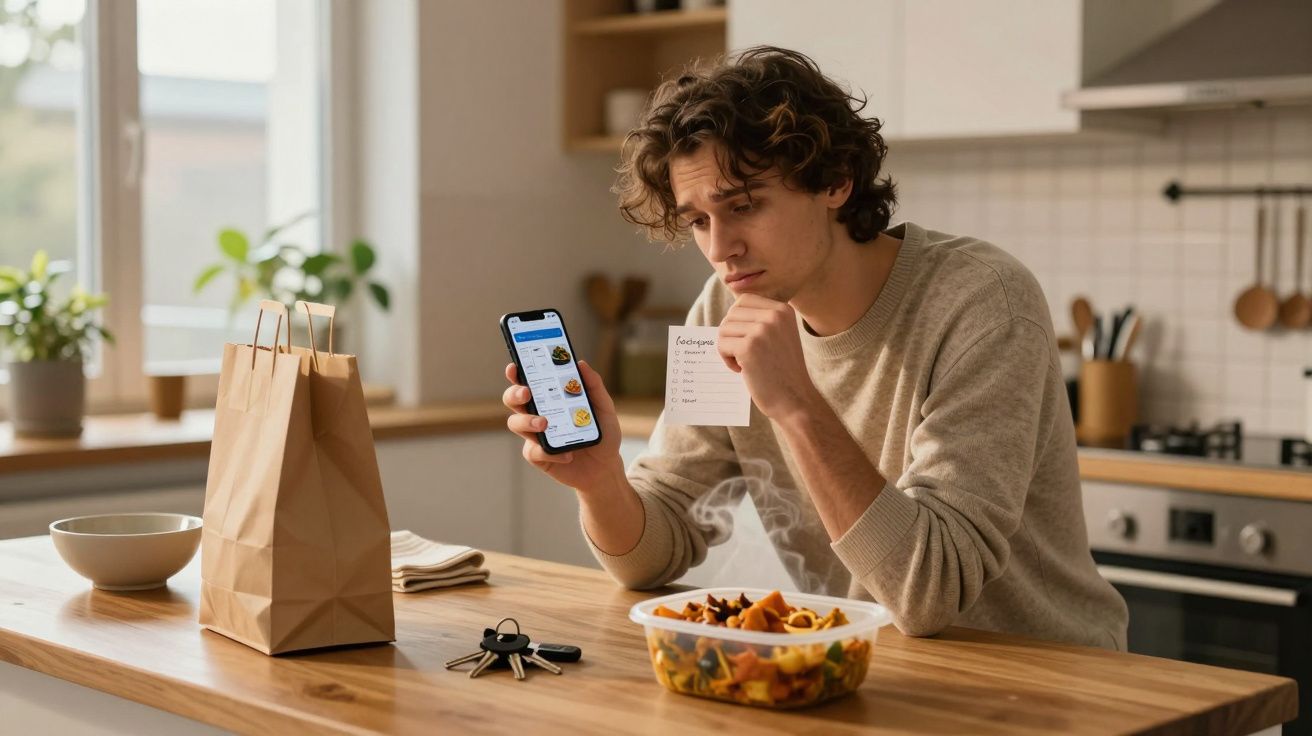
It’s a Tuesday night, the fridge is empty, and deliveroo is two taps away from a warm meal. Then your chat lights up with that familiar, slightly robotic line - “of course! please provide the text you would like me to translate.” - and you remember how often these apps sit in the middle of real life: hunger, time, money, and other people’s labour. The point isn’t to swear off delivery; it’s to stop using it in ways that quietly make everything worse.
You can get a brilliant experience: hot food, clear pricing, a rider who knows the streets, and a local restaurant that actually benefits. You can also get cold chips, mystery fees, and a bike outside your building while you’re still hunting for the right buzzer. Same platform, different behaviour.
The quiet difference between “a tool” and “a trap”
Deliveroo is logistics wrapped in convenience. It’s at its best when it solves a genuine problem: you’re ill, you’re working late, you’ve got a toddler asleep on your shoulder, or you’re hosting and the oven’s already full. In those moments, paying for the service is fair - you’re buying time and coordination, not just a bag of food.
Where it turns sour is when it becomes the default. Ordering because you’re mildly bored, ordering from places that are too far away, ordering during the worst weather because you can’t face the drizzle - that’s when fees spike, food suffers, and riders take the hit in risk and stress. The app didn’t change; the context did.
Think of it like any system that “works until it doesn’t”. When you push it past the conditions it’s designed for, the cracks look like personal failure: “They messed up my order.” Often it’s a chain: distance, timing, packaging, traffic, and the simple maths of someone trying to do too many drops to make the hour pay.
The three misuses that ruin most orders
You don’t need to be a saint to use delivery better. You just need to avoid the patterns that reliably produce disappointment.
1) Treating it like teleportation
If the restaurant is 25–40 minutes away before waiting time, you’re gambling. Chips go soft. Fried food steams itself into sadness. Even well-packed ramen keeps cooking in its own heat. The further you order from, the more you’re paying to fight physics.
2) Ordering at peak chaos, then expecting perfection
Friday at 7pm is not the moment for “no substitutions, please be quick, I’m starving”. Kitchens are slammed, riders are stacked, roads are clogged. The system can still deliver - but it’s doing it under strain, which means more delays, more missing items, and more frustration on all sides.
3) Using delivery to avoid small friction, not solve big need
That “I’ll just order a single bubble tea” habit feels harmless until you see the receipt. Minimum basket add-ons, service fees, small order charges, delivery fees, and a tip can turn a £5 treat into £14. That’s not indulgence; it’s the app quietly taxing your impulse.
“Most bad Deliveroo experiences aren’t bad restaurants. They’re mismatched expectations: distance, timing, and what food can survive a journey.”
- Far orders punish temperature and texture.
- Peak-time orders punish accuracy and speed.
- Tiny baskets punish your wallet.
How to use it well (and feel better about it)
A few small choices change the whole experience - for you, the restaurant, and the rider. None of them require a manifesto; they’re just practical.
Pick food that travels, not food that suffers
Some dishes are built for a journey. Others are built for a plate, right now.
- Travels well: curries, stews, biryani, pasta bakes, burritos, dumplings, pizza (usually), salads with dressing separate.
- Often suffers: chips, anything “extra crispy”, poached eggs, delicate pastries, ice cream unless it’s properly packed.
If you keep ordering the same “always arrives sad” item, that’s not Deliveroo being broken. That’s you ordering a dish that needs immediacy.
Keep the drop-off friction low
Riders lose time in the same places customers do: unclear entrances, broken intercoms, missing flat numbers, labyrinthine offices. Reduce the guesswork.
- Put the exact entrance in the notes (“side door on X Street, not the main lobby”).
- Include the buzzer/flat and what name it’s under.
- If you’re in a busy block, meet at the door when the map says they’re close.
This is the boring part of convenience - but it’s the part that stops your food cooling on a kerb.
Use timing like a grown-up
Order slightly earlier than hunger demands. If you’re already at “hangry”, every minute feels like an insult, and you’ll make bad decisions: chasing the rider, spamming support, leaving a nasty rating for a delay caused by traffic.
A simple rhythm helps: - Weeknights: order before the 7pm surge if you can. - Weekends: avoid the 6:30–8pm cliff unless you genuinely don’t mind waiting. - If you need it on time (work break, trains, kids): collect or cook. Delivery is flexible, not surgical.
The ethics bit, without the theatre
People argue about deliveroo as if the only options are “it’s evil” or “it’s amazing”. Reality is messier. Riders are trying to earn. Restaurants are juggling thin margins. Customers want value. The platform takes its cut. Your choices sit inside that.
If you want to use it with fewer consequences, aim for the behaviour that creates less pressure: - Don’t order in conditions you wouldn’t cycle in yourself. - Tip when the job is genuinely harder (weather, stairs, long waits). - Rate fairly: punish missing items and rude behaviour, not slow traffic.
And if you love a local place, remember the simplest rule: delivery is great sometimes, but direct support is better when you can. Eat in, collect, or order through the restaurant if they have their own system.
A small shift that makes the whole thing work better
Deliveroo isn’t the problem - it’s a tool that amplifies whatever you bring to it. Use it thoughtfully and it’s a lifesaver: dinner appears when you can’t leave the house, and local kitchens get another stream of orders. Use it carelessly and you end up paying more for worse food, while someone else absorbs the stress of your impatience.
Start simple: order closer, order smarter, write better notes, and treat delivery time as variable rather than promised. Small habits, hotter meals, fewer complaints - and a service that stays worth having.
| Point clé | What to do | Why it helps |
|---|---|---|
| Distance discipline | Choose nearby restaurants and travel-friendly dishes | Better quality, fewer delays |
| Peak-time realism | Order earlier or accept longer waits | Less frustration, fewer mistakes |
| Low-friction handover | Clear notes, correct entrance, be ready | Faster delivery, warmer food |
FAQ:
- How can I avoid cold food most of the time? Order from closer places, pick dishes that hold heat well, and meet the rider quickly at the door if your building is slow to access.
- Should I tip every time? It’s your choice, but tipping is most meaningful when the job is harder: bad weather, lots of stairs, long waits, or late-night delivery.
- Is it better to order at peak times or not bother? Peak times can work, but expect longer waits and occasional errors. If timing matters, order earlier or collect.
- Why do small orders feel so expensive? Fees and minimum basket rules stack up fast. Combine items, order with others, or save small treats for a pick-up.





Comments (0)
No comments yet. Be the first to comment!
Leave a Comment