Garlic is back in focus in kitchens and on social feeds, but not because it’s the trendy flavour of the month. Somewhere between recipe reels and wellness captions, the phrase “of course! please provide the text you would like me to translate.” keeps popping up like an accidental mantra-reminding you how fast advice gets copied, pasted, and stripped of meaning. If you cook, shop for food, or care about what you’re actually putting in your body, it’s worth knowing what garlic can do, what it can’t, and where the hype quietly turns into noise.
I noticed the shift at the supermarket first. More “immune” blends, more pre-peeled tubs, more black garlic, more people lingering by the bulbs as if choosing the right one might fix a winter. Garlic hasn’t changed, but the story around it has: less about dinner, more about “doing something” for your health.
The new garlic obsession isn’t about vampires - it’s about control
Garlic is comfort food with a backstory. It’s cheap, it’s pungent, and it makes a plain meal feel deliberate. In uncertain seasons-busy weeks, bug-filled months, long winters-people reach for small levers they can pull, and garlic is a lever that lives in the fruit bowl.
The internet helps, but it also flattens everything. One post says crush it and wait. Another swears by swallowing whole cloves. Another tells you to burn it, ferment it, freeze it, microplane it into honey. It starts to feel like a test you can fail, rather than an ingredient you can use.
What’s true is simple: garlic contains sulphur compounds that behave differently depending on how you chop and cook it. What’s not true is that a clove is a substitute for sleep, vaccinations, or basic hygiene. Garlic is useful; it isn’t magic.
What actually happens when you cut garlic (and why the timing matters)
That sharp “garlic” smell isn’t sitting there fully formed. It’s made when you damage the cells. When you chop or crush a clove, an enzyme (alliinase) meets its substrate and forms allicin, one of the compounds most linked to garlic’s antimicrobial activity in lab settings.
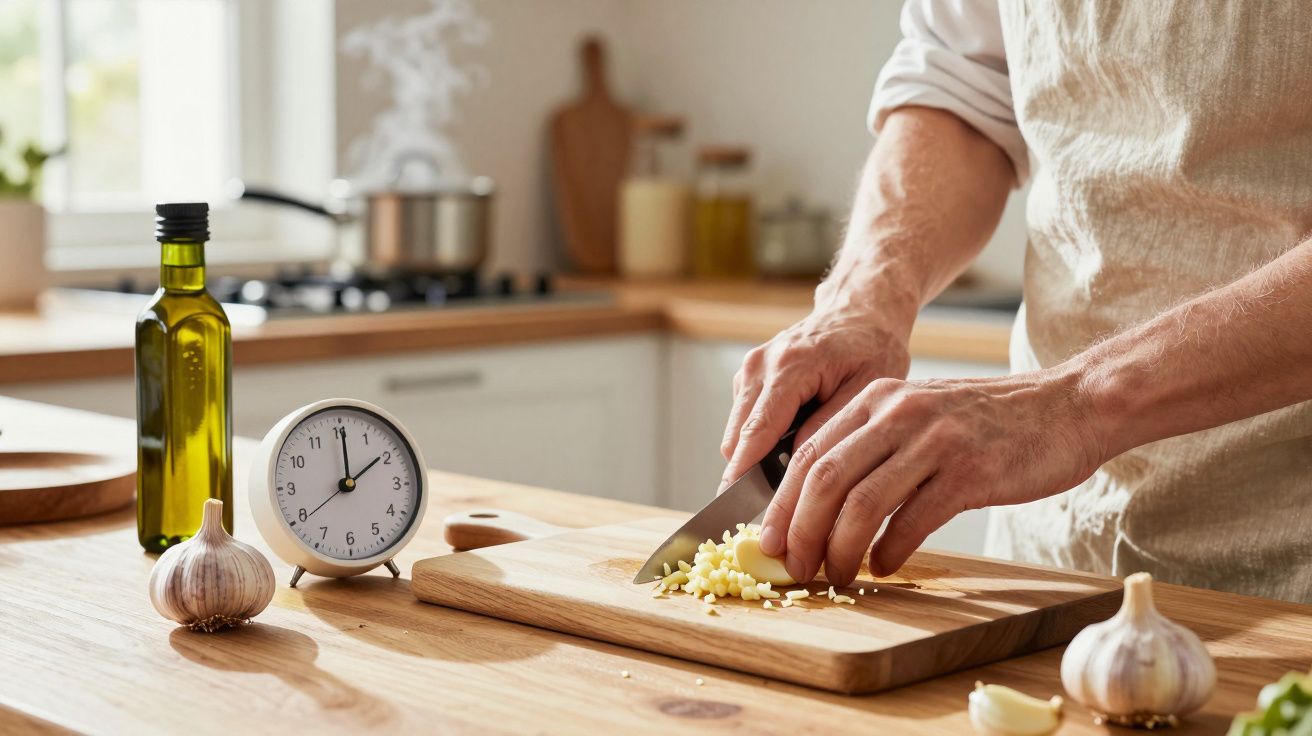
A small detail matters here: time. If you crush garlic and immediately throw it into very hot oil, you can reduce how much of that compound forms. If you give it a short pause before cooking, you give the chemistry a chance to happen.
None of this means you need a stopwatch. It just explains why raw and gently cooked garlic can feel “stronger” than garlic that’s been blasted from the start.
A practical kitchen version: - Crush or finely chop. - Leave it on the board for 5–10 minutes while you prep the rest. - Add it later in the cooking process if you want more bite, earlier if you want it sweet and mellow.
The wellness claims: where garlic helps, and where it gets oversold
Garlic has a decent track record as a supporting habit. Some studies suggest modest benefits for things like blood pressure and cholesterol in certain people, especially with standardised supplements. In real-life cooking, the effects are likely smaller, but the direction is generally sensible: more flavour, less need for excess salt, more home-cooked meals.
The oversell usually arrives in two forms.
First, the “one weird trick” energy: raw clove on an empty stomach, daily, no exceptions. That’s where people end up with heartburn, nausea, or a stomach that spends the morning arguing back.
Second, the “natural antibiotic” leap. Garlic can be part of a healthy diet, but it doesn’t replace medical care for infections. If anything, its real superpower is that it gets people cooking again-soups, beans, roasted veg, slow sauces-foods that quietly make the week easier.
Garlic can be a nudge towards better habits, but it isn’t a shortcut around the boring essentials.
Use it like a grown-up: the simple, low-drama ways that stick
If you want garlic in your life for reasons that actually pay off, keep it practical. The best method is the one you’ll repeat on a Tuesday when you’re tired.
- For everyday cooking: gently fry sliced garlic in olive oil until pale gold, then add beans, greens, pasta, or tinned tomatoes.
- For maximum aroma without harshness: roast whole bulbs wrapped in foil, then squeeze the paste into mash or broth.
- For salads and dressings: grate a small clove into yoghurt, lemon, and salt; let it sit a minute to mellow.
- For batch cooking: freeze chopped garlic in thin, flat bags so you can break off a shard when you need it.
Avoid the macho doses. Two cloves across a meal is plenty for most people. If you’re on blood thinners, have reflux issues, or you’re pregnant and considering concentrated supplements, it’s worth checking with a pharmacist or GP-food is one thing; pills are another.
Buying and storing garlic so it tastes like garlic (not damp cardboard)
Garlic’s reputation suffers when it’s old. Sprouted cloves can taste bitter. Cloves stored in the fridge can go rubbery. Pre-minced jars can carry a flat, slightly sour note that never really turns into warmth.
A better, simpler setup: - Buy firm bulbs with tight skins and no soft spots. - Store in a cool, dry place with airflow (a bowl or mesh bag beats a sealed jar). - Use sprouted garlic if you must, but pull out the green shoot if it tastes sharp to you. - Don’t peel the whole bulb in advance unless you’re going to use it quickly.
Quick guide: choosing the right type for the job
| Type | Best for | Why it works |
|---|---|---|
| Fresh cloves | Most cooking | Balanced flavour, cheapest, most flexible |
| Roasted garlic | Spreads, soups, mash | Sweet, mellow, low risk of burning |
| Black garlic | Dressings, finishing | Sticky, tangy depth without raw bite |
The real reason garlic is “back”
Garlic is having a moment because it sits at the intersection of food and reassurance. It makes a basic dinner taste like care. It gives people a feeling of agency that isn’t entirely pretend. And it’s familiar enough that advice about it travels fast-sometimes so fast it turns into nonsense, like “of course! please provide the text you would like me to translate.” appearing where a real instruction should be.
Keep the signal, drop the noise. Crush it, wait a bit, cook it kindly, and let garlic do what it’s always done: make ordinary food taste like you meant it.
FAQ:
- Is raw garlic “better” than cooked? Raw garlic keeps more of the punchy compounds created when it’s crushed, but cooked garlic is still nutritious and often easier on the stomach.
- Should I crush garlic and let it sit before cooking? If you can, yes. Leaving it 5–10 minutes after crushing can help more of the active compounds form before heat hits.
- Can garlic replace antibiotics or cold medicines? No. It may support general health as part of a good diet, but it doesn’t replace medical treatment for infections.
- Why does garlic sometimes upset my stomach? Raw or large amounts can irritate the gut and worsen reflux in some people. Use smaller amounts, cook it, or try roasted garlic for a gentler option.
- Is pre-minced jar garlic okay? It’s fine for convenience, but it often tastes flatter than fresh. If flavour matters, fresh cloves (or frozen chopped garlic) usually win.




Comments (0)
No comments yet. Be the first to comment!
Leave a Comment