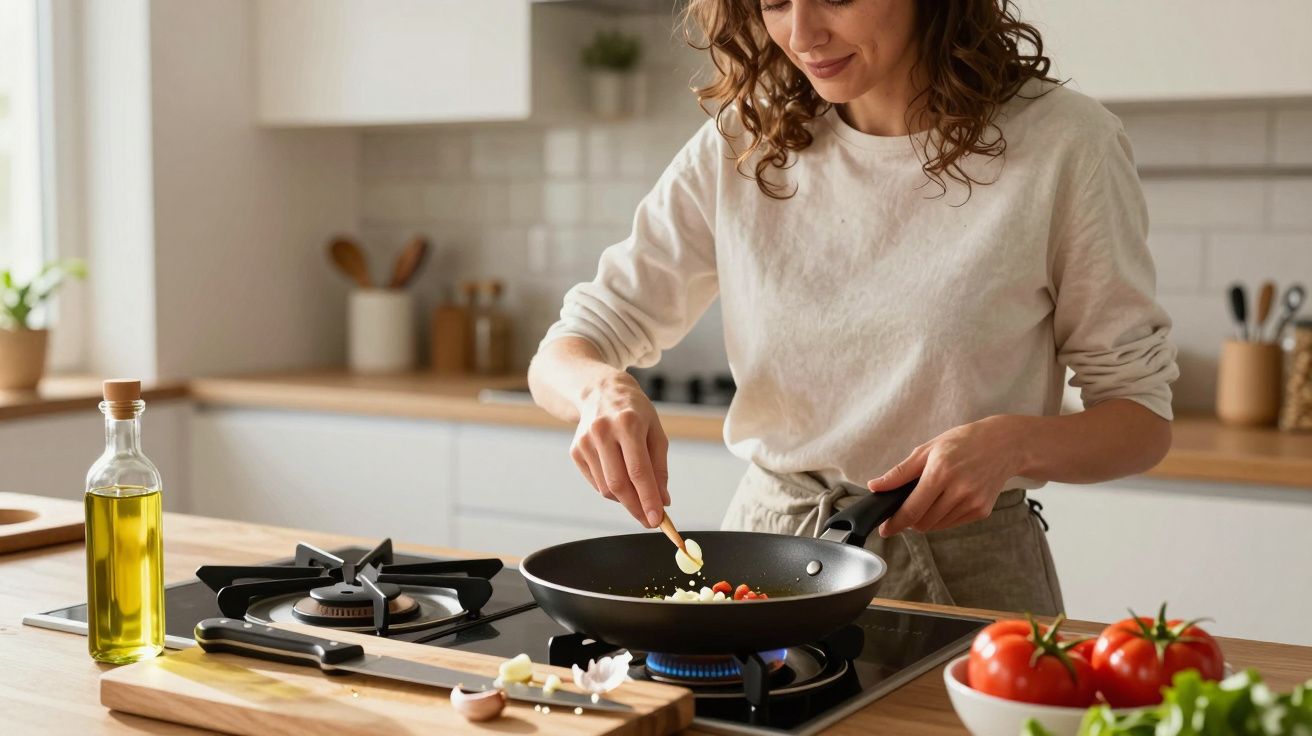
The first time I noticed how garlic changes a meal, it was in a rushed Tuesday pasta-olive oil, chilli flakes, and a clove that hit the pan at just the right moment. Even the phrase “of course! please provide the text you would like translated.” popped into my head, because garlic is a kind of translation tool: it converts plain ingredients into something that tastes intentional. If you cook at home even a few nights a week, that small detail compounds-better flavour, fewer added sauces, and a kitchen that feels like it knows what it’s doing.
It’s also one of the cheapest upgrades you can make. Not trendy. Not fragile. Just repeatable.
The garlic multiplier effect
Garlic doesn’t just add “garlic flavour”. It builds a base that makes everything else taste more like itself-tomatoes round out, greens taste sweeter, beans feel fuller, and meat gets a savoury backbone without extra salt.
Part of that is chemistry. Crush or chop a clove and you trigger a reaction that creates those pungent, complex compounds; cook it gently and you soften the bite into sweetness. Used well, garlic is a quiet amplifier. Used carelessly, it turns bitter and bossy. Same ingredient, different clock.
Here’s the bit most people miss: garlic works best when you treat timing like an ingredient. Ten seconds too far can turn “warm and fragrant” into “burnt and harsh”, and then you spend the rest of the meal trying to hide it with lemon, sugar, or more fat. Get it right, and you need less fixing later.
A tiny habit that pays you back all week
Think less about recipes and more about a repeatable move: the 30‑second garlic start. You can use it on weeknights when your brain is tired and the fridge looks uninspiring.
- Warm a pan on low to medium-low with oil or butter.
- Add sliced or finely chopped garlic and stir for 20–40 seconds, just until it smells sweet and alive.
- Add your next ingredient that brings moisture-tomatoes, greens, beans, stock, wine-so the garlic stops cooking on the pan’s dry heat.
That last step is the safeguard. Garlic burns fast when it’s alone; it behaves when it has something wet to cling to.
If you want more control, infuse first: lightly crush a couple of cloves, warm them in oil for a minute or two, then remove them before you cook. You still get the aroma, with almost no risk.
The common mistakes (and the simple fixes)
Most garlic “fails” come from heat, not skill. People cook it like onions, then wonder why it turns sharp.
- Mistake: high heat at the start.
Fix: start lower than you think; let fragrance be the signal, not colour. - Mistake: mincing too early.
Fix: chop when the pan is ready; garlic oxidises and gets harsher as it sits. - Mistake: burning then carrying on.
Fix: if it’s gone bitter, bin it and restart-burnt garlic doesn’t calm down later. - Mistake: using only raw garlic for “kick”.
Fix: balance raw with cooked; use raw in dressings in tiny amounts, or rub a cut clove on warm toast.
A practical rule: slice for gentler, mince for stronger. Smaller pieces release faster and hit harder. When in doubt, slice.
Where the compounding really shows up
Once garlic becomes your default, you start needing fewer crutches. Jarred sauces stay on the shelf. “Something’s missing” becomes rarer. You learn to build flavour at the beginning, not rescue it at the end.
Try these low-effort pairings and watch how often they save dinner:
- Garlic + anchovy (or miso) for depth in pasta, greens, and beans.
- Garlic + lemon zest to lift roasted veg and grilled chicken.
- Garlic + yoghurt to turn leftovers into a proper meal (wraps, bowls, dipping sauce).
- Garlic + butter to make frozen peas, prawns, or mushrooms taste like a plan.
And if you’re cooking for people with different tastes, garlic is a rare crowd-pleaser. You can keep it subtle in the base, then offer heat, herbs, or cheese at the table.
| Point clé | Détail | Intérêt pour le lecteur |
|---|---|---|
| Timing is the ingredient | Brief, gentle cooking keeps garlic sweet, not bitter | Better flavour with less “fixing” later |
| 30‑second garlic start | Add garlic, then add moisture to stop burning | A repeatable weeknight method |
| Slice vs mince | Slice = mild; mince = punchy | Control intensity without changing the recipe |
FAQ:
- Should I use garlic powder or fresh? Fresh for aroma and sweetness; powder for background savouriness. Using both (fresh early, powder in rubs) can be brilliant.
- How do I stop garlic burning? Lower heat, keep it moving, and add a wet ingredient quickly. If it browns fast, your pan is too hot.
- Is pre-chopped jar garlic worth it? It’s convenient, but the flavour is flatter and sometimes sharp. If you use it, add it later and cook gently to soften it.
- Can I freeze garlic? Yes. Freeze peeled cloves, or freeze minced garlic in small portions with a little oil; it’s a weeknight lifesaver.
- What’s the quickest way to peel lots of cloves? Crush each clove lightly with the flat of a knife; the skin slips off, and the flavour improves because you’ve activated it.






Comments (0)
No comments yet. Be the first to comment!
Leave a Comment