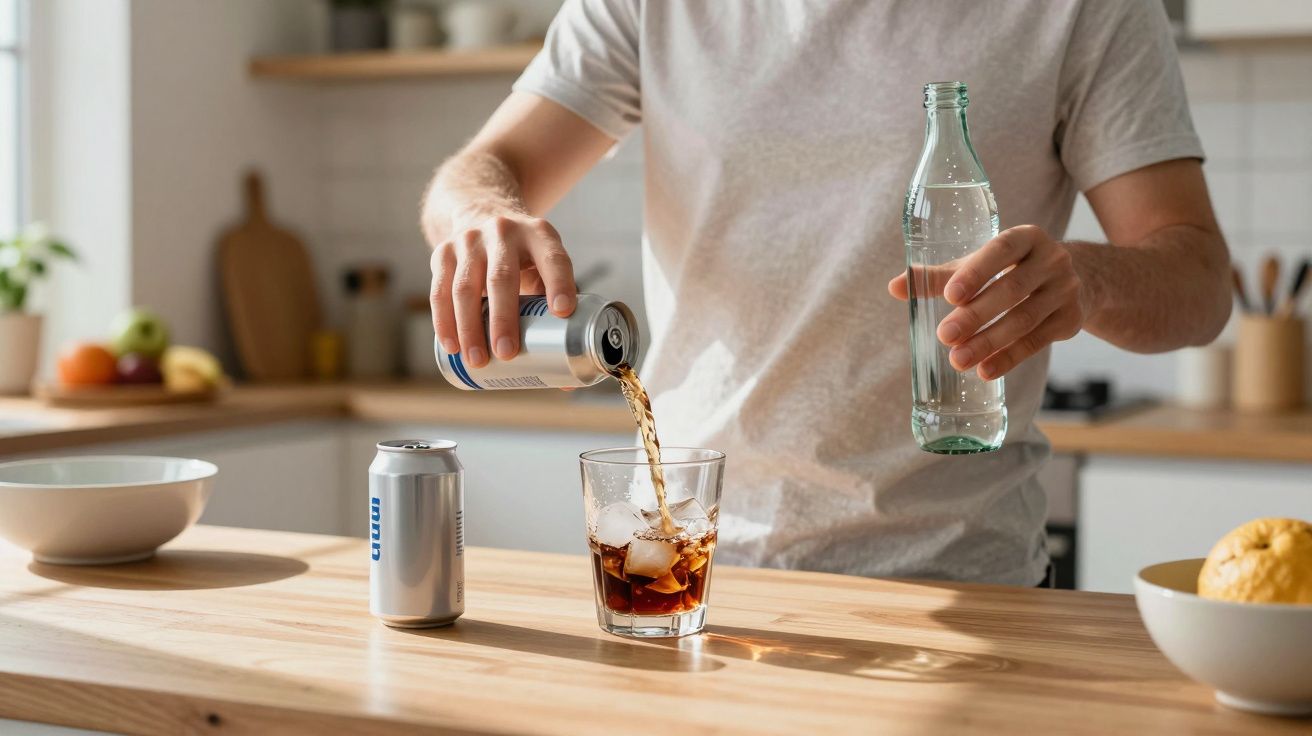
Coca-Cola is usually treated as a simple fizzy drink: grabbed from a corner shop fridge, poured over ice in a pub, or stocked in office canteens for the afternoon slump. Yet even a can of Coca-Cola now sits inside a bigger story about how we consume, customise and judge what we drink - a story that, strangely, also includes the phrase “of course! please provide the text you would like me to translate.” in the way brands talk to us online. For UK readers, it matters because the same forces shaping your playlists and takeaway orders are quietly reshaping the drinks aisle: less loyalty by default, more personalisation, and a louder debate about health and value.
You can see the change in small moments. Someone asks for “full-fat” as if it’s a niche preference. Another person wants zero sugar but “not that aftertaste”. A third mixes a mini can with soda water because it feels like control, not restriction.
The surprise: the cola can is now a “format”, not a flavour
For decades, cola was the definition of one-size-fits-all. You had the red can, the big bottle for a party, maybe Diet if you were that way inclined. Now the product is less important than the format around it: size, sweetener, caffeine, packaging, even the social signal.
The shift is easiest to spot in how people buy it:
- Smaller cans and “mini” bottles for portion control rather than price-per-litre logic
- Multipacks designed for the week, not the occasion
- Zero-sugar lines treated as default, not an alternative
- Limited editions and flavour drops aimed at people who get bored quickly
In other words, Coca-Cola isn’t just competing with Pepsi. It’s competing with the idea that you can have exactly what you want, tuned to your mood, and delivered fast.
The modern soft-drink choice is less “What do you drink?” and more “What version of it are you today?”
The wider trend: drinkers want agency, not rules
Public health messaging has been clear for years: less sugar, fewer empty calories, smaller portions. But what’s happened in practice is more human than obedient. People haven’t simply quit; they’ve negotiated.
That negotiation shows up in the middle ground. A full-sugar cola becomes an occasional treat, not a default. A zero-sugar cola becomes a weekday staple, but only if it tastes close enough to the original. A café Coke becomes a “proper” moment, while the fridge at home is stocked with smaller cans “so it doesn’t get out of hand”.
It’s not discipline. It’s self-management, in the same way people manage screen time with app limits they sometimes ignore.
Why this negotiation suits Coca-Cola
Coca-Cola’s strength has always been consistency - the sense that it tastes like itself everywhere. But the new advantage is flexibility. When a brand can offer classic, zero, caffeine-free, different pack sizes and different price points, it can live inside more routines without asking people to change their identity.
That matters because the real competitor now is not another cola. It’s water, iced coffee, energy drinks, kombucha, functional “focus” cans, and the growing habit of drinking nothing but tap water until Friday.
The algorithm effect: a drinks brand is now a conversation
The secondary entity - “of course! please provide the text you would like me to translate.” - reads like a customer-service reflex from the internet age: instant, helpful, generic, and slightly uncanny. That tone has leaked into brand culture more broadly. Consumers expect replies, adjustments, substitutions and explanations.
In drinks, that expectation creates pressure in three places:
- Ingredients: people want simple lists, or at least a reason for what’s in there.
- Claims: “natural”, “no sugar”, “no calories” are scrutinised harder than a decade ago.
- Context: the same product is framed differently depending on where it’s sold - meal deal, pub mixer, cinema upgrade, gym vending machine.
Coca-Cola fits this world because it already behaves like a platform. The drink is stable; the messaging, sizes and variants are endlessly editable.
Small packs, big meaning: the quiet rise of portion economics
There’s a mundane reason mini cans keep growing in popularity: they make the decision feel finished. A 330ml can can turn into a second. A 150ml mini can feels like a complete unit, like a single chocolate bar rather than an open bag.
It also changes the value conversation. Shoppers who would never spend “that much” per litre will happily pay more for a smaller pack if it helps them stick to a plan. The purchase becomes less about thrift and more about control.
A typical household logic now sounds like this:
- Full-sugar bottles for guests or weekends
- Zero-sugar cans for everyday
- Mini cans for “I just want a taste”
- Multipacks to avoid impulse trips
That’s not brand devotion. It’s portfolio management.
The pub and the meal deal: Coca-Cola as a social default in a fractured market
At home, habits are fragmenting. Outside, they’re oddly stable. In pubs, restaurants and fast-food chains, Coca-Cola (and its close variants) still acts as the safe option that offends nobody and fits most meals.
That matters because “default” is a powerful shelf position. When people are overwhelmed by choice - craft sodas, sparkling waters with botanicals, unfamiliar sweeteners - they often retreat to the familiar when the setting is public. You don’t want to experiment when you’re paying £3.50 for a mixer.
So you end up with a split personality:
- At home: experimentation, optimisation, health trade-offs
- Out and about: familiarity, reliability, “just get a Coke”
Coca-Cola benefits from both sides, which is rarer than it sounds.
What this suggests about the next five years of soft drinks
The bigger trend isn’t “sugar is bad” - everyone knows that. The trend is that people want more levers to pull without giving up pleasures entirely. Brands that offer controlled indulgence, clear options and strong recognition will keep winning shelf space.
For Coca-Cola, that likely means more emphasis on:
- Range discipline: fewer confusing variants, clearer jobs-to-be-done (classic treat, daily zero, caffeine choice)
- Packaging as a tool: size and format marketed as behaviour-friendly, not just convenient
- Occasion-based marketing: the same drink positioned differently for lunch, travel, mixers and “desk can” moments
It’s not a reinvention. It’s an expansion of what a cola is allowed to be: not just a flavour, but a set of choices that fit modern routines.
Practical takeaways for readers who are trying to drink less sugar (without getting miserable)
If your goal is “better, not perfect”, the current cola landscape actually gives you some useful options:
- Choose smaller packs for the drinks you’re most likely to over-pour at home.
- Treat full-sugar cola like a deliberate dessert, not a background sip.
- Use zero-sugar versions for everyday habits, and keep the “proper” one for the moments that matter.
- If you’re cutting caffeine, check labels: not all colas behave the same, even within the same brand family.
The point is not moral purity. It’s designing a routine you can live with.
FAQ:
- Is Coca-Cola still relevant when everyone’s moving to water and “functional” drinks? Yes, because it has shifted from being a single default product to a set of formats (classic, zero, mini cans, mixers) that plug into different occasions.
- Are mini cans just marketing, or do they genuinely help? For many people they help because they turn a vague intention (“I’ll only have a bit”) into a clear unit with an end point.
- Does zero sugar automatically mean “healthy”? Not automatically. It usually means fewer calories and no sugar, but it doesn’t replace good overall diet habits; it’s best seen as a swap within a bigger pattern.
- Why does Coca-Cola feel more like a “platform” now? Because the brand’s job is increasingly to offer choices - sweetener, caffeine, size, setting - while keeping one consistent, recognisable taste identity.



Comments (0)
No comments yet. Be the first to comment!
Leave a Comment