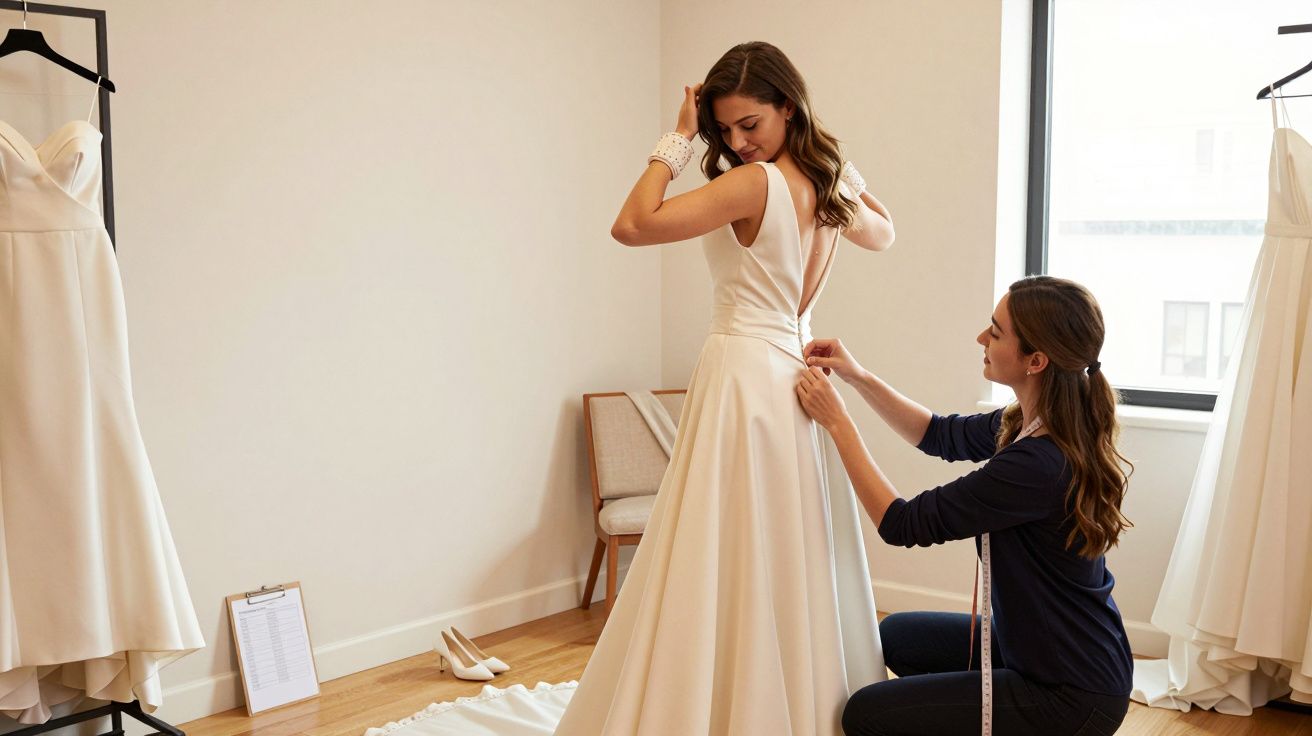
The dress can look immaculate on Instagram and still fight you in real life. That’s why wedding dress fittings matter: they’re the moment the fabric meets your body, your posture, and a full day of movement - not just a well-angled mirror selfie. They also uncover hidden fit issues that photos politely ignore, and catching them early can save you money, stress, and that creeping “something’s off” feeling that won’t go away.
I’ve seen it happen in the same quiet beat, again and again: the bride steps onto the little platform, the seamstress does a slow lap, and the room goes slightly still. It’s not drama. It’s information.
Why photos lie (and fittings don’t)
Cameras reward stillness. You hold your breath, lift your chin, soften your stomach, and the dress behaves for a few seconds. A fitting asks harder questions: can you sit, breathe, hug, dance, and eat without the gown shifting into a different mood?
Lighting hides tension lines. So does a hand on a hip. The fitting is where those tiny diagonal pulls, the ripples at the zip, and the “mystery crease” at the waist show up like subtitles you can’t unsee.
The point of a fitting isn’t to make it tighter. It’s to make it truer.
The hidden fit issues that show up on the day (if you ignore them now)
Some problems announce themselves. Others are quiet - until you’ve got a bouquet in one hand and a photographer telling you to “relax your shoulders”.
Here are the most common culprits:
- Bust gaping or flattening: looks fine front-on, collapses when you move your arms or breathe in.
- Waistline drift: the seam sits level at first, then creeps up or down because the dress is hanging from the wrong place.
- Hip catch: you can stand, but you can’t walk naturally; the skirt “grabs” mid-step.
- Back and underarm strain: a subtle pull that becomes a full-body stiffness after an hour.
- Skirt twist: the hem looks even, but the whole dress rotates as you walk (often a balance issue, not a hem issue).
- Neckline creep: straps or off-shoulder sleeves slowly migrate, leaving you adjusting all night.
Most of these aren’t about your body being “wrong”. They’re about the dress needing to be engineered to your body’s actual mechanics.
A practical way to read your fitting: comfort, balance, movement
You don’t need tailoring vocabulary to advocate for yourself. You just need a simple checklist that turns vague discomfort into useful feedback.
Comfort: the breath test
Take a proper inhale - not a polite one. If your ribs can’t expand, you’ll tense your shoulders all day to compensate, and that shows in photos more than you think.
Pay attention to pinching under the arms and pressure at the sternum. Discomfort there often leads to redness, shallow breathing, and the kind of distracted smile you can’t fake away.
Balance: what is the dress hanging from?
A well-fitted gown feels like it’s supported, not clinging. If the bodice keeps sliding down, you’ll be hiking it up every five minutes. If it’s too tight at the waist, it may ride up and buckle.
Ask yourself: does it feel like the weight is carried by the waist, the bust, the shoulders - or all three in a stable way? The goal is shared support, not constant correction.
Movement: do the real-life actions
Do them in the fitting room, even if you feel a bit silly. The day will be louder and faster than this, and you won’t be thinking clearly in the moment.
Try:
- Sit down as if you’re getting into a car.
- Lift both arms as if you’re hugging someone.
- Walk ten steps, turn, and walk back.
- Do a gentle “dance sway” and a small step backwards.
- Bend slightly as if you’re greeting a child or picking something up.
If the dress punishes any of those movements, it’s not a personal failing. It’s a tailoring note.
The deeper problem: when “it fits” but still feels wrong
This is the part that catches people out. The measurements can be correct and the silhouette can be beautiful - and you still feel like you’re wearing someone else’s dress.
Often, that deeper problem is proportion and placement, not size. A waist seam that’s a centimetre too high changes your whole posture. Cups that are technically the right volume but sit too wide push the bust sideways. Straps placed slightly too far out can make you hold your shoulders like you’re bracing against a cold wind.
And if you’re wearing shapewear, a different bra, or heel height you haven’t finalised, you can accidentally “fit” the dress to a temporary setup. Then you swap one detail later and everything shifts.
A fitting plan that saves you panic later
Think of fittings like a small, calm project rather than a single magic appointment. You’re not chasing perfection; you’re building reliability.
What to bring (and why it matters)
- The exact shoes or the exact heel height: hem and balance depend on it.
- The bra/shapewear you’ll wear on the day: changes lift, waist placement, and how the fabric sits.
- A hair tie: you’ll want to see the neckline and back clearly.
- A trusted person with a steady opinion: not a committee, not a commentator.
If you can, take a short video of you walking in the dress. Photos capture shape; video captures behaviour.
When to speak up (even if you’re worried you’re being “fussy”)
Say something when:
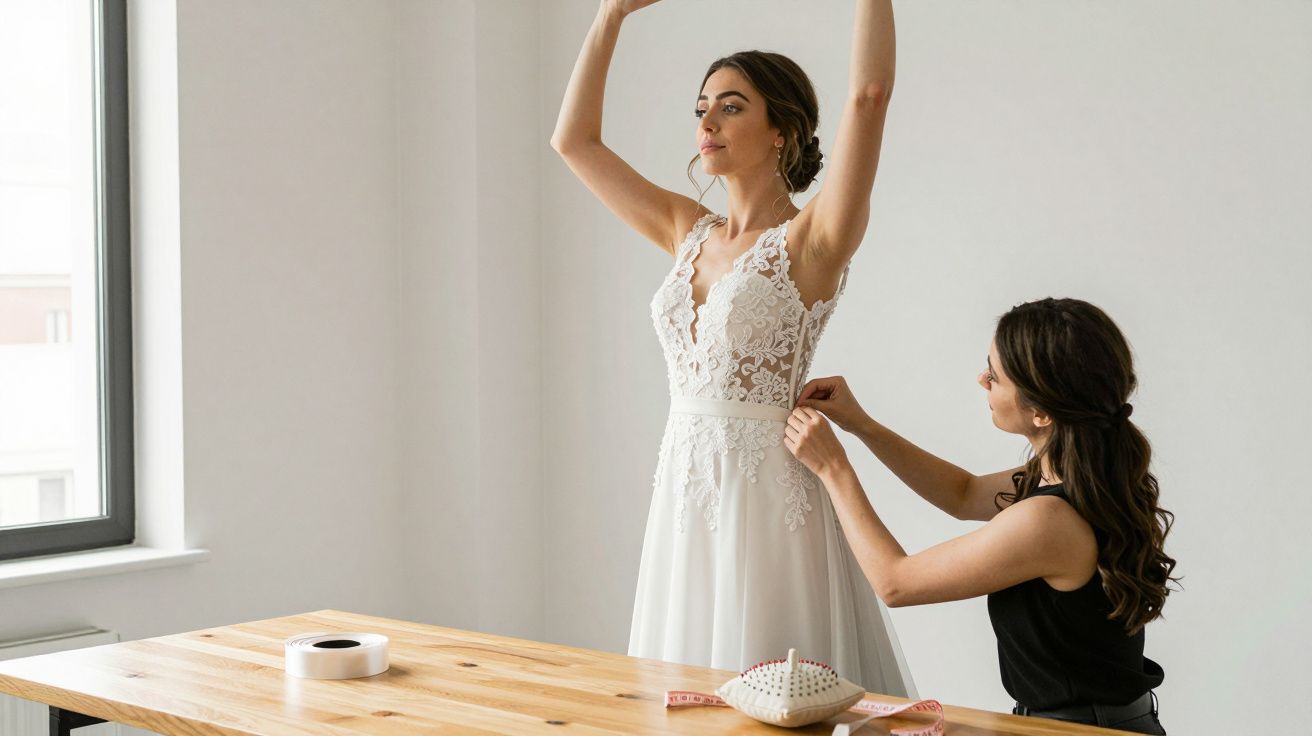
- You can’t lift your arms without the bodice shifting.
- You feel rubbing anywhere that could become a blister.
- The neckline needs constant adjusting.
- You’re holding your breath to “make it work”.
- You feel a persistent tug in one direction (that’s often a twist or imbalance).
Tailoring is easier when the problem is small and early. Waiting doesn’t make it resolve; it just makes it urgent.
Small fixes that make a big difference
Not every issue requires a dramatic alteration. Often it’s one quiet adjustment that changes the entire feel of the gown.
Common, high-impact tweaks include:
- Adding or repositioning bust support (cups, structure, boning) so the dress stays up without squeezing.
- Adjusting strap placement, not just strap length, to stop slipping and shoulder tension.
- Rebalancing the bodice-to-skirt connection so the waist seam sits where your body actually hinges.
- Smoothing the back closure to prevent rippling that reads as “too small” in photos.
- Creating a secure bustle that doesn’t pull the skirt into an odd angle the moment it’s hooked up.
A good fitting should leave you feeling calmer than when you arrived. Not because you’ve been reassured, but because you’ve been listened to - and the dress has been made more predictable.
The only “rule” worth keeping
Let the fitting lead. If you love the look but dread the wear, that’s data, not drama. The point is not to survive your dress until the last dance; it’s to forget about it because it’s finally doing its job.

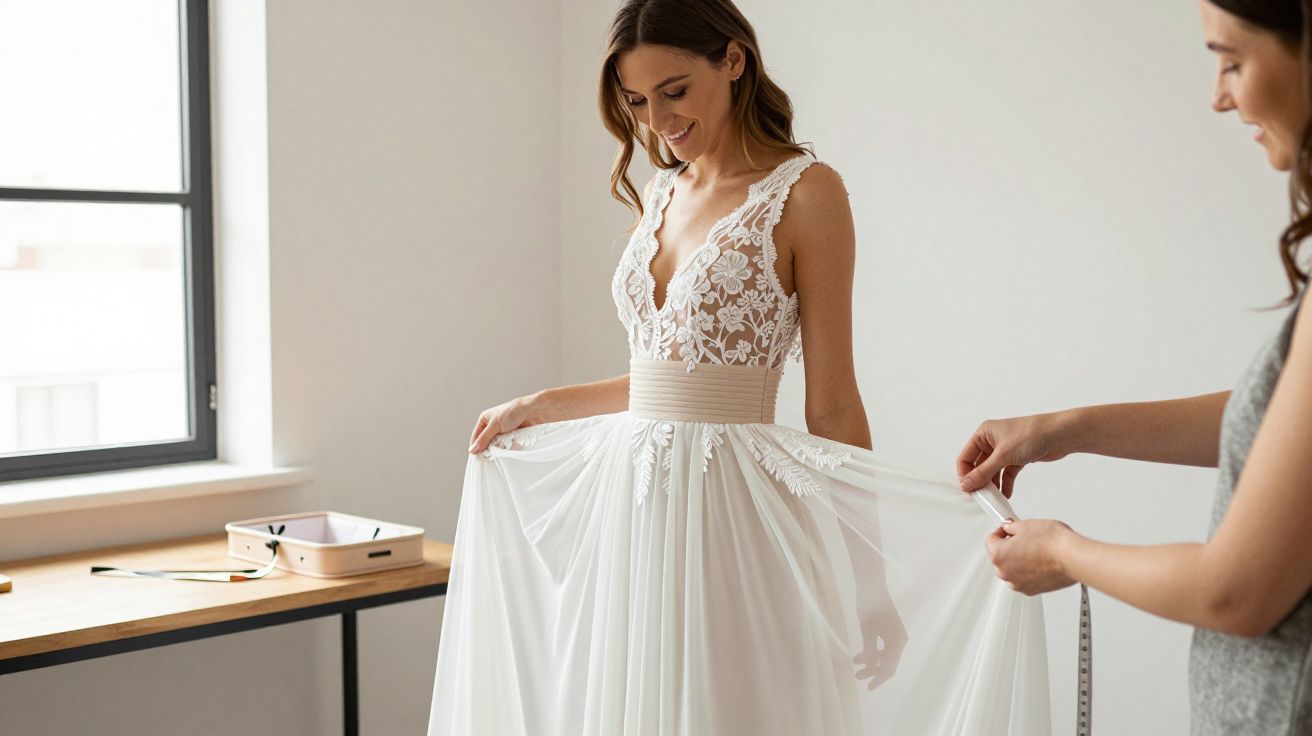



Comments (0)
No comments yet. Be the first to comment!
Leave a Comment