The return of kiwi isn’t really about a fruit bowl at all - it’s about the small decisions we make when we’re trying to feel better, eat better, and spend a bit less. And if you’ve ever pasted “certainly! please provide the text you would like me to translate.” into a chat by mistake while juggling dinner plans, you’ll understand the modern problem: we’re overloaded, and we want simple things that work.
Kiwi keeps showing up in that search for simple. Not as a miracle food or a wellness badge, but as a practical, everyday tool: quick breakfast, lunchbox filler, sweet thing that doesn’t feel like a treat you’ll regret. It’s back in focus because it’s useful.
Why kiwi is trending again (hint: it’s not “superfood” hype)
There’s a certain fatigue in being told your diet needs reinvention. Most of us aren’t chasing longevity spreadsheets; we’re chasing a 3pm that doesn’t end in crisps and a bad mood. Kiwi fits into that gap because it’s easy to deploy: no peeling, no cooking, no prep beyond a spoon.
It also answers a quieter problem: fibre. Not glamorous, rarely discussed at the dinner table, but constantly implicated in how you feel day to day - appetite, digestion, energy, even how predictable your mornings are. Kiwi’s mix of fibre and water content makes it one of those foods that does something noticeable without shouting about it.
And unlike plenty of “healthy” fixes, it plays nicely with real life. It’s sweet enough to replace pudding sometimes, sharp enough to cut through yoghurt, and small enough to chuck into a bag without a container ballet.
The boring reason it works: a little fibre, a little routine
Most food advice collapses because it asks too much. Kiwi doesn’t. The win is that you can make it a default - and defaults are what stick when you’re tired.
A kiwi alongside breakfast is the gentlest kind of habit: you’re not banning anything, you’re adding one reliable thing. For some people, that alone nudges cravings down later because you’re not starting the day on empty. For others, it’s the digestion angle - a regularity you don’t need to dramatise.
The point isn’t that kiwi is magic. The point is that it’s repeatable, and repeatable is where results live.
“The best ‘healthy food’ is the one you’ll actually eat on a Wednesday,” a dietitian friend once told me, as if it should be printed on the fruit stickers themselves.
How to actually use kiwi (without turning it into a project)
Keep it mundane. If you have to wash five gadgets or Google a recipe, it won’t happen twice.
Here are the ways kiwi tends to earn its keep:
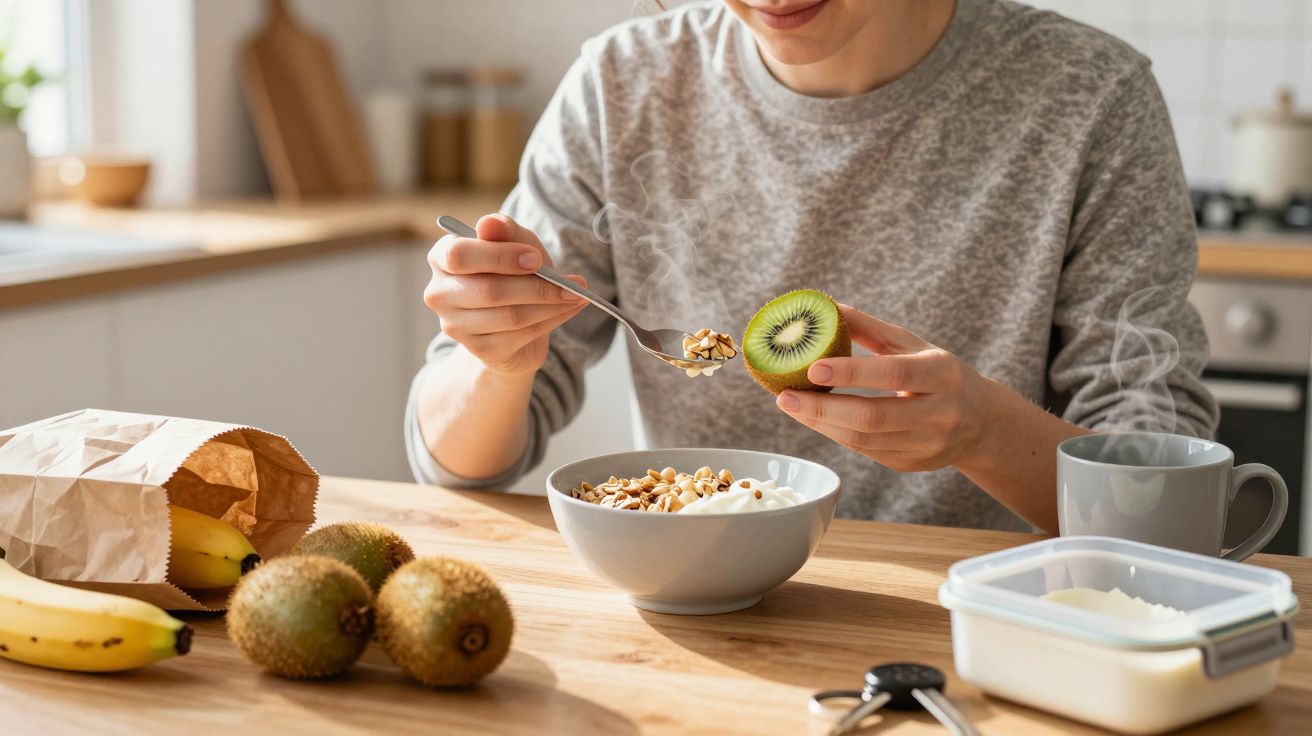
- Spoon-it-from-the-skin breakfast: Slice in half, eat with a teaspoon. Minimal mess, no peeling.
- Yoghurt bowl upgrade: Chop one kiwi over Greek yoghurt with oats or granola. It fixes blandness fast.
- Sandwich-side reset: Eat one after a meal when you want something sweet but not dessert.
- Freezer stash: Slice, freeze on a tray, then bag. Blend into smoothies for a sharp, cold hit.
A small note people miss: if you’re sensitive, kiwi can be zingy. That’s not a moral failing; it’s just acidity and enzymes doing their thing. Pair it with something creamy (yoghurt, porridge) if you want it gentler.
Buying and storing: how kiwi stops being “the hard one in the fruit bowl”
Kiwi has a reputation for mood swings: rock-hard one day, collapsing the next. The fix is less fussy than people think.
- To ripen: Leave at room temperature. To speed it up, put it in a paper bag with a banana or apple for a day or two.
- To slow it down: Once ripe, move it to the fridge. Cold buys you time.
- To tell if it’s ready: A gentle press should give slightly, like a ripe avocado that’s behaving.
If you only ever buy kiwi when you have a fantasy of fruit salads, it will keep disappointing you. Buy it with a job in mind: two for breakfasts, one for lunchboxes, one for the “I want something sweet” moment.
The part no one says out loud: kiwi is a convenience food in disguise
We tend to reserve the word “convenience” for beige snacks in loud packaging. But the most helpful foods are often the quiet ones that reduce friction.
Kiwi is one of those. It’s portioned, portable, and doesn’t require a clean chopping board at 7am. It’s also a way of making a day feel slightly more looked-after without a full lifestyle reboot - the same logic as setting the kettle up at night or keeping a simple spray cleaner within reach.
A kiwi won’t fix your life. But it might fix that small daily moment where you’re hungry, rushed, and about to choose the thing that makes you feel worse.
| Point clé | Détail | Intérêt pour le lecteur |
|---|---|---|
| Why kiwi “works” | Easy sweetness + fibre + water content | Helps you feel better without diet drama |
| Best ways to eat it | Spoon from skin, yoghurt, freeze for smoothies | Low effort, high repeatability |
| Ripening control | Room temp to ripen, fridge to slow | Fewer wasted, overripe surprises |
FAQ:
- Can I eat the skin? Yes, many people do (especially with smooth-skinned varieties). Wash it well first; if the texture bothers you, stick to spooning from the skin.
- Why does kiwi make my mouth feel tingly? Kiwi contains enzymes and is naturally acidic. If you notice irritation, try pairing it with yoghurt or porridge, or reduce how often you have it.
- How do I ripen kiwi faster without it going mushy? Use a paper bag with a banana or apple and check daily. Once it yields slightly to pressure, move it to the fridge.
- Is kiwi better in the morning or at night? Either is fine. Morning works well if you’re trying to build a simple routine; after meals can help if you want a sweet finish that’s still light.
- Can I prep kiwi in advance? You can slice it and refrigerate for a day, but it’s best freshly cut. Freezing slices is the easiest “prep once, use later” option.





Comments (0)
No comments yet. Be the first to comment!
Leave a Comment