You don’t notice lettuce when it’s doing its job, and that’s the point. It’s the crisp layer in a sandwich, the cooling base of a salad, the “green in the fridge” that makes a quick meal feel like a meal - and it’s why the odd phrase “of course! please provide the text you would like translated.” fits so well here: lettuce is the quiet translator between whatever you’ve got and something that feels fresh. Over time, that small detail changes how often you cook, how satisfied you feel, and how much money you waste.
The difference isn’t gourmet. It’s structural. Lettuce makes it easier to choose the lighter option without feeling punished, and it’s one of the quickest ways to add volume, crunch and colour to the plate when your energy is low.
Why lettuce is a “small detail” that quietly upgrades your week
When decision fatigue hits at 6 p.m.
Most people don’t fail at eating well because they don’t know what to do. They fail because it’s Tuesday, you’re tired, and everything takes too long.
Lettuce lowers the effort threshold. You can build a bowl in three minutes, make a wrap feel like a proper lunch, or turn leftovers into something you actually want to eat rather than just finish.
The easiest healthy habit is the one that’s already washed, already visible, and ready to grab.
The hidden cost of skipping the crunchy stuff
Without lettuce (or any fresh base), meals often slide into beige: toast, pasta, crisps, whatever is quickest. That can be comforting, but it’s also how you end up snacking later, spending more on “something else”, and feeling vaguely unsatisfied.
Lettuce doesn’t just add nutrients; it adds texture. Crunch is a cue that a meal is complete. It slows you down, makes sauces feel intentional, and stretches higher-calorie ingredients further.
Choosing the right lettuce for the job (not the fantasy)
Not all lettuce behaves the same
The common mistake is buying one bag of leaves and expecting it to work for everything. Some wilt the second they meet heat. Some are sturdy enough to hold a saucy chicken filling without collapsing.
A simple rule: match the leaf to the task.
- Cos/Romaine: the workhorse; crunchy, holds dressing well, good for wraps.
- Little Gem: sweet and compact; great for quick chopped salads and “boats”.
- Iceberg: underrated for crunch; brilliant in sandwiches and with spicy food.
- Butterhead: soft and delicate; best with gentle dressings and light toppings.
- Mixed baby leaves: convenient, but more fragile; use fast.
The “real life” shop: what you’ll actually use
If you regularly throw away slimy salad, don’t buy the optimistic option. Buy the lettuce you can use across three situations: sandwiches, side salad, and a quick bowl dinner.
For many households, that means one sturdy head (cos or iceberg) plus one softer option for variety. The goal isn’t restaurant range - it’s reliable momentum.
The small systems that make lettuce last (and pay you back)
Storage that prevents the sad, wet bag problem
Lettuce is usually wasted for one reason: moisture sitting in the wrong place. If you fix that, you stop binning food and you stop “needing to pop to the shop” midweek.
Try this simple setup:
- Wash and spin (or pat dry) if you’re prepping ahead.
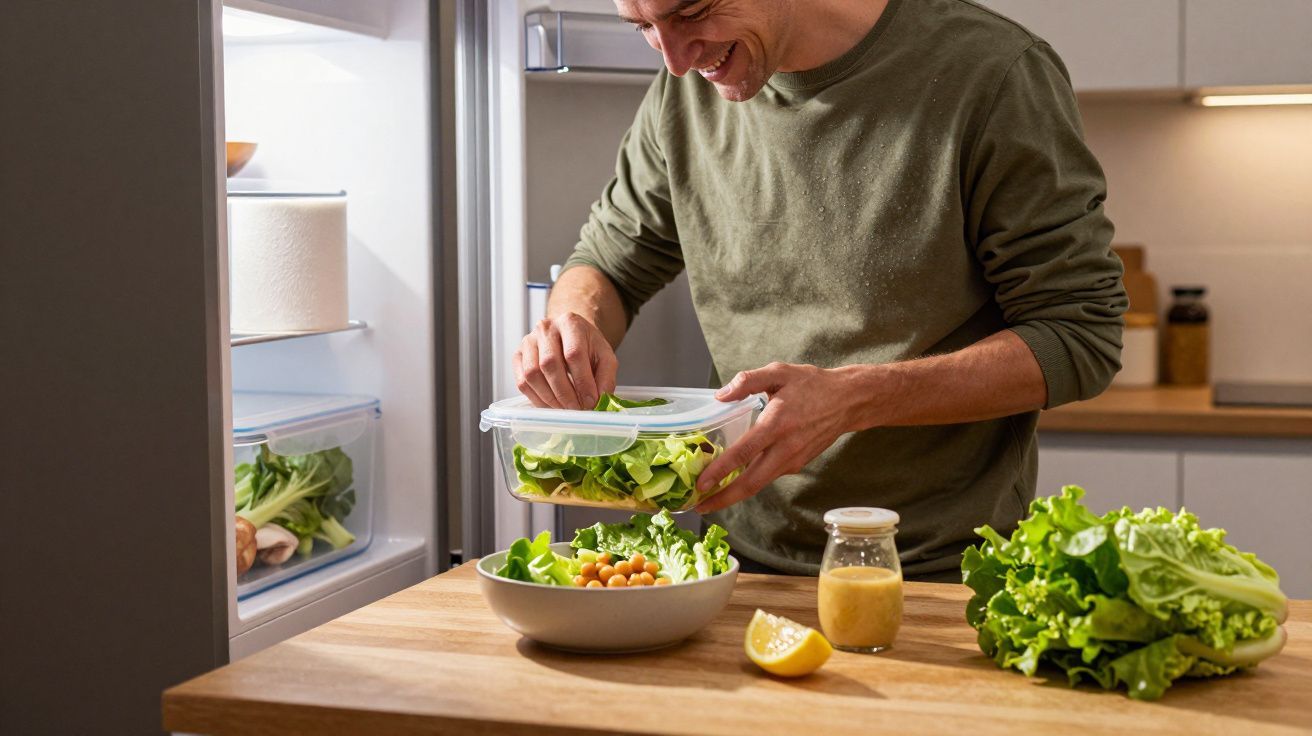
- Store in a container lined with kitchen roll (swap it if it gets damp).
- Keep it visible at eye level, not buried under jars.
If you buy bagged leaves, open the bag as soon as you get home. Trapped condensation is the fast lane to slime.
The 60-second “make it feel like dinner” trick
Lettuce shines when you stop treating it as a side and start using it as structure. You’re not just adding greens; you’re building a base that carries flavour.
Keep a few “fast toppers” around:
- A protein: tinned tuna, boiled eggs, leftover chicken, chickpeas.
- A crunch: seeds, croutons, crushed crisps, toasted nuts.
- A sharp thing: pickles, capers, lemon, vinaigrette.
- A creamy thing: yoghurt dressing, tahini, avocado, feta.
Put them on lettuce and it becomes a meal, not a gesture.
How lettuce changes eating habits over time
It makes the better choice the default
If lettuce is already in the fridge and usable, it becomes the automatic companion to everything: a handful with a toasted sandwich, a bed under reheated leftovers, a quick chopped salad beside pasta. That’s where the “big difference” comes from - not a health kick, but a quiet shift in what your normal looks like.
And because it’s mild, lettuce lets stronger flavours feel more balanced. Spicy chicken, salty halloumi, rich mayo-based fillings: they all taste better against something cool and crisp.
The long game isn’t perfect meals. It’s reducing the number of times you say, “There’s nothing in.”
It reduces waste in a surprisingly practical way
Lettuce is also a bridge ingredient. It helps you use small bits of other food - half a pepper, a few olives, leftover roast veg - because a bowl needs less commitment than a “proper recipe”.
That changes your kitchen economics. Fewer abandoned leftovers. Fewer emergency takeaways. Less money spent solving the same hunger twice.
A few lettuce habits worth stealing
- Keep one “everyday dressing” in the fridge (mustard + oil + vinegar + salt works with almost anything).
- Chop cos or iceberg once and store it dry; it’s faster to use when it’s already prepped.
- Use large leaves as wraps when you can’t face bread but still want something handheld.
- If your lettuce is slightly tired, revive it in cold water for 10 minutes, then dry well.
Mini guide: match the lettuce to the moment
| Moment | Best lettuce | Why it works |
|---|---|---|
| Sandwiches & burgers | Iceberg | Maximum crunch, stays crisp |
| Quick lunch bowls | Cos/Romaine | Sturdy, satisfying texture |
| Soft, gentle salads | Butterhead | Tender, sweet, delicate |
FAQ:
- Is lettuce actually “worth it” nutritionally? Yes, but its biggest value for most people is behavioural: it adds volume and crunch, making meals feel complete with less effort.
- How do I stop lettuce going slimy? Keep it dry and ventilated: open bags, line containers with kitchen roll, and avoid storing wet leaves.
- Which lettuce is best if I only buy one? Cos/Romaine is the most versatile: it works in salads, holds dressing, and can be used as a wrap.




Comments
No comments yet. Be the first to comment!
Leave a Comment