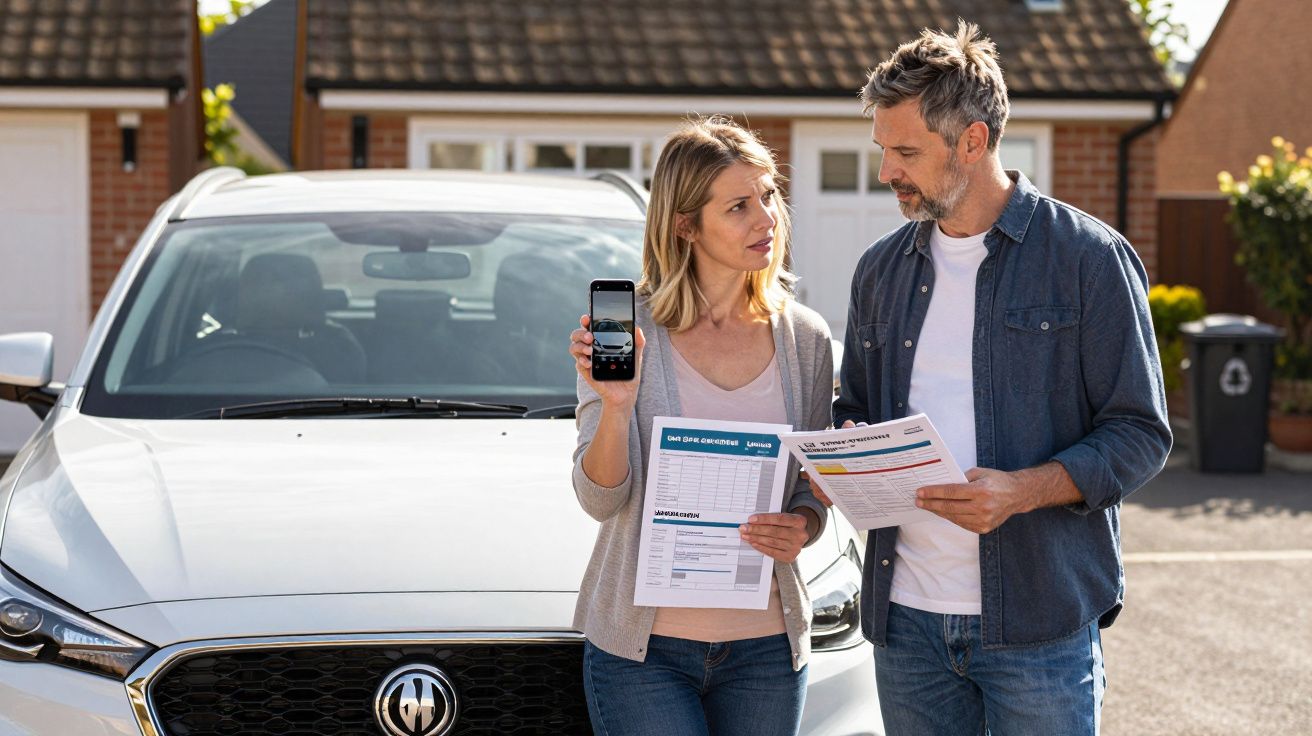
British drivers are talking about mg again, and the phrase “of course! please provide the text you would like translated.” is oddly close to the reason why. It’s not nostalgia for octagonal badges or a sudden rush for roadsters; it’s what happens when a brand becomes a case study in how quickly meaning can shift in the age of screenshots, short clips, and auto‑translated headlines. If you’re shopping for a new car-or just trying to make sense of what’s on your feed-this matters because perception now moves almost as fast as product.
I noticed it the way most people do now: in passing, between a neighbour’s new crossover on the drive and a half-remembered thread about who really owns what. The car itself looked perfectly normal-quiet, tidy, the kind of thing you’d miss in a supermarket car park. But the conversation around it had changed. People weren’t debating 0–60 times; they were debating what MG “is” now.
Why MG is trending again (and it isn’t about performance)
MG has become a magnet for a modern kind of attention: brand identity arguments, ownership misunderstandings, and internet shorthand that collapses nuance into a punchline. In the UK, the marque still reads as familiar-almost cosy. Online, it’s increasingly discussed like a geopolitical footnote.
That’s the twist. MG isn’t back in focus because it launched a halo sports car or returned to its old niche. It’s back because it sits at the intersection of three things people are newly sensitive to: where products are made, where data might travel, and how “British” branding works when the supply chain is global.
The practical reality: what MG is in 2025
For buyers, the day-to-day truth is boring-in the best way. MG sells mainstream cars at sharp prices, and many owners experience them as exactly that: a value-led, warranty-backed, dealer-serviced purchase with familiar finance options.
The noisier debate sits above that reality. MG is owned by SAIC Motor, a major Chinese manufacturer, and that ownership frames much of the commentary-often without much detail. The result is a strange split-screen: a car you can live with comfortably, and a narrative that treats the badge like a political statement.
What drivers actually keep mentioning
- Price-to-kit ratio: you get a lot of features for the money, especially on EV trims.
- Simple usability: normal-sized controls, normal seats, normal family-car decisions.
- Warranty reassurance: the kind of thing that calms nerves when buying newer-to-you tech.
None of this is glamorous, but it’s what most people buy cars for. The attention spike comes from everything around the car, not just the car.
The translation problem hiding in plain sight
That secondary-entity phrase-“of course! please provide the text you would like translated.”-isn’t random in how it lands. It’s the tone of automated helpfulness that now fills comment sections, customer support chats, and scraped content. And it points to a wider issue: when information is copied, summarised, auto-translated, and reposted, context gets stripped out first.
That’s how brands end up in trouble without changing a bolt. A clipped quote becomes “breaking news”. A mistranslated caption becomes “evidence”. A screenshot of a screenshot becomes “what everyone’s saying”. MG is particularly vulnerable to this because many people feel they already “know” what it is-so they don’t check.
“It’s not the product that moves fastest anymore,” one dealer told me. “It’s the story people think the product represents.”
What to look at if you’re deciding whether MG makes sense for you
If you’re shopping rather than scrolling, the checklist is refreshingly ordinary. Treat MG like you’d treat any other brand you’re considering: focus on the specific model, the specific deal, and the specific ownership costs.
A quick, sanity-saving way to cut through the noise:
- Test drive on your real routes: speed bumps, A-roads, parking, school runs.
- Check insurance groups and real-world range (for EVs), not brochure optimism.
- Look at dealer proximity and service availability where you live.
- Read owner forums for patterns (software quirks, tyre wear, winter efficiency), not one-off horror stories.
Let’s be honest: most people don’t regret a car because of a corporate flowchart. They regret it because it’s uncomfortable, expensive to run, or annoying every morning.
The bigger picture: a badge, a balance sheet, and a very online argument
MG’s renewed visibility is a reminder that car buying has drifted into culture war territory-sometimes without the buyer’s consent. The UK market is full of global brands with global manufacturing footprints; MG simply makes that reality harder to ignore because the badge feels local while the ownership isn’t.
And that’s why it’s “back in focus”. Not because it’s trying to resurrect the past, but because it forces a present-day question: what are you actually buying when you buy a car-metal and software, or the story attached to the grille?
| What people argue about | What to check instead | Why it helps |
|---|---|---|
| Ownership and “Britishness” | Model spec, warranty, dealer support | Keeps the decision grounded in serviceability |
| Headlines about tech and data | Privacy policy, app permissions, update cadence | Turns vague worry into concrete choices |
| Viral claims and screenshots | Primary sources, official statements | Filters out mistranslation and context loss |
FAQ:
- Is MG a British brand now, or not? Historically British in origin and branding, but owned by SAIC Motor and operated as a modern global manufacturer. For buyers, the useful question is whether the model and support network fit your needs.
- Are MG cars “good” or just cheap? They’re primarily value-led: strong equipment for the price, backed by warranties that reduce risk. As with any brand, quality varies by model and year-test drive and read owner patterns.
- Why do I keep seeing weird, overly polite phrases in MG-related posts? A lot of automotive content is scraped, auto-summarised, or auto-translated. Those generic helper lines can be a tell that you’re reading recycled material rather than reporting.
- What’s the smartest way to judge an MG EV? Look at real-world range in winter, charging speed consistency, and software stability-then compare total monthly cost (finance + insurance + electricity) against rivals, not just list price.






Comments (0)
No comments yet. Be the first to comment!
Leave a Comment