
Wedding dress fittings sound like the calm, organised part of planning - a private appointment, a few pins, a mirror, and a happy tear. But they often deliver a sharp reality check: the moment you realise the dress isn’t just “your size”, it’s a project with a timeline, a budget, and a body that keeps being a body.
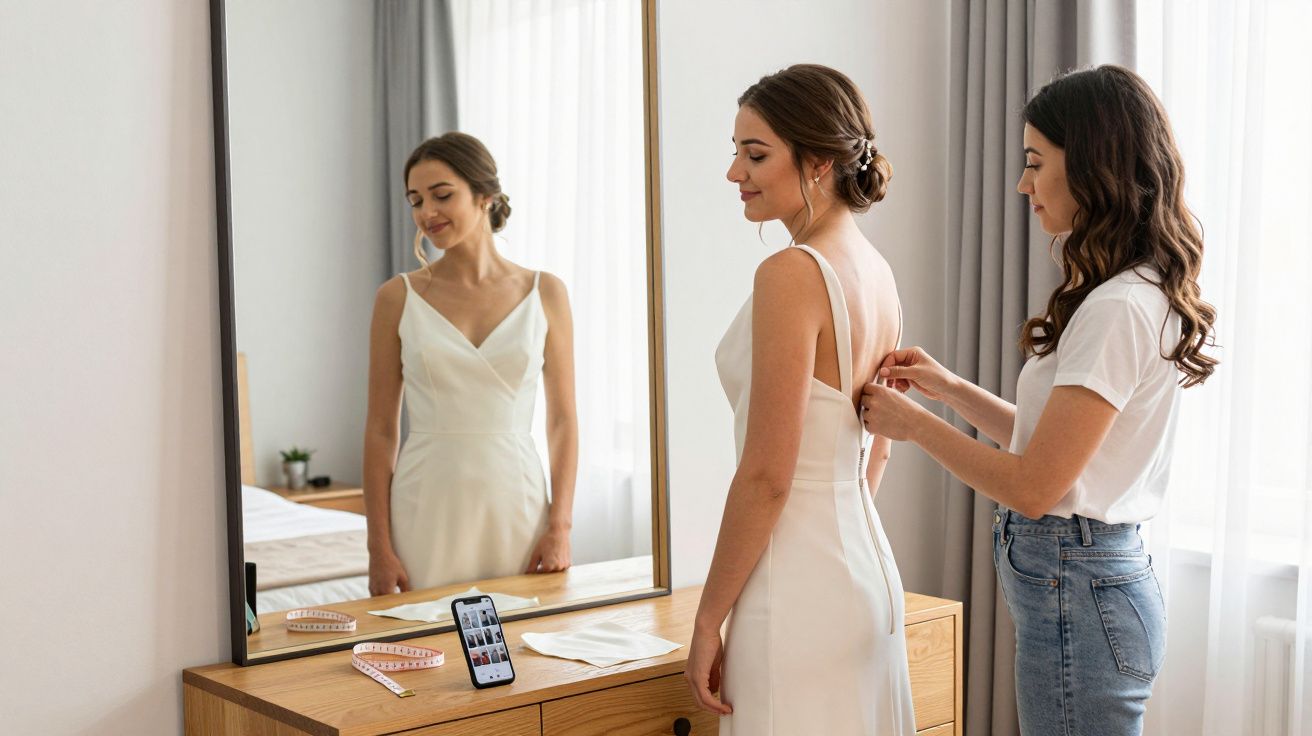
The fitting room light is honest in a way your phone camera never is. The seamstress is kind, efficient, and holding a mouthful of pins like a magician. And you, suddenly, are trying to breathe normally while someone tugs fabric into the shape you hoped would happen effortlessly.
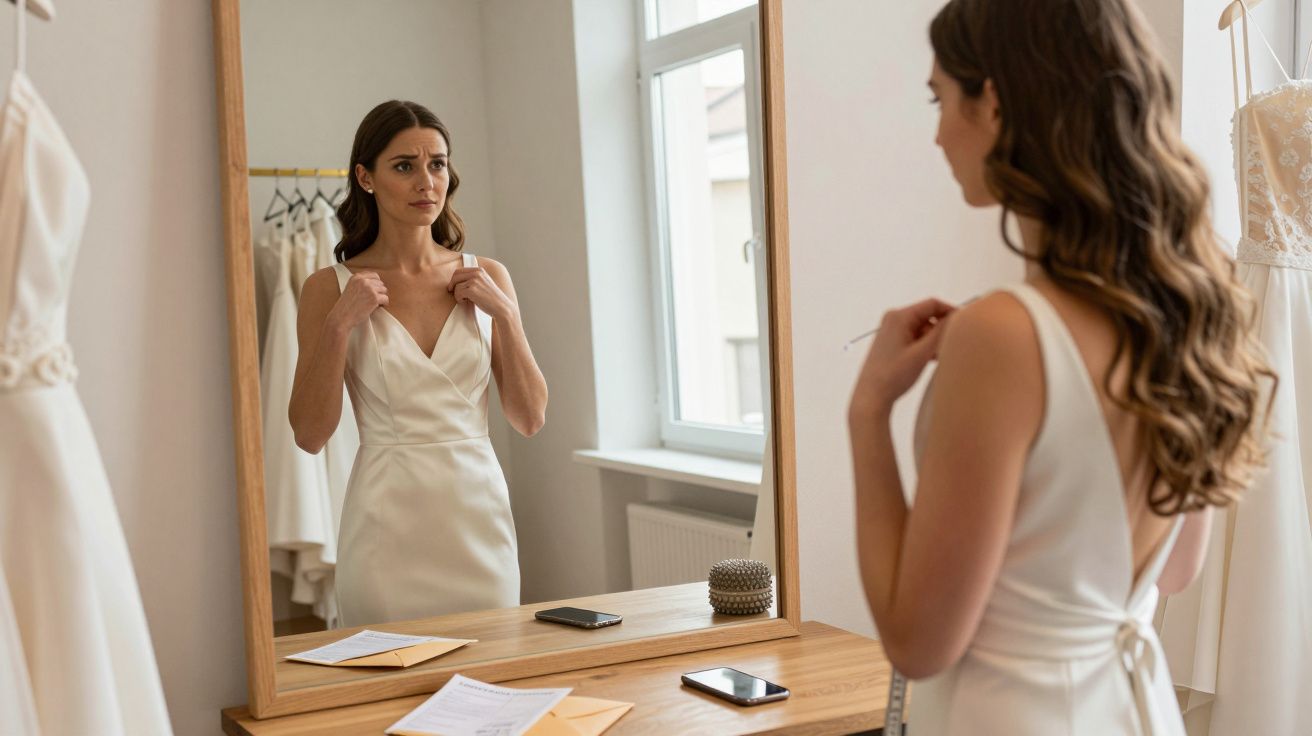
The moment nobody warns you about isn’t the first look. It’s the first pinning.
The fitting moment that catches brides off guard
It usually happens at the first alterations appointment, not the boutique try-on. You step into the gown, it goes up, and for a second you think, Oh good, it fits. Then the mirror turns, the fabric settles, and the seamstress starts folding, clipping, chalking.
That’s when it lands: a “perfect fit” is built, not found.
A lot of brides expect wedding dress fittings to confirm they chose correctly. Instead, the first fitting often reveals where the dress is supposed to sit versus where it sits on a normal Tuesday posture, with a normal lunch in your stomach, in normal underwear that isn’t the final lingerie. It’s not failure. It’s physics.
The reality check is especially loud if you’ve been imagining the dress as a fixed object. In fittings, it behaves more like a draft.
Why it feels so emotional (even when nothing is “wrong”)
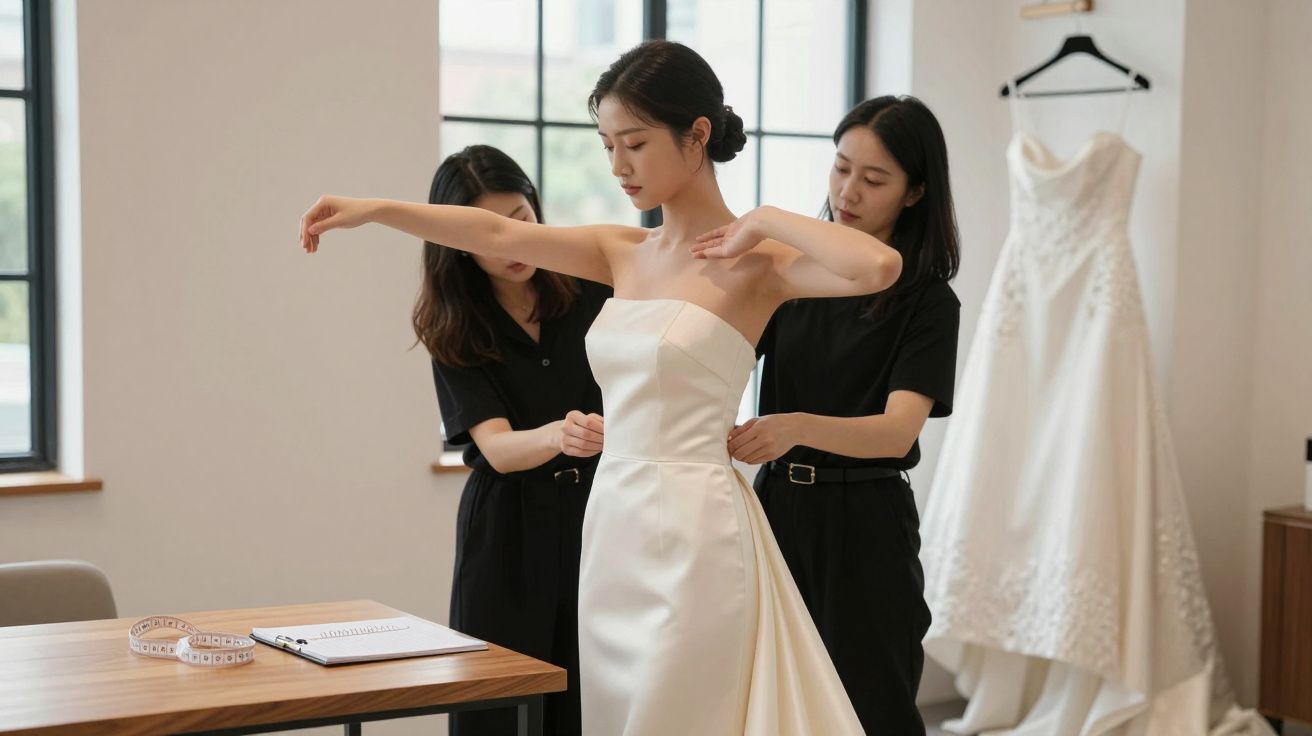
Fittings are intimate in a strangely unromantic way. You’re half-dressed, under bright lights, while someone measures your ribcage and asks you to relax your shoulders - which is impossible, because you are thinking about shoulders.
There’s also the whiplash between the fantasy and the process. Online, dresses zip up, everyone cheers, and the moment freezes. In real life, the zipper can stick, the bodice can gap when you exhale, and the hem is definitely wrong because you’re not in the shoes yet.
And then there’s the language. “We’ll take it in here.” “We’ll let it out if there’s seam allowance.” “We’ll build a bustle.” It can sound like your dress is being corrected, when actually it’s being customised to you.
“A fitting isn’t a judgement. It’s a construction site,” one seamstress told me. “Pins are just placeholders for the final version.”
What’s actually happening in that first pinning
Most gowns arrive made to a standard size chart, not your exact proportions. Even made-to-order dresses are cut for a range, because bodies are not static and fabric behaves differently once it’s hanging.
In a typical first alterations appointment, the focus is more structural than aesthetic:
- Bodice placement: where the waist seam or boning should sit on your torso, not the mannequin’s.
- Support: cups, straps, or internal corsetry adjustments so you’re not relying on “standing perfectly” all day.
- Balance: the dress can pull forward or back depending on bust, hips, and posture.
- Hem planning: marked to the right height in your wedding shoes, on the right surface, with the right underlayers.
The pinning can look brutal because it’s temporary and exaggerated. Fabric gets folded into sharp lines so it can be measured, mirrored, and replicated in stitches later. It’s meant to look a bit odd mid-process.
The common mistakes that make this moment harder than it needs to be
The loud mistakes aren’t about taste. They’re about timing and assumptions.
- Bringing the wrong shoes (or no shoes). Heel height changes everything: hem, posture, even how the bodice feels.
- Wearing “random” underwear. If your bra will not be worn on the day, don’t let it influence the fit now.
- Treating weight change like a plan. “I’ll just lose a bit” turns fittings into a moving target and adds stress to a week that doesn’t need it.
- Expecting the sample-shop feeling. Boutique clips create a silhouette fast. Alterations create it slowly, and that’s normal.
- Not practising sitting, walking, lifting arms. A dress can look right and behave wrong, especially with sleeves, straps, or a fitted skirt.
Let’s be honest: most brides arrive trying to be “low maintenance” about it, then realise the dress requires decisions. The fitting is where those decisions show up.
How to walk into wedding dress fittings with calmer expectations
Think of your first fitting as an information-gathering appointment, not the final reveal. You’re there to learn what the dress needs to become wearable for hours, across hugs, photos, dinner, and the loo.
A simple approach that helps:
- Bring your day-of shoes and your best approximation of day-of underwear. Not perfect, just consistent.
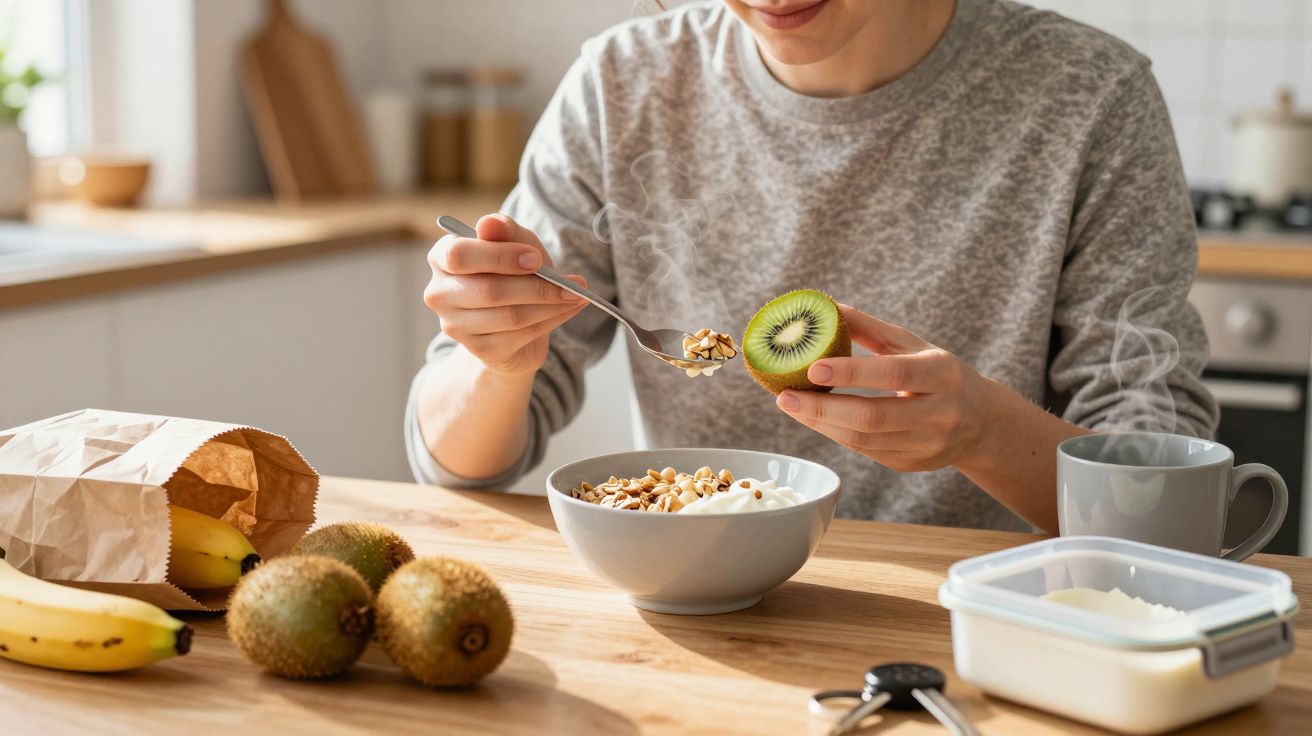
- Eat normally. You’re fitting a dress for a long day, not a ten-minute standing session.
- Ask what is “possible” versus “recommended”. A change can be technically doable and still a bad idea for comfort or drape.
- Check movement on purpose. Sit, step, raise your arms, take a deep breath, and notice what pulls.
- Get clarity on the plan. What will change at this fitting, what will be left for the next, and what you should not worry about yet.
If you leave with chalk marks and a list of next steps, that’s success. It means the dress is being built for your actual life, not just a photo.
A quick “reality check” list for that mirror moment
If you feel panicky in the first pinning, run through these before you decide anything dramatic:
- Is this pinned, not sewn?
- Am I wearing the right foundations and shoes?
- Have we marked the hem yet, or is it just pooling?
- Am I standing stiffly because I’m nervous?
- Have I seen the back and the side, not just the front?
Often the dress isn’t wrong. You’re just seeing it in its unfinished stage, under conditions that magnify every thought.
| What you’re seeing | What it usually means | What to do |
|---|---|---|
| Wrinkles and odd folds at the waist | Temporary pinning and balance adjustments | Wait until seams are sewn before judging |
| Hem looks “too long everywhere” | Shoes/underskirt not accounted for yet | Mark hem in wedding shoes |
| Bodice feels tight when you breathe | Support/placement not final | Ask about boning, cups, and ease |
FAQ:
- How many wedding dress fittings do most brides need? Commonly two to three: an initial alterations fitting, a follow-up to refine, and a final pick-up/check. Complex gowns may need more.
- Should I try to lose weight before my fittings? It’s better to fit the body you’ll reliably have. If changes are likely, tell the seamstress early so they can plan the order of alterations.
- Why does it look worse pinned than clipped in the shop? Clips create a quick silhouette from the outside. Pinning is a measured, temporary step towards permanent seams and internal support.
- What should I bring to the fitting? Wedding shoes, underwear/shapewear you’ll wear on the day (or closest equivalent), and any accessories that affect the neckline or straps.
- When will it finally feel like “my dress”? Often at the second fitting, once key seams are sewn and the bodice support is in. The first fitting is usually the most confronting.


Comments (0)
No comments yet. Be the first to comment!
Leave a Comment