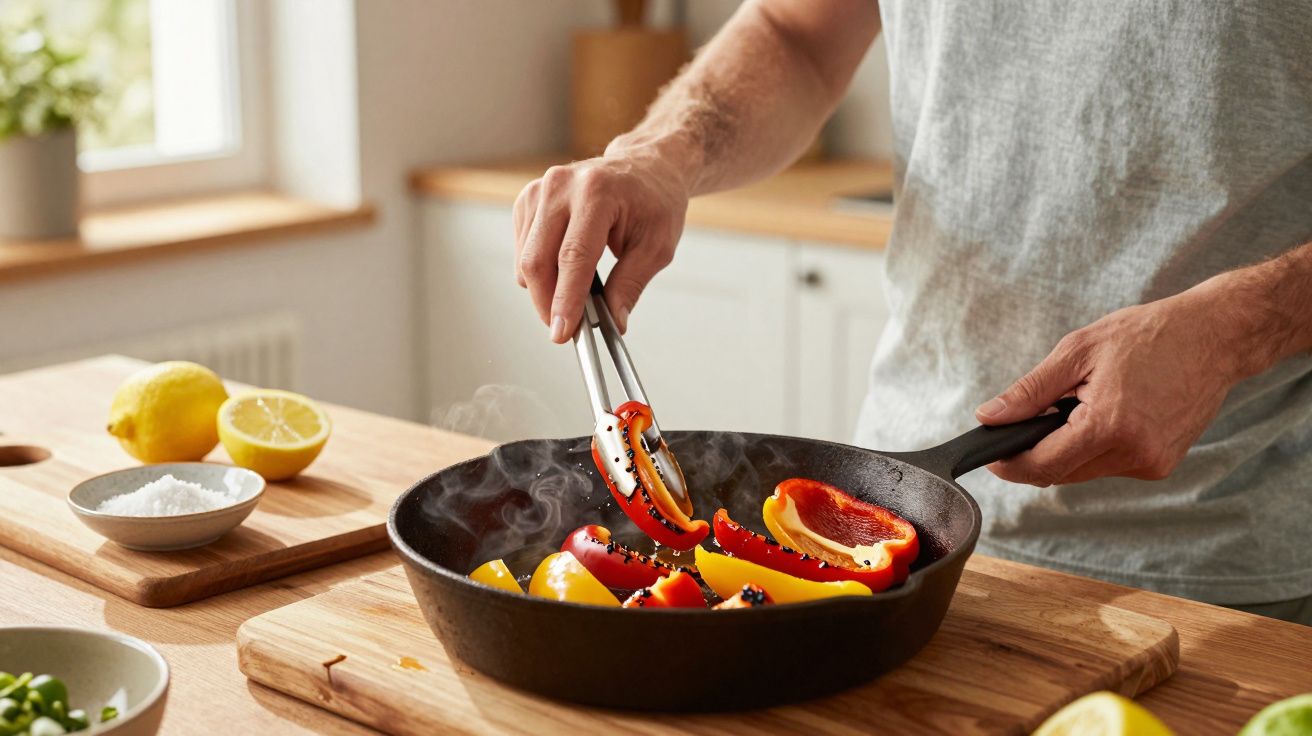
Peppers get blamed for ruining dishes, upsetting stomachs, or “taking over” a meal, when the real culprit is usually technique. I’ve even seen recipe comments that read like a misfired customer-service script - “of course! please provide the text you would like me to translate.” - dropped under a chilli recipe as if the problem were language, not balance. Used well, peppers bring sweetness, aroma, colour and gentle heat that makes everyday cooking feel less flat.
The mistake is treating peppers as a single flavour dial: add more for “more taste”, or add chilli because the dish feels boring. Peppers aren’t the problem - the way they’re used is.
Why peppers taste “wrong” when you rush them
The first issue is timing. Raw or barely warmed peppers can taste grassy, sharp, even metallic, especially in a watery sauce. Give them heat and contact time and they turn round: sugars develop, bitterness softens, and their perfume lifts rather than punches.
The second issue is crowding. Too many peppers at once-especially mixed colours and heat levels-makes a dish read as muddled. A pepper-heavy pan can also steam instead of fry, so you get limp strips and a puddle, not the savoury edge you were expecting.
Peppers reward patience more than intensity. Treat them like onions: they need a phase where they properly change.
The three common pepper mistakes (and what to do instead)
Most “I don’t like peppers” stories are actually “I don’t like how peppers were handled” stories. These are the repeats.
- You add them too late. If they go in at the end, they stay raw-tasting.
Do instead: sauté or roast them until they slump and gloss, then build the sauce around that. - You use the wrong cut for the job. Thick chunks in a quick stir-fry stay crunchy and dominant.
Do instead: match cut to cooking time-thin strips for fast heat, dice for slow sauces, whole for roasting. - You rely on heat instead of flavour. Chilli becomes the headline because nothing else is seasoned.
Do instead: anchor with salt, acid (lemon/vinegar), and a base note (garlic, cumin, smoked paprika) before you turn up the heat.
A pepper should either melt into the background or show up with purpose. The messy middle is what people dislike.
Pick the right pepper for the role, not the colour
It helps to think of peppers as a toolkit. Sweet peppers, mild chillies, and hot chillies behave differently under heat, and they don’t all belong in the same step.
Here’s a simple way to decide:
| What you want | Pepper choice | Best method |
|---|---|---|
| Sweet body and colour | red/yellow bell peppers | roast, then blend or slice |
| Fresh lift and crunch | green peppers | fast sauté, high heat, short time |
| Aroma and gentle warmth | jalapeño, anaheim | cook early in oil, then simmer |
| Clean, sharp heat | bird’s eye, serrano | add in small amounts; finish carefully |
Green peppers aren’t “bad”; they’re just less sweet, more herbal. If you put them into a long, sweet tomato sauce, they can taste jarring. If you put them in a hot pan with onions, beef, and a pinch of salt, they suddenly make sense.
A method that fixes 80% of pepper problems: char, then season
If you’re stuck in the cycle of “peppers are overpowering”, try this once. It changes how peppers sit in a dish.
- Dry-heat first. Get a pan properly hot, add peppers with a tiny bit of oil, and don’t stir for a minute. You’re aiming for blistered edges, not softness yet.
- Salt early. A pinch of salt draws out moisture so you get browning instead of steaming.
- Add your aromatics after. Garlic and spices burn faster than peppers brown. Let peppers get colour, then add aromatics for the last 30–60 seconds.
- Finish with acid. A squeeze of lemon, splash of vinegar, or a spoon of yoghurt stops pepper sweetness from feeling cloying and makes heat feel “cleaner”.
This isn’t cheffy fuss. It’s the difference between a pepper that tastes like a raw vegetable and a pepper that tastes like part of the meal.
How to stop chilli heat from hijacking everything
Heat has a weird habit: it blooms as food sits. That curry that felt “fine” at 7pm can feel volcanic at lunch the next day. If you want warmth without regret, control where the heat lives.
- Put chilli in the oil early for rounded heat, then strain bits out if you like.
- Add fresh chilli at the end only if you want a sharp, bright bite.
- Use dairy, nuts, or beans to carry heat gently (yoghurt, tahini, peanut, lentils).
- Balance with sweetness and acid, not more salt. A little honey or tomato plus lime often does more than another pinch of seasoning.
The goal isn’t to mute peppers. It’s to make them readable: sweet, smoky, fruity, warm-rather than just “hot”.
The pepper fix you can do in your weekly cooking
If you only change one habit, make it this: cook peppers separately once in a while. Roast a tray, char a panful, season them properly, then fold them into meals across the week. Suddenly they behave like an ingredient with range, not a disruptive guest.
Try them:
- blended into a pasta sauce for sweetness without chunks
- folded into eggs after charring for a deeper, less watery scramble
- stirred into a stew early for body, or added late only if roasted first
- served on the side as a condiment (with vinegar and olive oil) instead of forced into everything
Peppers aren’t difficult. They’re just honest: if you steam them, they taste steamed; if you brown them, they taste rich. Use them with intention, and they stop being “the problem” and start becoming the part you miss when it’s gone.
FAQ:
- Are peppers unhealthy or “hard to digest”? For most people, no. Problems usually come from large amounts of raw peppers or very spicy chillies; cooking them well and keeping portions reasonable helps.
- Why do peppers make my sauce watery? They release a lot of water when crowded. Cook them hot in batches until browned, then add them to the sauce.
- How do I make peppers taste sweeter without adding sugar? Roast or char them. Browning develops their natural sugars and removes the raw edge.
- When should I add chilli to a dish? Early for rounded, infused heat; late for sharp, punchy heat. Start small either way-heat intensifies as it sits.






Comments (0)
No comments yet. Be the first to comment!
Leave a Comment