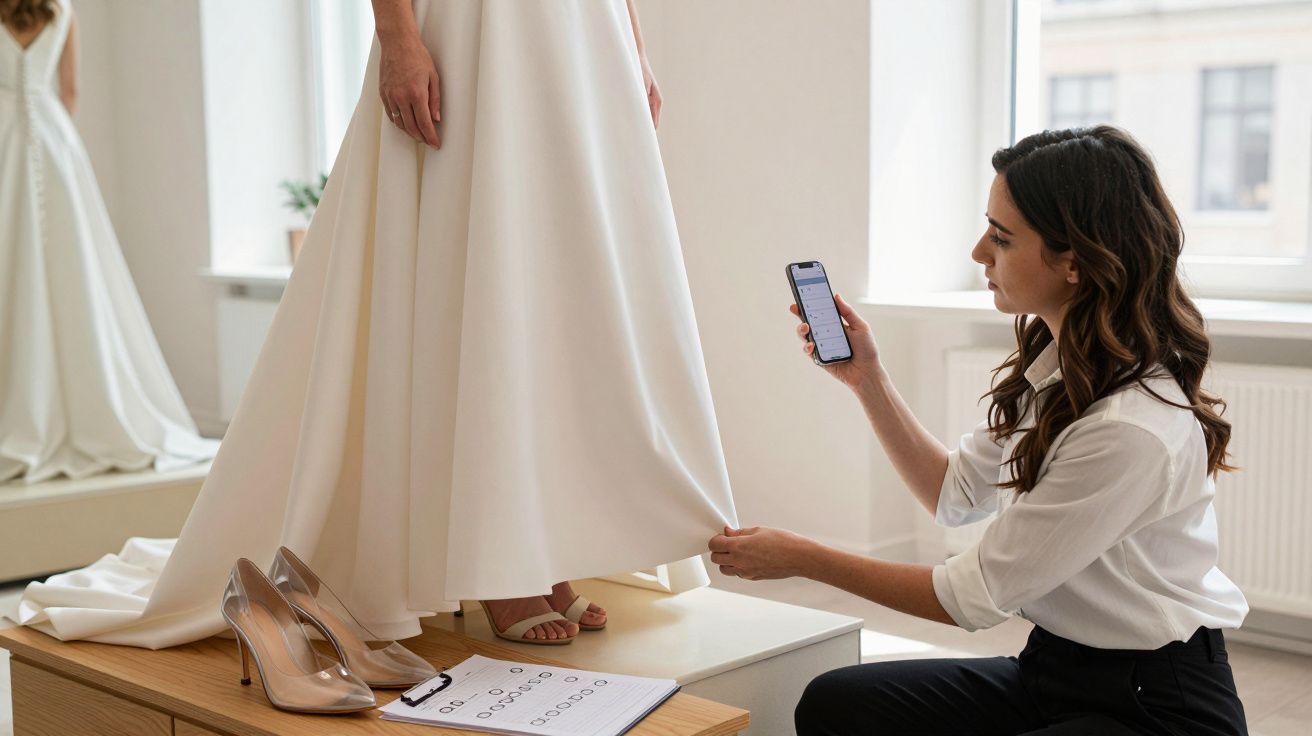
You can have the wedding dress timeline in a spreadsheet and still feel that tight, fizzy planning anxiety in your chest when someone says, “So… when are your fittings?” Bridal alterations aren’t hard, exactly. They’re just oddly invisible until you’re the one trying to book a seamstress, lose or gain half a stone, and remember you also need shoes.
Most advice is either too vague (“start early!”) or too rigid (“8 weeks, no exceptions”). The reality is softer and more practical: a few key appointments, some waiting time, and one calm decision-get the fittings in the diary before you need them.
Why the alteration timeline feels confusing (and why it doesn’t need to)
Alterations live in the gap between how dresses are made and how bodies actually are. Bridal sizing runs different, fabrics behave differently, and most gowns arrive closer to “nearly” than “ready”. Add busy studios, peak season, and a dress that might need hemming, bust work, and bustle points, and suddenly you’re juggling lead times you didn’t know existed.
The secret isn’t rushing. It’s treating alterations like a mini-project with checkpoints, the way you’d do venue payments or notice periods. Once the dates are set, your brain stops spinning quite so much.
The only timeline that matters: order date → arrival → fittings → collection
Think in four stages. Each has a job, and if you do the job at the right stage, you avoid the classic late panic.
1) Right after you order: reserve your seamstress
This is the bit nobody tells you loudly enough. You don’t need your dress in hand to book alterations; you need your wedding date and your dress designer (or at least the style).
- If your boutique has an in-house seamstress, ask when they want you to book.
- If you’re going independent, message two or three specialists and reserve a fitting window.
- Ask what they need from you: photos, measurements, a copy of the order, heel height.
Peak months (late spring to early autumn) fill up fast. Booking early isn’t overkill-it’s how you stop playing calendar roulette later.
2) When the dress arrives: do a calm “baseline try-on”
When the call comes-“your dress is in”-it’s tempting to treat it like a final reveal. Try to think of it as data. You’re checking what’s true, not judging your body or the dress.
At this point you’re looking for the big categories:
- Length: will it need a hem, a horsehair braid adjustment, or just a press?
- Bodice: does it sit flush at the bust and waist, or gape/pinch?
- Straps/sleeves: are they secure, comfortable, and symmetrical?
- Back/closures: zip, buttons, corset-any strain or wrinkling?
Take quick photos (front/side/back) in good light. Those pictures save a surprising amount of “was it always like that?” later.
A clear fitting schedule that works for most brides
Here’s the rhythm most bridal alteration studios use, even if they describe it in different words.
First fitting (usually 8–12 weeks before)
This is the “pin and plan” appointment. It’s where the seamstress decides what’s possible, what’s sensible, and what order to do things in. Expect pinning at the bodice, marking the hem, and talking through any redesign ideas (adding straps, raising a neckline, changing a back).
Bring: - Your wedding shoes (or a pair with the exact heel height) - The bra/shapewear you’ll actually wear - Any accessories that affect fit (straps, sleeves, belt)
If you’re still deciding shoes, choose them now. Hem decisions are heel decisions in disguise.
Second fitting (usually 4–6 weeks before)
This is the “make it real” appointment. The dress should start feeling like yours: the bodice secure, the hem close, the shape intentional rather than pinned.
This is also when bustle options (how the train is hooked up for dancing) get tested properly. Move around. Sit down. Lift your arms. Do a small spin. Dresses behave differently in motion, and you want to learn that in a studio, not on your day.
Final fitting / collection (usually 1–2 weeks before)
This is for tiny tweaks, reassurance, and handover. You’re checking comfort and finish: no scratchy seams, no slipping straps, no last-minute panic about breathing.
Try not to schedule this too early. Bodies fluctuate, and the last fortnight is where small changes show up.
“The goal isn’t perfection under a spotlight,” a seamstress once told me. “It’s confidence in real life-walking, hugging, eating, dancing.”
The three things that blow up a bridal timeline (and how to avoid them)
1) Waiting for “goal weight” before booking
Alterations can accommodate changes, but calendar gaps can’t. Book the fittings, then let your seamstress advise the best moment to take in key seams.
If your weight is actively changing, say it plainly. A good studio will plan for it without judgement, sometimes leaving certain seams until later.
2) Bringing different underwear to each fitting
It’s more common than you’d think. A different bra changes bust height; different shapewear changes hip and waist lines; even nipple covers versus a bra can change how the bodice sits.
Pick your foundations early and keep them consistent.
3) Adding “just one more thing” late on
Buttons down the train, custom sleeves, major re-shaping, beading changes-these are all doable, but they’re not “quick”. If you want design changes, raise them at the first fitting so the work can be staged.
A timeline you can screenshot
Use this as a flexible template, not a moral code.
- When you order: book alteration slots (even if tentative)
- Dress arrival: baseline try-on + photos, confirm fitting dates
- 8–12 weeks before: first fitting (plan + pin)
- 4–6 weeks before: second fitting (refine + bustle practice)
- 1–2 weeks before: final fitting/collection (comfort + finish)
If your wedding is sooner, you can compress it. If your dress is complex, you may add a third fitting in the middle. The point is having a sequence.
How to calm planning anxiety without pretending you’re chill
Bridal admin has a special way of making you feel behind, even when you aren’t. A small trick that helps: turn the timeline into two questions you can answer today.
- What is my next appointment date? If you don’t have one, that’s the task.
- What do I need to bring to it? Shoes, underwear, and one trusted person who won’t narrate panic.
Treat it like a gentle routine. Book, prepare, attend, repeat. The dress will meet you there.
| Milestone | Aim | What you decide |
|---|---|---|
| First fitting | Structure | What needs altering, and in what order |
| Second fitting | Movement | Comfort, shape, and bustle choice |
| Final fitting | Confidence | Tiny tweaks + take-home plan |
FAQ:
- When should I start alterations if I bought off-the-peg? Usually sooner. As a rule, aim for a first fitting around 6–10 weeks before, because you’re not waiting on delivery lead times and you may need more “make it fit” work.
- Do I need my actual wedding shoes? Ideally yes. If you can’t, bring a pair with the same heel height and commit to that height for the day.
- What if I’m pregnant or my weight is changing? Tell your seamstress early. They can schedule fittings closer to the date and delay certain final seams so you’re not paying for repeated rework.
- How many fittings are normal? Two to three is common. Simple hems may be fewer; major bodice changes, lace work, or custom additions may need more.
- Should I steam the dress before the final fitting? Don’t do it unless the studio asks. Let the seamstress assess the fabric as-is; pressing and steaming often happens at the end of the process.


Comments
No comments yet. Be the first to comment!
Leave a Comment