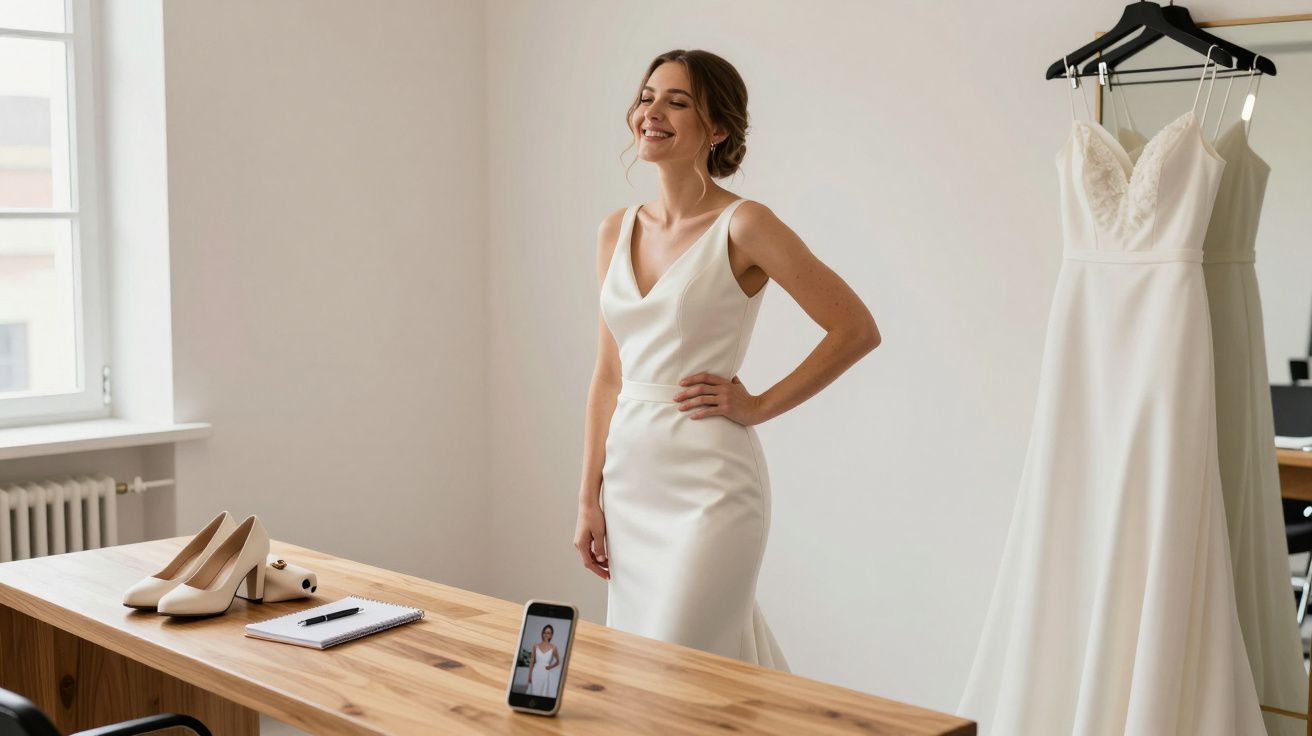
The week before a wedding can feel like living inside a browser tab that never stops refreshing: opinions, fittings, invoices, timelines. Somewhere in that swirl sits the final choice of wedding dress, and with it the possibility of emotional closure-because one clear decision can quiet dozens of smaller ones. In practice, it’s the moment you stop auditioning versions of yourself and start preparing to show up as you are.
I remember a bride standing in a salon doorway with her shoes in a bag and her hair half pinned, smiling politely at her own reflection as if it belonged to someone else. “I thought I’d feel fireworks,” she said, “but I mostly feel… tired.” That tiredness is often the real signal: you don’t need more dresses, you need a decision that lets your mind go still.
The moment the dress stops being a search
Most people think they’re choosing fabric and silhouette. What they’re actually choosing is an ending: the point where the dress hunt becomes a plan. The right dress doesn’t necessarily look dramatic on the hanger; it behaves well under real conditions-movement, light, photos, weather, family dynamics, budget reality.
The shift happens when questions stop multiplying. You stop asking “Could there be better?” and start asking “Can I live in this for twelve hours and feel like myself?” That’s not settling. That’s clarity.
Peace of mind doesn’t arrive when you find a perfect dress. It arrives when you stop needing a perfect one.
What “emotional closure” looks like in a fitting room
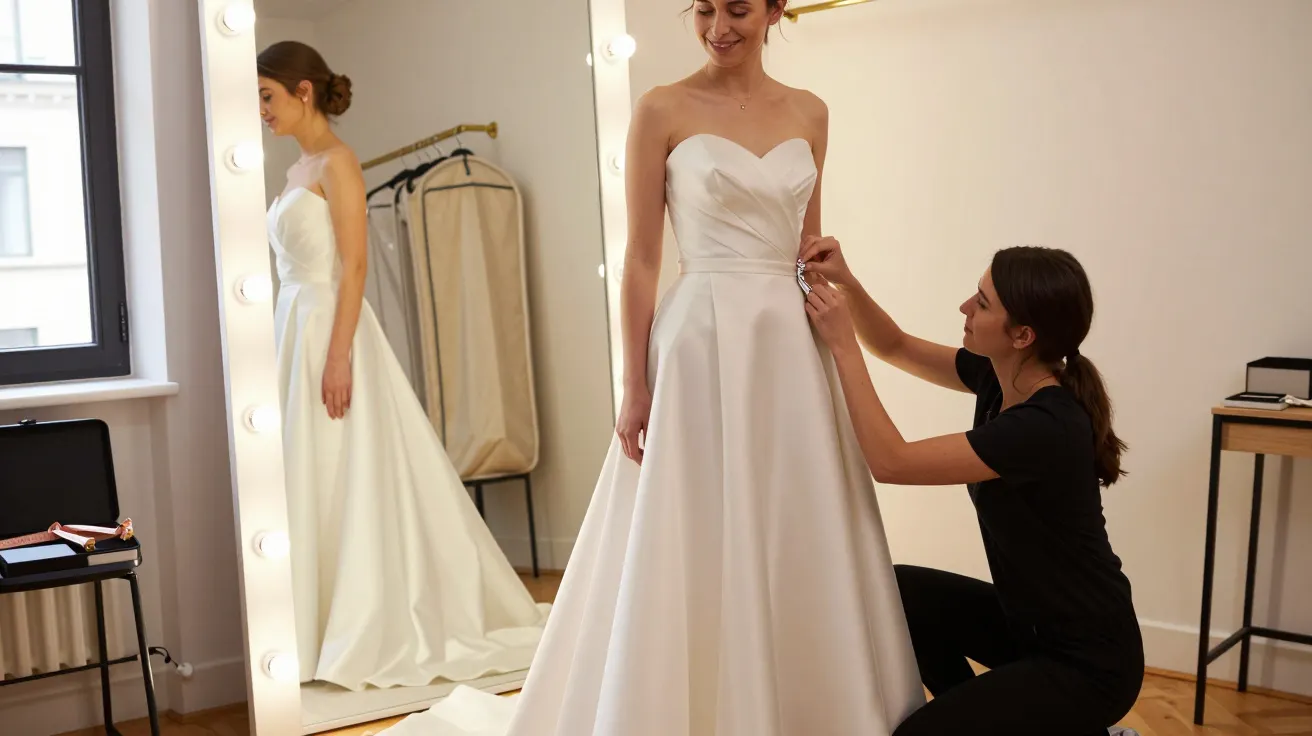
Emotional closure in bridal shopping is rarely cinematic. It’s often practical, almost quiet. You notice you’re no longer bracing your shoulders. You stop adjusting the bodice every thirty seconds. You can imagine the ceremony without immediately imagining what you’ll hate about the photos.
Common signs you’re close:
- You keep comparing other dresses to one specific dress, not the other way round.
- You can describe how you want to feel, and the dress matches that feeling.
- Your body language relaxes instead of performing for the mirror.
- The “what if” thoughts soften into logistics (veil, shoes, hem, transport).
It’s also normal to feel a flicker of grief. Choosing one dress means letting go of other beautiful possibilities: the sleek one, the princess one, the “my mum loves it” one. Closure contains a tiny goodbye.
How to make the final choice without second-guessing yourself
The decision becomes easier when you treat it like a small system rather than a mood. You’re not trying to predict your feelings for the next six months; you’re trying to reduce risk and increase confidence.
A simple write–wear–confirm routine
- Write: After each fitting, note three facts (comfort, movement, support) and one emotion (calm, excited, visible, safe). Do it before anyone else weighs in.
- Wear: Re-try your top two with the right underwear and a similar heel height. Many “maybe” dresses become clear yes/no when the foundations are correct.
- Confirm: Ask the salon for the lead time, alteration windows, and total cost in writing. Confidence often follows when the numbers stop being foggy.
This is not about killing romance. It’s about removing the hidden frictions that keep your brain spinning at 2 a.m.
The common traps that steal your peace of mind
Some doubts are genuine fit issues. Others are social noise dressed up as “just being sensible”. Knowing the difference protects your decision.
- Buying for the imagined photo, not the lived day: If you can’t sit, eat, hug, or breathe, it will show in your face.
- Chasing a moving target: Pinterest boards evolve faster than your alterations timeline. Freeze inspiration once you’re close.
- Letting one person’s taste become the barometer: A dress can be wrong for them and right for you. That’s allowed.
- Mistaking adrenaline for truth: Big emotions can happen in a dressing room because it’s intense, not because it’s correct.
If you keep returning to discomfort-itching, slipping, pinching, heavy weight-believe that information. Your nervous system is part of the decision.
A quick decision checklist that actually works
A final choice tends to hold when it answers the day as a whole, not just the mirror moment. Use this like a quiet audit.
| Check | What you’re looking for | Why it matters |
|---|---|---|
| Comfort over hours | Sit, lift arms, walk, breathe | You’ll remember the day, not the dressing room |
| Photo reality | Natural light, side angles, movement | Confidence isn’t one front-facing pose |
| Logistics | Budget total, lead time, alterations | Removes the “surprise stress” later |
If two dresses are close, pick the one that makes planning easier. Ease is not a lesser criterion; it’s the foundation of feeling present.
After you choose: how to protect the choice
The most underrated part of closure is maintenance. Once you’ve decided, you need to keep the decision intact.
- Stop browsing “just for fun” for a while; it reopens the loop.
- Save one clear photo of you in the dress that you love. Use it as an anchor when doubts flare.
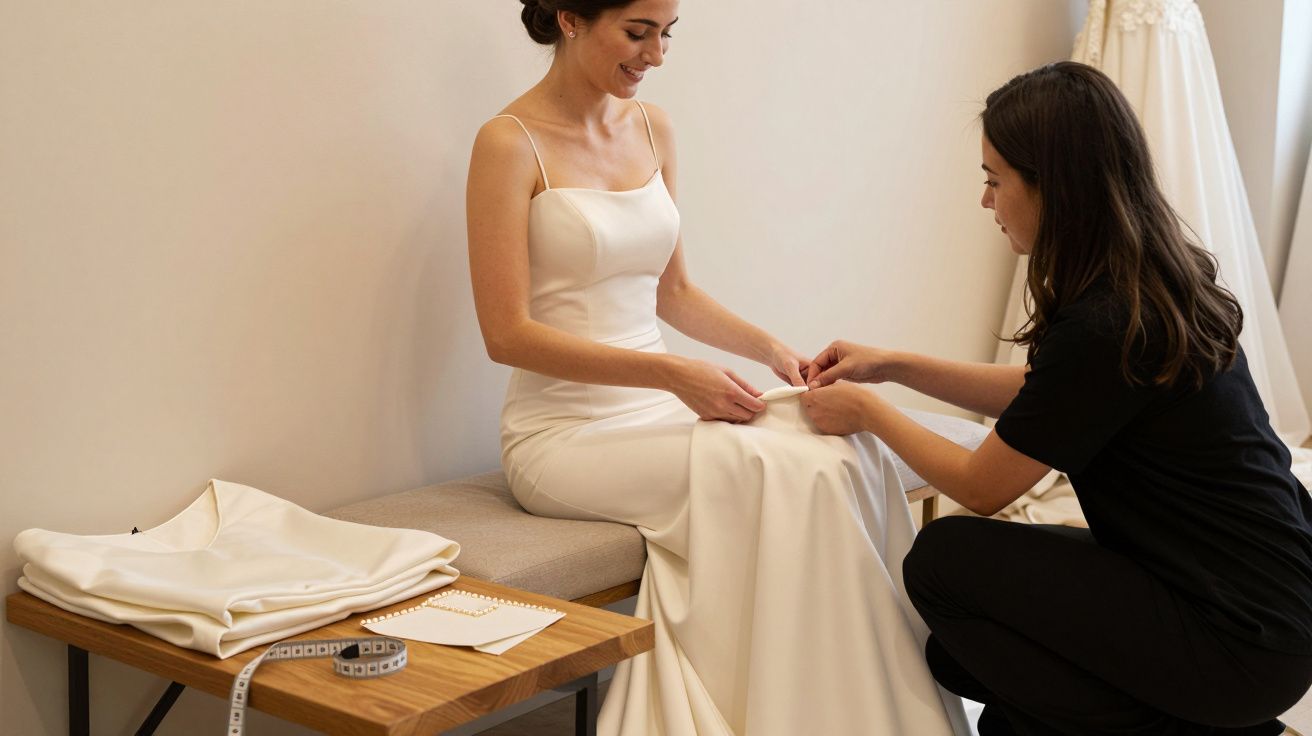
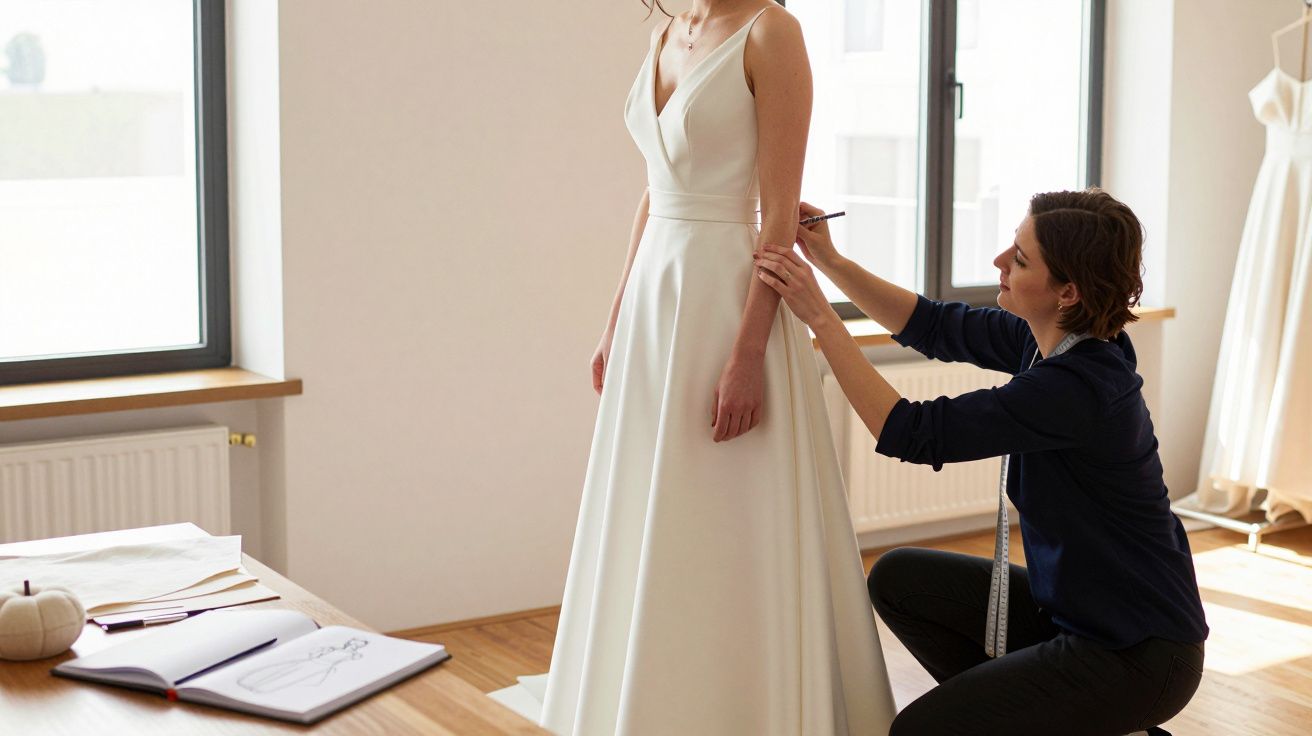
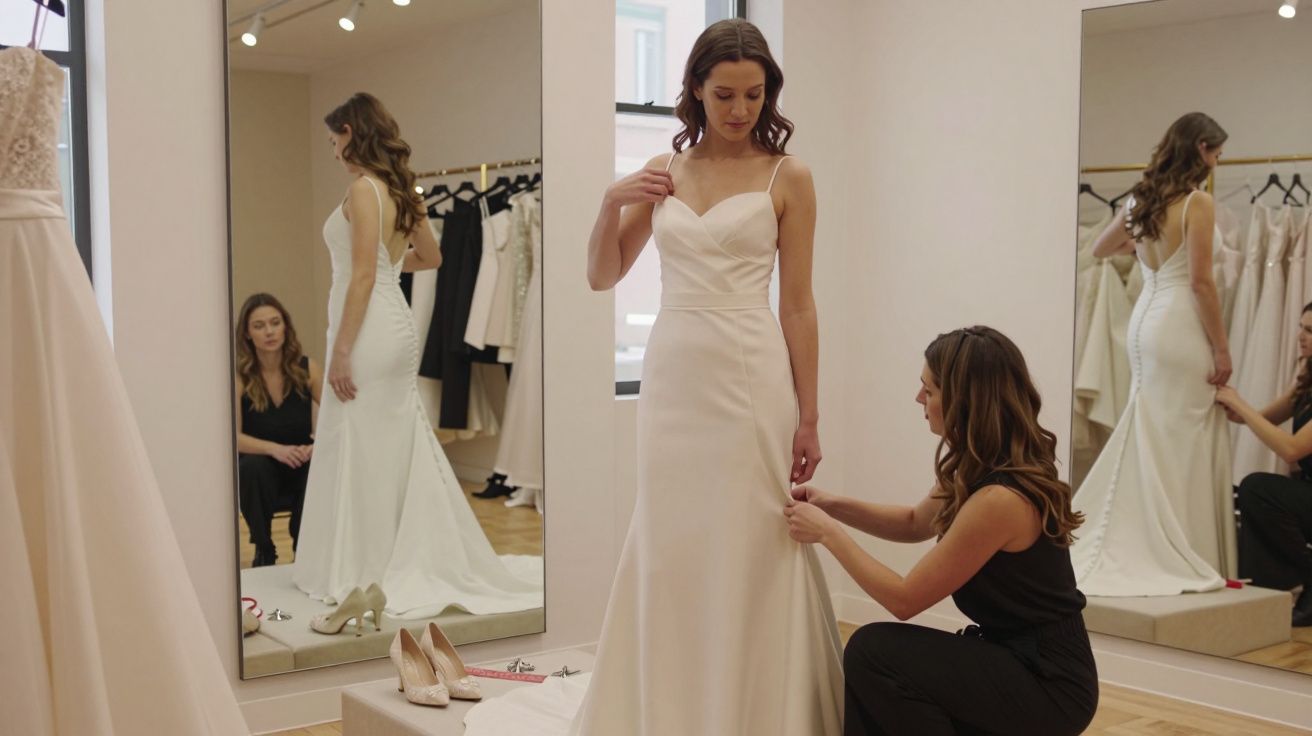
- Book alterations early and bring the shoes and underwear you’ll actually wear.
- Tell your key people what you need: excitement, not alternatives.
The aim is simple: when the dress arrives, you want recognition, not panic. The final choice is meant to give you back your attention-for your vows, your people, and the life you’re stepping into.
FAQ:
- Is it normal to feel calm rather than emotional when I choose? Yes. Calm is often the clearest sign of fit: your brain stops negotiating and starts organising.
- How many dresses should I try before deciding? There’s no magic number, but if you’ve tried enough to define what you like and you have a front-runner you keep returning to, you’re usually ready.
- What if my family dislikes my choice? Ask yourself who the dress is for. You can listen to concerns about comfort or practicality, but taste is not a requirement.
- Can I get emotional closure if I’m buying online? You can. Recreate fitting conditions at home (proper underwear, shoes, movement test) and set a firm return/decision date.
- What if I say yes and then regret it? Regret often comes from continued browsing or unclear alteration plans. Pause inputs, confirm logistics, and revisit your anchor photo before making changes.


Comments
No comments yet. Be the first to comment!
Leave a Comment