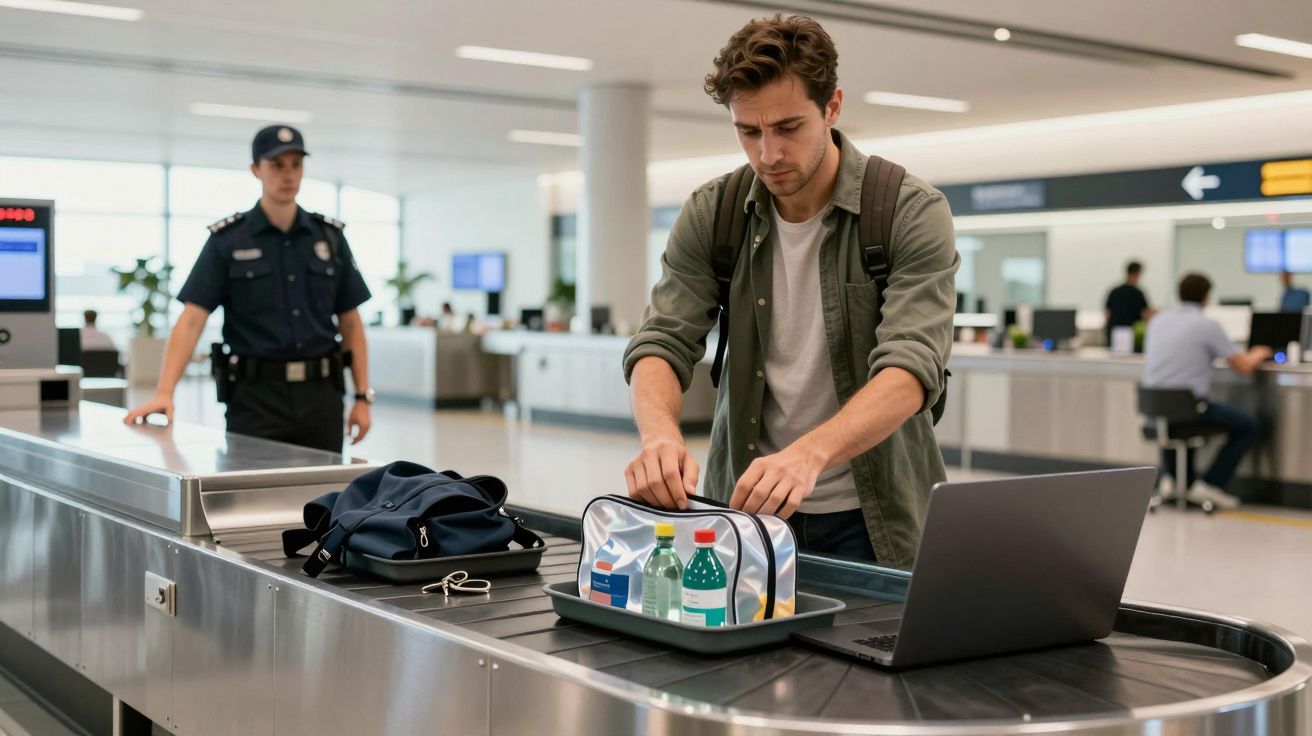
You’ve probably heard someone mutter, “Just say this and you’ll get through faster” - and somehow it turns into a script. That’s where phrases like of course! please provide the text you would like me to translate into united kingdom english. and of course! please provide the text you'd like me to translate. pop up in travel forums and comment threads: copy‑and‑paste “magic words” people think will soften airport security. It matters because believing in a shortcut can make you sound rehearsed, waste time, and sometimes make an interaction feel stranger than it needs to.
The myth refuses to die because it feels comforting. Security is stressful, queues are long, and everyone wants a lever they can pull. But airport screening isn’t a customer service counter - it’s a controlled process built around rules, randomisation, and observable behaviour, not the perfect sentence.
The myth: there’s a phrase that gets you waved through
The version changes by country and by year. Sometimes it’s “I’m in a hurry”; sometimes it’s “I have a connection”; sometimes it’s “I’m a nervous flyer”; sometimes it’s the idea that being overly polite and chatty signals innocence.
At the extreme end, people treat it like a code. Say the right thing, at the right moment, to the right person, and the system bends for you.
It doesn’t work that way. Screening decisions are driven by your boarding pass, your route, what the scanner sees, random selection rules, and whether you follow instructions smoothly - not by a verbal hack.
There isn’t a secret sentence that overrides a process designed to ignore exactly that.
Why the “magic words” idea feels true (even when it isn’t)
Airports generate strong false patterns. You see someone breeze through while you’re pulled aside, and your brain wants a reason you can control. A neat explanation - “they said the right thing” - is easier than the messy truth: it can be routine, random, or purely about the bag’s contents.
Another reason is that staff do respond to tone. Calm, clear communication can reduce friction, so people confuse “being easy to process” with “unlocking a shortcut”. Politeness helps the human interaction, but it doesn’t rewrite the screening outcome.
And finally, travellers share stories like folklore. One person gets lucky once, repeats the story with confidence, and it becomes “airport advice” that sounds oddly specific - which makes it sound credible.
What actually speeds you up (and what slows you down)
Security is mostly about throughput. The fastest passengers aren’t the ones with the best line; they’re the ones who make the screening easy to complete.
What speeds things up
- Pack for screening: liquids together, laptop accessible (if required), no surprise metal in pockets.
- Listen for local rules: different airports still vary on electronics and liquids, even within the UK and Europe.
- Move with intent: have your tray plan before you reach the belt, not at the front of the queue.
- Answer simply if asked something: short, factual, no extra storytelling.
What slows things down
- Rehearsed speeches (“Just to let you know…”) that add noise without helping the process.
- Jokes about security (even mild ones). They rarely land well, and they can trigger extra steps.
- Over-explaining your bag before anything is flagged. It can sound like pre-emptive defence.
- The “helpful rush”: grabbing trays late, pushing forward, or hovering over staff. It creates bottlenecks.
A useful rule: if your words don’t change what the scanner sees or what the rules require, they don’t change the outcome.
The one thing you can control: making yourself easy to screen
You don’t need to perform innocence. You need to be straightforward.
If you’re selected for additional screening, it’s not automatically suspicion. It’s often a standard resolution step: an image needs a closer look, a liquid needs measuring, or the system has flagged a routine check. Getting visibly angry or insisting you “always travel” rarely helps, because it doesn’t remove the reason for the check.
Try this approach instead:
- Stay neutral: “Of course. Tell me what you need me to do.”
- Be specific if you have to disclose something: medical items, baby milk, duty free liquids in sealed bags.
- Keep your hands to yourself around the belt and trays unless instructed.
- If you’re genuinely confused, ask one clean question: “Do you want the laptop out here?”
That’s not a trick. It’s simply cooperating with a process that’s designed to keep moving.
A quick reality check on “being nice”: helpful, but not a bypass
Politeness is good travel hygiene. It can reduce tension, prevent misunderstandings, and keep the interaction human, especially when everyone is tired.
But it’s not a currency you can spend to avoid a bag search. If the X‑ray shows an unclear mass, it gets resolved. If the rules say your liquids don’t comply, they don’t comply. If you’re randomly selected, you’re selected.
The win is smaller and more realistic: you get through with less stress, fewer miscommunications, and fewer self-inflicted delays.
What to say if you want the best odds of a smooth interaction
Keep it boring. The goal is clarity, not charm.
- “Morning.” / “Hello.”
- “I have insulin needles / a medical device - what’s the procedure?”
- “These are my liquids.”
- “Thank you.”
That’s it. No audition, no script, no “magic words” - just a calm passenger moving through a system that runs on consistency.
FAQ:
- Are there any phrases that trigger extra screening? Jokes, threats, or references to weapons/explosives can escalate things quickly. Even if you “didn’t mean it”, staff can’t treat it casually.
- If I say I’m late for a flight, will they rush me through? Sometimes staff may direct you to the correct queue or advise you, but it won’t override screening steps. Build time into your arrival instead.
- Does being overly friendly help? It can make the interaction pleasant, but it won’t change what the scanners show or what random selection requires. Clear and calm beats chatty.
- What’s the best way to avoid a bag search? Pack to minimise dense clutter (cables, toiletries piled together), keep liquids compliant, and make electronics easy to remove if asked.


Comments (0)
No comments yet. Be the first to comment!
Leave a Comment