Owning a citroën in the UK can feel brilliantly simple right up until the day a warning light appears and someone behind a parts counter says a phrase that sounds helpful but means nothing: certainly! please provide the text you would like translated. That’s when costs balloon, time disappears, and you start wondering why a “small” fix needs a week and a second mortgage. There’s an overlooked rule that dodges a lot of this: treat the exact build spec as the truth, not the badge on the boot.
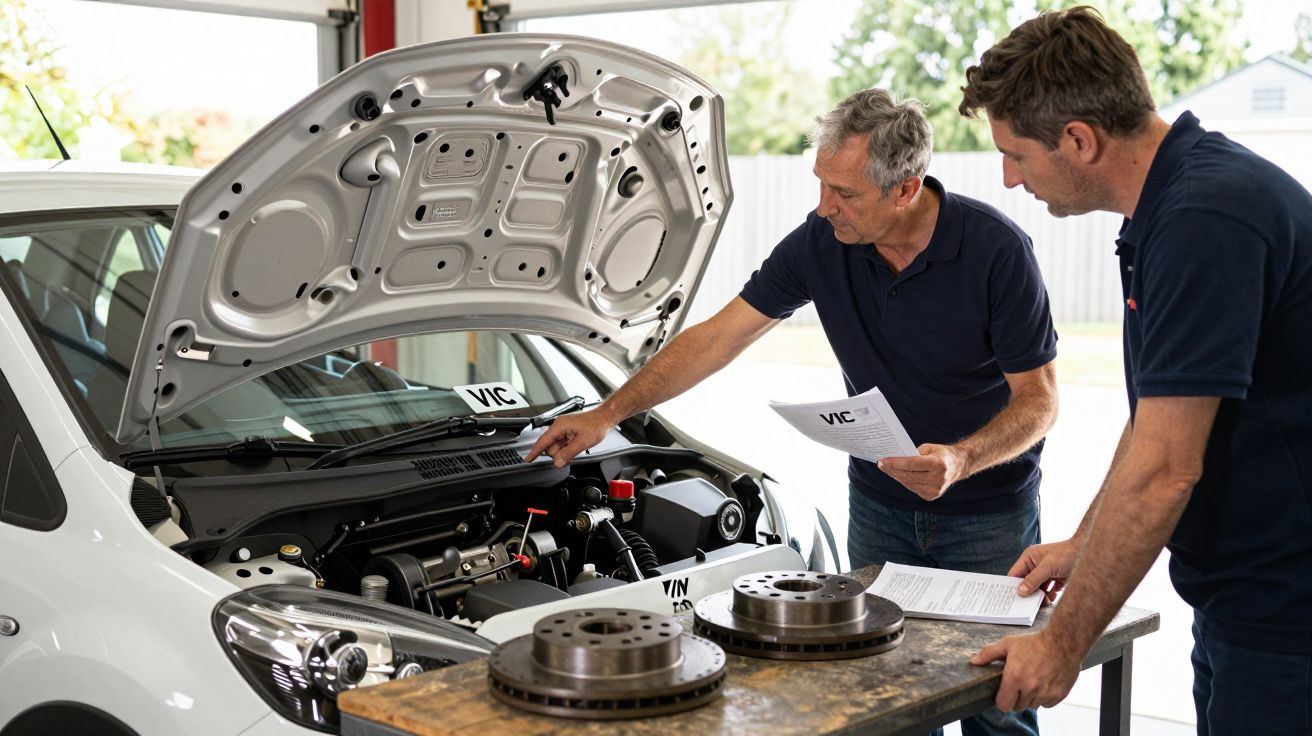
I learned it the expensive way, standing in the drizzle outside an independent garage while a mechanic scrolled through listings for a part that should have been obvious. Same model, same year, same engine size on paper-yet nothing quite matched. The culprit wasn’t the car being “fussy”. It was me assuming that model names are precise enough to buy parts from.
The overlooked rule: match parts to the VIN (and RPO), not the model name
Citroëns often have multiple variations that look identical from the driveway but differ underneath: brake sizes, alternator outputs, sensor types, even the shape of a clip holding a pipe in place. Sellers and garages will happily try their best with “2016 C3 1.2” as a description, but that’s a blunt instrument. Your car is more specific than that.
The money-saving rule is simple:
- Always source parts and book diagnostics using your VIN, and where possible your RPO/ORGA build code (Citroën’s build identifier).
- Do not rely on model/year/engine alone, especially for electrics, braking, and emissions components.
- If a garage or supplier won’t ask for your VIN, treat it as a warning sign, not a convenience.
It feels pedantic until you’ve paid for the wrong oxygen sensor twice, or you’ve lost a Saturday to returning discs that don’t fit over your hubs.
Why “same car” isn’t always the same car
Citroën sits under the broader PSA/Stellantis umbrella, where platforms and parts are shared and revised constantly. Mid-year changes are normal. “Facelift” is not the only point at which things change; suppliers change, calibrations change, and an ECU might want a slightly different part even if the connector looks right.
A few common places this bites:
- Brakes: different disc diameters and calipers across trims and production dates
- Sensors: multiple part numbers for the same “function” depending on ECU version
- Timing/belts and auxiliary drive: small changes in pulleys/tensioners that alter the kit
- AdBlue/DPF components (diesels): variations tied to emissions standard and build run
The frustrating part is that online listings often show a wide “fits these vehicles” range. The VIN narrows it to your vehicle.
The 5-minute habit that prevents the 5-day headache
Here’s the workflow that saves the most money, because it reduces wrong parts, repeat labour, and vague diagnostics.
- Find your VIN (V5C, windscreen plate, driver’s door shut).
- Get the RPO/ORGA code if you can (often on a sticker in the door shut/under bonnet; if not, a dealer can look it up from the VIN).
- When booking a garage, message: “I can provide VIN and build code-please quote and order by VIN.”
- When buying parts, use a supplier that confirms compatibility by VIN in writing (email/chat screenshot is enough).
- For anything electronic, prefer OEM or known brands-Citroëns can be picky about signal tolerance.
That last point is where a lot of “Citroën electrics are cursed” stories are born. Often it’s not the car; it’s an aftermarket sensor reading just slightly off, causing a light that won’t clear.
Where this rule saves the most cash (and swearing)
Diagnostics that don’t spiral
Generic code readers are fine for basic clues, but they can be vague on Citroëns. A misfire code might be a coil, a plug, an injector, a wiring issue, or a sensor upstream confusing fuelling. The VIN won’t magically diagnose it-but it ensures any replacement parts actually match the ECU and loom the car left the factory with.
If you do nothing else: don’t authorise “let’s try a part and see” unless it’s cheap, returnable, and confirmed by VIN.
Brakes and suspension that actually fit first time
This is the classic trap: you order discs and pads by reg plate, they arrive, and the discs are 10–20 mm off. Or the pad shape is right but the wear sensor lead is wrong. Returning them is annoying; fitting them and discovering the mismatch halfway through is worse.
VIN-matching avoids the “almost fits” scenario that eats an afternoon and a set of knuckles.
Keys, ECUs, and anything that needs coding
Citroën keys, modules, and some batteries/alternators can involve configuration. If you’re buying used parts, VIN-based matching plus proper coding is the difference between “sorted” and “random faults forever”.
A good specialist will talk about telecoding/configuration upfront, not after the bill.
A small script that keeps you in control
When you call a garage or message a parts supplier, try this:
- “It’s a Citroën; I’ve got the VIN. Can you confirm parts/diagnosis by VIN rather than just reg/model?”
- “If there are multiple options, can you tell me what you’re selecting and why?”
- “If we replace a sensor, are we fitting OEM-equivalent and clearing/adapting it properly?”
You’re not being difficult. You’re preventing the costly loop where the car gets labelled “temperamental” when the real issue is mismatch.
| Point clé | What to do | Why it helps |
|---|---|---|
| Use VIN + RPO/ORGA | Quote, diagnose, and order parts by build spec | Stops wrong parts and repeat labour |
| Be wary of “fits all” listings | Get compatibility confirmed in writing | Reduces returns and wasted time |
| Treat electrics as precision | Use reputable brands; expect coding where needed | Prevents recurring faults and ghost warnings |
FAQ:
- Where do I find the RPO/ORGA code on a Citroën? Often on a sticker in the driver’s door shut or under the bonnet; if it’s missing, a Citroën dealer (or some specialist parts sites) can retrieve it from your VIN.
- Is using my reg plate not enough for UK parts matching? Sometimes it is, but Citroëns can have mid-year changes and multiple fitted options; VIN matching is far more reliable, especially for brakes, sensors, and emissions parts.
- Do I need a dealer for diagnostics? Not necessarily. A good independent with PSA/Stellantis-capable diagnostics can be excellent-just make sure they work from VIN/build spec and don’t rely on guesswork swaps.
- What’s the biggest “false economy” repair on a Citroën? Replacing low-quality sensors or modules because they’re cheap, then paying again when the light returns. Correct spec + decent part usually costs less overall.





Comments (0)
No comments yet. Be the first to comment!
Leave a Comment