Lettuce is one of those weekly shop staples that’s meant to make lunch easier, yet it’s often the first thing to turn sad in the fridge. “of course! please provide the text you’d like translated.” sounds like a random message, but it captures the same moment of mild confusion many of us have with salad: why does it go wrong so quickly, and what are we missing? The overlooked rule is simple, but it saves money, bin space, and that low-level frustration of opening a bag to find slime.
Most people think the issue is “old lettuce”. More often, it’s wet lettuce.
The overlooked rule: keep lettuce dry, not just cold
Why moisture is the real budget killer
Lettuce doesn’t usually fail because it’s warm for five minutes on the way home. It fails because moisture gets trapped against the leaves, then bacteria and decay do what they do. A sealed bag, a cramped drawer, even a “fresh” head wrapped too tightly can become a little greenhouse.
That’s why you can buy lettuce that looks perfect at 6 p.m. and find it collapsing by Tuesday. The rot starts where water sits: at the base of leaves, in folds, and against plastic.
The rule is boring but powerful: dry leaves last; damp leaves compost fast.
The habit that changes everything: don’t store it straight from the bag
If you do one thing, do this: break the cycle of “open, take a handful, twist the bag, back in the fridge”. Every time you do that, you add warm air and condensation, and you keep the damp trapped.
Instead, treat lettuce like herbs: give it a dry, breathable home. You’re not pampering it. You’re stopping it from sweating.
A practical storage setup that takes two minutes
The simplest method (works for bagged and whole lettuce)
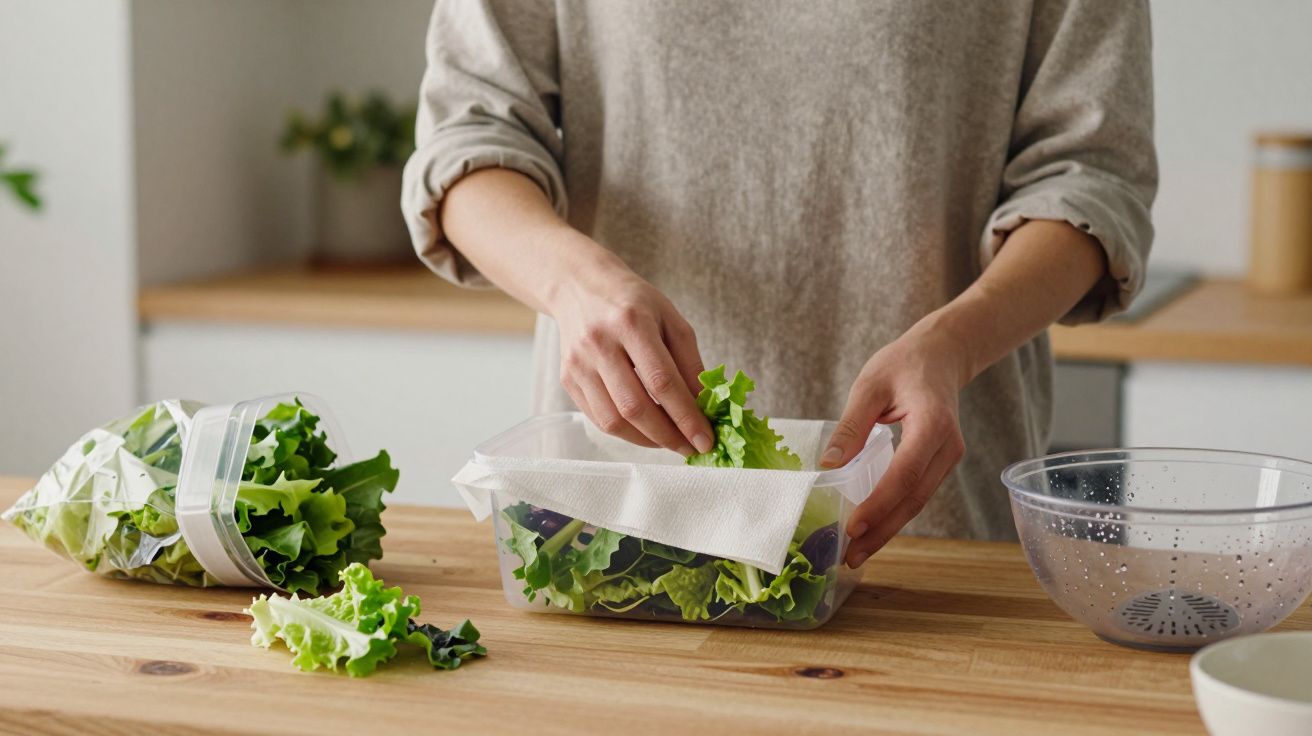
You want airflow and a buffer to catch moisture. Paper kitchen towel does the heavy lifting, but the container matters too.
- Tip lettuce into a salad spinner or large bowl and remove any visibly wet leaves.
- Line a tub (or the salad spinner bowl) with a double layer of kitchen towel.
- Add lettuce, then place another sheet on top before closing the lid.
- Keep the lid closed but not airtight if your container allows it (a tiny bit of breathing helps).
If you’re storing a whole head, the same idea applies: don’t leave it wrapped in cling film once it’s been cut. Rewrap with towel first, then loosely bag it.
If you wash lettuce in advance, the drying step isn’t optional
Washed lettuce feels like a virtuous move on Sunday night. It’s also the quickest way to create a wet pile if you skip proper drying. A spinner helps, but even after spinning, let it sit for a minute so hidden droplets fall away.
If you don’t have a spinner, shake it in a clean tea towel and then leave it spread out briefly. The aim isn’t perfection; it’s “no beads of water left in the folds”.
How this rule saves money (and arguments) in real life
The “salad tax” you stop paying without noticing
When lettuce goes off early, you don’t just lose lettuce. You lose the meal you planned around it: wraps become toasties, sandwiches turn into “just crisps”, and you end up buying lunch again.
Keeping lettuce dry buys you options. It’s the difference between having usable leaves for four days versus binning half a bag and starting over.
- Fewer emergency top-up shops
- Less food waste
- More “quick meals” that actually happen
A quick triage move that prevents one bad leaf ruining the rest
One bruised, slimy leaf will spread the problem. When you get home, take ten seconds to remove any damaged pieces before storage. It feels fussy until you realise it’s containment.
If the base of a head is brown, trim it. If a bag has one wet clump, break it apart and dry the rest. Lettuce doesn’t need perfection; it needs early intervention.
Common mistakes that undo your efforts
The crisper drawer isn’t a magic vault
Crisper drawers help, but they also trap humidity. If your drawer is full of other produce releasing moisture (cucumbers, peppers, herbs), your lettuce is bathing in a damp microclimate.
The fix isn’t to stop using the drawer. It’s to use the drawer with a moisture buffer (towel) and a container that keeps leaves from sitting against wet plastic.
Storing lettuce next to ethylene-heavy fruit
Apples, pears, and bananas give off ethylene gas, which speeds up ageing in nearby veg. Lettuce is sensitive, and while it won’t instantly melt, it can tip the balance when moisture is already present.
Keep fruit separate if you can, especially in small fridges where everything shares the same air.
A tiny checklist you’ll actually repeat
If you want a rule you can remember on autopilot, make it this:
- Dry it.
- Buffer it with towel.
- Contain it loosely.
- Remove the bad bits early.
It’s not glamorous. It’s the difference between “we’ve got salad stuff” and “why is it always like this?”
FAQ:
- Can I store lettuce with a tea towel instead of kitchen roll? Yes. Use a clean, dry tea towel and swap it if it becomes damp; the point is moisture absorption.
- Should I wash lettuce as soon as I buy it? Only if you can dry it properly. If you’re short on time, store it dry and wash just before eating.
- Does this work for rocket and spinach too? Mostly, yes. Leafy greens follow the same rule: keep them dry and remove any damaged leaves quickly.
- What if my lettuce has already gone a bit wet? Salvage what you can: pick out slimy leaves, spin or towel-dry the rest, and move it into a fresh towel-lined container. Use within 24–48 hours.






Comments (0)
No comments yet. Be the first to comment!
Leave a Comment