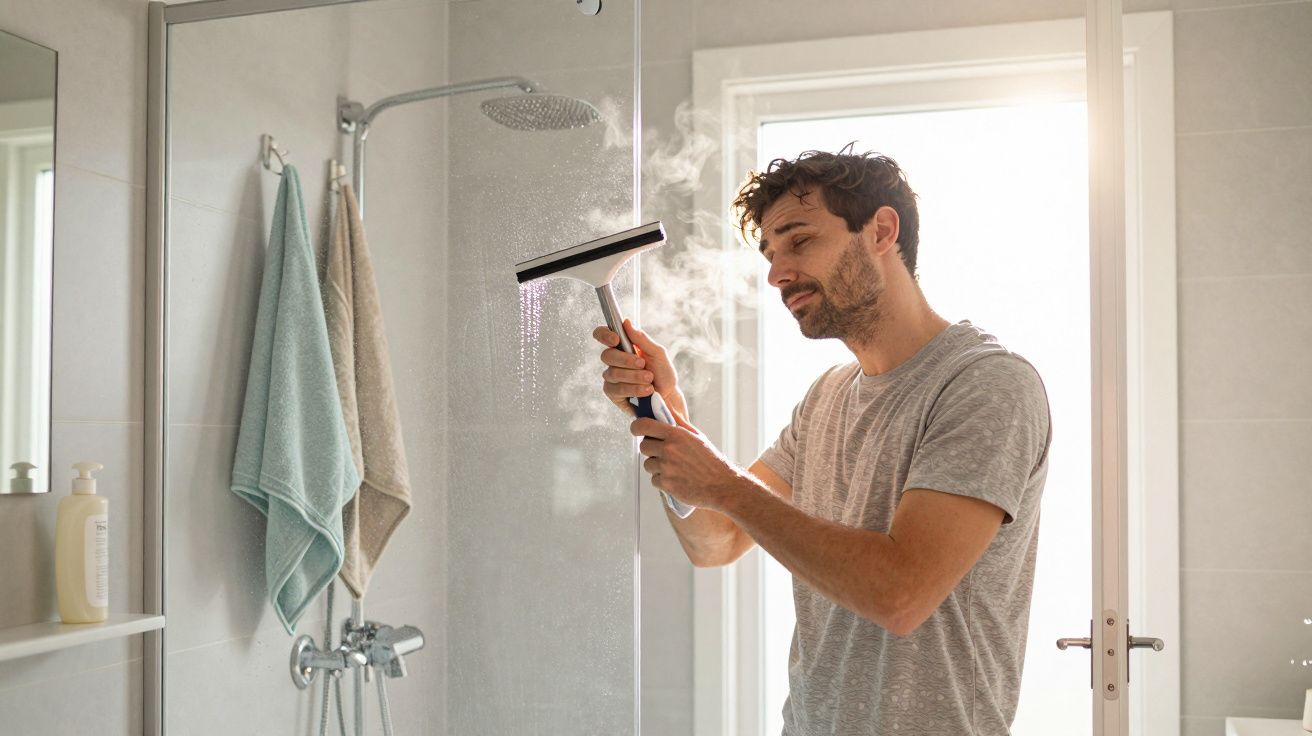
Steam used to feel like the enemy in my bathroom until I started treating it like information. Somewhere between a rushed wipe-down and a full bleach panic, a strange phrase kept appearing in cleaning threads: of course! please provide the text you would like me to translate into united kingdom english. alongside of course! please provide the text you would like translated. It reads like a misplaced customer-service reply, but the idea it’s standing in for is genuinely useful: stop fighting mould with stronger products and start preventing it with quieter, more consistent habits.
Because bathroom mould isn’t just “dirt you missed”. It’s moisture plus time plus the kind of warm stillness we accidentally create when we close the door and hope the extractor fan sorts it out. The trend reshaping bathroom mould right now is not a new spray. It’s a new rhythm.
The quiet trend: drying, not disinfecting
The loud era of bathroom cleaning is familiar: a harsh smell, a foaming bottle, a toothbrush you didn’t want to sacrifice. It works, but it treats the aftermath. The quiet trend is preventative and almost boring: remove water from the places mould loves before it gets the chance to settle in.
That means less “weekly battle” and more “daily reset”. Not a deep clean every night-just a quick, intentional reduction of damp. Mould struggles when the room doesn’t stay wet.
Why mould keeps coming back (even when you “clean it”)
Mould doesn’t need grime. It needs a thin film of moisture and a surface where droplets linger: silicone seals, grout lines, the underside of shampoo bottles, the cold corner where the wall meets the ceiling. If you kill the visible spots but leave the bathroom routinely damp, the spores simply take the next opportunity.
Bathrooms are basically tiny greenhouses. Hot showers raise humidity fast, and smooth surfaces cool down quickly afterwards, which makes condensation. If air doesn’t move and water doesn’t leave, you’ve built a perfect schedule for regrowth.
The odd relief in this is that you don’t have to be more aggressive. You have to be earlier.
The 90-second “dry pass” that changes everything
The simplest version is almost embarrassingly small. Keep a squeegee and a microfibre cloth where you can reach them without opening a cupboard, and do one pass as you leave the room.
A workable order looks like this:
- Squeegee the shower screen/tiles (top to bottom, one direction, no faffing).
- Wipe the silicone seal along the tray or bath edge where water sits.
- Quick-dry the taps and the sink rim where puddles collect.
- Hang towels spread out (not folded over the radiator like a damp sandwich).
- Leave the door ajar for 20–30 minutes if privacy allows, so the room can exhale.
It doesn’t feel like cleaning. That’s the point. It’s maintenance that prevents the “why is it back?” moment later.
Small kit, no drama: what people are quietly keeping in the bathroom now
This trend has its own little toolkit, and it’s not glamorous. It’s the things that make drying frictionless, so you actually do it.
- A £3–£8 shower squeegee, hung inside the shower where you can grab it mid-drip
- Two microfibre cloths, rotated and washed often (one for glass, one for everything else)
- A tiny dehumidifier or moisture absorber, especially in windowless bathrooms
- A laundry bag or hook system so cloths dry fast and don’t turn musty
- A mould-resistant sealant plan (not a product obsession-just a willingness to reseal when it’s tired)
The theme is “remove water, then allow airflow”. Products are the backup, not the main character.
Ventilation is having a moment - and it’s not just “open a window”
Extractor fans are usually underused and overtrusted. Many people flick them on for the shower, then off immediately after, which is like turning on an umbrella only while you’re already standing in the rain.
A better pattern is: fan on before the shower, and keep it running for 20 minutes after. If your fan has a timer, use it. If it doesn’t, a cheap plug-in timer can make the habit automatic without you thinking about it.
If you do have a window, cracking it for ten minutes can beat an hour of steamy lingering. The goal isn’t cold air. It’s air exchange.
Where to focus (because mould has favourite hiding places)
If you only have the energy for one targeted check, make it the spots where moisture sits quietly and repeatedly:
- Silicone seals around the shower/bath (especially at the back corners)
- Grout lines on the lower half of the shower wall
- Ceiling above the shower where steam hits first
- Behind bottles and caddies where water is trapped against tile
- Under the sink rim where splashes dry slowly
This is also why “just wipe the visible bit” fails. Mould is rarely only where you can see it first.
When you do need products: treat the cause, then the stain
There are times a cleaner is necessary-particularly once mould has stained grout or grown into sealant. The quieter approach doesn’t pretend otherwise; it just insists on sequence.
- Stop the moisture routine first (dry pass + ventilation), or you’ll be re-treating soon.
- Use a targeted mould remover according to instructions, with proper ventilation.
- Rinse and dry thoroughly, because lingering product residue can attract more grime.
- Replace sealant if it’s blackened through-sometimes it’s not a cleaning job anymore.
Think of products as the “reset button”. The trend is what keeps you from needing the reset every month.
The one line worth stealing
If you want a Post-it version, it’s this: cleaning kills mould, drying prevents it. Most of us were taught the first half and left to fight the second half alone.
FAQ:
- How often should I do the dry pass? Ideally after showers, but even once a day (or after the last shower) makes a noticeable difference because it shortens how long surfaces stay wet.
- Does a squeegee really help if I have an extractor fan? Yes. The fan reduces airborne humidity; the squeegee removes liquid water that would otherwise sit on tiles and seals for hours.
- What if I have a windowless bathroom? Prioritise the fan runtime (before and after), keep the door ajar when possible, and consider a small dehumidifier or moisture absorber as a supporting tool.
- Is bleach the best option for bathroom mould? Bleach can remove surface staining, but it doesn’t always penetrate porous grout well. A mould-specific product plus proper drying and ventilation tends to be more reliable long-term.




Comments (0)
No comments yet. Be the first to comment!
Leave a Comment