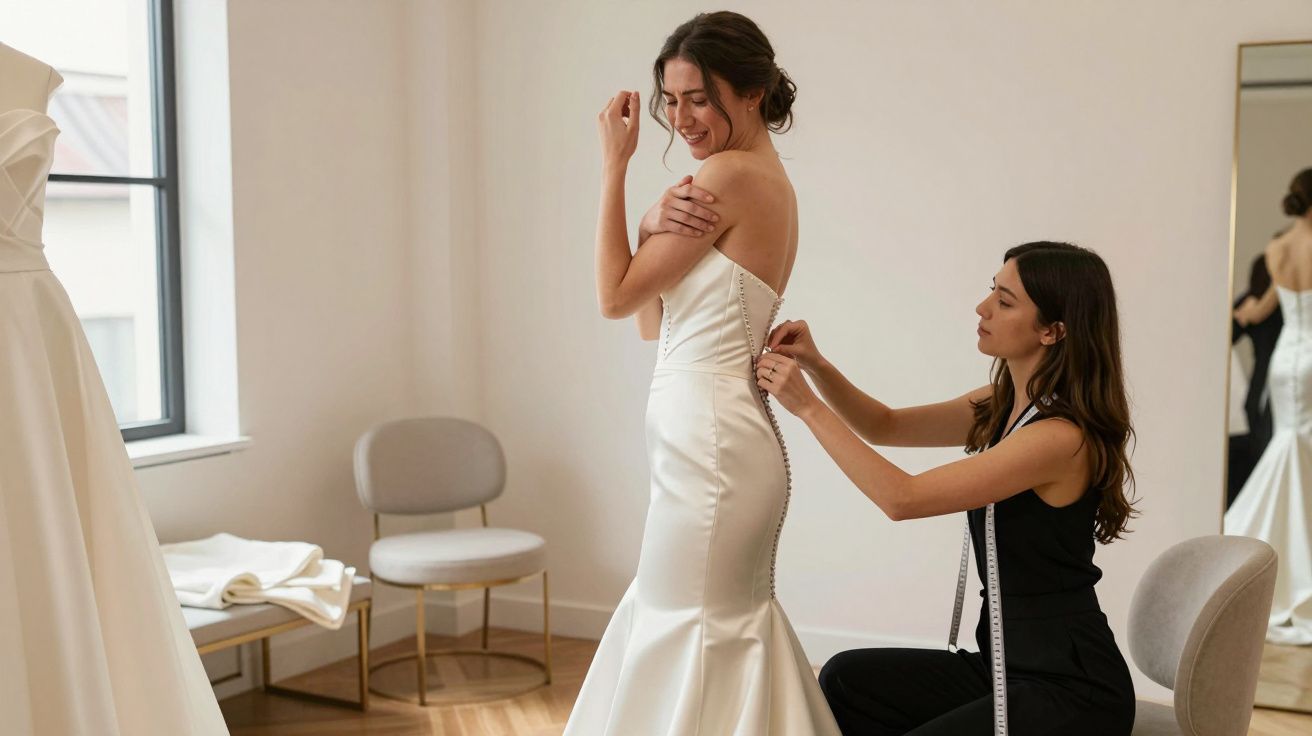
The fitting room is where wedding dress design turns from fantasy into physics, and the wearability trade-off stops being theoretical. You’re not just choosing a silhouette for photos; you’re choosing how you’ll breathe, sit, hug, eat, dance, and use a loo for ten hours. That matters because the day is long, and the memories are made in the in-between moments-walking, laughing, leaning in close.
I watched a bride step off the pedestal in a structured satin mermaid, eyes shining, then pause as if the dress had quietly tightened its grip. Two breaths later she was smiling again, but smaller. Not unhappy-just negotiating. That’s the silent conflict: comfort wants ease; drama wants architecture.
Why “wow” often borrows from your mobility
Most “dramatic” elements work by controlling the body. Corsetry distributes shape by compressing; heavy beading hangs like armour; sleek skirts limit stride so the line stays clean. Even soft fabrics can be demanding when they’re cut on the bias and expected to skim without wrinkling.
Comfort, by contrast, is generous. It needs room where your body expands (ribcage, waist when you sit), space where you bend (hips, knees), and forgiveness where the day gets messy (heat, humidity, champagne). The trouble is that many of the classic bridal signals-snatched waist, rigid bodice, long train-are essentially beautiful constraints.
We’ve all seen the version of this in photos: the dress looks flawless standing still, then slightly stressed in motion. A tiny pull line at the hip. A bodice that rides. A neckline that requires one hand to keep it where it belongs. It’s rarely “a bad dress”. It’s usually a dress doing exactly what it was built to do.
The main pressure points designers and brides quietly manage
The conflict isn’t spread evenly across the dress. It clusters in predictable places, which is why smart choices feel almost boring in the fitting room-and brilliant at 9pm.
- Bodice and cups: Too rigid and you can’t expand your lungs; too soft and the dress slides south.
- Waist seam: Perfect standing can mean painful sitting, especially after dinner.
- Hip and thigh area: Mermaid and fitted sheath styles restrict stride; the hem dictates how you move.
- Neckline and straps: Low fronts and wide-set straps can look effortless, but demand tape, alterations, and vigilance.
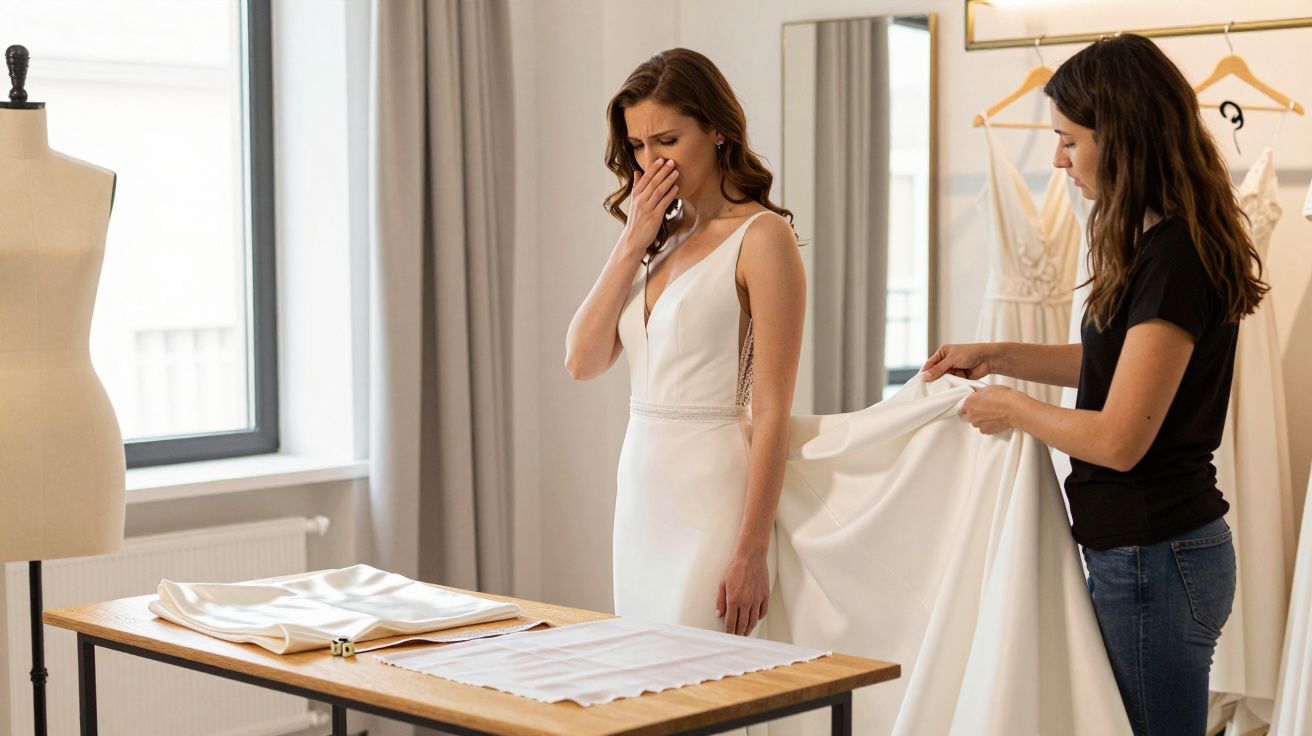
- Train weight and attachment: Drama behind you is still weight on you, unless it’s engineered to distribute.
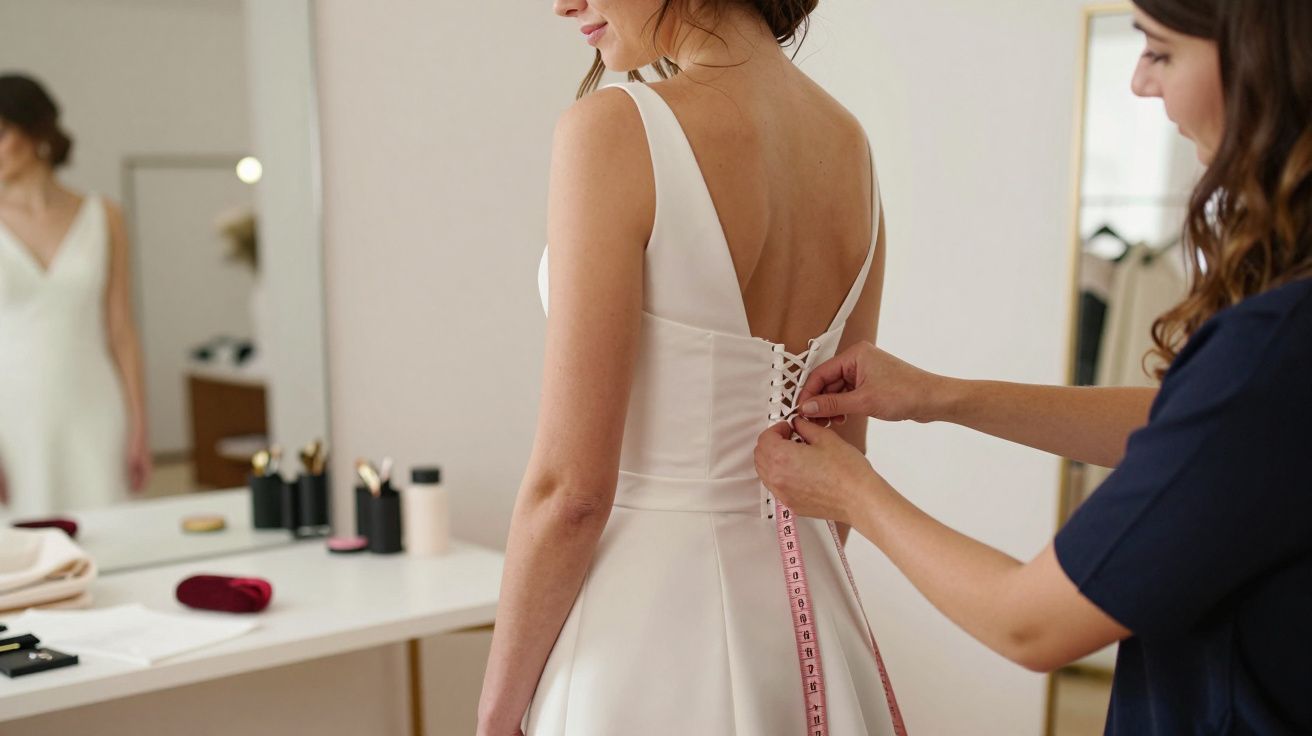
A good fitter will watch you walk, sit, raise your arms, and twist-not because they’re picky, but because movement reveals truth. The dress should survive a hug without requiring a reset.
The “comfort engineering” that keeps drama intact
You don’t have to choose between looking extraordinary and feeling like yourself. The secret is that comfort isn’t just fabric choice; it’s structure used kindly.
Here’s what tends to work, even in very showy gowns:
- Hidden stretch where it counts. A small stretch panel at the back bodice or along the side seam can change everything without changing the look.
- Boning that supports, not strangles. Well-placed boning lifts and distributes weight; over-boning just squeezes.
- A waistline you can sit in. Sometimes that means lowering it a fraction, softening the seam allowance, or changing how it’s finished.
- The right lining. A slippery lining reduces friction and heat, and it helps the outer fabric fall properly.
- Train strategy. A bustle you can use, a wrist loop you actually like holding, or a detachable overskirt that gives you “ceremony drama, reception freedom”.
The best dresses often feel “too easy” in the mirror. That’s not a flaw. It’s a sign the engineering is doing its job.
“If you can’t take a full breath and lift your arms, it’s not fitted yet-it’s just tight,” a seamstress told me, pinning a bodice with the calm authority of someone who has rescued many a dance floor.
How to test a dress like it’s the actual day (not a still photo)
In a boutique, it’s tempting to stand still and imagine the aisle. Do the opposite. Treat the fitting like a rehearsal for real life, because real life is the part you’ll remember.
Try this quick sequence in each serious contender:
- Sit down fully and stay there for thirty seconds. Notice the waist and the ribcage.
- Walk with purpose, then take smaller steps like you would in a crowded room.
- Raise both arms as if you’re hugging someone tall, then someone short.
- Turn quickly, as if someone calls your name.
- Simulate a dance move: a step back, a step to the side, a gentle dip of the knees.
Listen for the dress “talking”: creaks from stressed seams, the bodice shifting, the skirt catching. A little feedback is normal. Constant negotiation is not.
Choosing which discomfort is worth it (and which is just avoidable)
Every gown asks for something. The question is whether it’s a price you’re happy to pay, or a tax you didn’t agree to.
A useful way to decide is to separate statement from maintenance. A cathedral train is a statement. Having to hold your bodice up all day is maintenance. One feels intentional; the other drains you quietly.
If you want a simple rule: pick one “hard” feature and let the rest be kind. For example:
- Big skirt + breathable bodice
- Snatched corset + lighter skirt and shorter train
- Heavy beading + looser silhouette and fewer layers
- Low back + secure straps/sleeves or internal support
It’s not about lowering ambition. It’s about concentrating drama where it reads, and removing friction where it doesn’t.
| Choice | What it gives | What it costs |
|---|---|---|
| Corset bodice | Lift, shape, confidence in photos | Heat, pressure, less flexibility |
| Long train | Cinematic entrance, ceremony impact | Weight, bustle logistics, foot awareness |
| Fitted skirt | Clean line, “grown-up” glamour | Shorter stride, sitting tension |
A quieter definition of “the perfect dress”
The dress you remember fondly is rarely the one that looked best only when you stood perfectly still. It’s the one that let you forget about it, then caught the light when you moved. The one that held you, not managed you.
There’s a calm kind of drama in that: a gown that looks like a statement and feels like permission. When wedding dress design gets that balance right, the wearability trade-off stops being a compromise and becomes a choice you made on purpose.
FAQ:
- How tight should a wedding bodice be? Supportive, not restrictive. You should be able to take a deep breath, speak comfortably, and lift your arms without the neckline shifting.
- Can a dramatic dress be comfortable for dancing? Yes, with planning: a reliable bustle, lighter underskirt, or a detachable overskirt can keep the look while freeing your legs.
- What’s the most common wearability mistake? Fitting for standing only. If you haven’t sat down and moved properly in the dress, you haven’t really tested it.
- Do I have to choose between structure and softness? No. Modern construction can hide structure under soft fabrics; the goal is support that doesn’t feel like restraint.




Comments (0)
No comments yet. Be the first to comment!
Leave a Comment