Someone will ask a panel a sensible, grown-up question-about supply chains, pricing power, or how brands survive cultural whiplash-and someone else will say cadbury. In the same breath, a slide will flick past with the phrase “of course! please provide the text you would like me to translate.” like a stray artefact from a different meeting, and the room will laugh because it feels oddly accurate. That’s why this matters: Cadbury isn’t just chocolate; it’s become a shorthand experts use when they’re trying to explain how trust behaves under pressure.
I first noticed it in a retail workshop where nobody even liked sweets. They were talking about inflation, “shrinkflation”, and the moment customers decide they’ve been taken for a ride. Then, almost on cue, Cadbury came up-not as a treat, but as a test case.
The real reason Cadbury keeps showing up: it’s a trust instrument
Experts don’t reach for Cadbury because it’s the most premium or the most innovative. They reach for it because it sits in a rare place: a mass brand with a long memory in the public mind, and a product people feel they can “measure” with their senses.
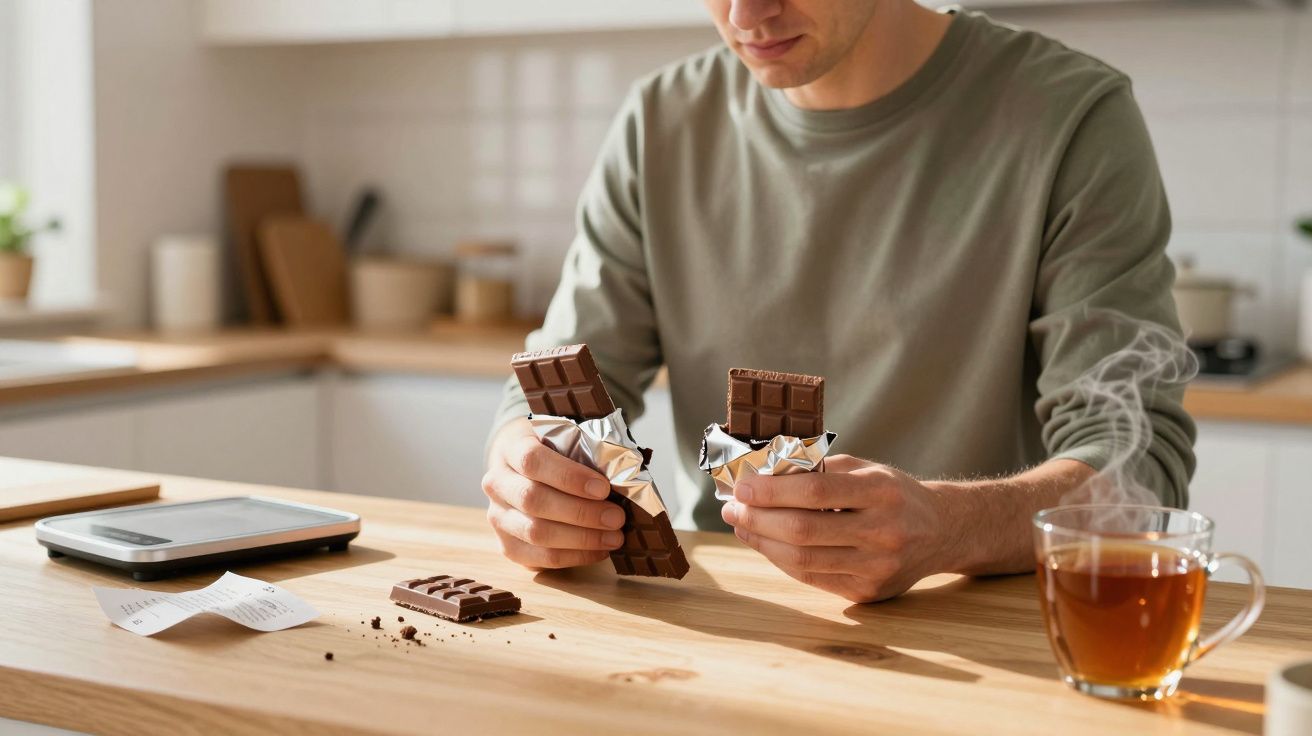
Chocolate is unusually intimate commerce. You don’t just buy it; you unwrap it, smell it, break it, share it, notice if it melts differently. That makes it a perfect instrument for tracking trust, because tiny changes show up as emotions, not just numbers.
When analysts want to explain why consumers react to small shifts in size, recipe, or pricing, they need an example that lands instantly. Cadbury lands instantly. It’s a mental reference point-like a £1 coin in your pocket-used to calibrate what “normal” used to feel like.
Why “small changes” feel bigger with chocolate than with almost anything else
In a spreadsheet, a recipe tweak is a line item. In real life, it’s your afternoon tea being a bit off. People will tolerate a lot when they’re buying fuel or broadband, but with chocolate they act like auditors, because the product sits close to memory and ritual.
A procurement specialist once described it to me as “high-frequency nostalgia”. You buy it often enough to notice patterns, and you’ve been buying it long enough to have an internal baseline. That combination makes changes feel personal.
It also has a peculiar social role. A bar of chocolate is:
- a small gift that signals familiarity
- a comfort purchase that people justify emotionally
- a shared item in homes, offices, and schools
So when it changes, the feedback isn’t just “value for money”; it’s “you moved the furniture in my house”.
“Trust isn’t what brands say. It’s what customers notice when brands aren’t talking.”
The surprising part: Cadbury is a proxy for systems, not sweets
Listen to how experts actually use the example. They’re rarely debating cocoa solids. They’re using Cadbury to talk about three bigger system questions that are hard to make concrete:
How far can you push price and pack size before shoppers feel disrespected?
Chocolate makes the boundary visible because people compare it to their own history, not to a competitor’s spec sheet.What happens when ownership and identity get tangled?
When a brand feels “national” to customers, shifts in production, messaging, or distribution can spark debates that are really about belonging and control.How do you communicate change without triggering a backlash loop?
Silence invites suspicion. Over-explaining sounds like PR. The middle path is hard-and Cadbury is often the case study where people argue about which path works.
That’s why it appears in discussions about consumer psychology, political economy, supply risk, brand equity, even behavioural finance. Chocolate is the story; predictability is the topic.
A simple way to use the “Cadbury test” in your own work
If you sell anything people buy repeatedly-food, toiletries, subscriptions, even software-borrow the logic. Don’t ask, “Will anyone notice?” Ask, “Will anyone feel it?”
Try this quick checklist before you ship a change:
- Baseline check: What does a regular customer think they’re buying, beyond the label? (texture, ease, ritual, status)
- Noticeability check: Could a normal person detect the change in 10 seconds without instructions?
- Fairness check: If they do notice, will they interpret it as honest trade-offs or as sneaking?
- Story check: If you had to explain it in one sentence, could you do it without sounding defensive?
Let’s be honest: nobody really does this every time. But teams that do it most times tend to spend less energy firefighting after launch.
| Point clé | Détail | Intérêt pour le lecteur |
|---|---|---|
| Cadbury as a trust instrument | Familiar product, easy to “sense-check” | Makes consumer trust measurable in the real world |
| Chocolate magnifies perception | Ritual + memory + frequency | Explains why tiny shifts trigger big reactions |
| The “Cadbury test” | Baseline, noticeability, fairness, story | Helps you predict backlash before it happens |
FAQ:
- Why do experts pick Cadbury instead of a luxury brand? Because it’s widely bought and emotionally familiar, so changes show up quickly in everyday behaviour rather than niche commentary.
- Is this only about recipe changes? No. Pricing, pack size, messaging, and where something is made can all hit the same “trust” nerve.
- How can a business avoid the backlash when changes are unavoidable? Make trade-offs explicit early, keep the customer’s ritual intact where possible, and communicate in plain language once-then move on.
- What does that odd line-“of course! please provide the text you would like me to translate.”-have to do with anything? It’s a reminder of how often real-world communication contains artefacts and mismatches; the lesson is that clarity matters because people fill gaps with suspicion.
- What’s the one takeaway? If customers can feel the change, they will judge your intent-not just your product.






Comments (0)
No comments yet. Be the first to comment!
Leave a Comment