
Bridal fittings are often described as practical: measurements, pins, hems, the quiet business of making fabric behave. Yet they’re also where emotional alignment happens - in a bright studio mirror, in the pause before you step onto the little platform, in the way your shoulders drop when the dress finally meets you properly. If you’re getting married soon, this matters because the fitting is where “a dress” turns into your dress, and where nerves can soften into something steadier.
You arrive thinking you’re here to fix the waist or lift a strap, but the real work is subtler. It’s learning what you want to feel when the doors open, and noticing what your body already knows before your brain catches up.
The moment that shifts from “looks” to “feels”
The first fitting can be oddly noisy, even when the room is quiet. There’s the rustle of tissue paper, the zip that won’t quite glide, the consultant’s calm voice saying, “Stand naturally.” You’re looking for problems, because that’s what fittings are for, and because control is soothing when everything else is moving fast.
Then, at some point, you stop scanning and start inhabiting. Not because the dress is suddenly perfect, but because it becomes specific to you: your height, your posture, your way of breathing. The emotional shift is rarely dramatic. It’s more like a click inside the chest that says, I can be myself in this.
The dress doesn’t only change shape. You do, slightly, when you realise you won’t need to perform the day.
What bridal fittings actually do (beyond the pins)
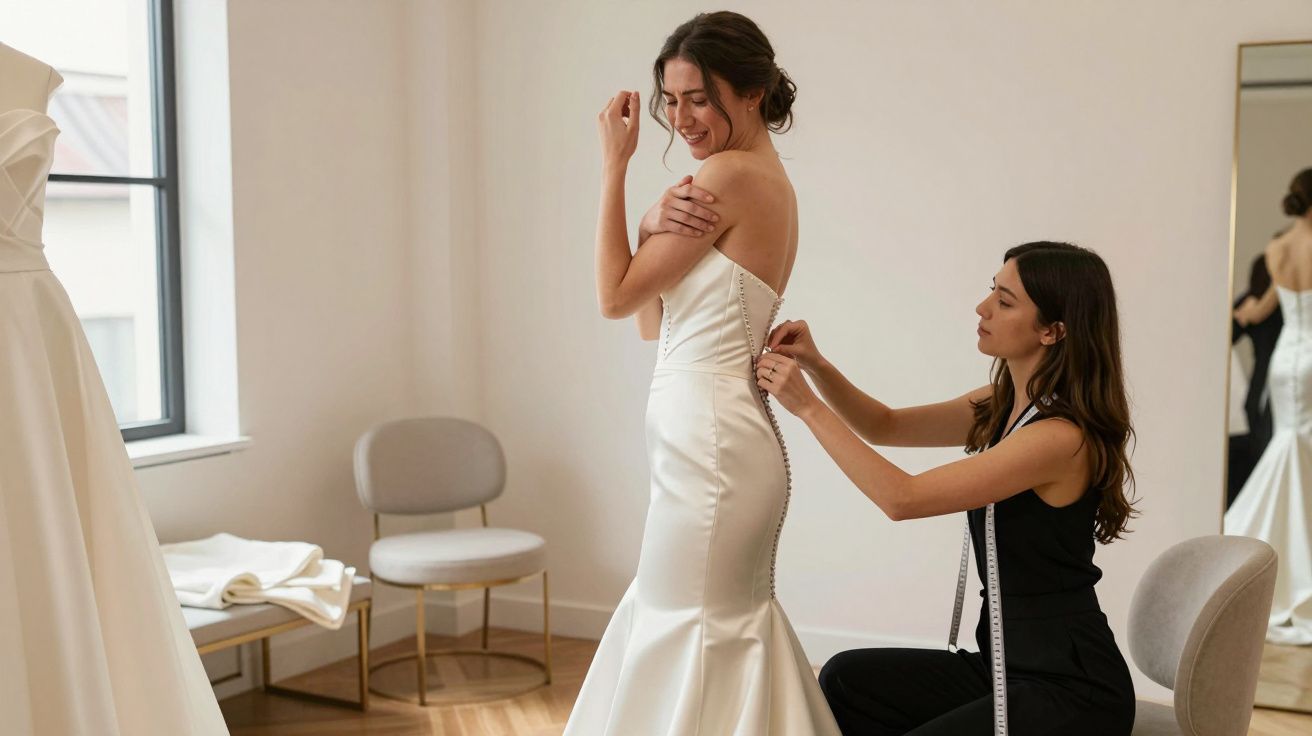
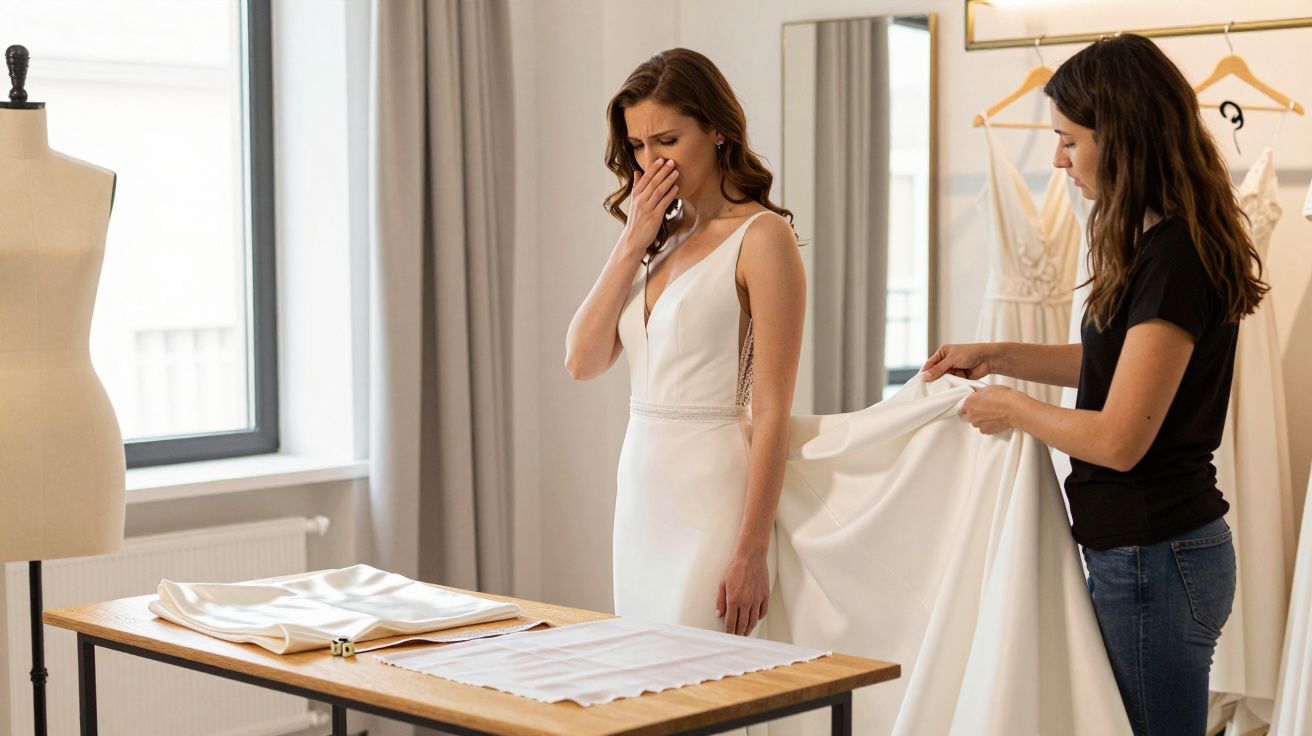
Technically, a fitting is a sequence of small corrections: lengths, balance, support, comfort. Emotionally, it’s a rehearsal for being seen. That’s why people cry at the “wrong” moment - not when they first try on a gown in a showroom, but later, when it fits well enough that they can stop bracing.
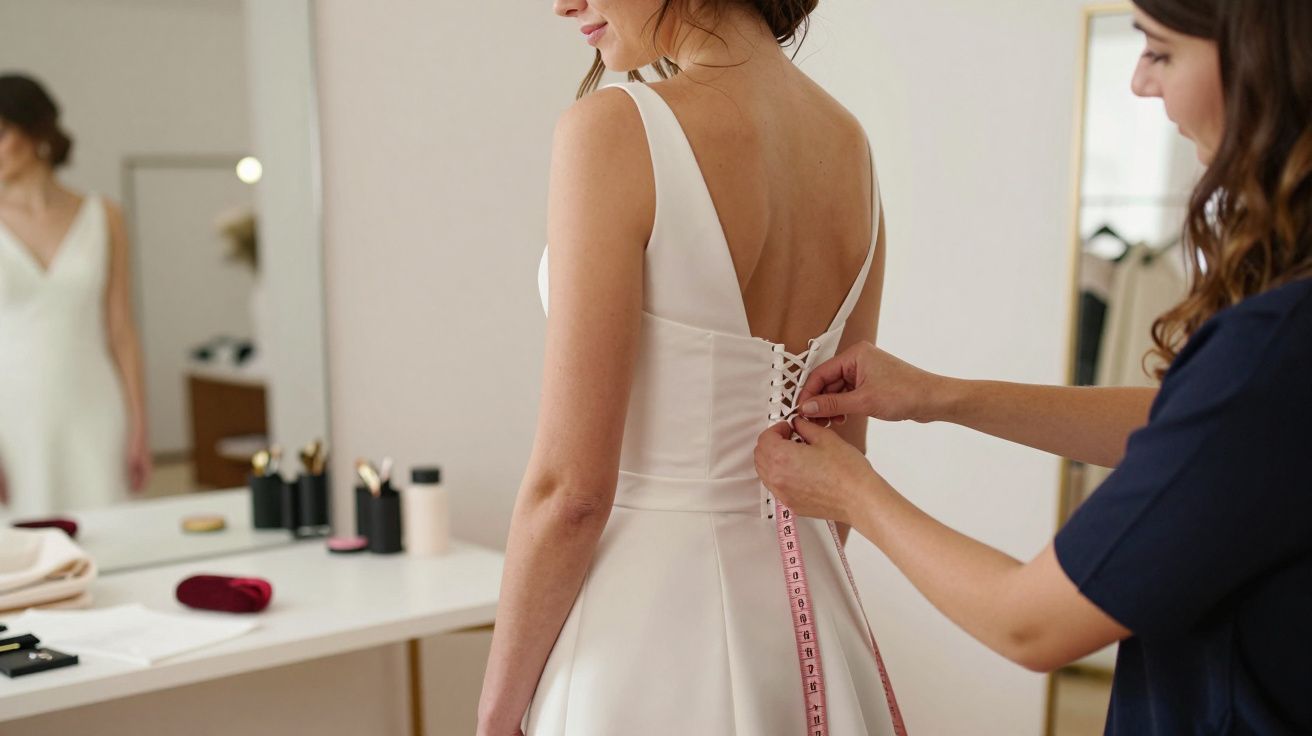
A good fitter isn’t just chasing symmetry. They’re watching how you move, where you tug at the bodice without noticing, whether you hold your breath when you turn. Those cues are as useful as a tape measure.
- A bodice that’s too tight reads as “snatched” in photos but feels like panic by the speeches.
- A hem that’s a centimetre too long won’t just trip you; it will keep you thinking about tripping.
- Sleeves can be beautiful and still stop you hugging people properly.
The practical fixes are the gateway. The point is to remove friction until you can focus on the marriage, not the garment.
The fitting that changes everything: when your body agrees
Most people bring a checklist into the fitting room: shape, support, modesty, sparkle, budget guilt. Emotional alignment tends to arrive when the checklist quietens and you notice your body acting as if the decision is made. Your hands stop fidgeting at the neckline. Your jaw unclenches. You look at your own eyes in the mirror and recognise yourself again.
This is also when some brides surprise themselves by changing their minds. A dress can be objectively stunning and still feel like someone else’s life. A different silhouette, a different neckline, even a different shade of white can suddenly feel honest. That honesty is the point - the dress becomes an extension rather than a costume.
If you’re waiting for a thunderbolt “yes”, consider this: the most reliable signal is often relief.
How to prepare for emotional alignment (without making it a performance)
There’s a temptation to treat fittings like a test you must pass: bring the right shoes, the right bra, the right people, the right reactions. Preparation helps, but the goal is not to stage a cinematic moment. It’s to create conditions where you can hear your own response.
A few habits make the room gentler:
- Bring the shoes you’ll wear, or a pair at the same heel height, so the hem decision feels real.
- Wear the underwear you’re likely to choose, but don’t panic-buy shapewear before you know what the dress needs.
- Practise three movements in the dress: sitting, lifting your arms, walking at a normal pace.
- Take one full breath before you look in the mirror, so you’re not evaluating on a held inhale.
People matter too. If someone’s anxiety spills into criticism, it will end up on your skin. Choose companions who can tell the truth without turning it into a referendum on your body.
The fitting works best when it’s honest, not when it’s impressive.
A quiet script for the fitting room
If words fail (they often do), try this simple language with your fitter:
- “This is what I love.”
- “This is what distracts me.”
- “This is what I need to be able to do in it.”
It turns emotion into usable information, without forcing you to justify your taste.
When it doesn’t feel right: what to do instead of pushing through
Sometimes you leave a fitting more unsettled than when you arrived. That doesn’t mean you’ve made a mistake; it often means the dress is asking for clarity. Discomfort can be physical, but it can also be social - the feeling that you’re dressing for other people’s expectations.
Start with the simplest checks. Is the sample too small, making everything feel harsher than it will? Are the alterations still at an early stage, with temporary clips pulling the dress out of balance? Are you tired, hungry, close to your period, or coming off a stressful week?
If the unease persists even after those variables, name it. “I don’t feel like myself,” is data. So is, “I feel brilliant but trapped.” Emotional alignment isn’t constant bliss; it’s a steady sense that the dress supports your day rather than taking it over.
A few signs you’re close to “yes”
Not the social-media signs. The quieter ones.
- You stop sucking in, because you don’t have to.
- You can imagine eating, laughing, and hugging without adjusting anything.
- Your thoughts shift from “How do I look?” to “Who will I see first?”
- You notice the dress less, and yourself more.
That’s when the fitting changes everything. Not because the dress becomes magical, but because you stop negotiating with it.
FAQ:
- What if I don’t cry or feel a “moment” during bridal fittings? That’s normal. Emotional alignment can feel like calm, relief, or simple certainty rather than tears.
- How many fittings do most people need? Often two to three, depending on the dress structure and how much needs altering. Complex gowns or major size changes can take more.
- Should I bring lots of people to the fitting? Usually no. One or two supportive voices are better than a panel; too many opinions can drown out your own.
- What’s the most common alteration that affects comfort? Bodice support and strap placement. Small changes there can transform how you breathe, move, and relax.
- If the dress looks perfect but feels wrong, is that a red flag? It can be. Comfort and self-recognition matter on a long day; talk to your fitter about what specifically feels “wrong” before assuming it’s just nerves.



Comments (0)
No comments yet. Be the first to comment!
Leave a Comment