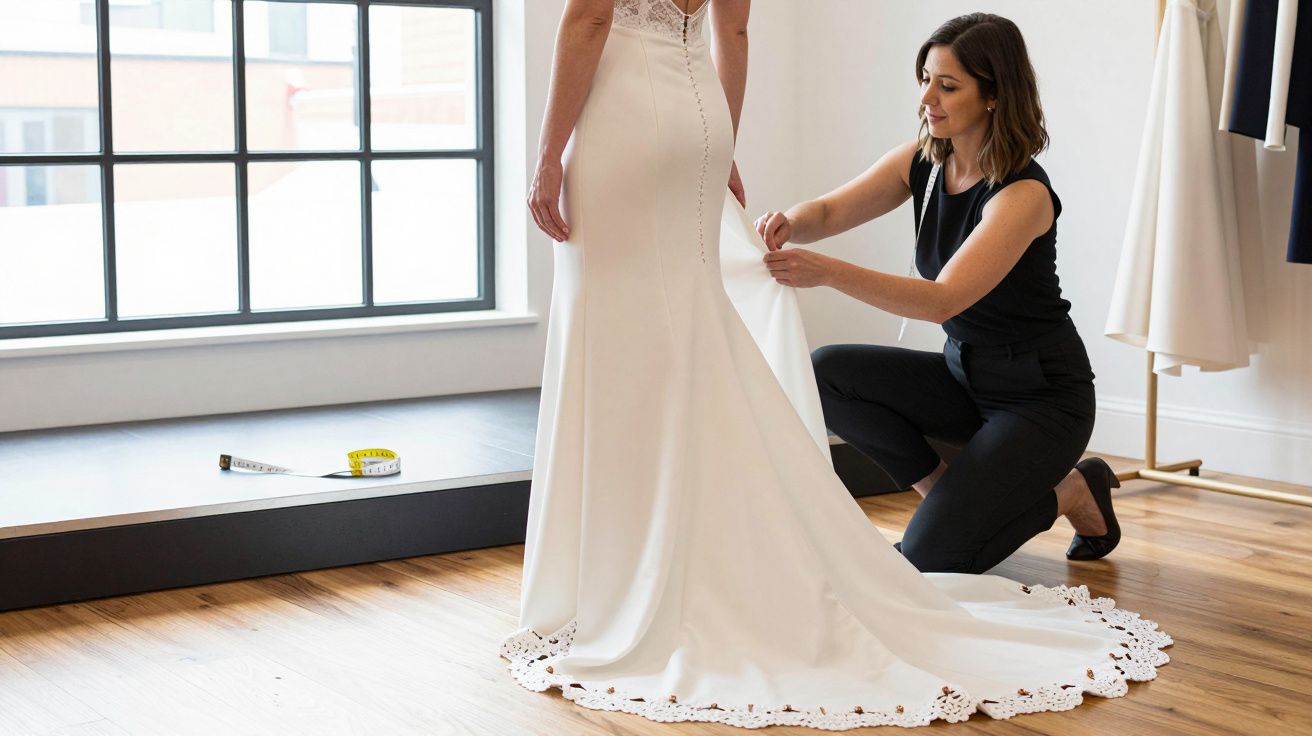
You don’t notice wedding dress trains until you do - usually in the first set of photos, when the fabric looks like it’s pouring out behind you, effortless and cinematic. But that sweep depends on weight distribution: where the dress carries its mass, how it drags, and what happens when you pivot, sit, or take one step too fast. It’s relevant because the train is the detail that can make your pictures look expensive - or make your alterations bill quietly spiral.
I first clocked the problem at a winter wedding in Manchester, watching a bride glide through the aisle like she’d rehearsed it for weeks. In the portraits, her train fanned into a perfect crescent, the kind photographers love because it frames the body without shouting. Twenty minutes into the reception, though, she was lifting the back of her dress with two fingers like she was handling a hot pan. The bustle was holding, technically. The dress wasn’t.
That’s the secret of the “beautiful” train: it’s not just extra fabric. It’s a moving load you’re asking a waistline, a zipper, a seam, and your own balance to manage all day.
The train detail that looks like pure romance (and isn’t)
Photographers adore a train that has shape without stiffness - a soft taper that starts high at the back, then widens as it hits the floor. It photographs as intention. It gives you that long line from shoulder to hem, and it makes even a simple pose look editorial because there’s something happening behind you.
Tailors, on the other hand, see a physics problem wearing lace.
A longer train increases drag. A heavier train increases pull. And a train with embellishment concentrated at the hem - lace motifs, beading, horsehair braid - shifts the centre of gravity backwards. The result is subtle at first: a waistband that wants to dip, straps that feel a touch tighter, a zip that takes a second extra to close. By hour five, it’s no longer subtle.
The trap is that the prettiest trains often hide their weight. Tulle can be airy, sure, but stack enough layers and you’ve built a duvet. Add an appliquéd lace edge and suddenly the weight is all at the very end, like a pendulum.
Why weight distribution is the real boss
A dress can weigh the same overall and still feel completely different on your body. The difference is where that weight sits.
When weight is centred closer to your natural waist and hips, you feel supported. When weight is concentrated far behind you - the train carrying it low and long - your body compensates. You lean forward a fraction. You shorten your stride. You hold your shoulders differently. The camera reads that as tension, even if you’re smiling.
A good tailor will talk about this in plain language: What is taking the strain? Is it your waist seam, your straps, your corsetry, the zip, the buttons, or a single layer of tulle doing heroic work? If the answer is “a bit of everything”, you’ve got a train that will behave in photos and misbehave in life.
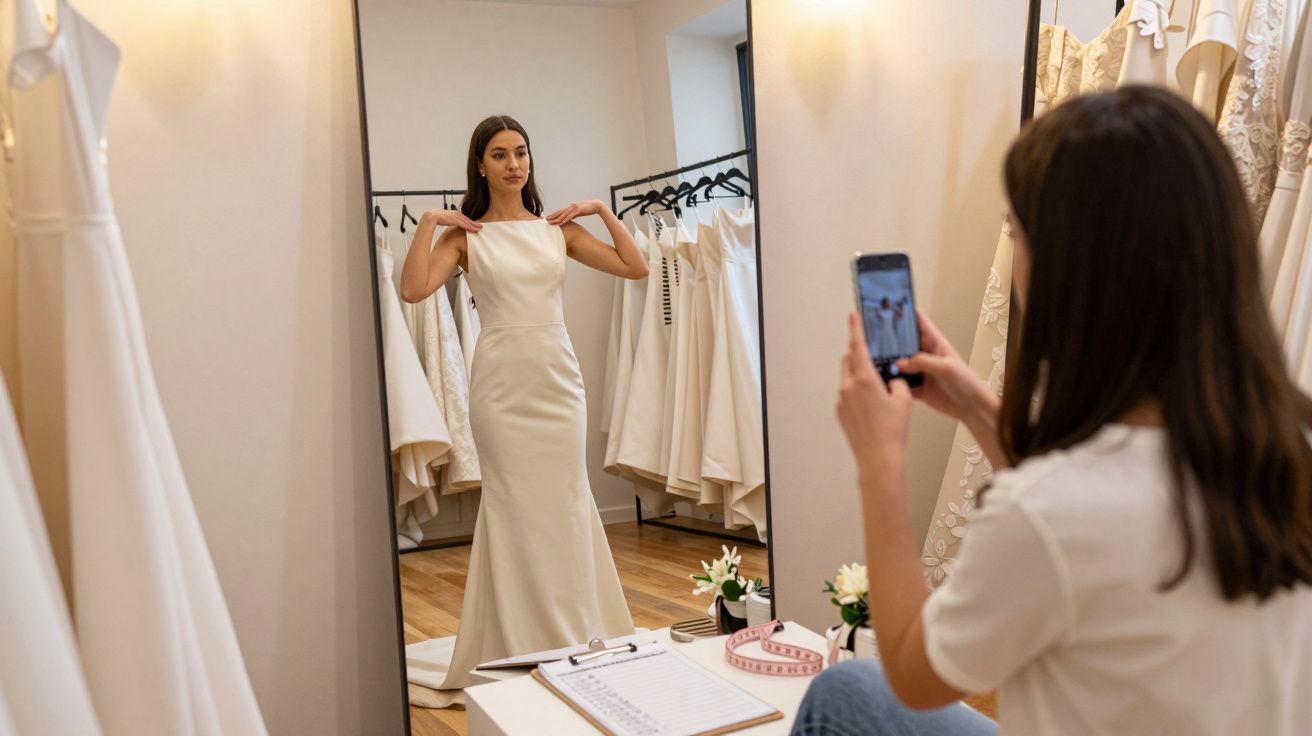
Let’s be honest: nobody thinks about this while trying on dresses under flattering boutique lights. You walk, you turn, you do a little swish, and it feels fine for three minutes. The wedding asks it to be fine for ten hours.
The quiet troublemaker: the lace-edged “puddle” train
There’s one train style that reliably produces gorgeous stills and nervous fittings: the puddle or chapel-length train with a scalloped lace border.
It’s stunning because the edge provides a clear outline in pictures. The scallop catches light, the pattern reads from a distance, and the whole train looks “finished” even when it’s casually arranged. It also concentrates weight exactly where you don’t want it: right at the perimeter, far from your body.
Common knock-on effects:
- The back waist dips slightly as the train drags, creating wrinkles that weren’t there in the fitting.
- The skirt twists a few degrees off-centre after walking, especially on smoother floors.
- Bustles pop because they’re holding a weighted edge, not just lifting fabric.
- Buttons or loops strain because they’re fighting leverage, not just gravity.
None of this means “don’t get the train”. It means treat the train like a feature you engineer, not a flourish you hope for.
How to keep the drama without the dread
You want the photographs. You also want to sit down without feeling like your dress is trying to return to the aisle on its own. The fix is rarely one big change; it’s usually three small, boring ones done well.
1) Ask what’s heavy, not what’s pretty
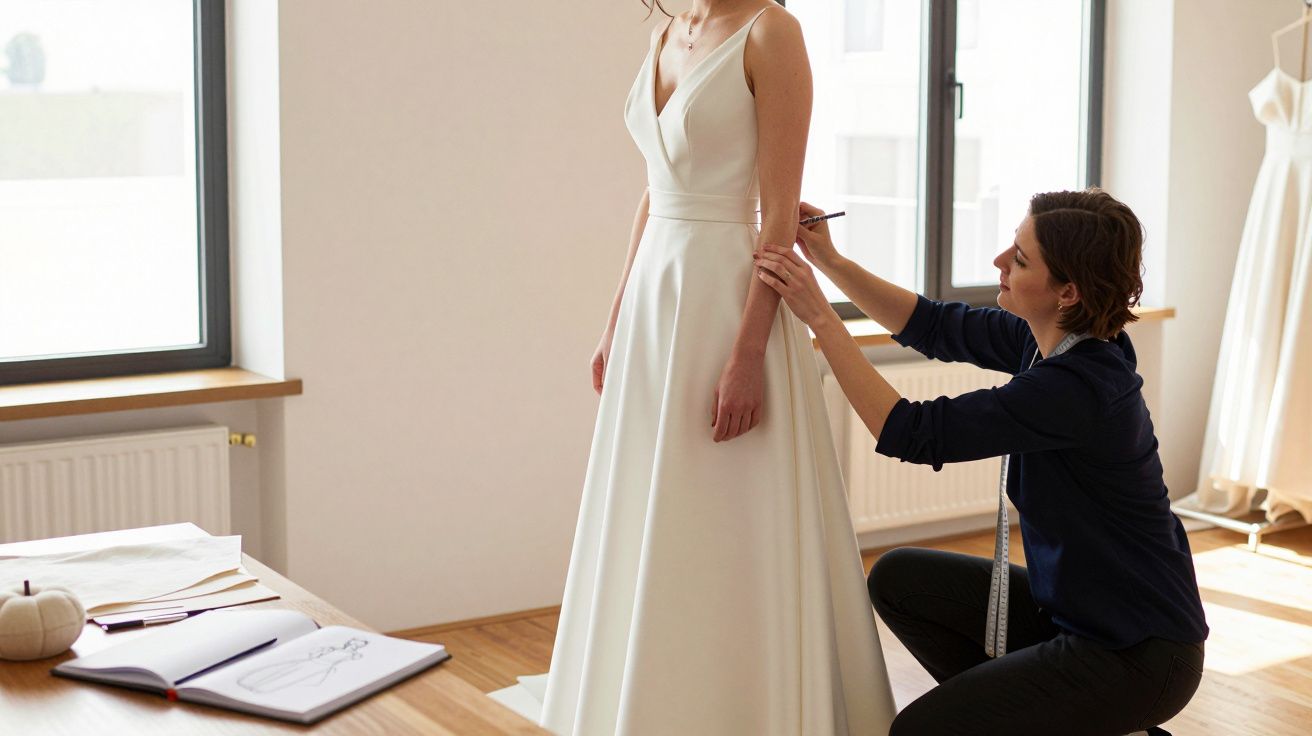
During your fitting, pick up the train with both hands and feel for the “loaded” areas. Beading at the hem? Dense lace? Multiple layers? If the weight lives at the edge, flag it early.
Options your tailor may suggest: - Reduce appliqué density towards the very end of the train. - Swap heavier trim for a lighter lace or remove horsehair in specific sections. - Add support structure under the skirt so the weight is carried higher.
2) Choose a bustle that matches the load
Not all bustles are created equal. A single-point bustle holding a lace border is asking for trouble. Multi-point systems spread the strain and help maintain shape.
What tends to work better for heavier hems: - A French bustle (under-bustle) with multiple pick-up points - A combination bustle for layered trains (securing different layers separately) - Reinforced loops and inner buttons, not tiny thread chains doing all the work
3) Test walking like you mean it
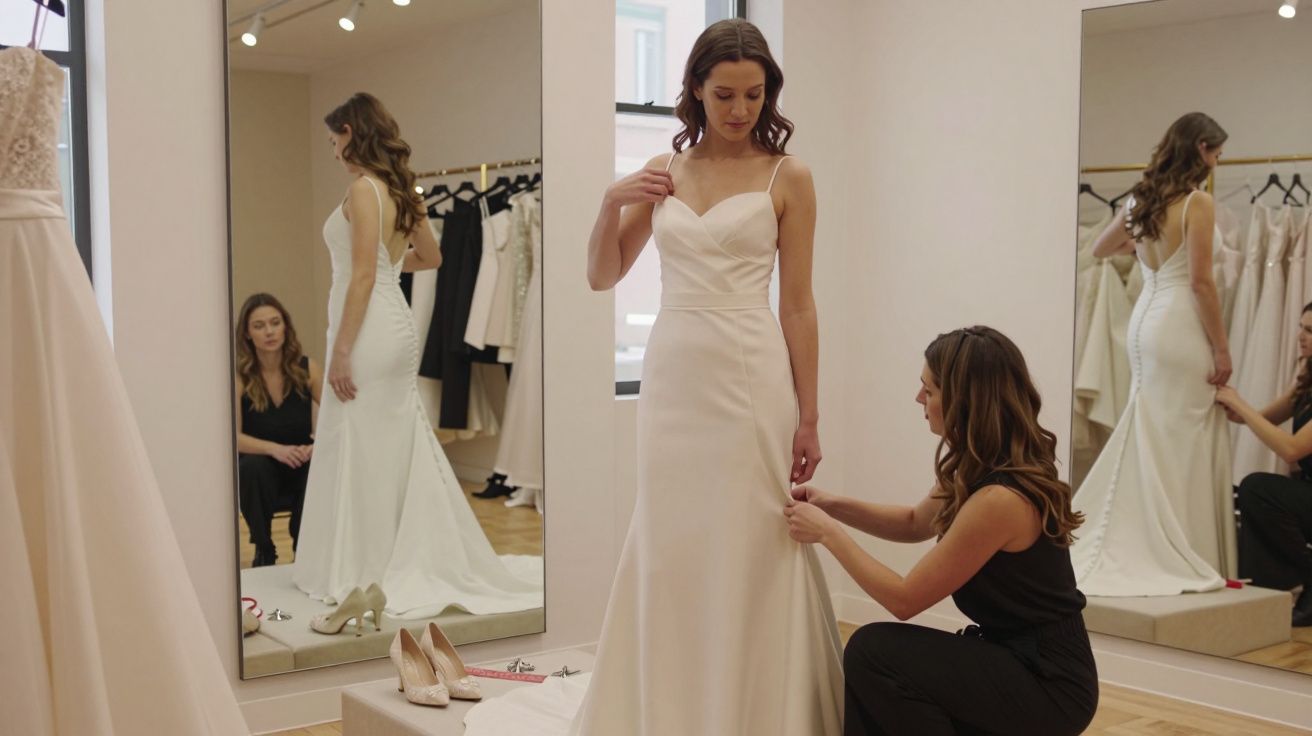
Do more than a gentle boutique glide. In your shoes, practise: - Five minutes of walking at normal pace - One set of stairs (up and down) - A full sitting motion (and standing back up) without using your hands
If something shifts, it will reveal itself in repetition. A train that behaves for one turn can still sabotage you after fifty steps.
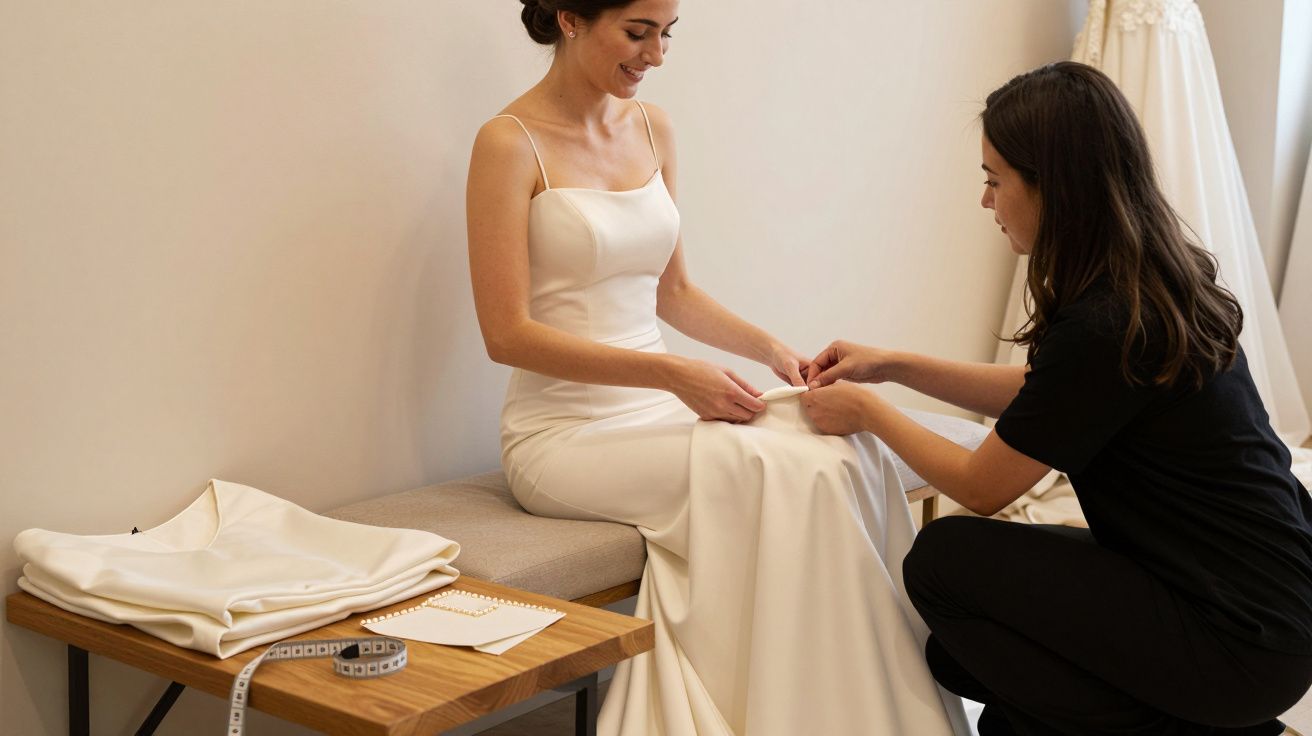
“A train is a lever,” one alterations specialist told me, pinning a bustle point with the seriousness of a medic. “If I spread the pull, you’ll forget it’s there. If I don’t, you’ll spend the night holding your dress like a handbag.”
A quick checklist to take to your next fitting
- Where is the heaviest part of the train: near the waist, mid-skirt, or hem?
- Does the back waist stay level after two minutes of walking?
- Do the straps feel tighter after moving, not just when standing still?
- How many bustle points are planned - and are they reinforced?
- Can you lift the train easily with one hand without the dress pulling backwards?
Small, friendly systems make wedding days stick. The train should be something you wear, not something you manage.
| What you want | What to ask for | Why it helps |
|---|---|---|
| Big, clean “fan” in photos | Wider train with lighter hem detailing | Keeps shape without concentrating weight at the edge |
| Train that behaves at the reception | Multi-point bustle with reinforced loops/buttons | Spreads load, reduces popping and twisting |
| Comfort without losing drama | Support higher up (structure, layer planning) | Improves weight distribution and reduces backward pull |
FAQ:
- Will a longer train always feel heavier? Not always. Length increases drag, but a well-designed, lighter hem can feel easier than a shorter train with dense lace and beading.
- Can a tailor fix a train that pulls the waist down? Often, yes. The usual solutions are redistributing layers, adding internal support, adjusting the waist stay, and switching to a bustle that spreads the load.
- Is a French bustle better for heavy lace edges? It can be, because it tucks fabric under and can use multiple points. The “best” bustle depends on your fabric, layers, and where the weight sits.
- What should I do during a fitting to catch problems early? Walk for several minutes, turn repeatedly, sit down, stand up, and then check whether the centre back and side seams are still aligned. If they drift, the train is winning.

Comments
No comments yet. Be the first to comment!
Leave a Comment