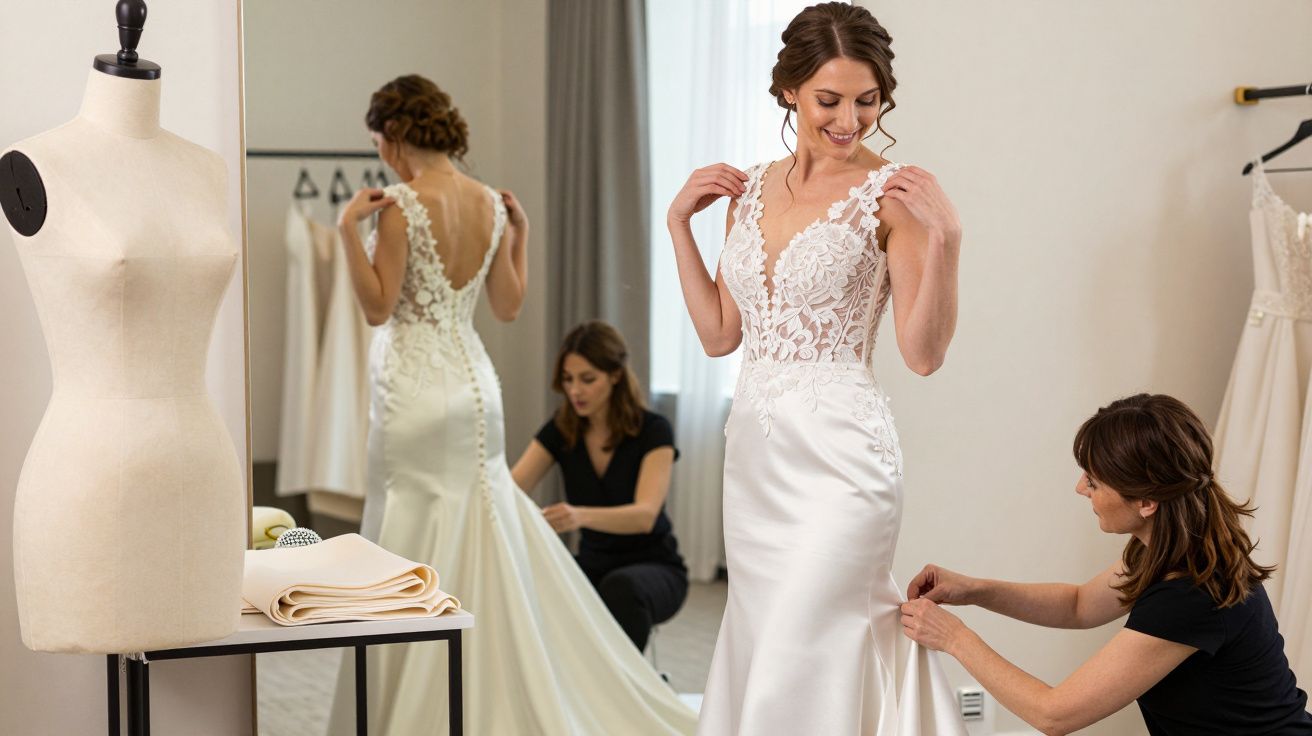
The most dramatic part of a wedding dress often happens in the weeks before the day, in a fitting room with pins in your hem and a seamstress squinting at the light. That is where before and after alterations quietly rewrite how a gown sits, moves and photographs, often through structural change that guests will never clock. It matters because comfort, confidence and fit don’t come from the label - they come from what is rebuilt inside the dress.
On the hanger, two dresses can look identical. On a body, one will behave like it was made for you, and the other will feel like you’re borrowing someone else’s moment. The difference is rarely magic. It’s method.
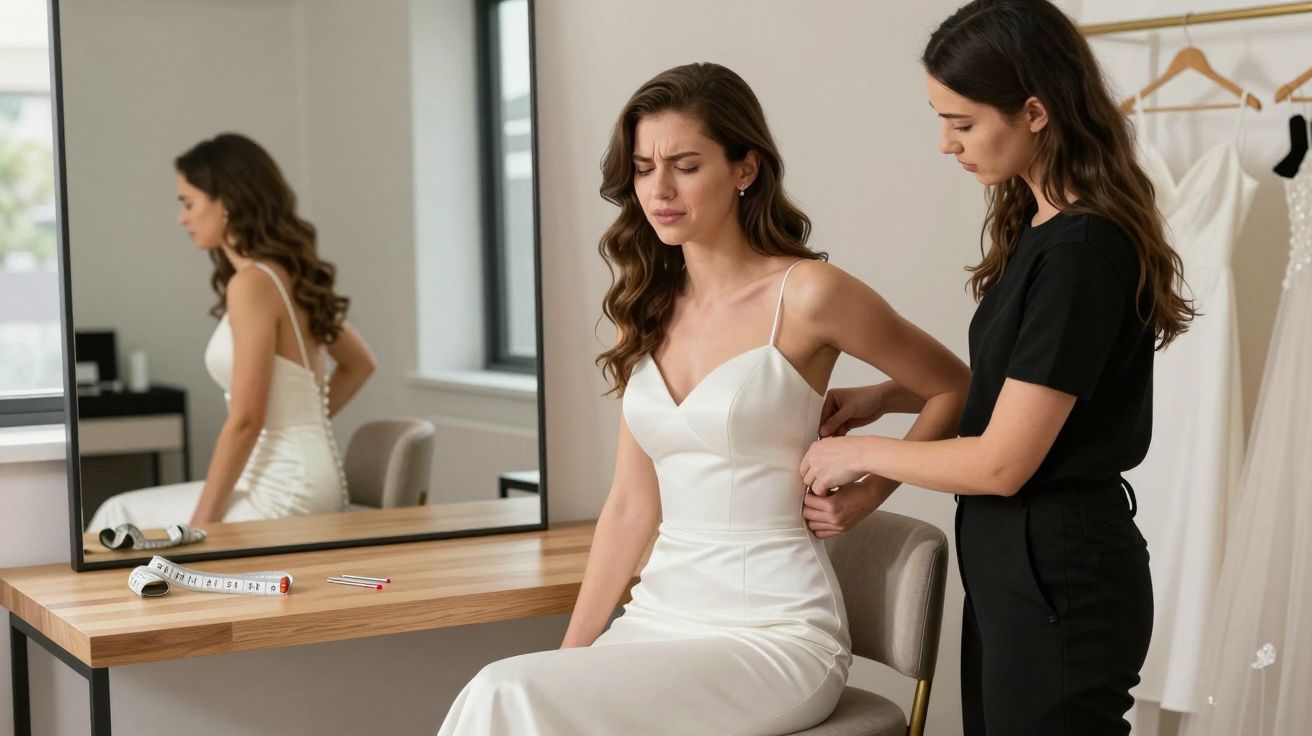
The fitting-room reveal no one posts
There’s a particular silence when you step out for your first proper fitting. Not the “oh wow” of the shop appointment, but the quieter kind: your own brain taking stock of everything that isn’t quite right yet.
The bodice might float away at the neckline when you inhale. The straps might bite. The skirt might drag at the back, then trip you at the front. None of that means you chose badly. It means the dress is still a sample - and you are not.
A good seamstress will rarely start with cosmetic tweaks. She starts by asking how you want to feel on the day: held in, free to eat, able to dance, able to hug. Then she finds the points of tension where fabric and body disagree, and she negotiates a truce.
Most “perfect” wedding photos are built on unseen engineering: the dress is reshaped to match you, not the other way round.
What “before and after” really changes
Fit isn’t only size - it’s balance
When people imagine alterations, they picture taking in a waist or shortening a hem. That’s part of it, but the bigger work is balance: where the weight sits and where the fabric wants to fall.
A dress can technically be “your size” and still be wrong at the shoulders, too long in the torso, or cut for a different bust shape. Those tiny mismatches create the things guests notice without knowing why: the constant tugging, the strap adjustment, the stiff posture.
Once the balance is corrected, you stop thinking about the dress. That’s the goal. You can move like yourself.
The structural change hiding under lace
Structural change is what turns a pretty bodice into one that stays put for eight hours. It can include:
- Adding or replacing boning so the bodice doesn’t collapse when you sit.
- Reinforcing seams that take the load (especially with heavy beading).
- Rebuilding cups or adding internal support so you’re not relying on tape and hope.
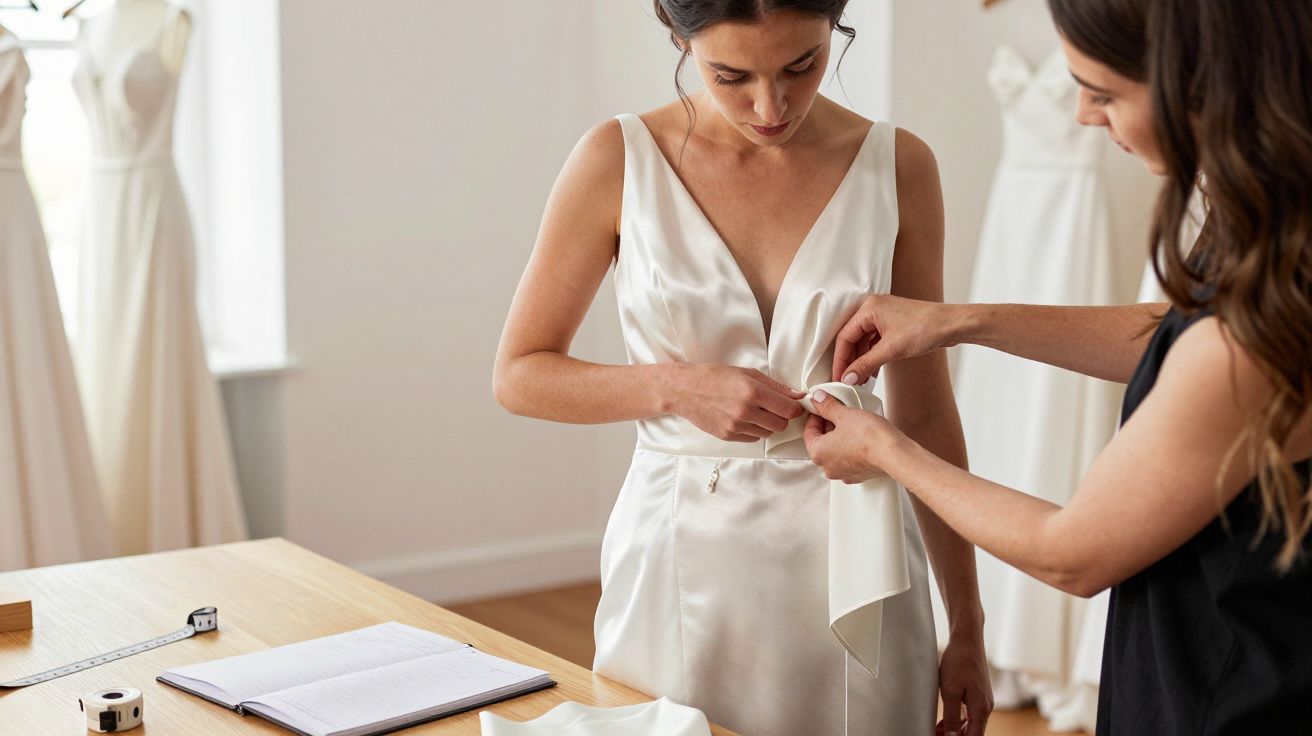
- Adjusting the waist stay (an internal belt) to carry weight without strain.
- Repositioning straps so they support rather than decorate.
These aren’t glamorous details, but they’re the ones that stop you spending your reception pulling fabric back into place. In photos, they translate into a neckline that looks intentional instead of accidental.
The three areas guests notice - without knowing they’re noticing
1) The neckline that doesn’t “talk back”
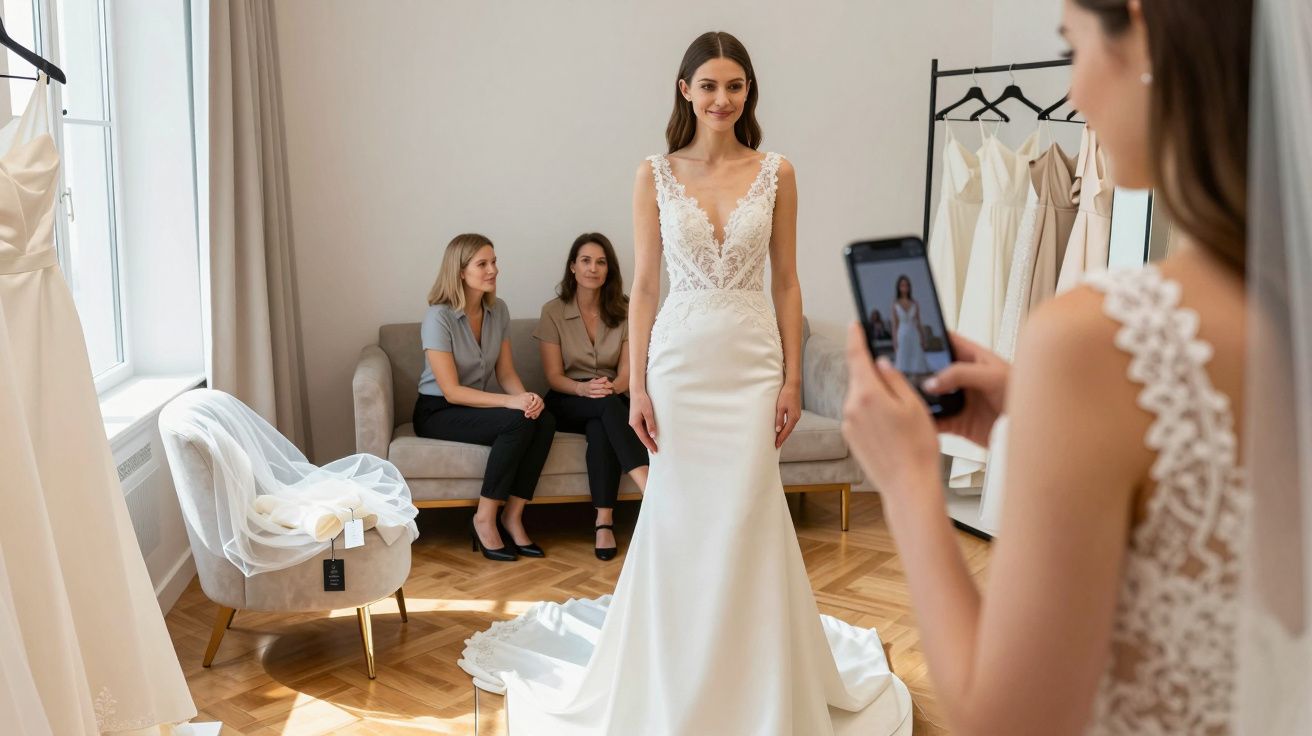
A neckline that gapes, wrinkles or shifts reads as nervousness on camera. It makes you appear as though you’re bracing yourself. After alterations, a good neckline looks calm: it stays where it was meant to be, even when you laugh.
That calm is often created by millimetres: a slightly adjusted shoulder seam, a reshaped dart, a tiny tuck that removes drag lines. It’s the dress learning your posture.
2) The waist that sits where your body does
A waist seam that’s too low can make the skirt pull and the bodice ride up. Too high, and the whole silhouette can feel squeezed. The fix is not always “take it in”; it’s often “move it”.
That can mean shortening the bodice, lifting the waistline, or redistributing fabric so the dress settles at your natural waist rather than the designer’s. It sounds minor until you feel the difference when you walk.
3) The hem that behaves in real life, not just on a podium
Shops pin hems while you’re standing still. Your wedding day involves steps, uneven pavements, stairs, grass, and someone inevitably treading on your train.
A hem that’s right is measured for your actual shoes, with your actual underlayers, and with movement considered. That might mean a bustle placement that lifts cleanly for dancing, or a hem that’s subtly higher at the front than your instinct would choose - because you will be moving forward all day.
The parts that look small - and change everything
Some alterations feel too “tiny” to spend money on until you’ve had them done once.
- Armholes: If they’re too low, you lose range of motion and the bodice shifts when you raise your arms. Raising an armhole can make the dress feel immediately more secure.
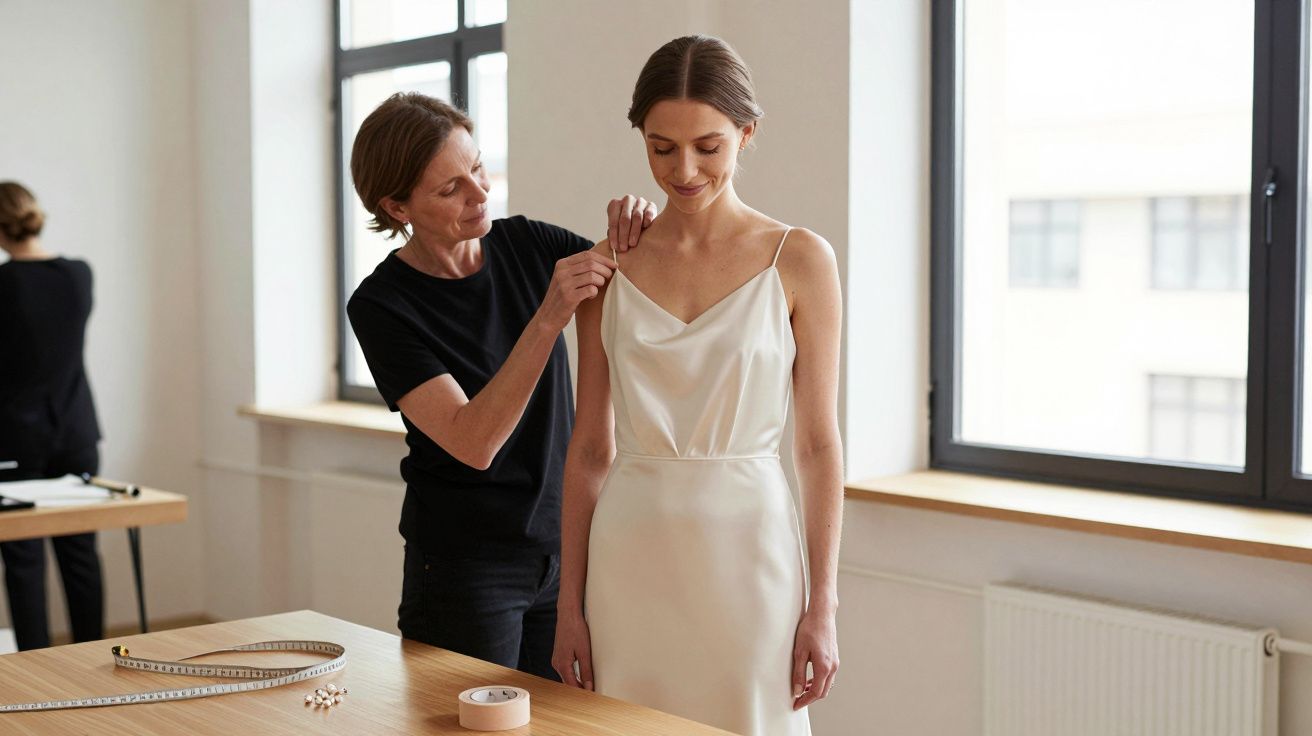
- Strap placement: A strap moved a centimetre can stop slipping without tightening.
- Bust shaping: Not bigger, not smaller - shaped to you. That reduces gaping and stops the dress from drifting.
- Skirt distribution: Heavy skirts can be rebalanced so the front doesn’t lift as the back drags.
These are the adjustments that make you look “effortless” because you’re no longer managing fabric.
A simple way to talk to your seamstress
The most useful feedback is not “it’s too loose”. It’s what happens when you move.
Bring shoes. Bring your undergarments. Then try three actions in the fitting:
- Sit down and stand up twice.
- Raise both arms as if you’re hugging someone.
- Walk quickly and turn.
Tell her what you feel in each moment: where it pulls, where it slides, where it makes you hold your breath. A skilled fitter will translate sensations into stitches.
Red flags worth listening to
- You’re told “it’ll be fine on the day” without testing movement.
- Pins are used to force fabric flat rather than reshape it.
- The bustle is treated as an afterthought, not a system.
- The dress is repeatedly tightened instead of rebalanced.
You should leave a fitting feeling more secure, not more restricted. “Snug” and “supported” are different experiences.
The quiet timeline that prevents panic
Most wedding dress stress comes from leaving too little time for the work that actually matters. Alterations are not one appointment; they are usually a sequence of decisions.
A practical approach looks like this:
- First fitting: establish the core fit (bust, waist, shoulders) and agree what needs rebuilding.
- Second fitting: confirm structure and movement; set hem with shoes and underlayers.
- Final fitting: finish details, confirm bustle, practise walking and sitting.
If your weight fluctuates, or you’re changing shoes, say early. Seamstresses can accommodate a lot - but they can’t reverse time.
The “transformation” is less about shrinking a dress and more about making it behave like it belongs to you.
The moment it all clicks
There is a point - usually not the first fitting - when you look in the mirror and stop scanning for flaws. Your shoulders drop. You stop holding your stomach in. You can breathe.
That’s what guests see. Not the stitches or the boning, not the hours of work inside the lining, but the ease it buys you. The dress becomes background, and you become the focus, which is exactly how it should be.
FAQ:
- When should I book alterations? As soon as your dress arrives and you’ve chosen your shoes (or at least heel height). Most brides need multiple fittings, so time is your friend.
- Will alterations ruin the designer look? Good alterations protect it. The point is to keep the intended silhouette while making it stable and comfortable on your body.
- What’s the biggest mistake with a strapless dress? Over-tightening instead of adding support. A proper internal structure (boning, cups, waist stay) usually works better than simply squeezing.


Comments (0)
No comments yet. Be the first to comment!
Leave a Comment