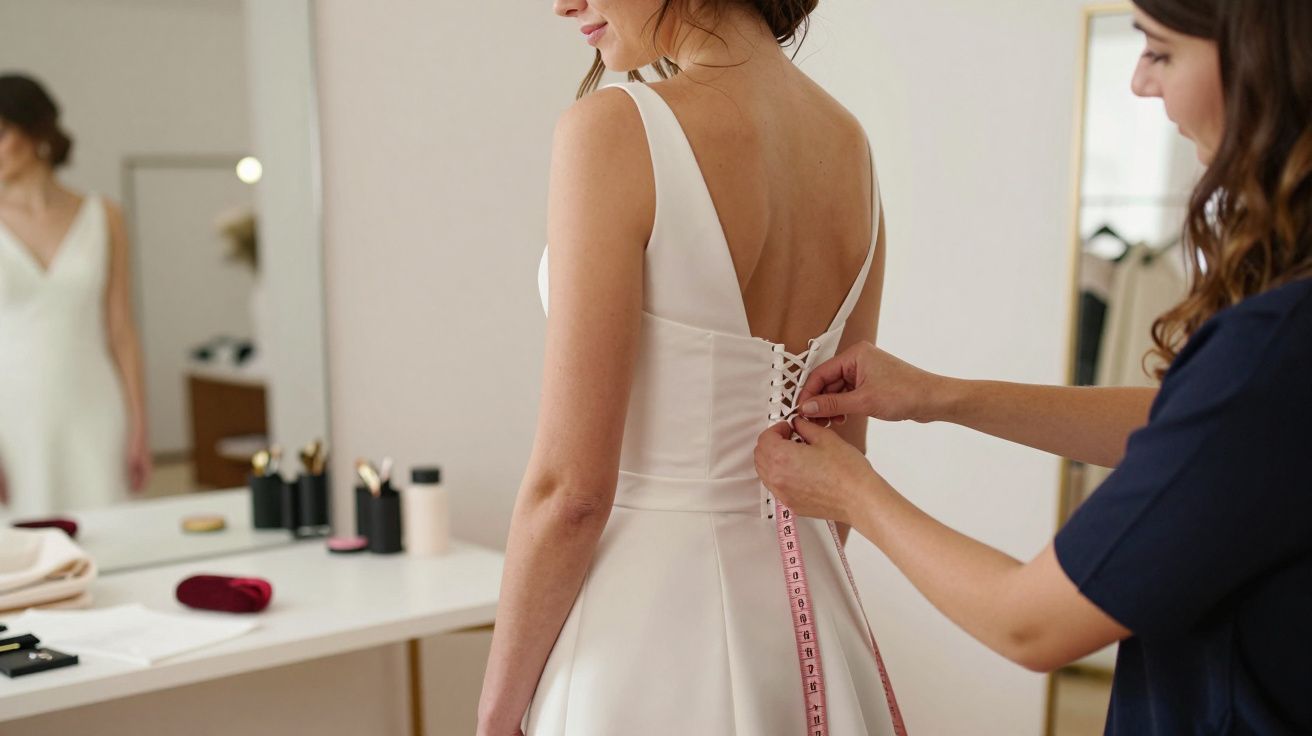
Emergency bridal alterations sound like the thing you only book when the zip has betrayed you and the wedding is in 48 hours. But the smartest use of them is crisis prevention: a small, planned alteration that quietly removes the most common causes of last-minute wedding dress panic. It’s the kind of tweak you don’t notice in photos-yet you feel it in your body all day, because you’re no longer bracing for a wardrobe malfunction.
Most dress stress isn’t about looks. It’s about movement: breathing after a big exhale, sitting for the meal, hugging relatives, lifting your arms for the first dance, going to the loo without a full-scale operation. There’s a single alteration that touches all of that, and it’s far less dramatic than people think.
The alteration that saves the day: a hidden “insurance panel” at the bodice
If you want a plain-English name, ask your seamstress about adding a modesty panel and/or converting the closure so the bodice has a little forgiveness. It’s essentially a concealed buffer at the back-often behind corset lacing or a converted zip-so you can tighten or loosen slightly without the dress fighting you.
That matters because bodies fluctuate. Not “new body” fluctuations-normal ones: travel swelling, a salty dinner, nerves, hormones, a different bra, standing up straight for eight hours, even the way you hold yourself when you’re excited. A rigid closure (especially a tight zip) doesn’t negotiate. A hidden adjustability system does.
And the best part is psychological: it turns the dress from a test you must pass into something that works with you. You stop thinking, What if it doesn’t do up on the morning? and start thinking, We’ve got options.
Why zips and “perfect fit” are the real panic triggers
A dress can fit beautifully in a calm fitting room and still cause chaos on the day. The difference is conditions: heat, time, pace, and emotion. Zips are efficient but unforgiving, and they tend to fail at the worst moment-when someone pulls a little too hard, when the fabric is under tension, when you’ve just had a sip of prosecco and you’re breathing shallow because everyone’s watching.
Even when a zip doesn’t break, it creates that specific kind of anxiety: the feeling that one millimetre is the difference between “I’m fine” and “I can’t move my ribs”. You end up standing like a mannequin because you’re scared to sit, scared to eat, scared to hug.
A hidden panel with lacing (or a zip that’s been converted to allow micro-adjustment) takes that single point of failure and spreads the tension out. It’s not about making the dress looser. It’s about making it survivable.
What it changes in real life
- You can breathe properly during photos without the bodice creeping up.
- You can sit down without the top edge digging in or popping open.
- You can handle normal, unglamorous body changes across the day.
- You reduce the risk of a zip failure becoming a full emergency.
How it’s done (and what to ask for)
A good bridal alterations specialist will guide you, but it helps to know the language and the logic. You’re aiming for a closure that keeps the dress secure while allowing a small range of adjustment-usually at the back bodice-without changing the dress’s silhouette from the front.
Common approaches include:
- Adding a modesty panel behind existing corset lacing (or improving the one you already have so it actually covers and supports).
- Converting a zip to corset lacing with a structured panel beneath, so it looks intentional and feels stable.
- Reinforcing the back with extra boning/support so tightening doesn’t create ripples or strain seams.
When you’re in a fitting, say it plainly: you want comfort and contingency. A seamstress who understands weddings won’t find that fussy; they’ll find it realistic.
Timing: the crisis prevention schedule that actually works
A hidden adjustability panel isn’t a “day before” job. It’s straightforward, but it needs at least one proper fitting to get the tension right and make sure it sits flat. The whole point is to avoid the rushed, sweaty appointment where everyone pretends it will be fine.
A simple timeline:
- 6–8 weeks out: discuss options and confirm whether the dress structure allows it.
- 3–4 weeks out: fitting with your real undergarments and shoes; test sitting, lifting arms, and breathing.
- 1–2 weeks out: final tweak and a calm, unhurried try-on.
Let’s be honest: nobody wants more appointments. But this is the one that trades an hour in a studio for not thinking about your ribs and your zip all day.
Small signs you should consider it (even if the dress “fits”)
Sometimes the dress is technically the right size, but the day will still expose weak points. Consider adding hidden adjustability if:
- The bodice feels fine until you take a deeper breath.
- You can’t comfortably sit without the top edge shifting.
- The zip takes effort to close, even once.
- The fabric shows strain lines near the closure.
- You’re travelling, changing climates, or wearing shapewear you haven’t tested for hours.
This isn’t pessimism. It’s planning, the same way you pack safety pins and painkillers and a phone charger-except it’s sewn into the dress.
The quiet relief of knowing the dress can flex with you
There’s a special kind of calm that comes from hearing, “If you need it a touch tighter, we can do that. If you need a touch looser, we can do that too.” It turns the morning from a performance into a process, and it gives you back the headspace you actually want on your wedding day.
You don’t need to expect disaster to prepare for it. That’s what crisis prevention is: not drama, just a small, hidden piece of engineering that keeps joy from being interrupted.
| What you’re fixing | The hidden adjustment solution | The benefit on the day |
|---|---|---|
| Zip strain and sudden “won’t close” moments | Modesty panel + corset lacing or adjustable closure | A fit that can adapt by small increments |
| Restricted breathing and sitting discomfort | Better tension distribution + added support | Comfort without changing the look |
| Panic over body fluctuations | Built-in flexibility at the bodice | Less stress, more freedom to eat, hug, dance |
FAQ:
- Can this be added to any dress? Most dresses can be adapted, but it depends on the back design and structure. A skilled alterations specialist will tell you quickly if the fabric and boning can support it.
- Will it change how the dress looks? From the front, usually not at all. From the back, it can be designed to look original (especially if lacing suits the style) and the modesty panel stays hidden beneath.
- Is this only for weight changes? No. It’s for normal day-of shifts: breathing, posture, heat, swelling, shapewear, and long hours of movement.
- Is it expensive? It varies by dress and complexity, but it’s typically far cheaper than a last-minute rescue or replacing a broken closure under pressure.
- When should I book it? Ideally 6–8 weeks before the wedding so there’s time for a proper fitting and a calm final adjustment.






Comments (0)
No comments yet. Be the first to comment!
Leave a Comment