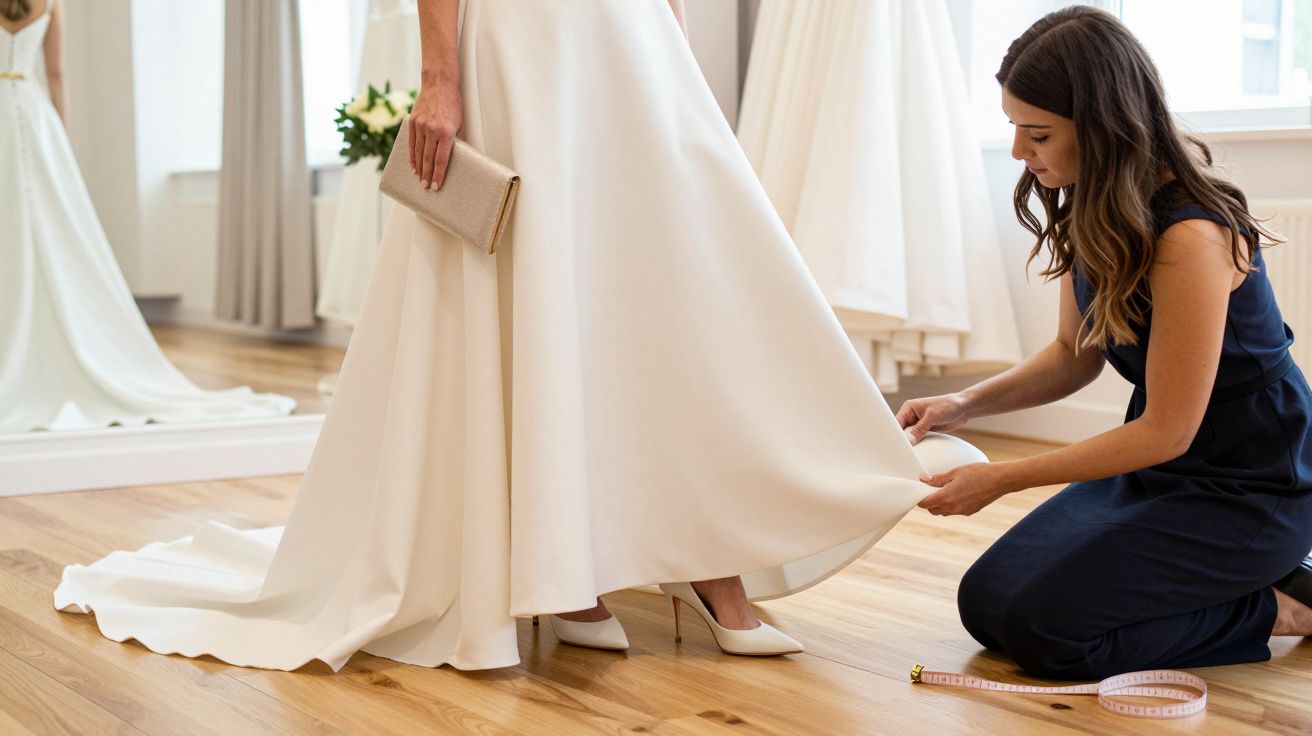
The last time I watched a bride practise her aisle walk, it wasn’t nerves that stopped her. It was the front edge of her skirt catching her toe-again-and the sudden, awkward shuffle that follows. Wedding dress hem alterations sound like the most boring part of the whole look, but they decide your movement flow: whether you glide, hover, or feel like you’re negotiating a tripwire in front of everyone you love.
Because the aisle is not a photo. It’s a piece of choreography you do once, in shoes you may not have worn for more than ten minutes, while holding a bouquet and breathing through feelings you didn’t schedule.
The hem isn’t just length. It’s your stride.
Most people think the hem is a single measurement: “take it up an inch” and you’re done. In reality, a hem is a relationship between your shoe height, your natural stride, the weight of the skirt, and what the fabric does when it swings forward.
A dress can look perfect standing still and turn into a different garment in motion. Your foot travels forward before it goes down. If the hem sits too low at the front, it becomes the first thing your toe meets. If it sits too high, you end up lifting your steps, which can read as tense even when you’re trying to feel calm.
The smallest change you can make-just a few millimetres at the front-can give you back your normal walk.
The alteration that changes everything: a “walking hem”
Some seamstresses call it a “walking hem”. Others simply build it in without naming it. The idea is the same: the front of the hem is set a touch higher than you’d choose if your only goal was to hide your shoes.
Not high enough to look short. High enough to stop the fabric from scooping the floor as you step.
On a fitted crepe gown, that might mean clearing the floor by a fingertip at the centre front. On a full skirt with multiple layers, it might mean shaping the outer layer to float while the inner layers sit slightly differently, so you keep coverage without the snag.
A good hem doesn’t just avoid tripping. It allows your body to do what it already knows how to do.
Why the “perfect length” can feel wrong on the day
There’s a quiet loss that happens when you put on a dress and realise you can’t move like yourself. It’s not dramatic, but it’s real: your stride shortens, your shoulders tighten, and you start thinking about your feet instead of the moment.
The brain loves predictability. If your hem brushes your shoe once, your body starts anticipating it. You walk defensively. The aisle gets longer.
That’s why fittings should include walking, turning, and stepping sideways-because the dress doesn’t need to fit your body in a mirror. It needs to fit your movement.
How to tell if your hem is fighting your movement flow
You don’t need to be an expert. Your body will report it quickly, usually in the form of tiny compensations.
Look for these signs during your fitting:
- You’re taking smaller steps than you normally would.
- Your toe catches the skirt when you start walking.
- The skirt pulls forward when you lift your knee (especially on heavier fabrics).
- You can’t walk at the same pace as you do in everyday heels.
- You’re holding the dress unconsciously, “just in case”.
If any of those are happening, the solution is rarely “practice more”. It’s usually “adjust the hem for walking, not for standing”.
What to ask for at your alterations appointment
Bring the shoes you will wear on the day. Not “similar shoes”. The actual pair, worn in enough that they don’t change your posture at the last minute. If you’re swapping into flats later, bring those too.
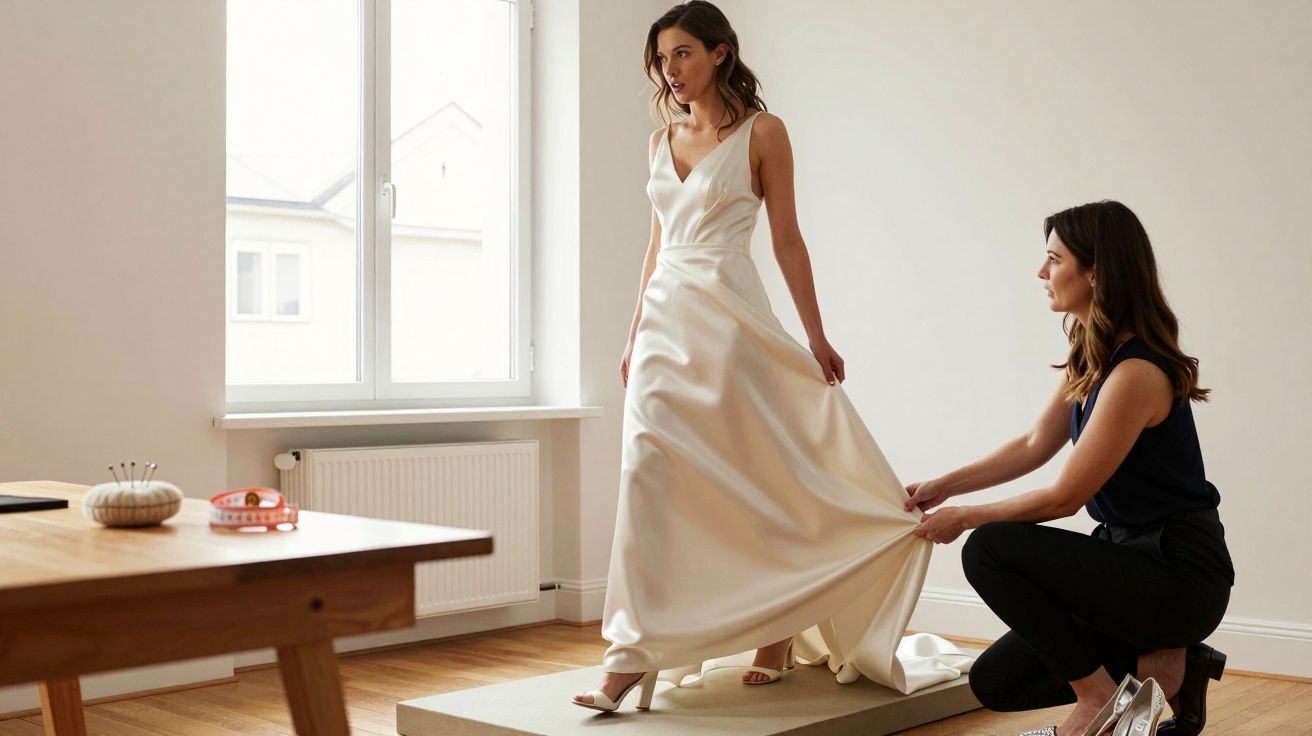
Then ask your seamstress to pin the hem while you move, not while you pose. You want a hem that survives real life: carpet, pavement, a threshold, someone stepping slightly too close during a hug.
A simple script helps:
- “Can we pin this while I walk at a normal pace?”
- “I’d rather see a little shoe than catch the hem.”
- “Can we check the front in motion and the back when I turn?”
And if your dress has layers, ask which layer is being shortened. Sometimes the outer layer is perfect, but an inner layer is the one hooking your heel.
Quick guide: hem choices and how they feel
| Hem approach | What it prioritises | How it walks |
|---|---|---|
| Floor-skimming “photo hem” | Maximum coverage | Higher snag risk, shorter stride |
| Walking hem (slightly higher front) | Movement flow | Natural stride, fewer catches |
| Bustle-only “fix” | Train management | Doesn’t solve front-toe catches |
The underrated detail: the hem sets your posture
When a hem is too long, your body tries to protect itself. You lift your foot higher. You shift your weight back. Your upper body stiffens to compensate. You might not notice in the moment, but it shows up as a carefulness that doesn’t match the joy you’re trying to feel.
When the hem is right, your shoulders drop. Your arms move naturally. Your pace becomes yours again.
It’s a small alteration with a big emotional payoff: you get to stop managing the dress and start inhabiting it.
A final fitting ritual that actually works
Before you sign off on the hem, do a tiny “aisle rehearsal” in the shop.
Walk ten steps. Turn. Walk back. Hold something in your hands (a phone, a clutch, anything) to mimic a bouquet. If there’s a doorway, step through it. If there’s a slight change in flooring, cross it.
Expect a little friction in the first minute, then notice what remains. If you’re still thinking about your feet after three passes, the hem is asking too much of you.
“You don’t want a dress that looks like it can walk. You want a dress that lets you forget you’re walking.”
FAQ:
- Should my wedding dress hem touch the floor? It can, but a hem that lightly clears the floor at the front often creates better movement flow and reduces tripping, especially with heavier skirts.
- Do I need to bring my exact wedding shoes to alterations? Yes. Even small differences in heel height and shape change your posture and where the hem lands.
- What if I’m changing into trainers or flats later? Ask for the hem to be set for your ceremony shoes, then plan a bustle or consider a second look; a single hem rarely works perfectly for both heights.
- Can hemming ruin the shape of the dress? Not if done thoughtfully. A skilled seamstress will preserve the silhouette by reshaping layers and keeping the hemline balanced as you move.
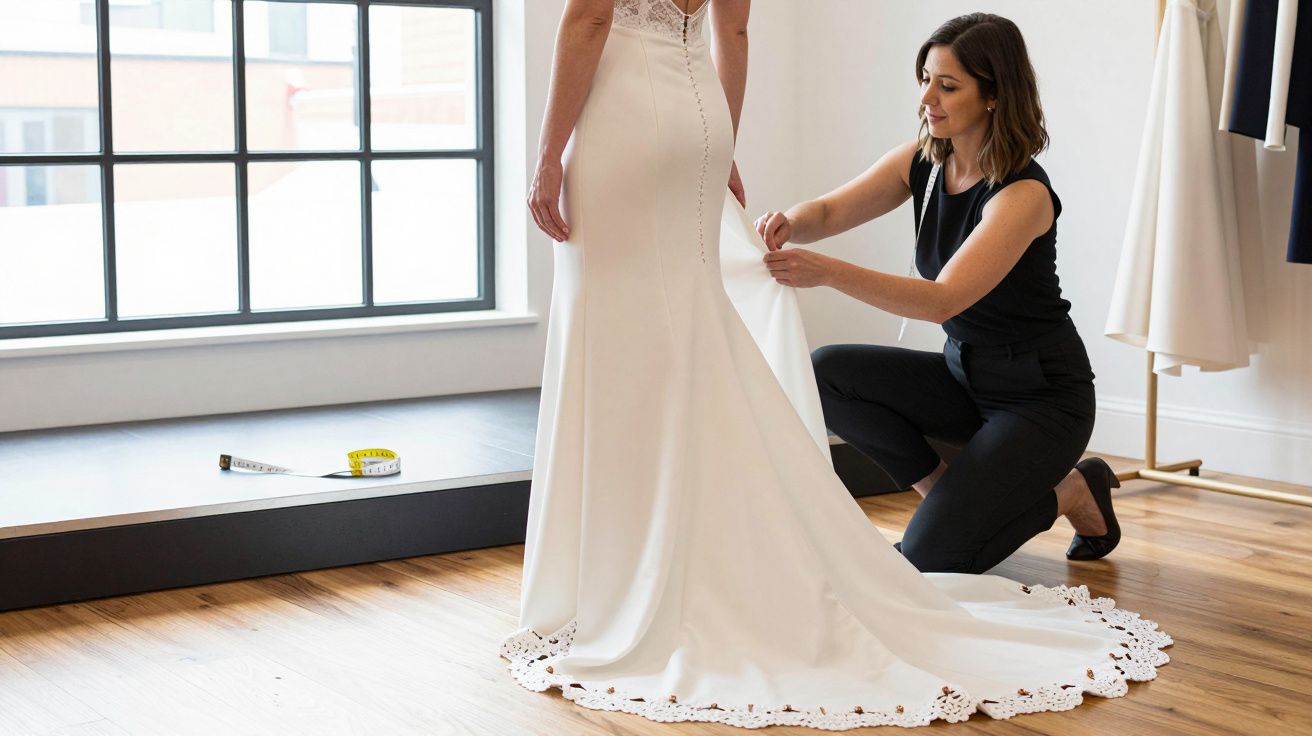
- How many fittings do hems usually take? Often two: one to pin and set the walking length, and one to confirm after stitching-especially if the dress has multiple layers or a train.




Comments (0)
No comments yet. Be the first to comment!
Leave a Comment