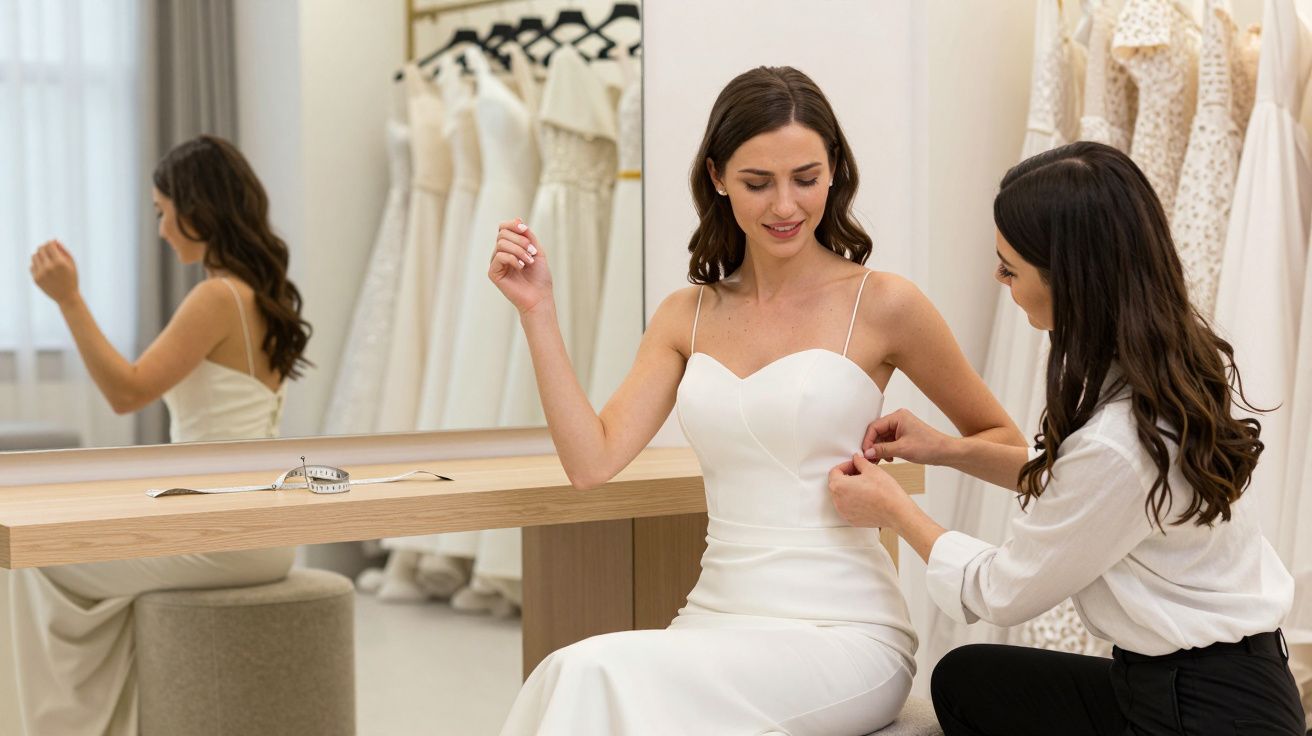
You can walk into wedding dress fittings feeling excited and walk out wondering why you’re suddenly counting down the minutes. The culprit is often pressure points-tiny hotspots at the waist, underarm, bust, or hip-that turn a beautiful gown into a fidgety distraction. It matters because discomfort rarely “settles”; it usually gets louder across a ceremony, photos, dinner, and dancing.
The frustrating bit is that this can happen with the most expensive dress in the boutique. The fabric can be exquisite, the lace can be hand-finished, and you can still feel pinched, rubbed, or slightly breathless. That’s not a you problem. It’s usually a fitting problem.
And there’s one mistake behind most of it.
The fitting mistake: chasing the “standing-still” silhouette
Many brides are fitted for how the dress looks when they’re perfectly upright, shoulders back, stomach held in, and feet planted. In real life, you sit, hug, breathe deeply, lift your arms, twist for photos, and eat. A gown fitted to the “statue version” of you will often punish the “human version” of you.
That’s when pressure points show up. The seam that felt “snug but fine” becomes a ribcage squeeze. The armhole that looked clean starts sawing at the front of your underarm. The waist that looked tiny turns into a hard edge the moment you sit.
Expensive dresses can actually make this worse because they’re structured. Boning, corsetry, dense linings, and crisp seams hold shape brilliantly, but they don’t forgive a misfit. They transmit it.
Where pressure points usually hide (and why they’re missed)
A pressure point isn’t always where you feel pain first. Often it’s where the dress anchors, while the discomfort shows up somewhere else as pulling, chafing, or a sense that you can’t quite expand your lungs.
Common trouble spots include:
- Underarm/front armhole: too high or too tight, especially in sleeved or illusion styles.
- Top of the waist seam: the seam allowance or boning edge presses when you sit.
- Bust apex and side seam: cups set too high/low push tissue sideways, creating a poking sensation near the arm.
- Hip and upper thigh: skirt fitted while standing becomes restrictive when you take longer steps or sit.
- Back neckline/zip area: a tight upper back makes you feel “pulled down” at the shoulders.
The reason they’re missed is simple: most fitting rooms default to a mirror check. Your body is rarely tested in motion.
How to do wedding dress fittings the way you’ll actually wear the gown
You don’t need to be dramatic in the salon. You just need a five-minute routine that forces the truth out of the dress.
The “real day” test (do this at every appointment)
- Sit down fully (not perched). Stay seated for 30 seconds and breathe normally.
- Lift both arms as if you’re hugging someone, then as if you’re doing a hairpin check.
- Take three big breaths-the kind you take before walking down the aisle.
- Walk with purpose: longer steps, then smaller steps, then a gentle turn.
- Do a photo twist: rotate from the waist and shoulders like you’re following a photographer’s direction.
While you do it, look for two things: where the fabric digs in, and where the dress drags you back into position. Those are your pressure points and anchor points, and they’re what the alterations need to address.
If you can only wear it comfortably while holding your posture like a performance, it’s not fitted for your day.
The quiet alchemy inside a good alteration
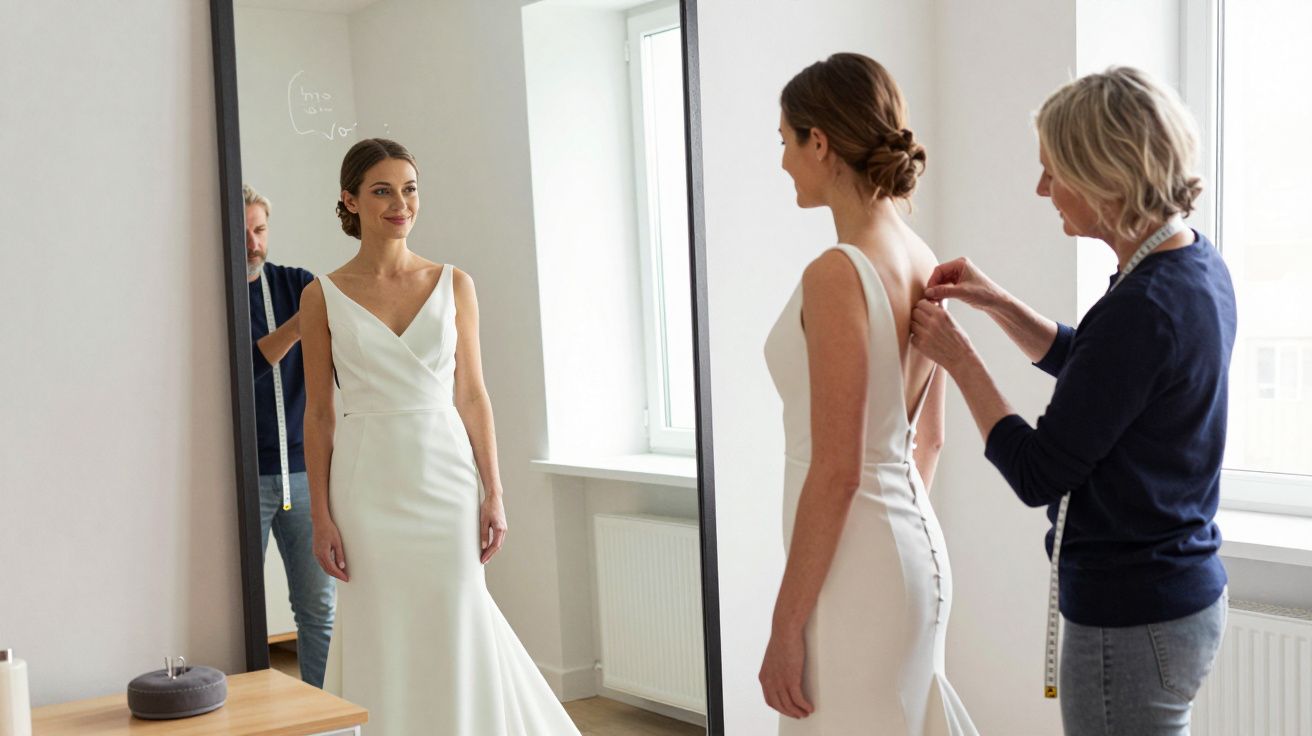
When alterations are done well, they don’t just “take in” fabric. They redistribute tension so the dress stays put without biting.
Small changes that often make the biggest difference:
- Lowering or reshaping the armhole by a few millimetres to stop underarm rubbing.
- Adjusting bust cups and strap position so the bodice supports rather than presses.
- Softening a waist seam (trimming seam allowance, padding, shifting boning ends) so sitting doesn’t create a hard edge.
- Adding a discreet bit of ease where you move-upper back, high hip, or along a side seam-without changing the visible silhouette.
A well-fitted gown feels secure, not tight. Security is “it won’t slip.” Tight is “I can’t expand.”
What to say to your seamstress so you’re not dismissed
“Uncomfortable” is easy to wave away. “Pressure here when I sit, and pulling here when I lift my arms” is actionable.
Use language that points to a testable outcome:
- “When I sit, the waist seam presses into my ribs on the right.”
- “When I hug, the armhole bites at the front of my underarm.”
- “When I breathe in fully, I feel the boning tip here.”
- “When I walk, the skirt catches at mid-thigh and shortens my stride.”
If you can, take a short video of the movement in the fitting room mirror. It’s not vanity; it’s evidence.
A quick lens: snug, supportive, or wrong?
Some firmness is normal, especially with corsetry. The goal is to separate “structured” from “strangling”.
| Feeling | Likely cause | What to ask for |
|---|---|---|
| Secure but you can breathe and sit | Correct support | Keep as is; confirm after steaming |
| Sharp digging at a seam/edge | Seam allowance/boning end | Soften edge, reposition boning, add padding |
| Pulling when you move arms | Armhole/back too tight | Reshape armhole, add ease to upper back |
Two timing traps that create discomfort later
The dress can feel fine at the final fitting and still turn on you on the day, for boring, predictable reasons.
- Fitting too early with a different bra/shapewear: tiny changes in undergarments shift where the bodice sits, creating new pressure points.
- Not accounting for swelling and heat: warm venues, nerves, and a long day can make your body slightly fuller. A “perfectly tight” fit becomes unforgiving.
Bring the exact underwear, shoes, and any planned jewellery to every key appointment. Consistency is comfort.
The goal you’re aiming for
You shouldn’t be thinking about your dress every minute. You should forget it’s there until someone tells you you look incredible.
In wedding dress fittings, don’t chase the smallest waist or the flattest front while you’re standing still. Chase a gown that looks the same when you laugh, sit, hug, breathe, and dance-because that’s the version of you your wedding day will actually contain.
FAQ:
- Will the dress “break in” on the day? Structured gowns don’t really break in like shoes. If you already have pressure points at the fitting, they tend to worsen with hours of wear, heat, and movement.
- Is it normal to feel tight when standing up straight? Mild firmness is normal, especially with boning, but you should still be able to take a deep breath and sit comfortably. If you can’t, it’s too tight or the tension is in the wrong place.
- What’s the most common spot for hidden discomfort? The front of the armhole and the top edge of the waist seam. They often feel “fine” until you lift your arms or sit down properly.
- Can shapewear cause new pressure points? Yes. Different compression levels and waist heights change how the bodice anchors. Wear the exact shapewear to fittings, or expect the fit to change.
- What should I do if I’m told it’s ‘meant to feel like that’? Ask to do the sit–breathe–arms test in front of the fitter. If discomfort appears with basic movement, it’s a fitting issue worth adjusting.




Comments (0)
No comments yet. Be the first to comment!
Leave a Comment