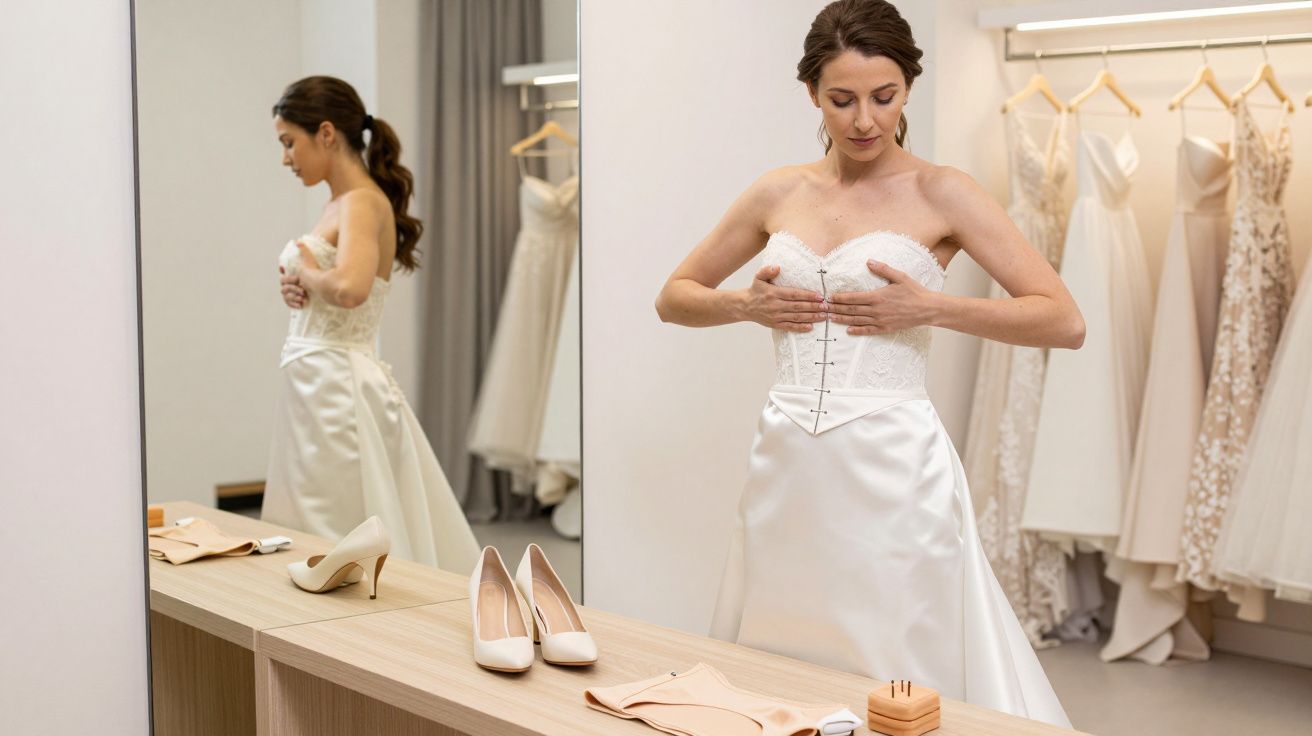
You don’t notice the problem at the time. You’re standing under bright boutique lights, trying not to cry, while wedding dress fittings turn into a blur of pins, mirrors and “how does it feel when you sit?”. Most brides make the same common mistakes in that moment-small choices that quietly snowball into discomfort, last‑minute costs, or a dress that looks right but doesn’t move right.
The strange part is that none of these mistakes look dramatic. They look sensible, even “helpful”. Until the photos come back, or you’re tugging at the bodice during speeches, or you realise your hem was set for a different pair of shoes.
The fitting isn’t just about how it looks-it’s about how it behaves
A wedding dress can look perfect when you’re standing still on a plinth. But the day isn’t a plinth. You’ll walk, sit, hug, lift your arms, breathe through nerves, maybe eat more than you expected, and almost certainly dance like you didn’t rehearse.
In fittings, the goal is not a mannequin finish. It’s a dress that stays put and stays comfortable while you do a hundred small, normal things.
If you remember one thought, make it this: fit is a moving target, so test it in motion.
Mistake 1: Bringing the “wrong you” to the appointment
A very common mistake is turning up as your weekday self and expecting to make wedding‑day decisions. No bra you’ll actually wear, different underwear, hair scraped back, no make-up, a tote bag of random shoes. Then you try to judge necklines, sheerness, and proportions.
Fittings are detailed. If you change the base layers later, you change the fit later-and sometimes you change it enough to trigger extra alterations.
Bring what you’ll wear, or bring the closest possible version. It saves you money and it saves you from “it felt fine at the time” confusion.
Quick checklist for a useful fitting
- The exact shoes, or same heel height.
- The bra/shapewear style you’ll wear (or go braless as planned).
- Seamless, nude underwear.
- Any jewellery that affects the neckline (pendant lengths matter more than you think).
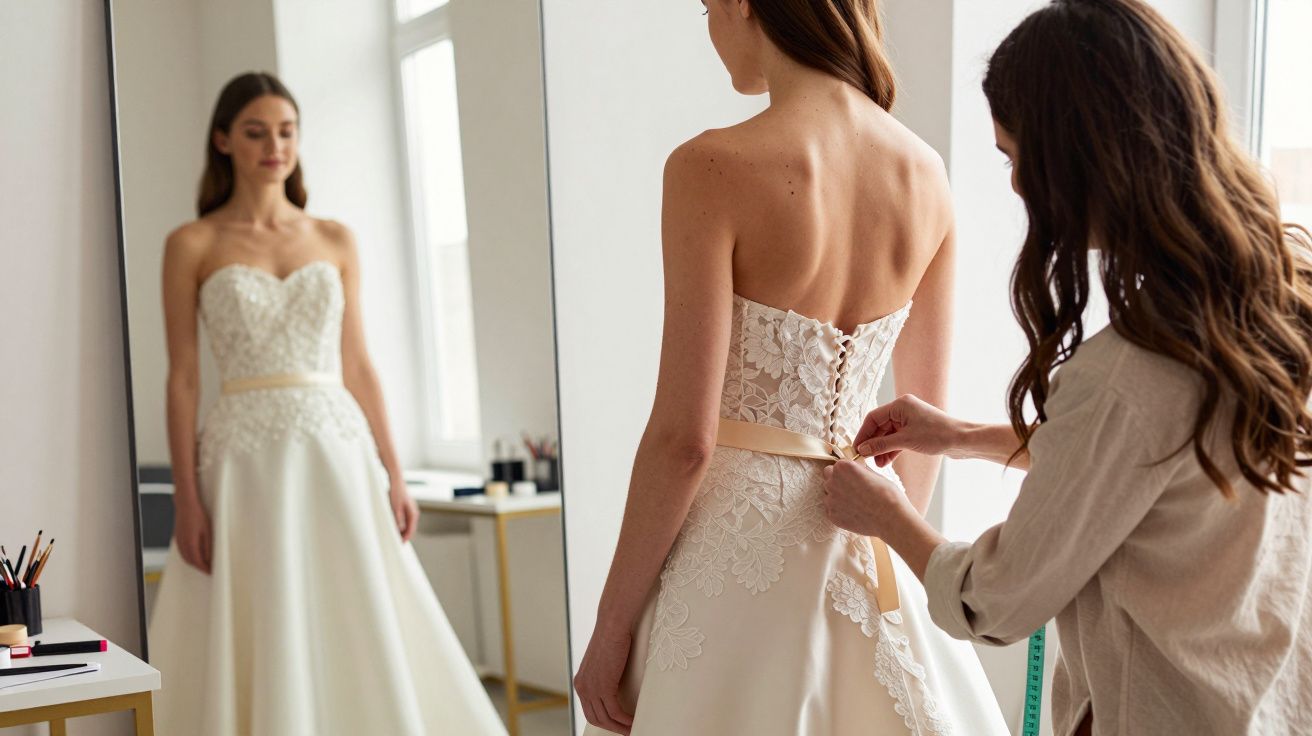
Mistake 2: Chasing a tighter waist instead of a stable bodice
Plenty of brides ask for “snatched” because it photographs well in the mirror. The risk is that you end up with a bodice that shifts, digs, or forces you to keep adjusting all day. A strapless dress in particular should feel secure without you having to hold it up with your posture.
A better test is boring but honest: take a deep breath, exhale, then lift your arms as if you’re hugging someone. If the top moves or bites, it’s not stable yet.
A dress that’s one notch too tight can look flawless at 11am and feel unbearable by the first dance.
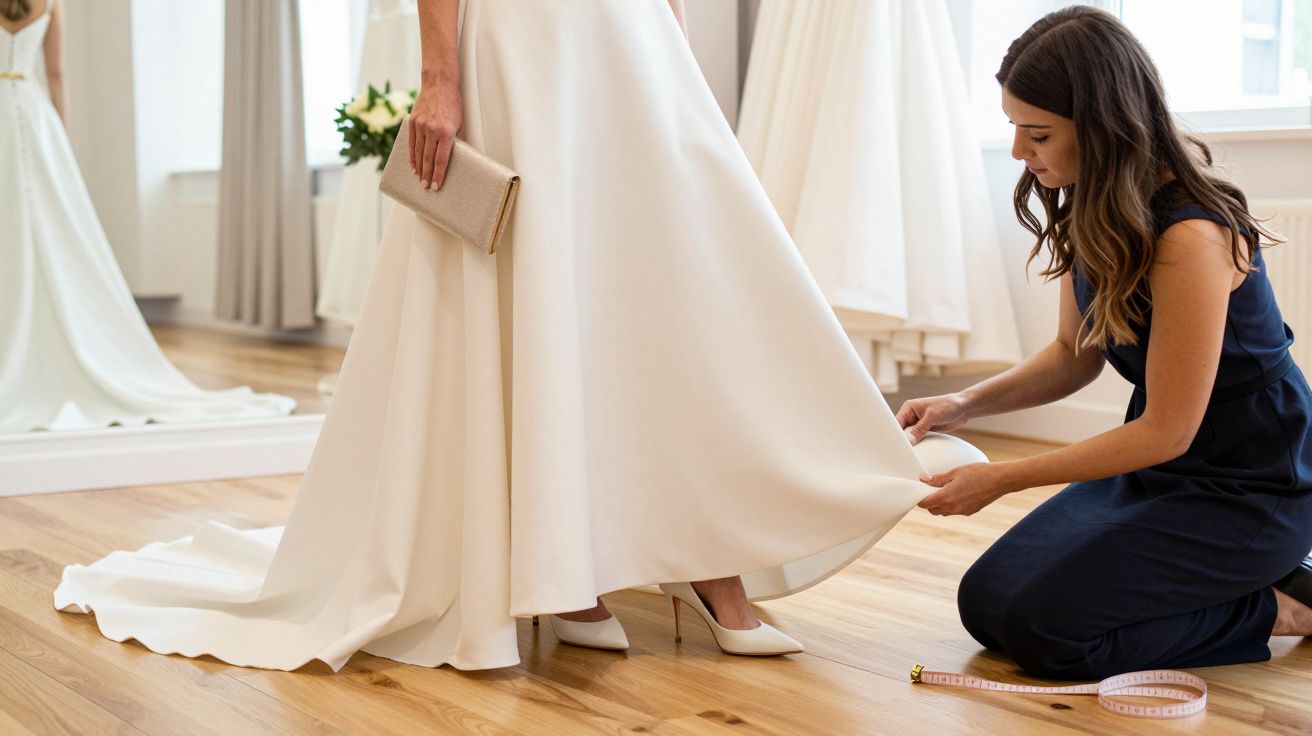
Mistake 3: Setting the hem before your shoes are final
Hems are not just “shorter or longer”. They’re the difference between floating and tripping, between a clean line and a wrinkled front panel. Brides often set the hem for shoes they think they’ll wear, then swap to something else nearer the day for comfort.
Even half an inch of heel height can change how the dress breaks at the front, especially with lighter fabrics that show every ripple.
If you truly don’t have your shoes, be explicit. Ask your seamstress what they can safely do now, and what should wait.
Mistake 4: Saying “it’s fine” because you feel awkward
This one is quiet. You’re half-dressed, people are looking, your mum loves it, the seamstress is busy, and you don’t want to be difficult. So you downplay discomfort: the underarm pinch, the scratchy seam, the way the straps slide.
But “fine” in a fitting often becomes “I can’t wait to take it off” on the day.
If something bothers you in a calm fitting room, it won’t improve under heat, adrenaline and eight hours of wear. Mention it early, when adjustments are simplest.
Mistake 5: Not sitting down (properly) in the dress
Standing is the easy part. Sitting exposes everything: boning pressure, skirt bulk, neckline gaping, buttons pulling, lace catching on the chair. Brides sometimes perch delicately and call it tested.
Do a real sit. Then stand up without help. Then do it again.
If you’re having a ceremony meal, ask yourself: can you breathe and eat comfortably? A tiny change in waist placement or a slightly different bustle point can turn “stiff and careful” into “normal and relaxed”.
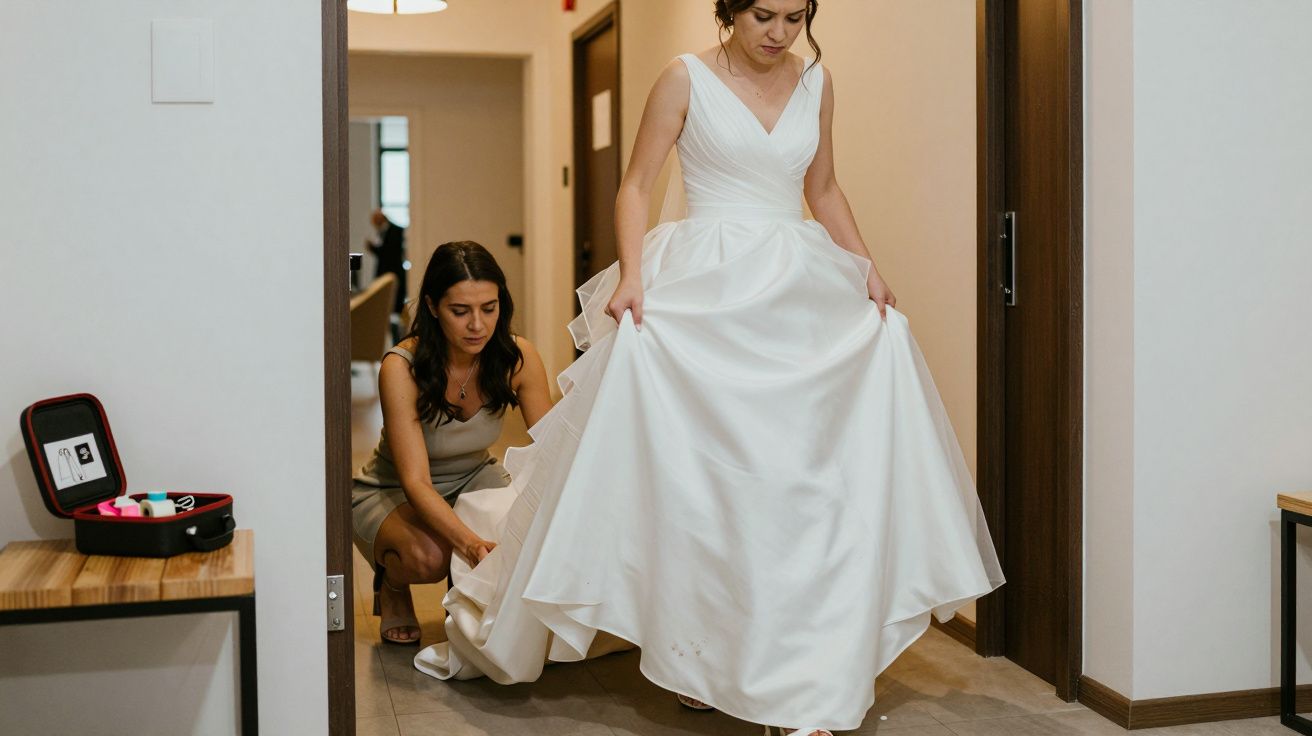
Mistake 6: Leaving the bustle (or train plan) as an afterthought
Most wedding dress fittings focus on the front, because that’s what you’re staring at. Then the train is mentioned late, quickly: a couple of loops, a pin, “you’ll be fine”.
But the bustle affects movement, weight distribution, and the back silhouette in photos. A poor bustle can drag, twist, or create an odd lump right where your pictures live.
Ask to practise it. Have whoever will help you on the day (friend, mum, bridesmaid) watch and film the steps. Under reception lighting, nobody has time to decipher a mystery of tiny hooks.
Mistake 7: Bringing too many opinions into the room
There’s a difference between support and noise. A fitting needs clarity: how you feel, what you can move in, what you can wear for hours. Too many voices can push you into decisions that aren’t actually about fit-more about pleasing the room.
If you can, limit the fitting audience. Or set roles: one person for emotional support, one person for practical notes, and everyone else on “quiet admiration”.
Mistake 8: Expecting the dress to fit the day after a big lifestyle change
Brides often plan to “tone up” or change shape before the wedding, and that’s where fittings can get tricky. If your body changes significantly after key alterations, the dress may need revisiting-sometimes at speed, sometimes at extra cost.
This isn’t about blame or pressure. It’s about timing. Your seamstress is working with what’s in front of them.
If you’re actively changing something (training, medication, stress, travel), say so. A good alterations plan can hold off certain steps until your size stabilises.
What to flag early (so your seamstress can plan)
- Weight fluctuation patterns (even if modest).
- A long-haul hen do or heavy travel close to the wedding.
- Any skin sensitivities (lace and boning can be surprisingly irritating).
- Pregnancy/postpartum timelines (if relevant).
A simple way to keep fittings calm: treat them like a tiny rehearsal
The brides who leave fittings feeling confident aren’t necessarily the ones with the “easiest” dresses. They’re the ones who test the dress like it’s real life: moving, sitting, breathing, lifting arms, walking on different surfaces.
Bring a short list, not a mood board. Note what needs fixing, not what needs proving.
Mini fitting script (use it every time)
- Walk ten steps, turn, walk back.
- Sit fully, stand up unassisted.
- Lift arms, hug motion, twist gently at the waist.
- Check comfort points: underarms, ribs, bust, straps, hip.
- Confirm shoes/hem/bustle plan out loud.
FAQ:
- How many wedding dress fittings do most brides need? Often 2–3: an initial pin fitting, a progress fitting, and a final check. Complex gowns or major resizing may need more.
- Should I eat before a fitting? Yes-eat normally. You want the dress fitted to a real, comfortable body, not a temporarily empty stomach.
- What’s the biggest “common mistakes” trigger for extra cost? Last-minute changes to shoes, underwear, or neckline/strap structure. Small switches can force reworking multiple areas.
- Can I fix discomfort with stronger shapewear? Sometimes, but it can also create new pressure points and change how the dress sits. Bring the shapewear to the fitting and test movement properly.



Comments (0)
No comments yet. Be the first to comment!
Leave a Comment