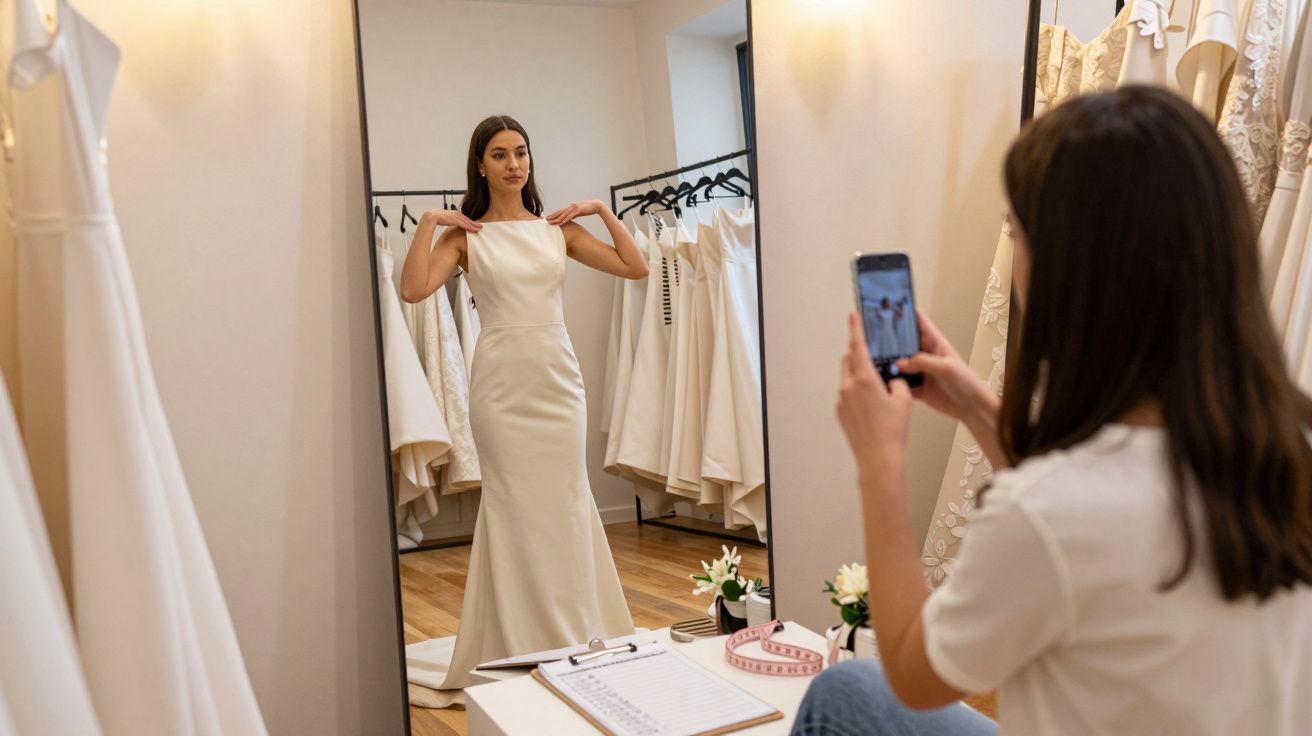
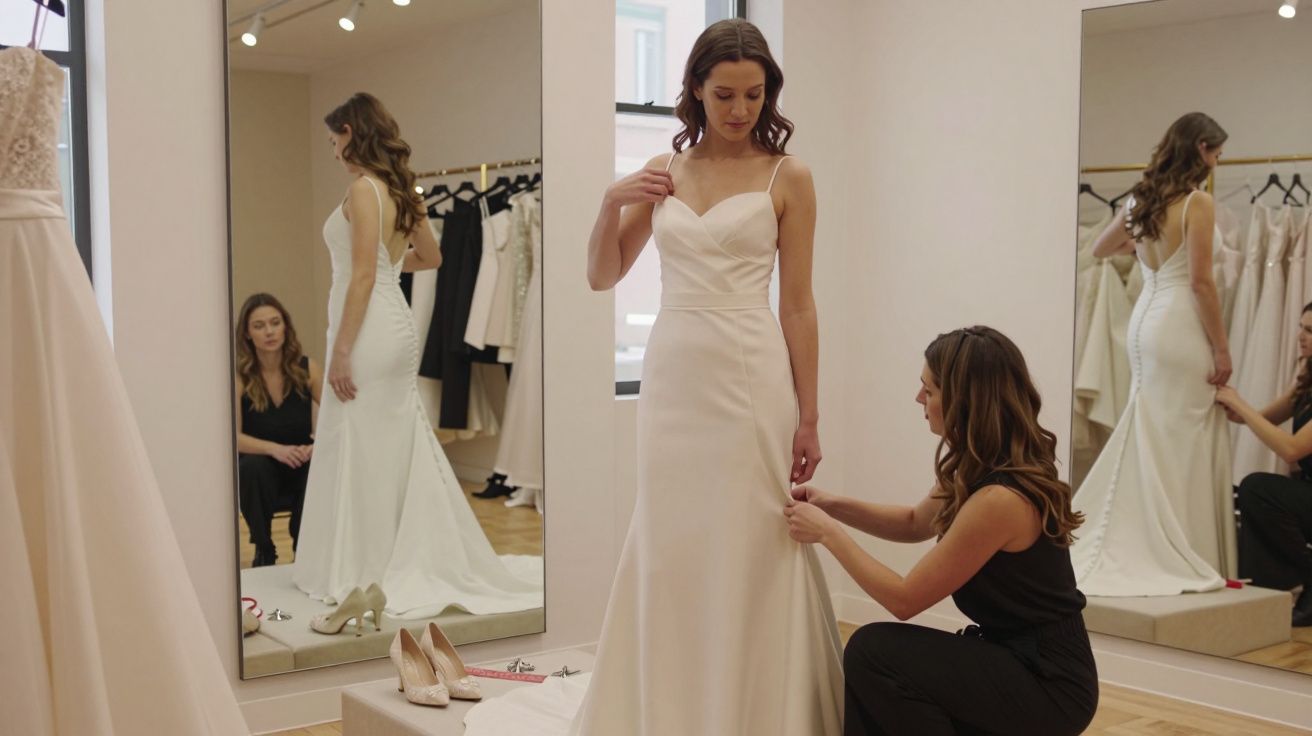
People keep telling you the same thing after the fitting, in different words: “You look amazing.” Yet you’re standing under boutique lights feeling a strange emotional disconnection, as if you’ve borrowed someone else’s life for the afternoon. That gap is often a bridal gown identity issue - not a style failure, not a body problem - and it matters because you’ll remember how you felt in the dress long after you forget the exact beading pattern.
It’s also more common than people admit. Weddings are loud with opinions, timelines, trend boards and “just trust me” energy, and your sense of self can get quietly edited along the way. The dress becomes the symbol everyone projects onto, and you’re left trying to recognise yourself in the mirror.
The quiet truth: a dress can fit perfectly and still not feel like you
There’s a slightly annoying reality no one says out loud: a gown can be technically flawless and emotionally wrong. The bodice sits, the hem skims, the photos will “work” - but your shoulders stay tight and your smile feels borrowed. That’s not you being ungrateful; it’s your nervous system calling something out.
A wedding dress isn’t just fabric. It’s a public costume for a private day, and if it doesn’t match your inner pace, you’ll feel it immediately - like wearing a voice that isn’t yours.
Top reasons wedding dresses don’t feel like “you”
1) You’re shopping for approval, not for recognition
You go into appointments braced for reactions: mum’s face, your friends’ squeals, the consultant’s “this is the one.” Without realising, you start choosing what will be easiest to sell to the room rather than what will feel easiest to inhabit.
If you keep thinking, They’ll like this, pause. The better question is: Do I relax in it? Your body answers before your brain writes the script.
2) Trend-board you has replaced real-life you
The algorithm loves a clean aesthetic. “Old money,” “corset moment,” “clean girl,” “Parisian minimal” - all gorgeous, all slightly flattening when you’re a human with a history. Trends aren’t the enemy, but they become a problem when you’re trying to become the moodboard instead of using it.
A quick tell: you love the dress on Pinterest, but on you it feels like a costume. That’s bridal gown identity waving from the background, asking to be invited back in.
3) The dress matches the wedding, not the person getting married
Some dresses are chosen to match the venue: the manor house wants sleeves, the marquee wants floaty, the city dinner wants sleek. The look becomes “cohesive” while you become a styling detail.
Try flipping the hierarchy. Instead of “What does the setting require?”, ask, “What do I require to feel like myself?” The venue won’t mind. Your photos won’t mind. Your nervous system will notice.
4) You’ve been “good” for too long
There’s a specific kind of disconnection that shows up in fittings: the kind rooted in years of being accommodating. You pick a dress that is polite, flattering, acceptable - and quietly not yours. People who are used to pleasing often struggle to name desire in plain language, especially when the stakes feel high.
A useful sentence to practise in the mirror is: “I want to feel like me.” No apology attached. No explanation footnotes.
5) You’re in a fit-and-fix loop
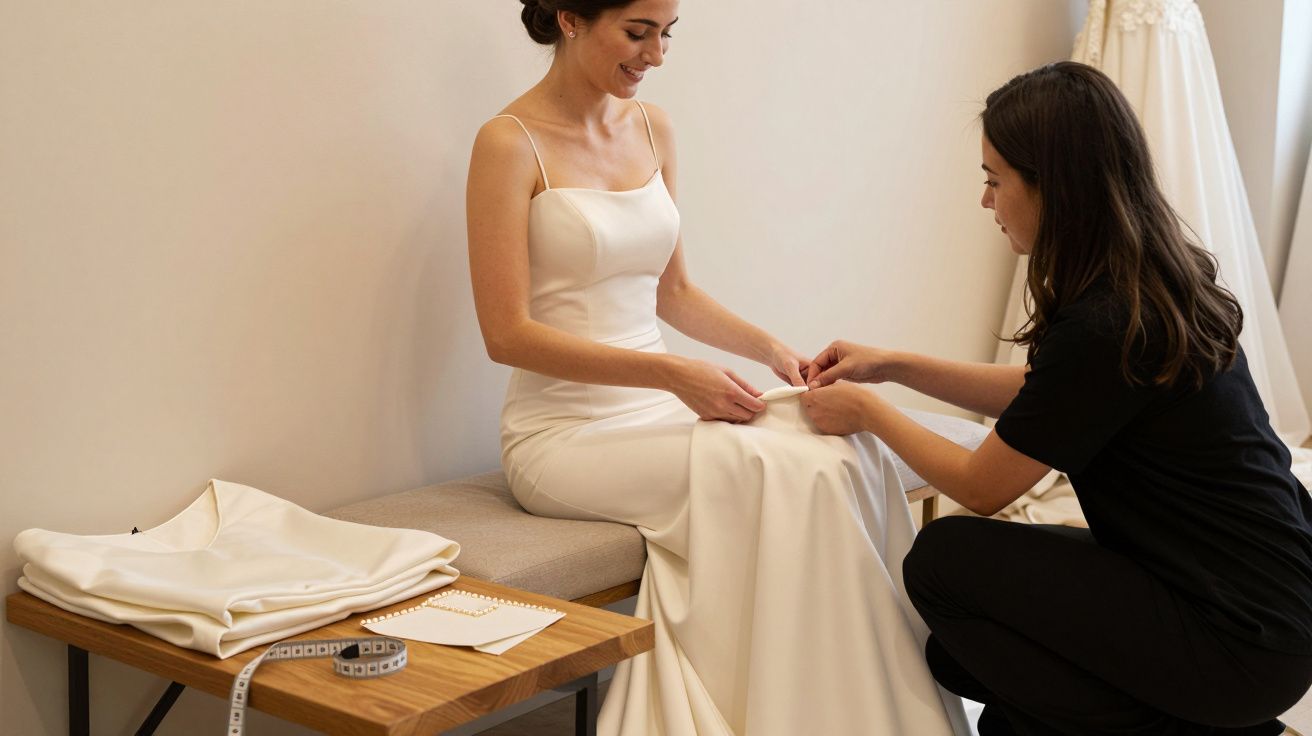
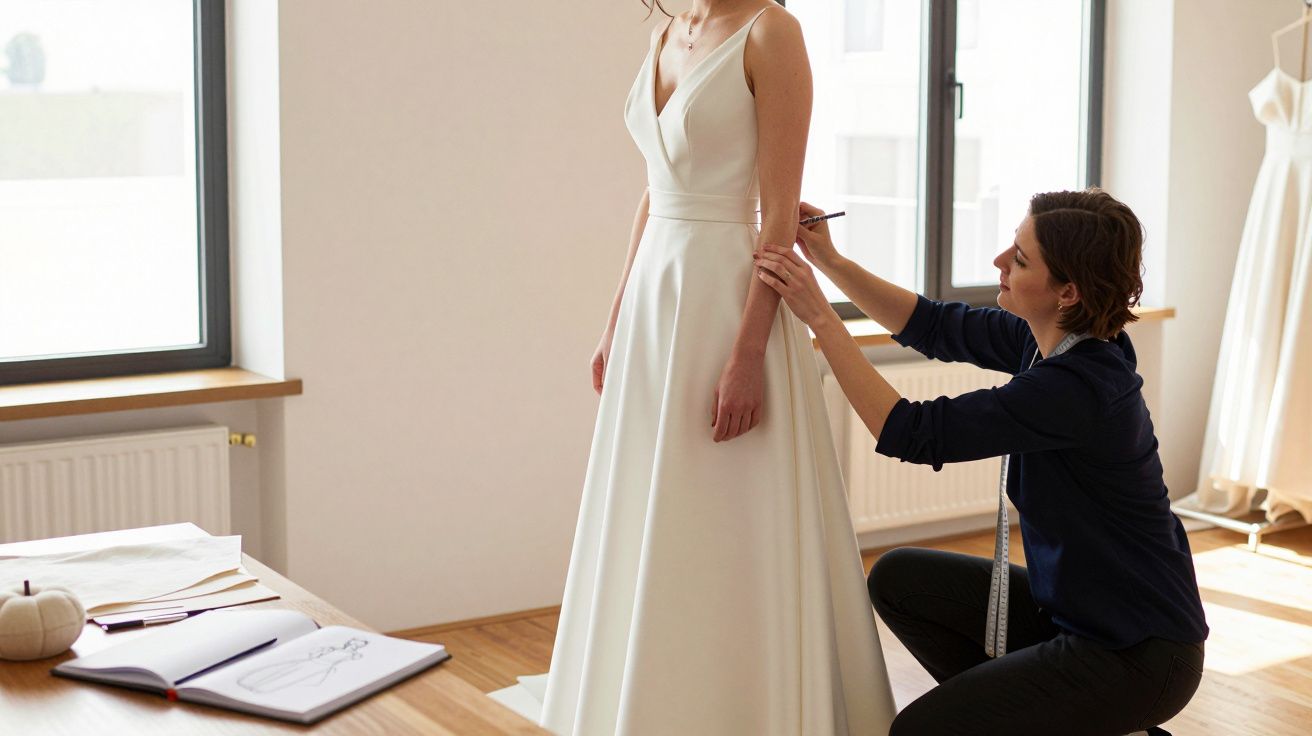
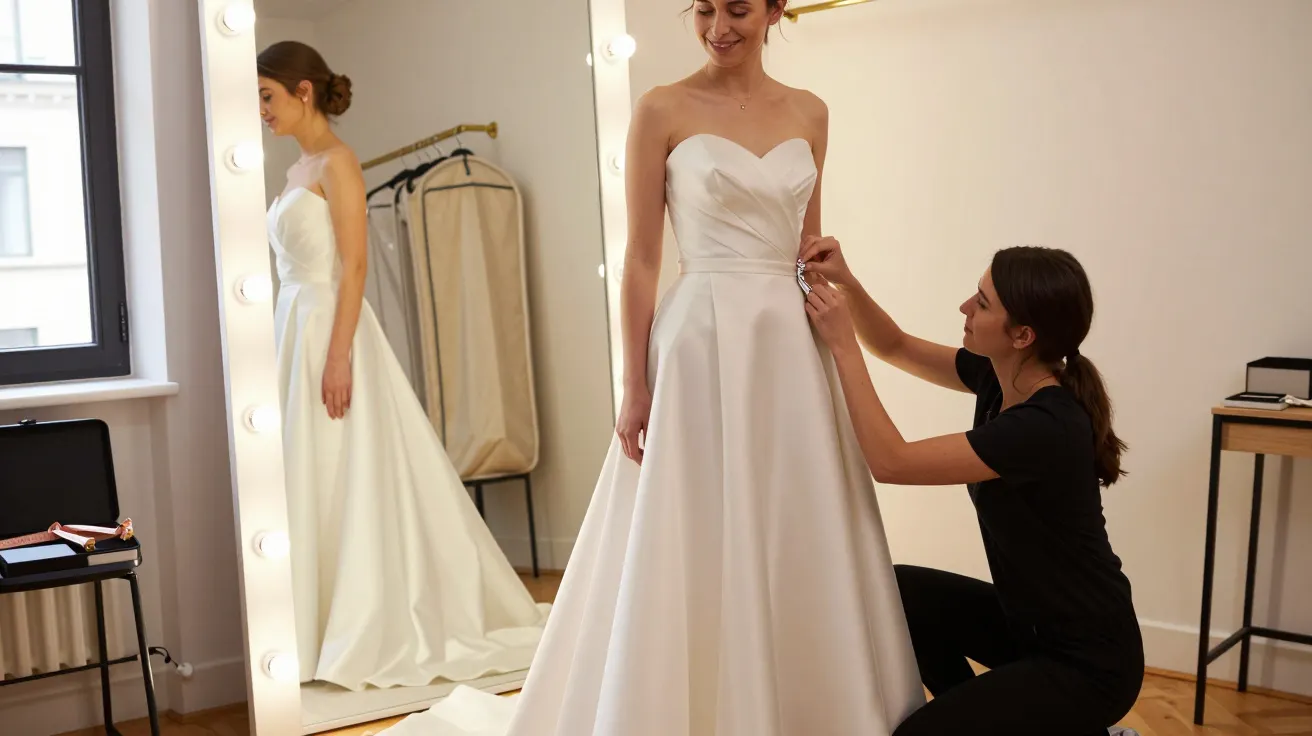
Modern bridal culture can make it sound like anything can be tailored into perfection. And yes - alterations are powerful. But if the core dress asks your body to behave differently (hold your breath, lift your chest, keep your arms pinned), you’ll spend months “fixing” a mismatch.
Watch for these signs during a fitting:
- You keep adjusting straps or tugging fabric without thinking.
- You can’t sit comfortably, or you dread eating in it.
- You’re planning coping strategies (“I’ll just not move much”).
Comfort isn’t a bonus feature. It’s identity in physical form.
6) The neckline, waist, or sleeves change how you move
This one is sneaky. A gown can look right when you’re standing still and feel wrong the second you walk, hug, dance, or breathe. Your “you-ness” lives in movement - the way you gesture when you tell a story, the way you laugh, the way you hold people.
Do a movement test, not just a mirror test: walk fast, sit down, lift your arms, hug someone, do a silly little dance in the changing room. If you become smaller to keep the dress in place, that’s information.
7) You’re grieving another version of the day
Sometimes “this doesn’t feel like me” is code for “this isn’t the day I pictured.” Maybe the wedding changed - budget, location, guest list, family dynamics - and the dress is carrying that grief. You’re not judging the gown; you’re noticing the story shift.
If this resonates, treat it gently. The fix isn’t always a different silhouette; sometimes it’s a quiet acknowledgement: I’m allowed to be sad and still move forward.
8) You haven’t named your non-negotiables
Many people shop with vague hopes (“timeless,” “romantic,” “elegant”) and zero boundaries. Then a dress can look spectacular while violating the things you genuinely need.
Non-negotiables sound small, but they’re stabilising:
- “I need to be able to raise my arms easily.”
- “I need to feel supported without feeling squeezed.”
- “I don’t want to think about my stomach all day.”
- “I want to look like myself in candid photos.”
Once you name them, emotional disconnection often drops fast.
How to reconnect: small rituals that make a big difference
Start small, repeat often - and do it before you book another “just in case” appointment. Pick one evening and do a two-minute identity check-in: eyes closed, hand on your sternum, inhale for four, exhale for six, five rounds. Then write three words you want to feel on the day (not how you want to look).
Bring those words to the boutique. Say them out loud to the consultant if you can. A good one will style around feelings, not just around measurements.
Here’s a simple filter that keeps you honest:
- If you’d wear it for strangers, but not for your partner or your closest friend, question it.
- If you like it more in photos than in your body, question it.
- If you can’t picture yourself eating, hugging, and laughing in it, question it.
“The right dress isn’t the one that gets the loudest reaction. It’s the one that lets you come back to yourself.”
What could change next
Once you stop trying to earn the dress and start asking it to meet you, decisions land cleaner. You might choose something simpler than expected, or bolder, or softer - not because you were persuaded, but because you were recognised. Bridal gown identity isn’t a mystical thing; it’s the steady feeling of alignment when your outer shape matches your inner tone.
And if you’ve already bought a dress and it doesn’t feel like you, that’s not the end of the story. Often it’s one alteration choice, one styling shift, or one permission sentence away from becoming yours.
Quick “alignment” checklist (save this before your next fitting)
- Do I feel more like myself in my face?
- Can I breathe low into my belly?
- Can I move without monitoring the dress?
- Do I like how I feel when I’m not posing?
- Would I choose this if nobody else saw it?
FAQ:
- Why do I feel numb instead of excited in dresses? Often it’s overload - too many opinions, too many options, too much pressure. Numbness can be your system protecting you; simplify the process and look for a calm “yes,” not fireworks.
- What if everyone loves a dress and I don’t? That’s a classic bridal gown identity moment. Thank them, then prioritise the feeling in your body; you’re the one wearing it for hours, not them.
- Can alterations fix a dress that doesn’t feel like me? Sometimes. Alterations can improve comfort and proportion, but they can’t always change the fundamental “energy” of a dress that asks you to move and hold yourself differently.
- How do I explain ‘it doesn’t feel like me’ to a consultant? Use concrete language: “I want to move easily,” “I want softness at the waist,” “I want to feel grounded, not exposed.” Feelings become solvable when you translate them into needs.
- Is it normal to mourn a different dress or a different wedding vision? Yes. Naming the grief often reduces emotional disconnection and frees you to choose what fits the life you’re actually living now.
Comments
No comments yet. Be the first to comment!
Leave a Comment