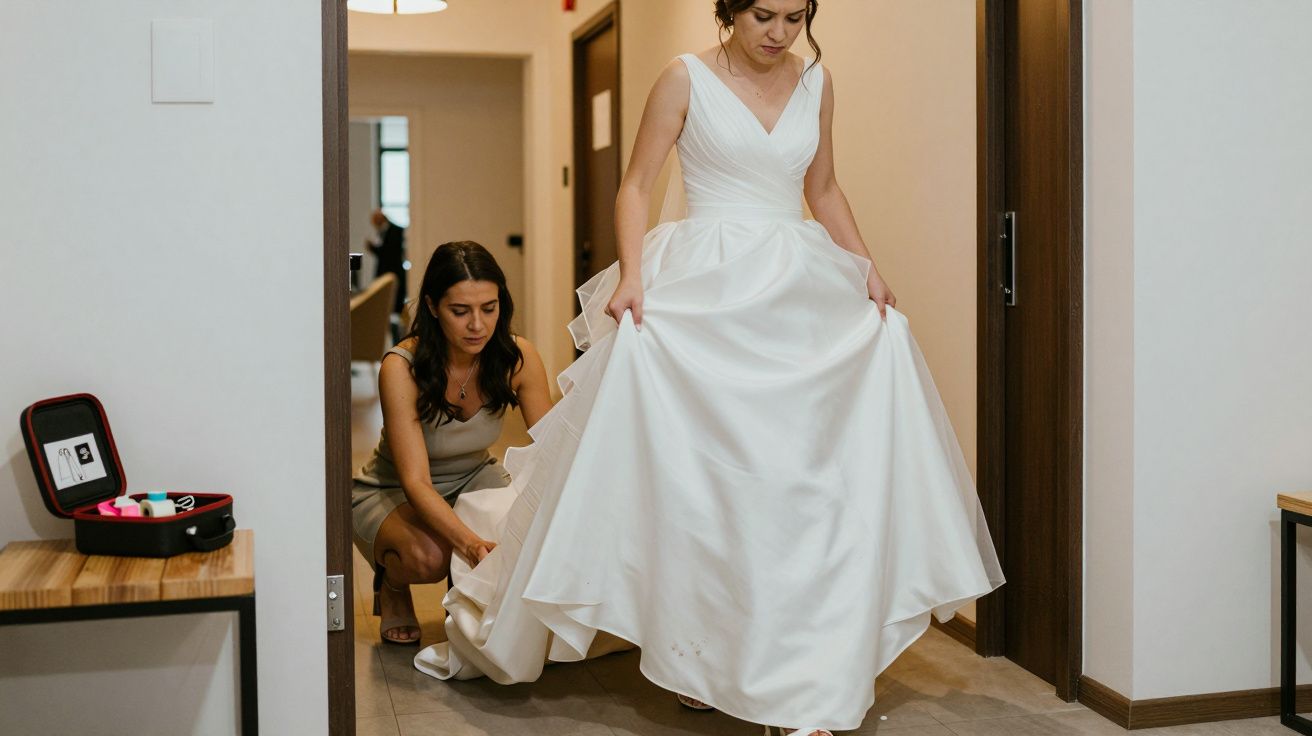
By mid-afternoon, wedding dress weight can feel like it has doubled, even if the scales would swear nothing has changed. It’s often layer accumulation - heat, moisture, fabric, and movement stacking up in ways your body notices long before your brain does. Knowing why it happens matters, because it changes how you pace yourself, how you ask for help, and how you avoid ending the day feeling trapped inside your own outfit.
It usually starts with a quiet thought during photos: Was it always this heavy? Then comes the reception, the dancing, the sitting down and standing up again, and suddenly the skirt has a gravity of its own.
What you’re feeling isn’t “in your head”
A wedding dress doesn’t gain kilos out of nowhere, but it can start behaving like it has. The difference is dynamic weight: how heavy something feels once it’s warm, slightly damp, creased, tugged, and constantly re-positioned.
Fabrics that floated at 11 a.m. can cling at 5 p.m. Layers that were neatly stacked can twist and compress. And your body, after hours on your feet, reads every extra pull as “more weight”.
1) Moisture turns “light” fabric into a quiet sponge
Even without rain, dresses pick up moisture: from warm air, body heat, spilled drinks, steamy kitchens, and tightly packed dance floors. Some materials hold onto it more than you’d expect, especially lining fabrics and multiple layers of tulle.
The effect is subtle at first. Then the hem feels slower. The skirt swings less. And when you lift it to use the loo, it’s that unmistakable moment of, Why is this suddenly hard work?
Moisture also changes friction. A slightly damp lining grips tights and legs, and what used to glide starts to drag.
2) Layer accumulation: the skirt stops behaving like separate layers
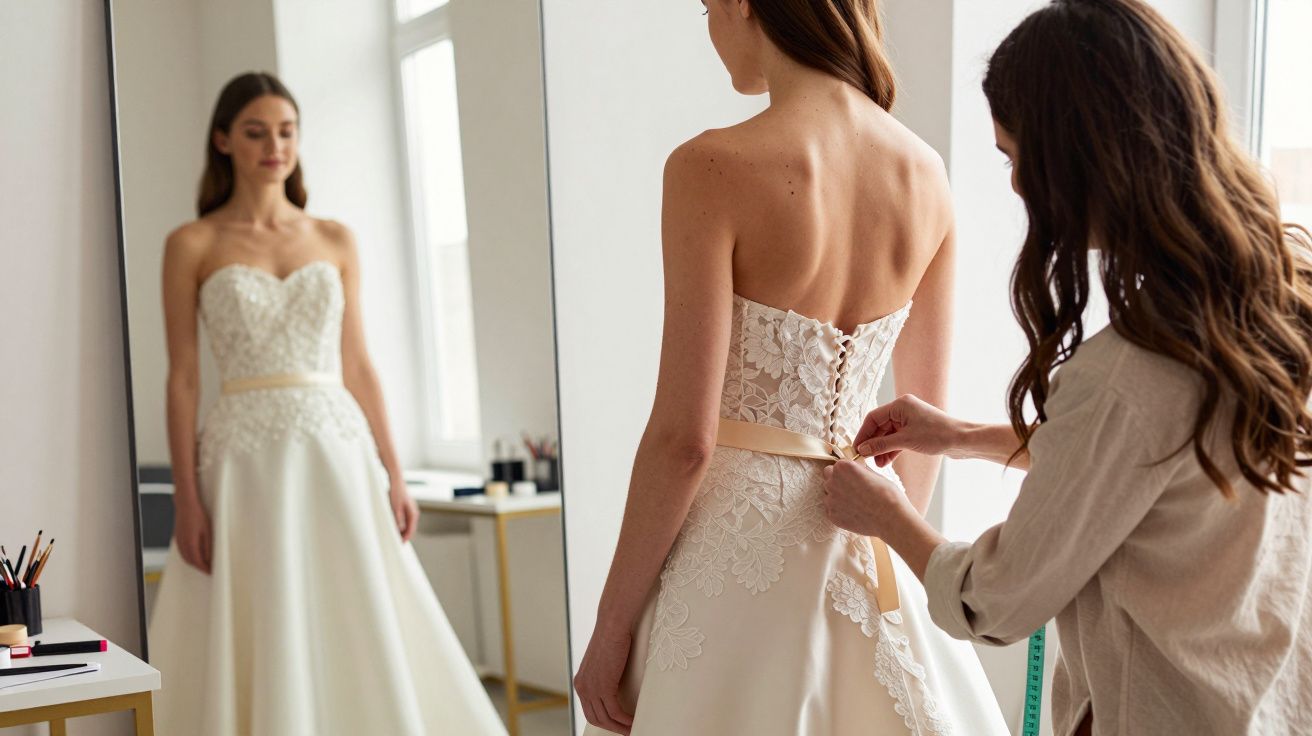
Most gowns aren’t one piece of fabric; they’re a small architecture. Slip, lining, interlining, skirt layers, overlays, sometimes a petticoat or underskirt. When you’re fresh and upright, those layers sit where they’re meant to.
Over time, layer accumulation happens in motion: the layers migrate, overlap, twist, and compress. Sitting for speeches can trap layers beneath you. Standing up can pull them forward. Dancing can rotate the whole stack around your waist.
The dress hasn’t “grown”. It’s just stopped distributing its weight evenly, and your hips and lower back feel the difference.
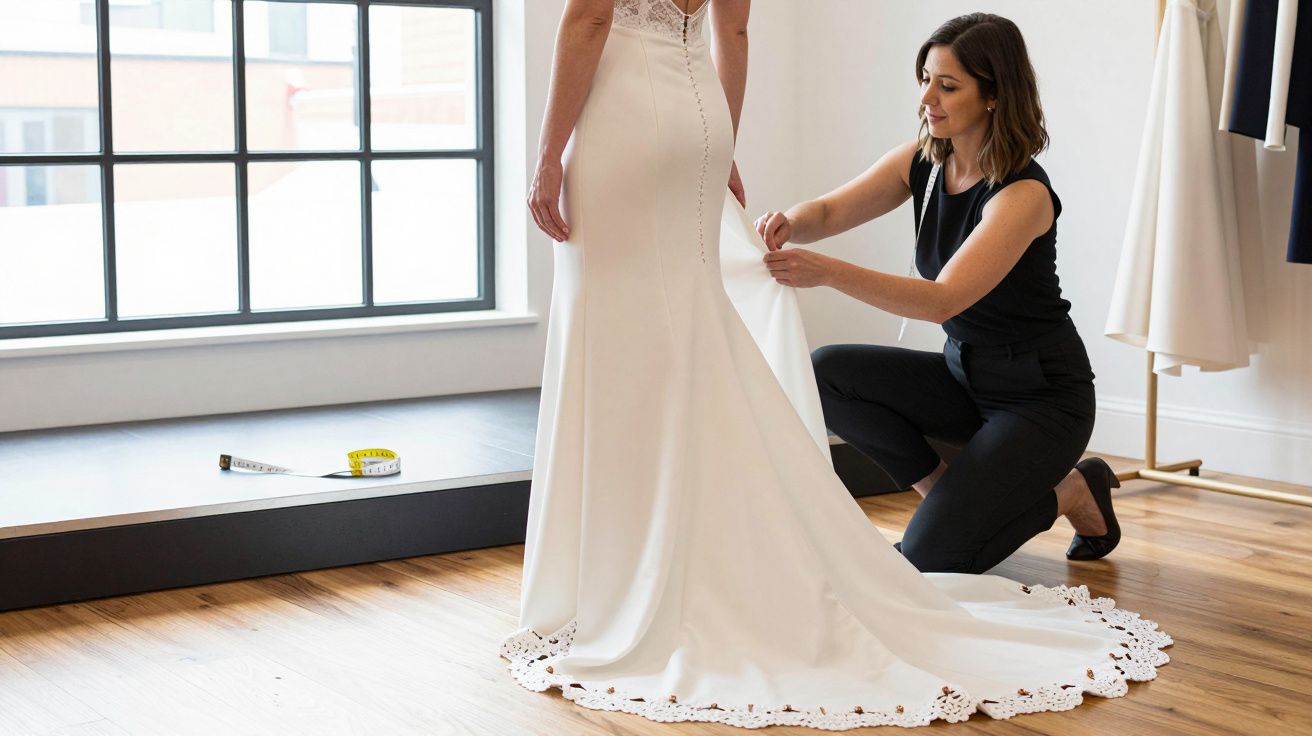
3) Your bustle (or train) becomes a lever, not a detail
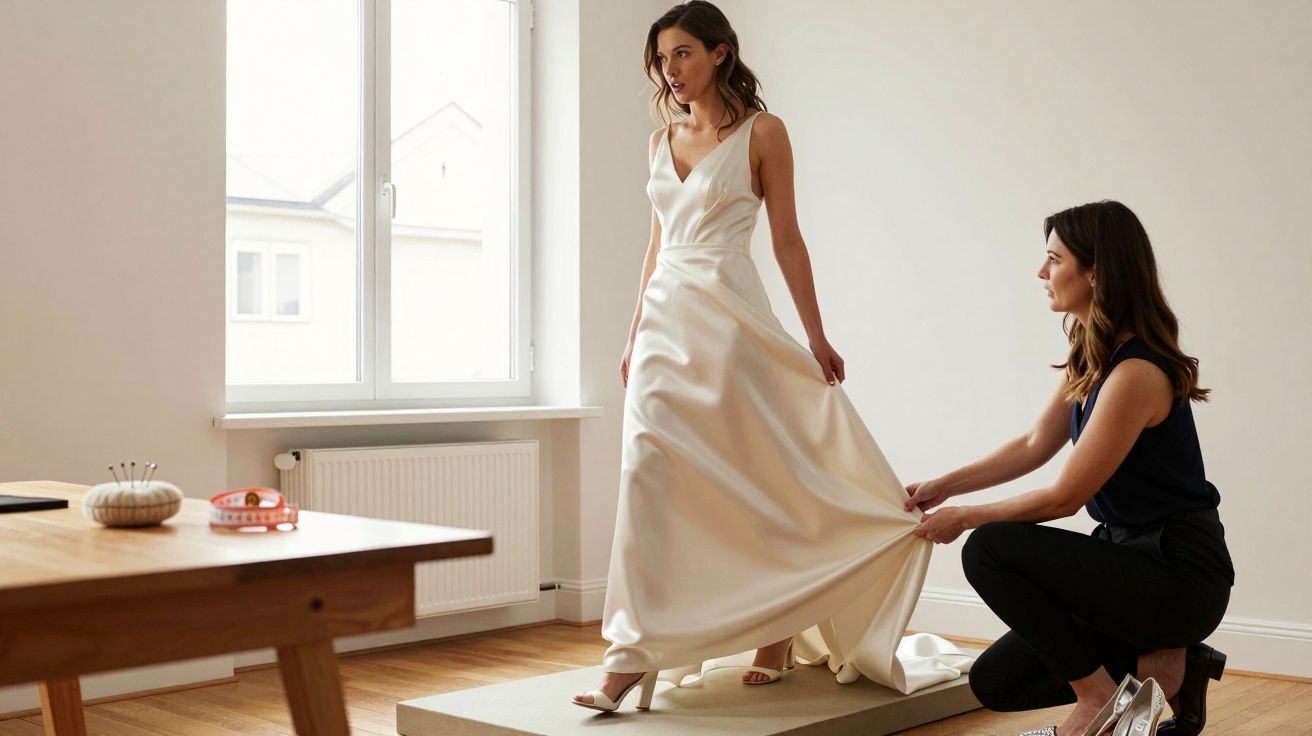
A train is elegant in stillness and demanding in real life. Once it’s bustled, the fabric is no longer trailing behind; it’s lifted and anchored, which changes the centre of gravity of the whole dress.
If the bustle points aren’t balanced, the dress can pull backward, downward, or to one side. You compensate without realising: core tight, shoulders slightly braced, steps shorter. That constant micro-effort is one of the fastest ways wedding dress weight starts feeling punishing.
And if a bustle pin loosens, the dragging returns - now with extra fabric bunched in the wrong place, like carrying a bag that keeps slipping off your shoulder.
4) Heat makes structures soften, then slump
Boning, interfacing, waist stays, internal corsetry - all designed to hold shape. But warmth changes how these elements behave against your body.
As you heat up, the inside of the dress can soften and mould. That sounds helpful, until it shifts a millimetre and starts biting at a rib or dropping onto your hips. When support moves lower, your hips take more load, and your legs start telling you the truth.
It’s why a dress can feel fine in the morning and strangely “heavier” after dinner, even with the same fit on paper.
5) The hem collects the world (and the world is heavy)
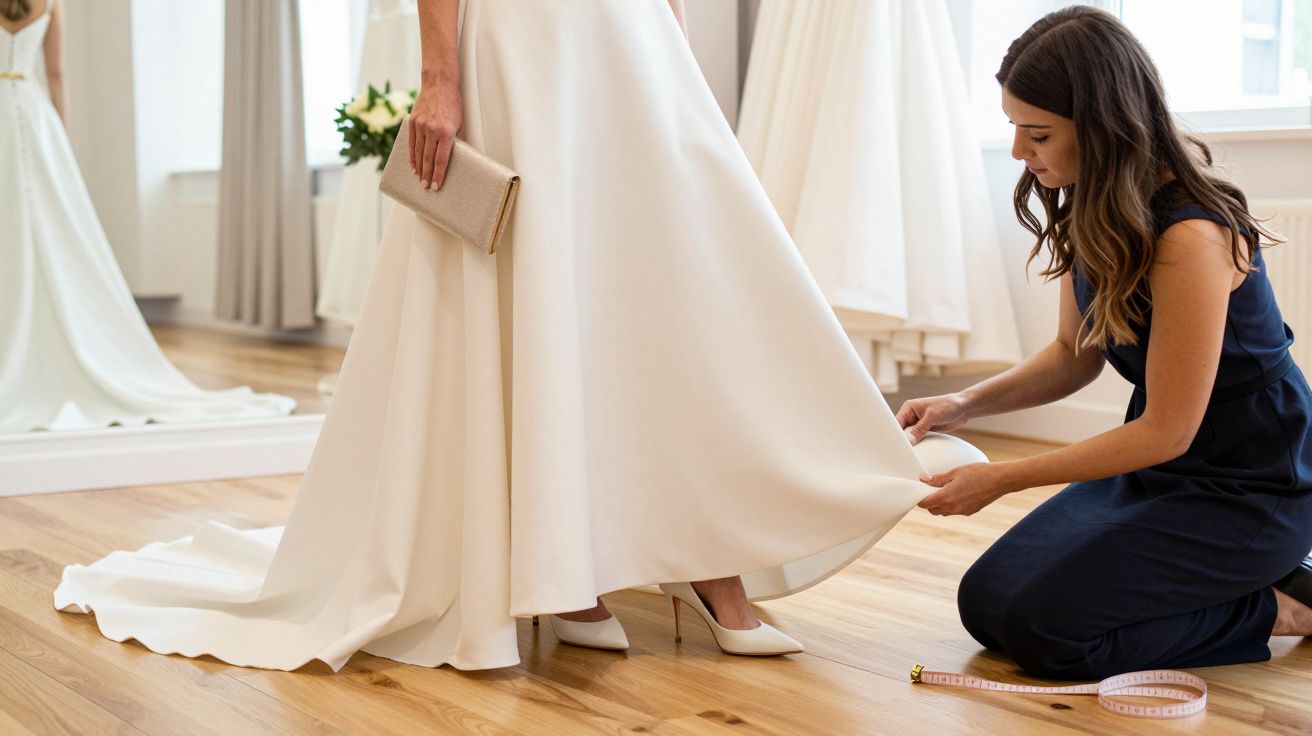
Outdoors, the bottom of the dress meets grass, dust, pavement grit, confetti, and whatever the venue’s path has to offer. Indoors, it meets spilt drinks and sticky floors near the bar. That build-up isn’t always visible in photos, but it adds drag and stiffness.
Even when the material doesn’t truly gain much mass, it gains resistance. A hem that used to skim now catches. Your stride adjusts. Your energy drains faster.
If you’ve ever felt your dress “pull back” as you walk, that’s often the hem doing quiet work against the ground.
6) You get tired - and tired muscles experience weight differently
There’s a reason the same handbag feels heavier after a long day. By evening, you’ve likely done hours of standing, posing, laughing, holding your bouquet, lifting your skirt, and balancing in shoes you don’t normally wear.
As fatigue builds, your posture changes. Your core support relaxes. Your breathing becomes shallower. The dress hasn’t changed, but the body carrying it has less spare capacity.
It’s not weakness. It’s physics plus a human nervous system that’s been “on” since morning.
7) Accessories quietly add up (and shift the load)
It’s rarely just the gown. Add a veil, hairpieces, jewellery, shapewear, tights, maybe a second skirt layer, maybe a belt. None of it feels dramatic alone.
Together, they change how the dress sits and how heat builds underneath. They also add pressure points - straps, waist seams, bodice edges - that become more noticeable with time, especially once you’ve eaten and your body naturally expands a little.
That pressure doesn’t just hurt; it makes the whole outfit feel heavier because you’re resisting it all day.
How to make it feel lighter without changing the dress
You can’t rewrite the construction at 6 p.m., but you can reduce the “felt weight” with a few practical moves:
- Do a bustle check twice: once after pinning, once after 20 minutes of walking and sitting. Small shifts early prevent big drags later.
- Assign one person to be your “skirt handler” for stairs, loos, and outdoor photos. Not everyone. One reliable pair of hands.
- Air breaks beat willpower: five minutes somewhere cool reduces moisture build-up and fabric cling.
- Lift from the sides, not the front when walking: it keeps layers aligned and stops the skirt twisting around your waist.
- Keep a hem emergency kit: safety pins, fashion tape, a small cloth to blot damp patches near the hem.
“The dress gets heavier when it stops moving the way it was designed to move. Put the movement back, and you get your energy back.”
A quick mental reset for the evening
When wedding dress weight suddenly feels too much, it’s usually one of three things: moisture, shifted layers, or a dragging hem. Fix the one you can fix in 60 seconds: re-fluff the skirt layers, re-pin the bustle, wipe the hem, take off the veil.
Then drink water. Not because it’s a wellness slogan, but because dehydration makes fatigue sharper, and fatigue makes everything feel heavier than it really is.
| What’s happening | Why it feels heavier | Quick fix |
|---|---|---|
| Moisture + heat | More cling and friction | Cool break, blot hem, loosen tight layers briefly |
| Layer accumulation | Weight shifts and twists | Lift skirt from both sides, re-set layers after sitting |
| Train/bustle imbalance | Pulling at hips/back | Re-pin bustle, add one extra anchor point if needed |
FAQ:
- Why did my dress feel fine at the fitting but heavy on the day? Fittings are short, controlled, and cool. On the day you add heat, time, movement, and layer accumulation, which changes drag and how weight is distributed.
- Does tulle actually get heavier? A little, if it holds moisture or picks up debris at the hem. More often, it feels heavier because the layers compress and stop floating separately.
- Is it normal to feel the weight mostly in my hips and lower back? Yes. When internal support settles or the bustle pulls, the load shifts downward and your hips compensate.
- What’s the fastest way to reduce the “heavy” feeling during the reception? Re-check the bustle and reset the skirt layers after sitting, then take a short cool-down break to reduce moisture and cling.


Comments (0)
No comments yet. Be the first to comment!
Leave a Comment