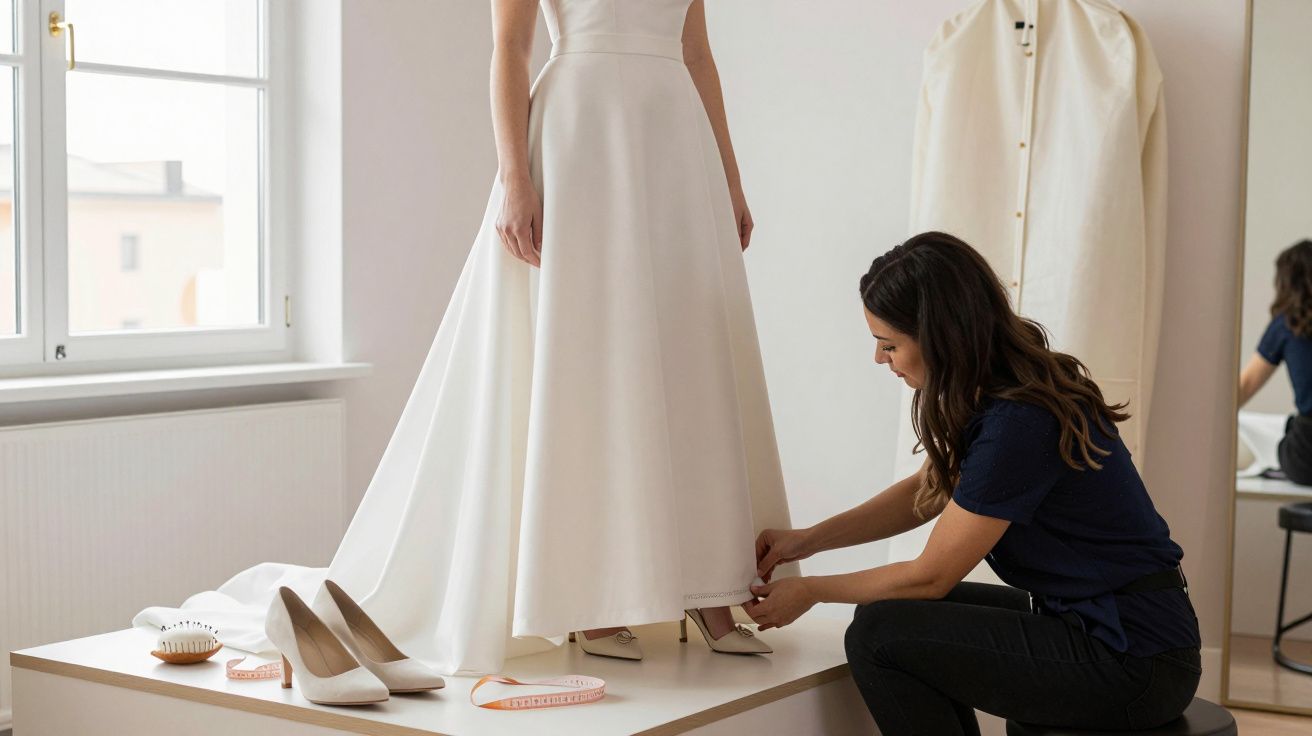
You don’t really expect bridal dress alterations to trigger pre-wedding stress, because the shopping part felt like the hard bit. You found the dress, you did the photos, you had the “this is it” moment in a mirror with good lighting. Then the calendar turns and suddenly your gown is a project with deadlines, pins, and a nagging question: what if it doesn’t come back the way you pictured?
The weirdest part is how quickly it shifts from romance to logistics. You go from choosing lace to discussing seam allowances, hem heights and whether you’ll be able to sit down. And because the dress is the one thing you’ll be in for hours, it can feel like every tiny change carries the weight of the whole day.
The post-shopping dip nobody warns you about
A lot of people feel a small crash after buying the dress. Not regret, exactly-more like the loss of a clear mission. Shopping had a beginning and an end; alterations are a blur of fittings, decisions and “we’ll see how it settles”.
It also lands at the same time as everything else speeds up: final payments, seating plans, family opinions, the creeping sense you should be “excited” at all times. So the dress becomes an easy container for anxiety. If you can fix the dress, maybe you can fix the feeling that time is running out.
What bridal dress alterations actually involve (and why they feel so intense)
Alterations aren’t one thing. They’re a chain of small, skilled decisions made on a moving target: your body, your posture, your shoes, even the weather on the day.
Most brides hear “we’ll take it in” and imagine a quick nip at the waist. In reality, the common jobs are more like this:
- Hemming to match your exact shoe height (and the way you walk in them).
- Taking in or letting out the bodice so it stays up without you constantly adjusting.
- Bustle work so you can move once the ceremony is over.
- Strap and sleeve tweaks for comfort, support and coverage.
- Adjusting necklines or backs so they sit flat and don’t gap in photos.
The intensity comes from the stakes. The dress isn’t just clothing; it’s a plan you’ve already paid for in your head. Alterations are where that plan meets physics.
The three moments where anxiety tends to spike
There are patterns, and they’re oddly predictable.
1) The first fitting: “It doesn’t look like the boutique clip”
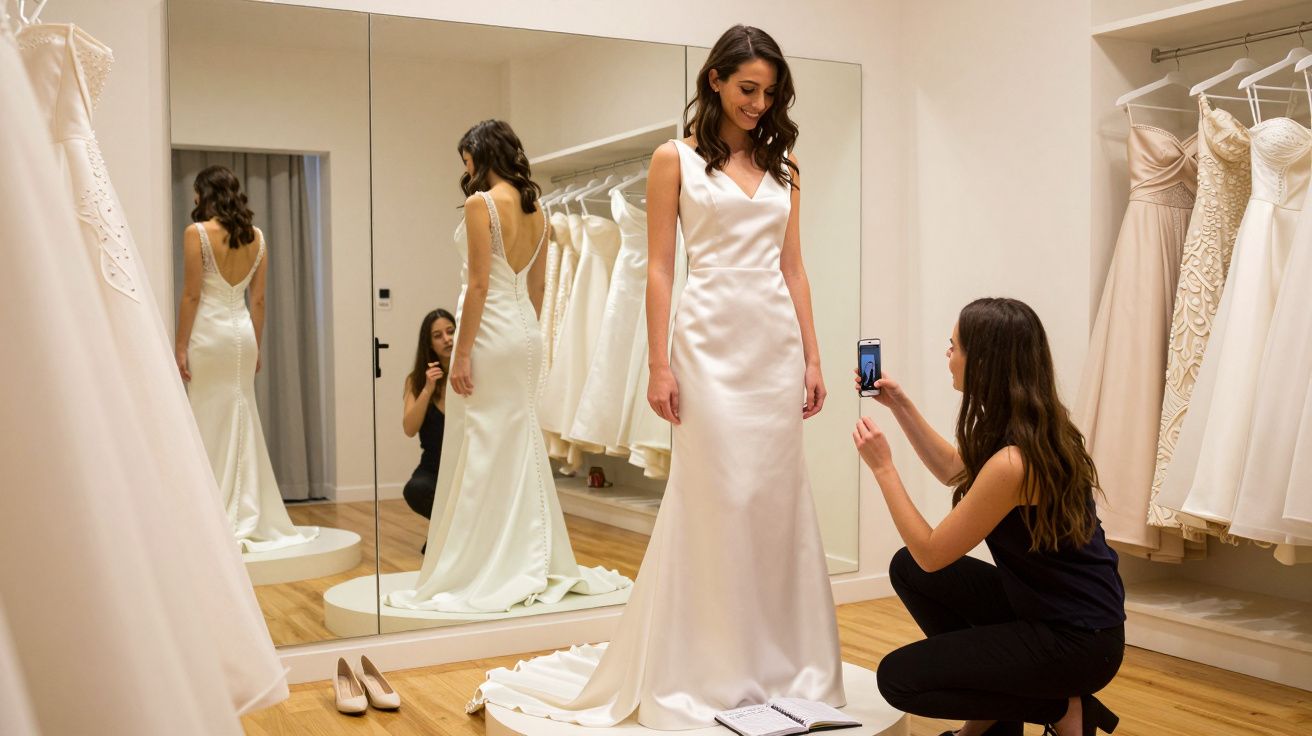
The sample dress was clipped to fit you, lifted into place, and styled to perfection. Your actual dress is your size, made to standard proportions, and it may sit lower, looser or longer than you imagined. That doesn’t mean it’s wrong. It means this is the starting point.
If you go in expecting the “final” look at fitting one, you’re almost guaranteed a wobble. The first fitting is mostly diagnosis: what needs to change, what can change, and what should be left alone.
2) The bustle decision: “Will I ruin the back?”
Bustles are practical engineering dressed up as ribbons and hooks. They can feel like a threat to the silhouette you fell for, especially if you loved a clean train line.
A good seamstress will talk you through options (over-bustle, under-bustle, multiple points) and show you how they look in motion, not just standing still. Bring one honest friend who will watch you walk and turn-because the bustle is for dancing, not posing.
3) The final collection: “What if I’ve changed?”
Bodies change. Stress changes you. Travel and time change you. Even the way you stand changes as the day approaches.
The aim of the last appointment isn’t perfection; it’s security. You want the dress to stay in place, feel like you can breathe, and allow you to move without constantly thinking about it. That mental freedom is the real end product.
A low-drama plan that usually works
The simplest way to reduce tailoring panic is to treat alterations like any other timeline: clear inputs, fewer variables, no last-minute surprises.
Here’s the version that tends to keep people sane:
- Book early, even if the dress hasn’t arrived yet. Good alterationists fill up fast, especially in peak season.
- Take your real shoes (or the same heel height). Hem decisions depend on them.
- Wear the underwear you’ll wear on the day. If you’re changing shapewear, do it before fitting one.
- Limit the “extra changes” you add from social media. Every new idea (new sleeves, new neckline) adds time, cost and risk.
- Ask what’s reversible. Some adjustments can be undone; others cannot. Knowing which is which calms the decision-making.
The hidden trick is consistency. When you keep your shoes, undergarments and expectations stable, your fittings become straightforward instead of emotional.
How to talk to your seamstress without spiralling
People often apologise for having questions, as if the right move is to be the “easy bride” who never worries. But clarity is kinder than politeness.
Useful questions sound like:
- “Can you show me what you mean by ‘taking in’-where will the seam move?”
- “What will this look like when I sit down?”
- “If I lose or gain a small amount of weight, what happens?”
- “What’s the latest safe date for the final fitting?”
And if you’re feeling overwhelmed, say that plainly. Most professionals have seen the moment when a bride’s brain goes from fabrics to fears, and a calm explanation is often all it takes to bring you back.
The goal isn’t to control every millimetre. It’s to trust the process while still making informed choices.
The comfort checks people forget until it’s too late
Your dress should look good in still photos, yes. But it also has to survive a full day of real life.
Before you sign off, do a quick “reality run” in the fitting room:
- Sit, stand, and sit again without using your hands to lift the skirt.
- Raise your arms like you’re hugging someone.
- Take a few fast steps and a slow turn.
- Practice the bathroom plan (seriously), especially with fitted skirts.
- If there’s a bustle, make someone else practise doing it.
You’re not being picky. You’re preventing the kind of small discomfort that turns into a constant distraction.
When the dress becomes a proxy for bigger pre-wedding stress
Sometimes the dress anxiety isn’t really about the dress. It’s about being looked at, being photographed, being the centre of attention, or carrying everyone else’s expectations in one outfit.
If that’s you, it helps to name what you’re actually afraid of. “I’m worried it won’t fit” can mean “I’m worried I won’t feel like myself”. Alterations can solve the first problem; reassurance, support and better boundaries solve the second.
You’re allowed to want the dress to be right. You’re also allowed to want the experience to feel manageable, not like a weekly audition.
FAQ:
- How many fittings do bridal dress alterations usually take? Often two to three: an initial fitting to pin and plan, a second to refine, and a final check/collection. More complex changes can require extra appointments.
- When should I book alterations? As soon as you have your wedding date and an estimated dress arrival. Even if work can’t start yet, securing a slot prevents a last-minute scramble.
- Do I need to bring my wedding shoes? Yes, or at least shoes with the same heel height. Hemming without them is guesswork, and guesswork is where stress breeds.
- What if my weight changes close to the wedding? Tell your seamstress early if you expect changes. Many dresses can be adjusted slightly near the end, but it depends on seam allowances, fabric, and structure.
- Is it normal to feel anxious after the first fitting? Very normal. The first fitting often looks worse before it looks better, because it’s the “before” stage with pins and temporary shaping rather than the finished result.





Comments (0)
No comments yet. Be the first to comment!
Leave a Comment