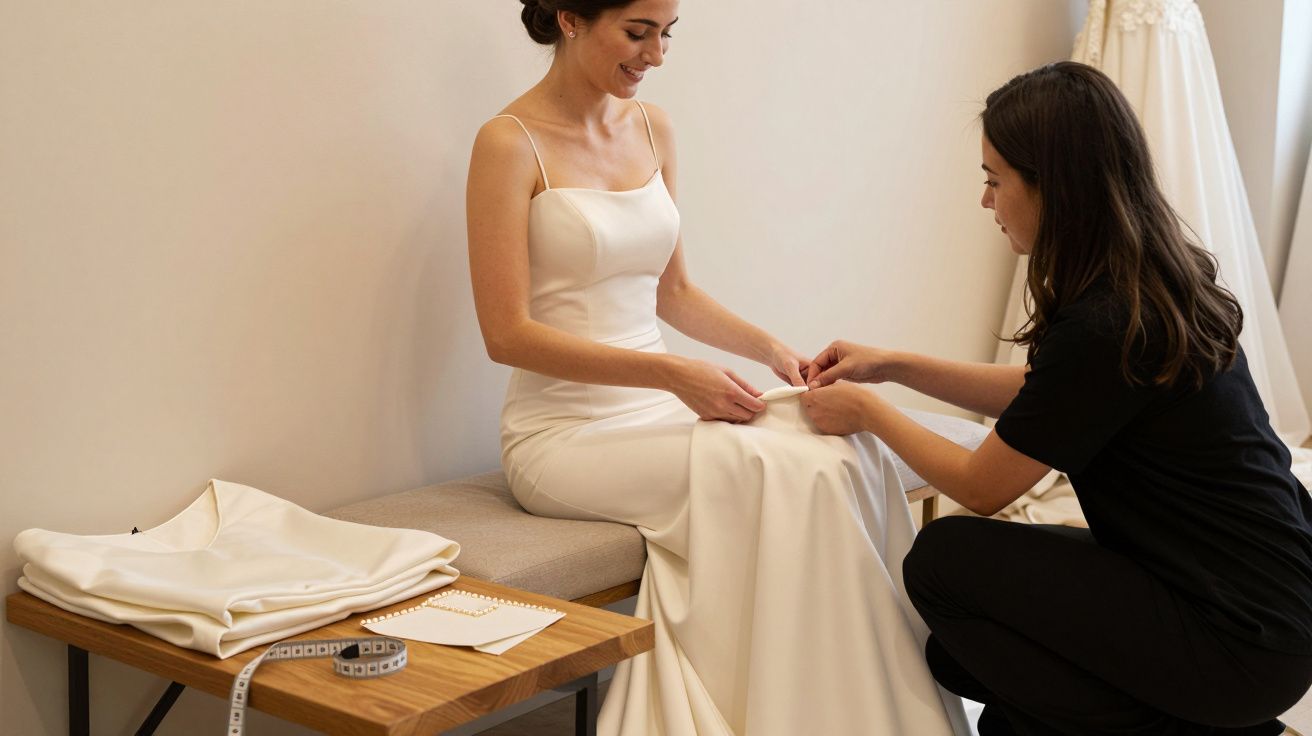
Wedding mornings have a way of making every decision feel louder than it did in the fitting room. Wedding dress design sits right at that pressure point, and the 2026 bridal trends are already nudging it in a clear direction: less costume, more considered. The dress still has to photograph beautifully, but it also has to move, breathe and make sense for the life you’re actually living on the day.
You can feel the shift in the questions brides are asking. Not “Will this look bridal enough?” but “Can I sit, eat, hug people, and still feel like myself?” The priorities are turning practical without turning plain.
A calmer silhouette, built for real movement
The biggest tell in 2026 is proportion that looks effortless up close. Designers are treating volume like architecture rather than drama, placing it where it flatters and removing it where it interrupts the day.
Expect to see:
- Soft structure: corsetry and boning, but cushioned and flexible rather than rigid.
- Ease through the hips: shapes that skim, with room to walk and sit without constant rearranging.
- Train logic: detachable trains, bustle systems that don’t collapse, and hems designed to survive venues that aren’t spotless.
A dress that only works in a still pose is starting to feel dated. The new “wow” is when it looks intentional in motion, not just on a plinth.
Fabric honesty: texture you can read in photos
If 2024–25 was about clean minimalism, 2026 keeps the restraint but adds surface interest. Think fabrics that do the work so the styling can stay simple.
What’s being prioritised:
Matte over mirror-shine
Satin isn’t gone, but the appetite is moving towards matte crepe, silk mikado with a dry hand, organza layers, and textured jacquards. They photograph with depth and they don’t show every crease from the car ride.
Detail that’s integrated, not sprinkled on
Beading and sparkle are becoming more “built in”:
- tonal embroidery that reads like shadow rather than glitter
- raised appliqué placed with intention (often asymmetrical)
- micro-pearls used as edging and seam emphasis, not all-over coverage
It’s less about catching light across the whole body, more about drawing the eye to shape and line.
Adaptability: one dress, more than one moment
A quiet theme across 2026 bridal trends is wardrobe thinking. Brides want an outfit that can shift from ceremony to dinner to dance floor without a complete costume change.
Common design solutions include:
- Detachable overskirts that create ceremony drama, then lift off for a sleeker evening look.
- Convertible sleeves: long, sheer or lace sleeves for the aisle; strapless or straps later.
- Two-piece looks where the “bridal” comes from fabric and cut, not a single fixed silhouette.
The point isn’t to have more, it’s to have control. The dress shouldn’t dictate the day’s pace.
Personal meaning, minus the heavy nostalgia
The retro cycle continues, but it’s being edited. Instead of full throwback gowns, the nods are smaller and more wearable: a 90s neckline, a 60s sleeve, a 30s bias cut-anchored by modern construction.
Designers are also making space for sentiment without looking costume-like:
- heirloom lace re-applied as an internal panel or cuff detail
- a veil edge that mirrors a grandmother’s handwork
- embroidery that’s private (initials, date, a line of text) rather than a public slogan
This is where wedding dress design is getting sharper: emotion, but with restraint.
Comfort as a luxury feature (finally treated as one)
Comfort used to be an afterthought you dealt with once the photos were done. In 2026 it’s becoming part of the sales pitch, and good ateliers are proving it in the fitting.
Look for:
- lighter linings and fewer scratchy internal seams
- breathable layers (especially under lace or tulle)
- support that doesn’t punish: cups and inner bands that hold without crushing
- pockets that aren’t novelty: placed so the skirt hangs correctly
If you’re planning a long day, comfort isn’t a compromise. It’s what keeps your posture relaxed and your face unstrained in every candid.
Sustainability that shows up as choices, not speeches
The “eco” conversation is growing up. Instead of marketing buzzwords, 2026 bridal trends lean towards practical decisions: fewer pieces, higher quality, and options that can be worn again.
You’ll see more:
- made-to-order timelines and smaller runs
- resale-friendly classics with modern detailing
- dyed-after options and shorter hems designed for post-wedding tailoring
- fabric transparency (origin, fibre blend, care requirements)
It’s less about being perfect and more about being deliberate.
| Priority in 2026 | What it looks like | Why it matters |
|---|---|---|
| Movement | soft structure, smart trains | you can live in it all day |
| Texture | matte, tactile fabrics | photographs with depth |
| Adaptability | detachables, two-piece sets | one dress, multiple moments |
A simple way to shop with these priorities
- Try the dress sitting down before you fall in love with it.
- Walk up and down a step and do a “dance test” in the sample.
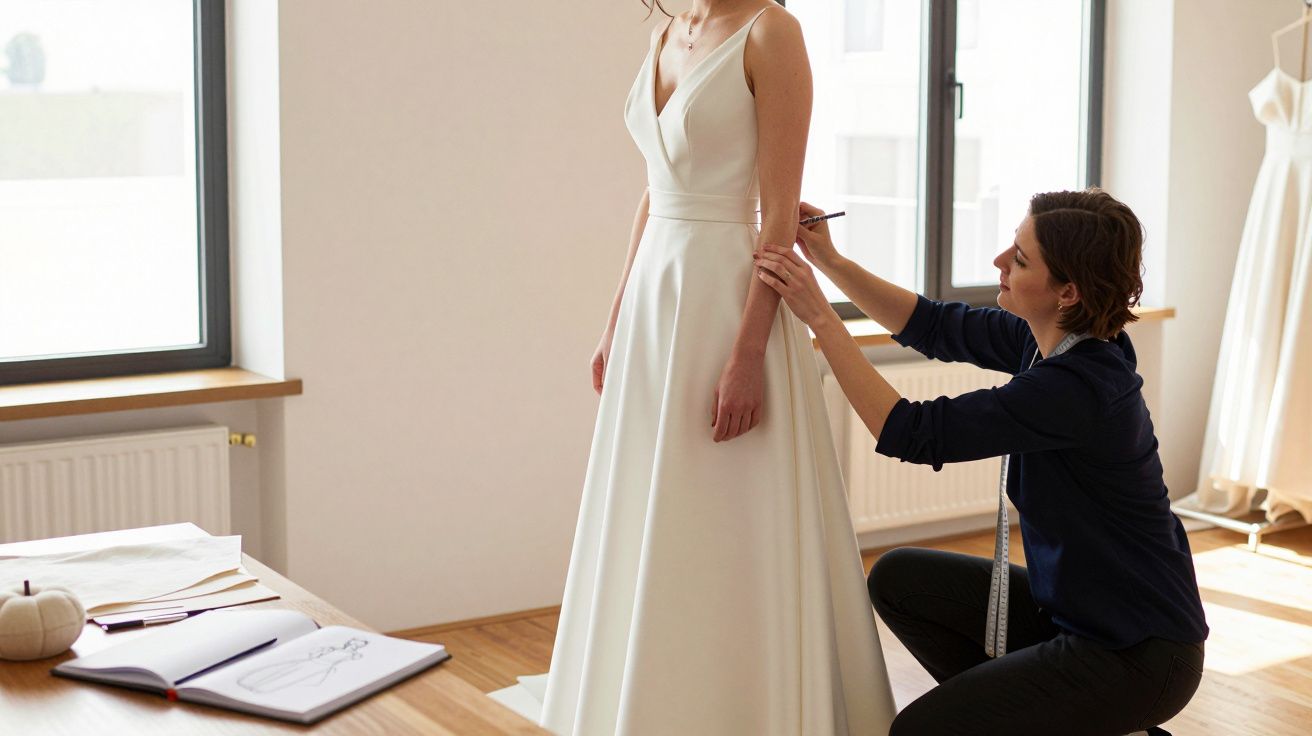
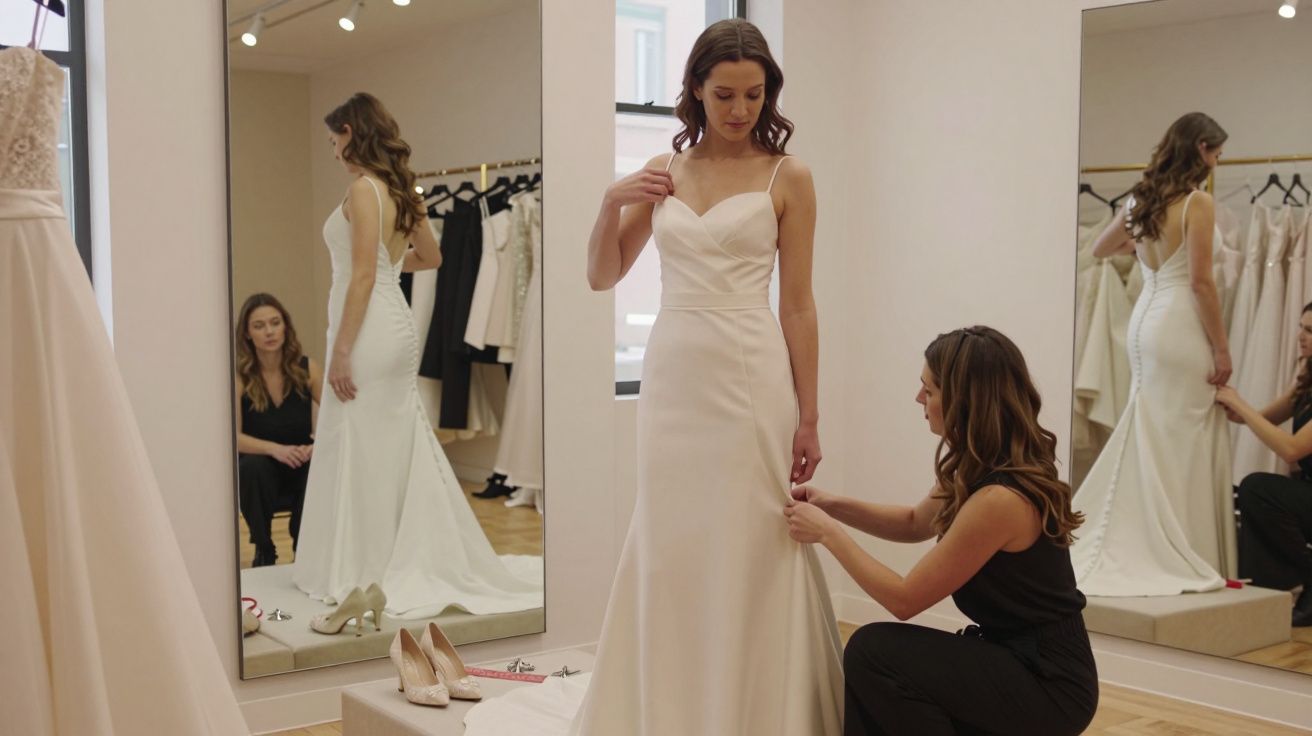
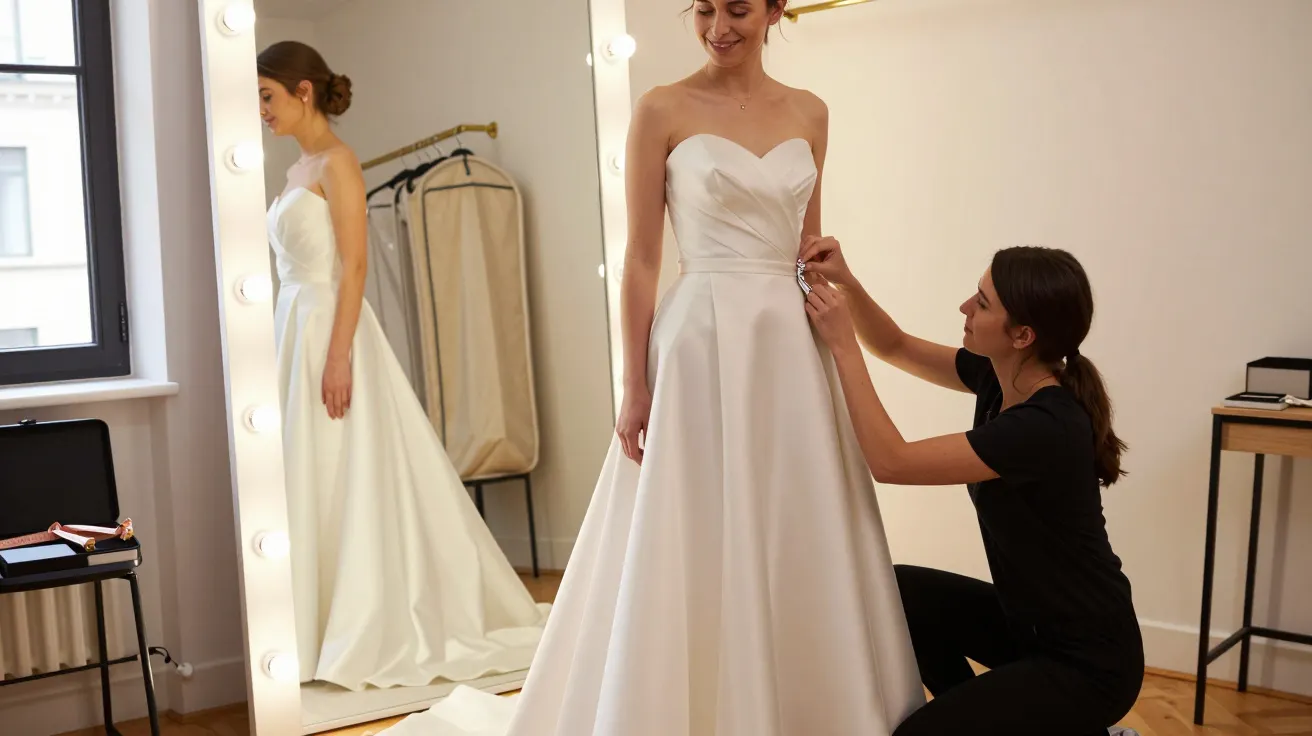
- Ask what’s detachable and what can be altered without breaking the design.
- Get a clear answer on weight: if it feels heavy in a calm showroom, it won’t feel lighter after eight hours.
FAQ:
- Will minimalist dresses look “too plain” in 2026? Not if the fabric and cut are doing the work. Texture, seam placement and proportion are replacing heavy embellishment as the main visual interest.
- Are detachable pieces actually practical? They can be, if they’re engineered well. Ask to practise attaching/removing overskirts or sleeves and check how the dress looks once the pieces are off.
- What silhouettes suit a modern venue like a restaurant or city hall? Clean lines, controllable volume, and shorter or detachable trains tend to work best. You want a shape that fits the space, not fights it.
- How do I balance comfort with a structured look? Look for internal support (bands, cups, light boning) paired with flexible fabrics and good lining. A well-made dress can feel secure without feeling tight.
- Is rewearing a wedding dress realistic? Often, yes-with tailoring. Styles with simpler skirts, fewer heavy layers, and fabrics that dye well are the easiest to shorten or restyle after the wedding.



Comments
No comments yet. Be the first to comment!
Leave a Comment