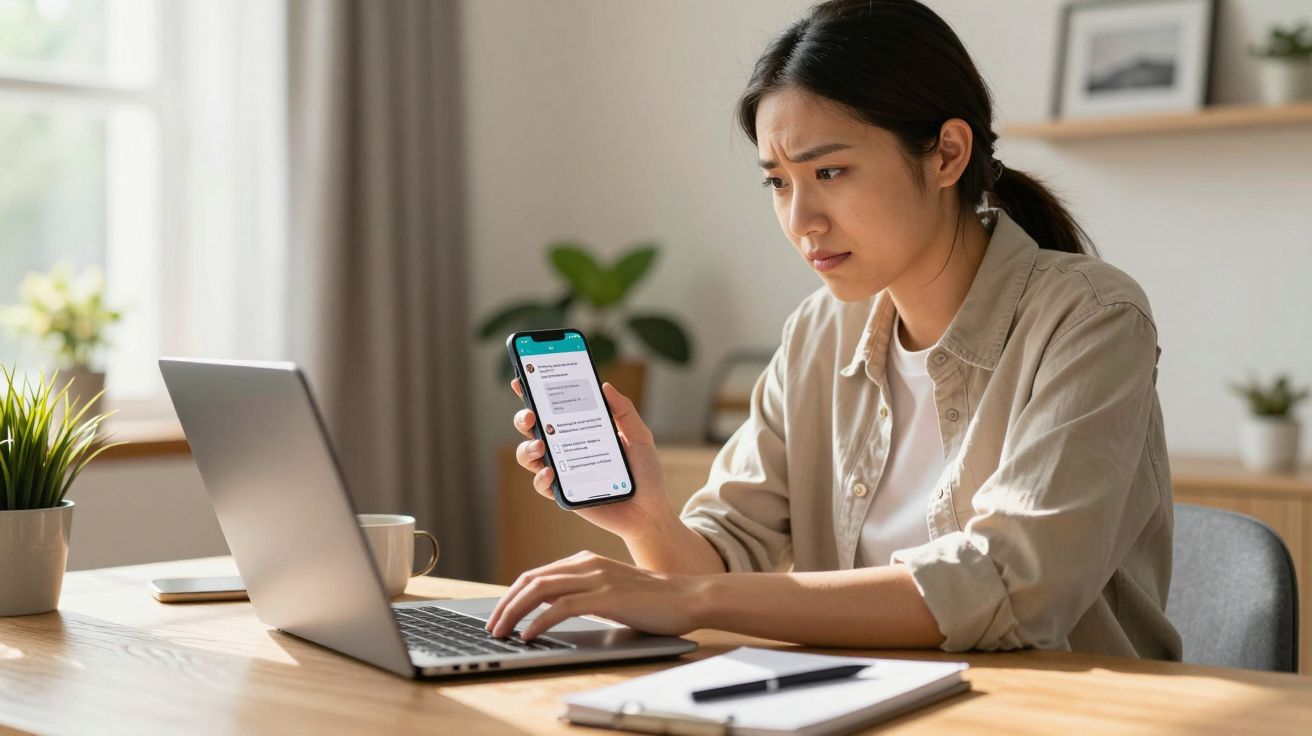
On any given morning, “of course! please provide the text you would like translated.” shows up in places you don’t expect: a chat widget on a website, a pop-up in an app, an auto-reply in a busy inbox. Right beside it sits its near-twin, “of course! please provide the text you would like me to translate.”, and between them they quietly reveal what changed in first impressions: people now judge not just speed, but intent, safety, and whether you’re actually listening. This matters this year because those first lines are increasingly the only chance you get before someone clicks away, screenshots your reply, or loses trust.
It used to be enough to sound polite and competent. Now, when everyone is juggling AI tools, data worries, and shortened attention spans, a “helpful” opener can land as canned, evasive, or oddly pushy. The first impression is still made in seconds-but the standards inside those seconds have shifted.
The new first impression test: are you human, or just friction?
First impressions used to be about warmth: a greeting, a smile, an upbeat tone. In digital spaces this year, they’re more like a systems check. People scan the first line for evidence that you understand the task, that you won’t waste their time, and that you won’t mishandle their information.
That’s why those ultra-polite prompts can backfire. “Please provide the text” is fine, but it can feel like an automated gate-especially if the user already tried to provide it, or doesn’t know what format you need. The impression becomes: I’m talking to a wall that only responds to the right keyword.
In 2025, friction reads as incompetence. Even when it’s just a missing detail.
What actually changed (and why you feel it everywhere)
Three shifts are doing the heavy lifting.
First: people are now fluent in templates. They can spot a stock line in half a second because they’ve seen it in delivery updates, customer service chats, and AI assistants. Template language isn’t “professional” anymore; it’s often interpreted as a refusal to engage.
Second: the cost of misunderstanding went up. A wrong translation can be embarrassing, yes-but it can also be contractual, clinical, immigration-related, or reputation-sensitive. So users are looking for a signal that you’ll ask the right clarifying question before you touch anything important.
Third: trust got brittle. If someone is pasting personal text, a first message that ignores privacy or context can make them stop. A good first impression now includes subtle reassurance: what you need, what you’ll do, and what you won’t do.
The micro-moment that decides everything: the first question
The most influential part of a first interaction isn’t the greeting. It’s the first question you ask.
Compare:
- “Please provide the text you’d like translated.”
- “Paste the text here, and tell me the target language and where it’ll be used (email, CV, legal document). I’ll keep the tone consistent.”
Both are polite. Only one feels like it understands the job.
People don’t mind being asked for information. They mind being asked in a way that suggests you’re not thinking. This year, the winning first question is specific, light, and clearly connected to a better outcome.
A quick sanity-check: are you asking for clarity, or offloading effort?
If your opener makes the user do project management, you’ve lost the room. If it makes them feel guided, you’ve bought patience.
A strong first question usually does three things:
- Narrows the task (what length, what variety of English, what formality).
- Protects the user (what to avoid sharing; whether sensitive details can be anonymised).
- Speeds the work up (clear next step, clear format, clear turnaround expectation if relevant).
Why “nice” can read as wrong this year
There’s a particular flavour of friendliness that now triggers suspicion: over-eager politeness without substance. It sounds helpful but doesn’t reduce uncertainty.
That’s the risk with lines like “of course!” paired with a generic request. In isolation, it can feel like theatre-like you’re trying to sound reassuring while staying non-committal. Users are sensitive to that because they’ve been burned by cheery automation that never actually solves the problem.
Warmth still matters. But warmth has to be attached to competence. Think less “delighted to help” and more “here’s how we’ll do this safely and well”.
The new essentials: context, consent, and tone
If first impressions are a doorway, these are the hinges.
Context is what makes your help accurate. A translation for a mate on WhatsApp shouldn’t read like a government notice, and a formal complaint letter shouldn’t sound like casual chat.
Consent is what makes it feel safe. A simple, plain line-“Don’t include bank details or passwords; you can replace names with [NAME]”-can change the emotional temperature instantly.
Tone is what makes it usable. People increasingly want translations that keep voice, not just meaning: apologetic, firm, persuasive, affectionate, neutral.
A good opener doesn’t lecture. It gently asks for what it needs, and signals you understand why it matters.
A practical script you can steal (without sounding like a robot)
If you need one pattern that works across most situations, it’s this:
- Ask for the text (obvious, but don’t stop there).
- Ask for the target language/variant (e.g., UK vs US).
- Ask where it will be used (email, legal, marketing, subtitles).
- Offer a privacy nudge.
- Offer options (literal vs natural; formal vs friendly).
In bullet form, because people read like they’re crossing a road:
- Paste the text you want translated.
- Tell me the target language and whether you want UK or US style (if English).
- What’s the context: personal message, work email, CV, legal/medical?
- If it’s sensitive, swap names for placeholders like [NAME].
- Do you want it literal or natural-sounding?
It takes ten seconds to read. It saves ten minutes of back-and-forth. And it lands as: this person is on it.
Why it matters this year (even if you think your work speaks for itself)
In crowded, fast-moving channels, you often don’t get to “prove” you’re good. People decide whether you’re worth engaging with based on a single message, a single prompt, a single request for more information.
This year, first impressions are less about charm and more about reducing risk: risk of wasting time, risk of being misunderstood, risk of sharing something you shouldn’t. The best openers feel like a handrail-small, sturdy, and immediately useful.
And if you’re building a product, running a service desk, or even just trying to be the reliable person in a group chat, this is the quiet competitive edge: making the first ten seconds feel safe, specific, and human.
| Shift | What people now look for | What to do in your opener |
|---|---|---|
| Template fatigue | “Is this a real response?” | Use one specific question tied to their goal |
| Higher stakes | “Will you handle this carefully?” | Ask for context and preferred tone |
| Fragile trust | “Is my info safe here?” | Offer a simple privacy prompt and boundaries |
FAQ:
- Why do first impressions feel harsher this year? Because people are overloaded and can spot generic, automated language instantly; they reward specificity and clarity.
- Is it bad to say “of course!” in a first reply? Not inherently, but if it’s followed by a vague request it can feel performative. Pair warmth with a useful, concrete next step.
- What’s the single best question to ask first? “Where will this be used?” Context prevents tone mistakes and reduces rewrites.
- How do I sound human without oversharing? Be direct, name the next step, and offer one small reassurance (privacy or tone) without a long explanation.


Comments (0)
No comments yet. Be the first to comment!
Leave a Comment