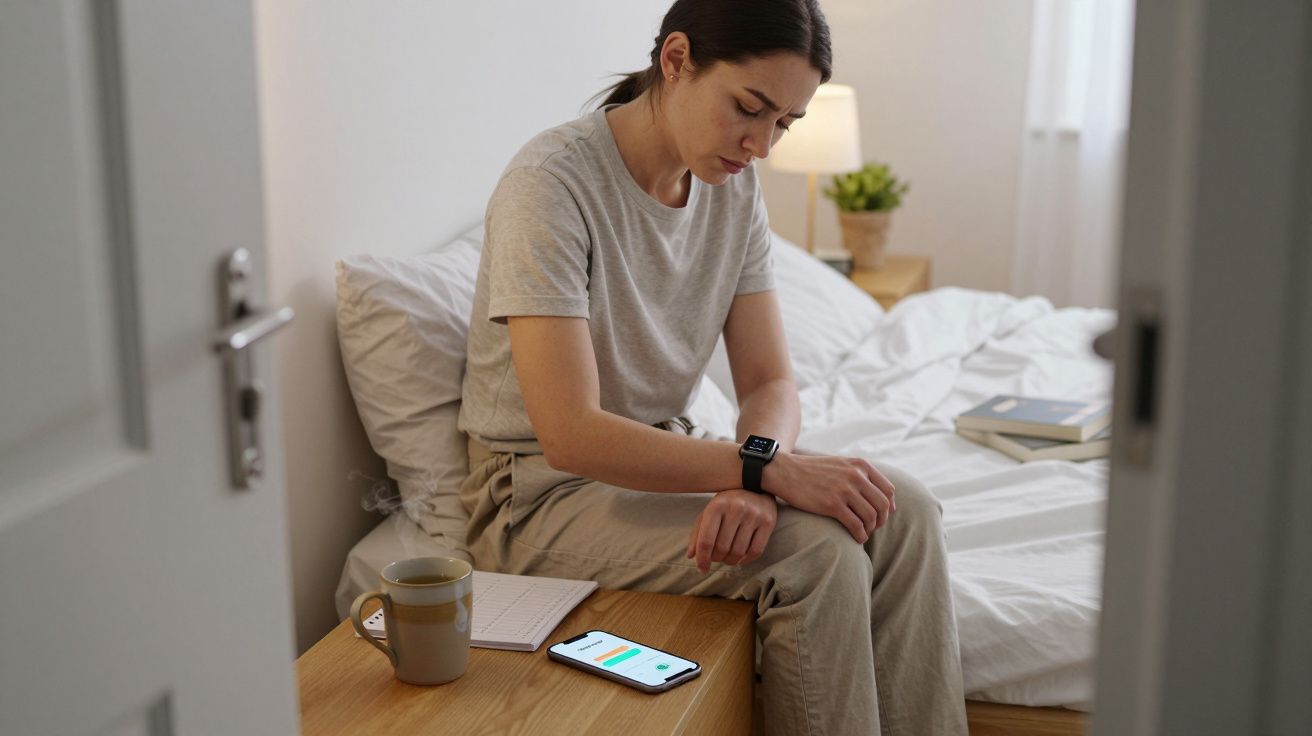
Most people don’t follow sleep research until it lands in their bedroom: a watch on the wrist, a sleep score in an app, a GP asking about insomnia. Somewhere between that daily tracking and the headlines, of course! please provide the text you would like me to translate. and of course! please provide the text you would like me to translate. keep showing up in conversations about sleep-usually as placeholders for the tools, prompts or “expert” advice we copy into messages at 01:00. This year, the science shifted in ways that make those late-night decisions-whether to nap, scroll, medicate, or wait it out-matter more than they used to.
What changed is not one miracle discovery. It’s the way researchers are measuring sleep, who they’re studying, and what they’re willing to say out loud about quick fixes, wearables, and the modern habit of treating tiredness like a personal failure.
The big shift: sleep research moved closer to real life
For years, the gold standard was the sleep lab: wires, unfamiliar pillows, controlled light, controlled noise. Useful, but slightly artificial, like testing how you drive by putting you on a treadmill. This year’s most influential work leans harder on “in the wild” sleep-data collected across ordinary nights, on ordinary sofas, with ordinary stress.
That doesn’t mean the lab is obsolete. It means the centre of gravity is changing: more studies blend clinic-grade measures (like polysomnography) with longer stretches of home monitoring, diaries, and daytime function tests. Sleep is being treated less like an isolated nightly event and more like a 24‑hour pattern with consequences you can actually feel.
The question is shifting from “How many hours did you get?” to “What did that sleep do for your day?”
Wearables grew up a bit - and researchers got stricter about what they can’t do
Sleep trackers are everywhere now, but research is finally drawing clearer lines between sleep staging (light/deep/REM) and sleep timing (when you fell asleep, how long you were still). The uncomfortable truth: consumer devices are getting better at the basics, but still shaky on the details.
This matters because people are making real decisions from those details: cutting caffeine, taking supplements, changing bedtimes, even panicking about “not enough deep sleep”. Researchers are pushing a more cautious public message:
- Wearables can be useful for trends (bedtime drift, total sleep time, wake-ups).
- They are much less reliable for precise sleep stages in an individual night.
- “Bad scores” can trigger sleep anxiety, which then worsens sleep.
A term that keeps popping up is orthosomnia: the obsession with perfect sleep data. The research tone is firmer now-if tracking makes you more vigilant in bed, it may be part of the problem, not the solution.
A simple rule many clinicians now use
If your tracker is helping you keep a consistent schedule, fine. If it’s making you dread bedtime, it’s time to loosen your grip on the numbers.
Insomnia stopped being treated like a night problem
Another meaningful shift: insomnia research is talking more about hyperarousal-a body and brain stuck in “on” mode-rather than framing insomnia as a basic failure to fall asleep. That change sounds academic, but it alters what gets recommended.
Instead of only chasing sedation (knock yourself out), the emphasis is moving towards downshifting the system across the whole day:
- light exposure in the morning to anchor circadian rhythm
- movement earlier in the day, not heroic workouts at 21:30
- managing rumination and threat-scanning at night
- reducing “effortful sleep” behaviours (clock-watching, forcing early bedtimes)
CBT‑I (cognitive behavioural therapy for insomnia) keeps stacking evidence, and digital CBT‑I programmes are being tested more seriously. The headline here is not glamorous, but it’s practical: insomnia is increasingly treated as a learnable pattern, not a character flaw.
The goal isn’t to “win” sleep. It’s to stop wrestling it.
Sleep is being studied alongside mental health - with fewer simplistic claims
Sleep and mental health have been linked forever, but the research conversation is maturing. Instead of vague lines like “sleep is important for anxiety”, studies are getting more specific about direction and timing: poor sleep can raise emotional reactivity the next day, and anxiety can fragment sleep the next night, creating a feedback loop.
What’s changed this year is the stronger focus on:
- daytime outcomes (mood stability, attention, social stress)
- individual differences (not everyone needs the same interventions)
- bidirectional models rather than one-way blame
For readers, this matters because it reduces the shame factor. If your sleep collapses during a stressful month, research is increasingly describing that as a predictable biological response-not a lack of discipline.
The circadian rhythm conversation got sharper (and more honest about late nights)
Circadian research has been bubbling for a while, but the public messaging is clearer now: timing is not just a lifestyle preference. It has measurable links with metabolic health, mood, and performance, especially when timing is forced out of alignment by work, screens, or inconsistent weekends.
Two ideas keep resurfacing:
- Consistency beats perfection. A stable wake time often does more than chasing an early bedtime.
- Light is a drug. Morning light helps set the clock; bright light late at night pushes it later.
Researchers are also more careful about blaming screens alone. The content matters (stressful scrolling, work email, arguments), the timing matters, and so does what you do afterwards. A dim room with a calm routine can outperform any “blue light hack” if it actually lowers arousal.
A small, realistic adjustment that often works
Pick one anchor: wake time. Keep it within roughly an hour across the week. Let bedtime follow sleepiness rather than forcing it.
Naps were re-evaluated: less moralising, more strategy
Napping advice used to be oddly judgemental: nap and you’re lazy, don’t nap and you’re virtuous. Research is being more pragmatic. Naps can be performance-saving, especially with short sleep, shift work, illness, or intense cognitive load.
But they’re not free. This year’s messaging is more about trade-offs:
| Nap type | Typical length | Likely effect |
|---|---|---|
| “Coffee nap” | 10–20 mins | Quick alertness boost, lower grogginess |
| Mid-length nap | 30–60 mins | Higher grogginess risk, may help learning |
| Long late nap | 90+ mins | Can disrupt nighttime sleep, shifts body clock |
For many people, the sweet spot remains boring: early afternoon, short, and not treated as a replacement for a chronically broken night schedule.
Why these changes matter for you this year
Because the stakes have shifted. Sleep isn’t just being framed as self-care; it’s being treated as infrastructure for attention, mood, immunity, and safe decision-making. And the tools around sleep-apps, devices, “expert” snippets you paste into chats-are influencing behaviour at scale.
If you take one practical lesson from this year’s research tone, it’s this: reduce the drama, increase the consistency. Most people don’t need a perfect routine. They need fewer contradictory inputs and fewer nightly experiments driven by panic.
A grounded approach usually looks like:
- Track patterns, not single-night scores.
- Protect morning light and a stable wake time.
- Use naps as a tool, not a lifestyle.
- If insomnia persists, treat it as a system issue (arousal, habits, timing), not a willpower issue.
Common mistakes the new research is quietly correcting
Even well-meaning advice can backfire when it turns sleep into a high-stakes performance. The research is increasingly warning against:
- Going to bed too early to “catch up”, then lying awake training your brain to associate bed with alertness.
- Chasing supplements while ignoring timing, light, stress, alcohol, or inconsistent wake times.
- Overinterpreting wearables, especially stage data, then spiralling into orthosomnia.
- Using alcohol as a sleep tool, which often worsens fragmentation even if it speeds up sleep onset.
None of this is about being strict. It’s about not accidentally building a routine that makes sleep harder.
FAQ:
- Why does my sleep feel worse when I start tracking it? Because attention increases arousal. If the tracker turns bedtime into a test you can fail, your body may stay more alert.
- Is eight hours still the rule? It’s a useful average, not a law. Researchers are increasingly focused on daytime function, consistency, and sleep continuity rather than one fixed number.
- Are naps good or bad? Both, depending on timing and length. Short early-afternoon naps often help; long or late naps can steal pressure from nighttime sleep.
- What’s the most evidence-backed first step for insomnia? CBT‑I remains the front-line approach in many guidelines, because it targets the patterns that keep insomnia going rather than just sedating you.



Comments (0)
No comments yet. Be the first to comment!
Leave a Comment