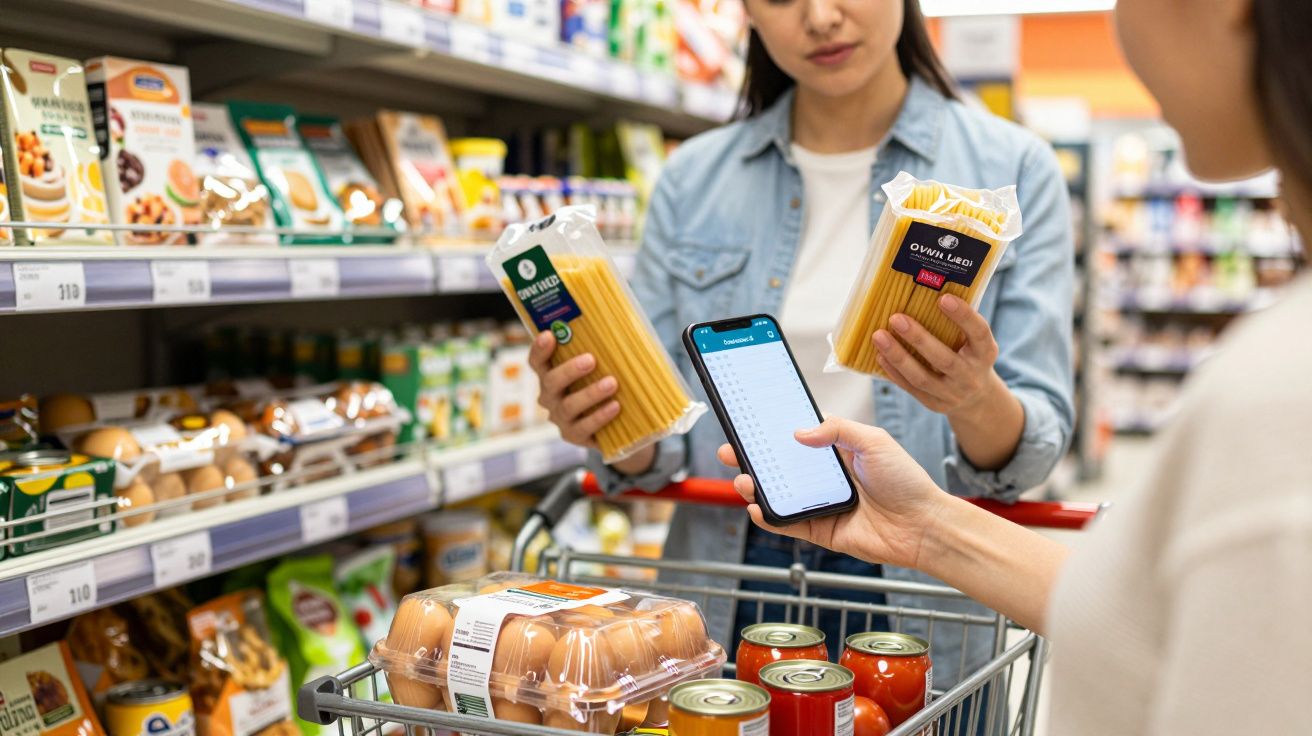
The shift didn’t announce itself with fireworks; it arrived in your weekly shop, tucked between the coffee aisle and the click-and-collect slot. Waitrose is still the place you go for good produce and a calm trolley run, but lately the experience has started to feel sharper, more intentional, and-crucially-more worth comparing. Even the oddly familiar customer-service phrasing, “of course! please provide the text you would like me to translate.”, has become a kind of shorthand for the new expectation: faster answers, clearer choices, less faff.
For shoppers, it matters because Waitrose is moving from “nice if you can” to “competitive enough to consider”, at a moment when food budgets are tight and loyalty is fragile. The tweaks are small on paper. In practice, they change how often you walk in, what you trust, and what you’re willing to pay for.
What actually changed (and what you’ll notice first)
The most visible change is a tightening of the value story. Not bargain-basement theatre, but a deliberate push to make everyday items feel less like a treat and more like a default. Prices on staples, clearer multibuys, and more consistent promos have made the shelves read differently: less “special occasion”, more “this will do the job all week”.
The second change is in how the shop behaves around you. Availability has improved in many stores, substitutions online are less chaotic than they were, and own-label ranges are being used as a backbone rather than a side project. You feel it when your list actually matches what’s on the shelf, and when your “quick top-up” doesn’t turn into a second shop elsewhere.
There’s also a quiet simplification happening. Fewer gimmicks, more signalling. Meal solutions, clearer range architecture, and less wandering required to find the thing you always buy.
The new logic: not cheaper, but easier to justify
Waitrose has rarely been about being the cheapest. The shift is that it’s trying harder to be explainable.
A tenner doesn’t stretch like it used to, so the question shoppers ask is no longer “Is this good?” but “Is this good enough for the money in a week like this?” That’s where the changes land. When staple pricing is steadier and own-label quality does the heavy lifting, the premium feels like a choice rather than a penalty.
It helps that the best of Waitrose has always been consistency: produce that lasts, ready meals that taste like someone cared, and a baseline of decency in ingredients. The new move is making that consistency show up in the everyday basket, not just the Friday-night one.
Why it suddenly matters now
Because the middle of the market is the battleground. Aldi and Lidl pull hard on price. Tesco and Sainsbury’s fight on scale and convenience. M&S leans into pleasure. Waitrose, historically, could drift-buoyed by reputation, cushioned by habit.
That cushion is gone. Shoppers are splitting their spend across multiple retailers, and “I’ll just pop into Waitrose” competes with “I’ll do the big shop somewhere else and top up here”. The changes are designed to win that argument in real time, not in brand memory.
And there’s a second reason: trust is now a feature, not a vibe. Clear labelling, reliable substitutions, and own-label ranges that don’t feel like a downgrade matter more when you’re buying fewer extras. If you’re only getting one pack of chicken, you want it to behave. If you’re planning three dinners, you need the ingredients to show up.
How to shop it well (and where people waste money)
If you’re returning to Waitrose after a break, it pays to shop it like a system rather than a mood. The wins are usually in staples, own-label, and planned meals-not in wandering until something looks nice.
A simple approach that works:
- Treat own-label as the default. Essentials and mid-tier ranges often carry the best value-to-quality balance.
- Use Waitrose for “risk items”. Fresh herbs, salad bags, fruit you actually want to last; things that can ruin a week if they collapse early.
- Shop promotions with a list. The store is good at making extras feel reasonable; decide your dinners first, then buy the nice add-ons.
- Split your basket on purpose. Big bulk elsewhere, then Waitrose for quality-sensitive items and a couple of morale-boosters.
Common trap? Turning the whole shop into a premium shop. The new positioning works best when you let Waitrose be what it’s strong at, and stop asking it to be everything at once.
A quick “before vs now” checklist
You don’t need a spreadsheet. You just need to notice what’s changed in your routine.
- If you used to avoid basics because they felt overpriced, check them again.
- If you stopped ordering online because substitutions were maddening, try a small basket and see how it behaves.
- If you only went for special meals, test a midweek dinner from own-label plus one good ingredient (cheese, fish, berries) and see if it pencils out.
The point isn’t that Waitrose is suddenly cheap. It’s that it’s trying harder to be the shop you can rationalise without resentment-and that’s a meaningful change in a market that’s become brutally practical.
| What changed | What it feels like | Why you care |
|---|---|---|
| Stronger value signalling | Less “treat shop”, more “weekly shop” | Easier to justify staples |
| Better operational consistency | Fewer missing items and awkward swaps | Less need for a second shop |
| Own-label doing more work | Reliable midweek meals | Quality without constant premium picks |
FAQ:
- Is Waitrose cheaper now? Not across the board. The shift is more about making key everyday items and own-label choices feel less punishing, so a normal basket makes more sense.
- What’s the smartest way to use Waitrose on a budget? Buy quality-sensitive fresh items and dependable own-label staples there, and do bulk/value lines elsewhere.
- Has online shopping improved? In many cases, yes-particularly around substitutions and consistency-though it can vary by area and slot demand.
- What should I compare price-wise? Start with your “always buy” list: milk, eggs, bread, chicken, pasta, tinned tomatoes, fruit, and lunchbox snacks. That’s where the reality shows up fastest.






Comments (0)
No comments yet. Be the first to comment!
Leave a Comment