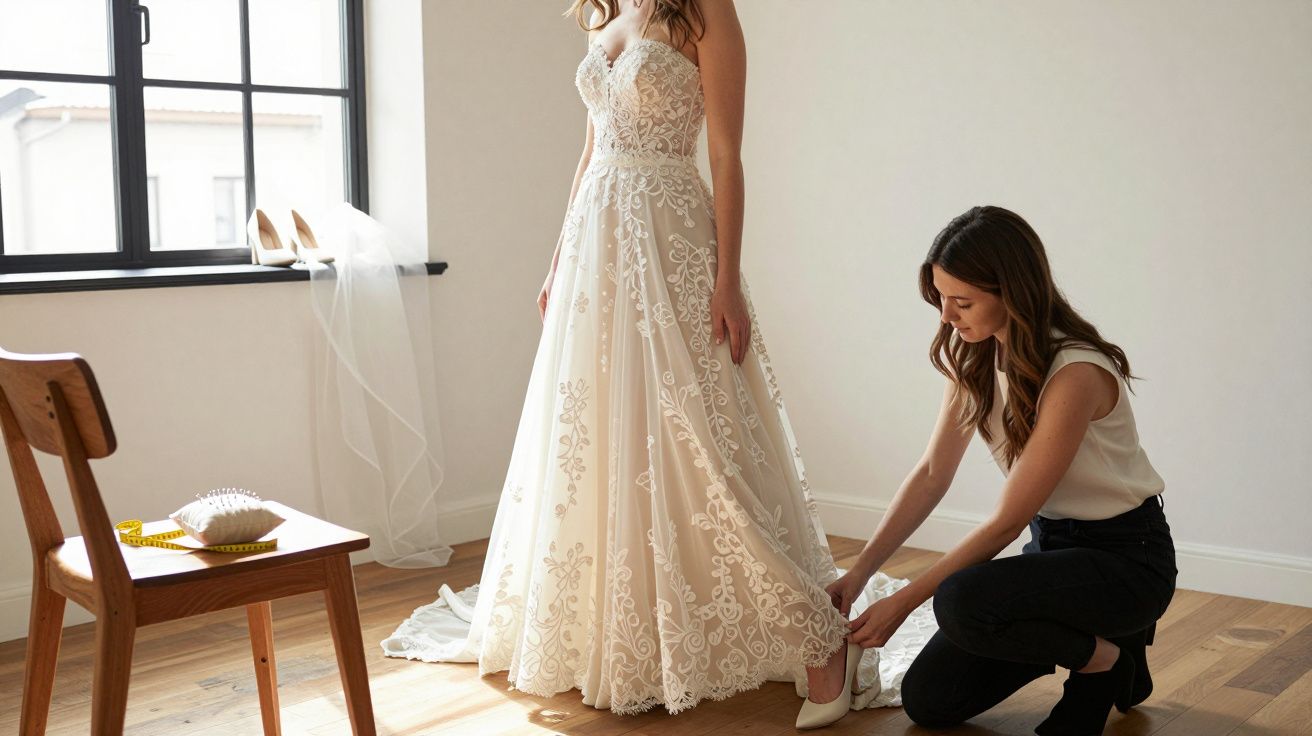
People think the bridal alteration process is a tidy finish line: a few pins, a few nips, done. But when it stops too early, the first thing you notice isn’t a “small tweak”-it’s an incomplete fit that turns up in photos, in posture, in the way you spend your own wedding day tugging at fabric instead of breathing. Alterations aren’t decoration; they’re load‑bearing.
I’ve watched it happen in fitting rooms lit like confessionals. The dress is beautiful on the hanger, promising, almost there-then the appointment schedule slips, the seamstress is rushed, the last fitting gets skipped “to be safe”, and the bride walks out with a garment that hasn’t been taught how to move with a real body for a real day.
The quiet damage of “nearly right”
An incomplete fit rarely looks dramatic in a mirror for thirty seconds. It shows itself in motion: when you sit, when you lift your arms, when you hug someone, when you try to breathe through a long ceremony and the bodice decides it knows better than your ribs.
The common story is timing. Someone books the first fitting late, assumes weight will stay perfectly stable, or underestimates how long hems and bodices take when there’s lace, boning, or beadwork involved. Then the calendar tightens and decisions get made under pressure: “Let’s leave it; it’s fine.”
It’s not fine. It’s simply untested.
What actually goes wrong when alterations end early
The dress starts driving your body
When the bodice isn’t properly balanced, it migrates. It slides down at the front, bites at the underarm, or gaps at the neckline, and you compensate without noticing-shoulders lifted, chin forward, core braced. You can smile through it, but your photos will tell on you.
A strapless gown is the clearest example. If the inner structure hasn’t been shaped and anchored to your torso, it doesn’t “stay up”; it gets held up by constant micro-adjustments. That’s exhausting by the time you reach speeches.
Hemlines become hazards, not details
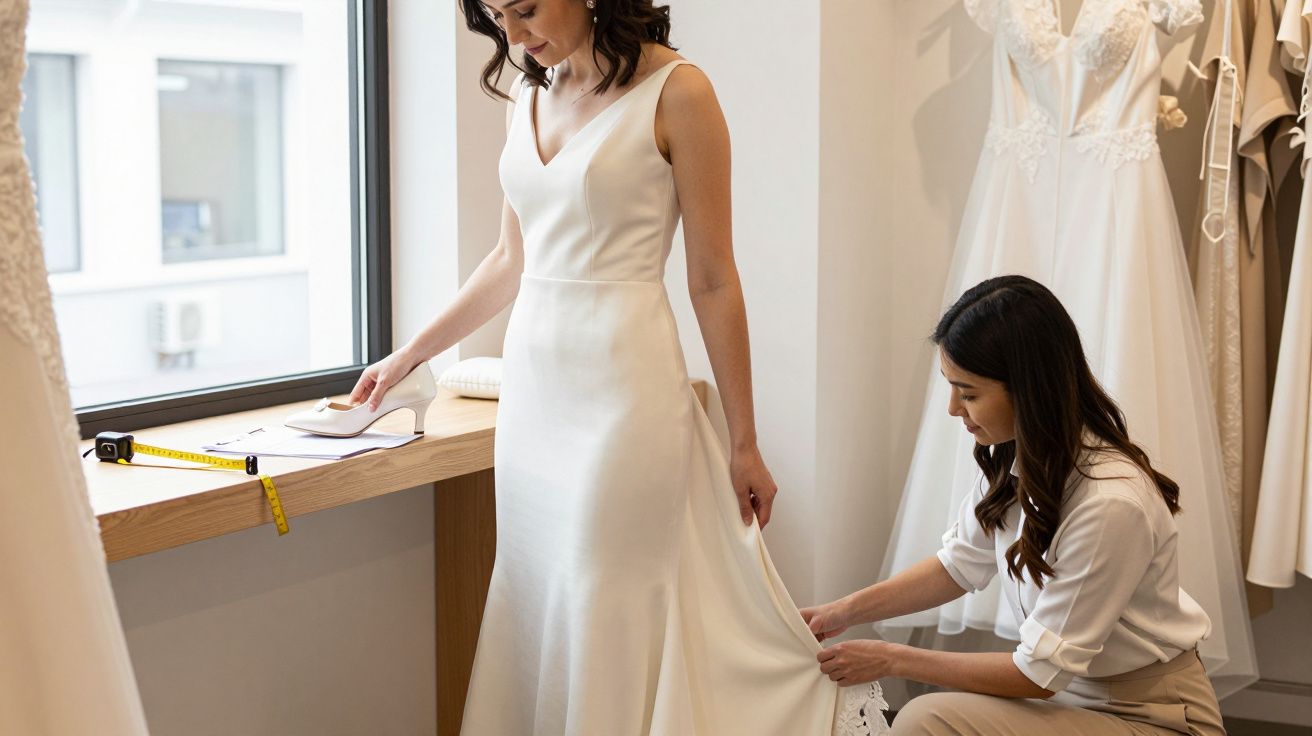
A hem that’s even half an inch off is a different dress once you add shoes, a bustle, and an aisle. Too long, and you’re stepping on it, kicking it forward, catching it under heels like a stubborn rug. Too short, and the proportions feel wrong and the train can sit oddly, pulling backwards with every step.
The trick is that hems aren’t just about the floor. They’re about how the skirt hangs from the waist and hips, and that only reveals itself once the top half is correctly fitted.
The “one more fitting” you skipped is where the truth lives
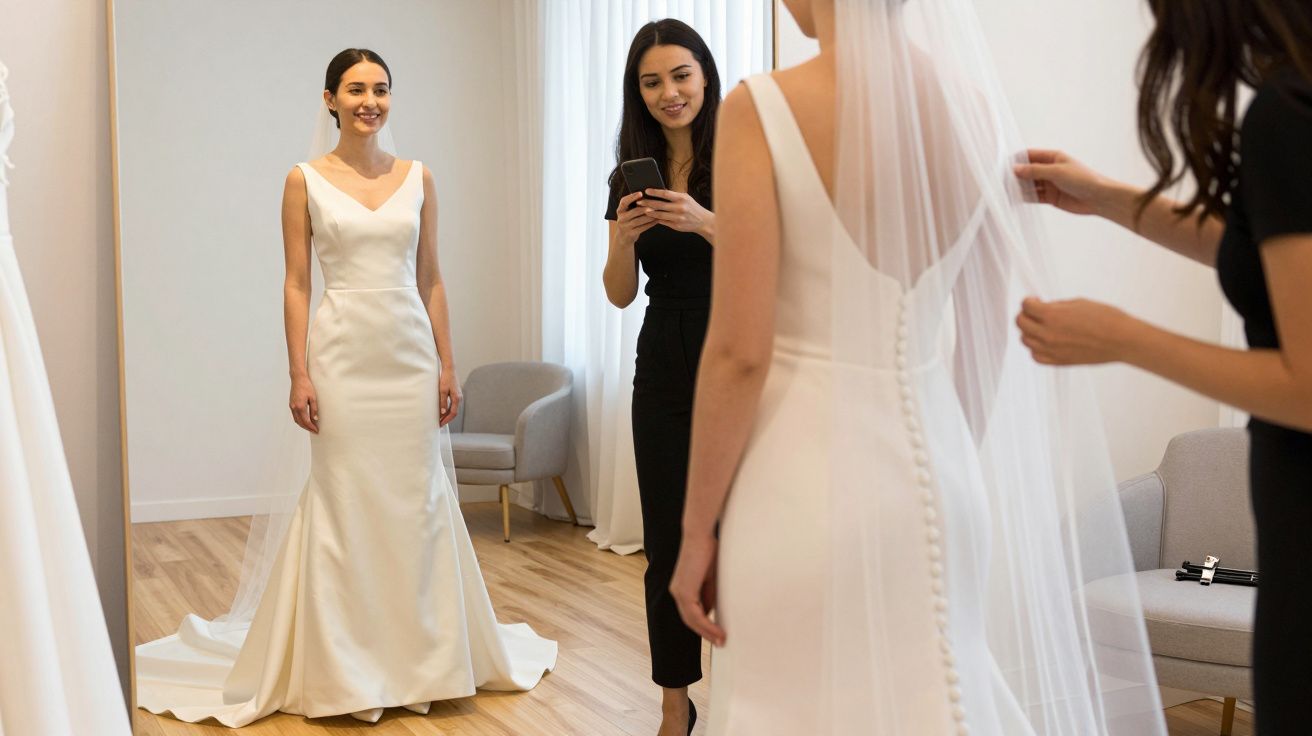
Final fittings aren’t vanity laps. They’re where you test the whole system: the bra or cups, the shapewear (if any), the shoes, the jewellery that snags, the way you actually walk and sit. It’s where a seamstress spots the small tension lines that mean something is pulling, twisting, or collapsing.
Cut that appointment and you lose the dress’s rehearsal. On the day, you become the rehearsal.
The cascade effect no one warns you about
Stopping early doesn’t just leave one issue; it creates a chain.
- A neckline that gapes leads to tape, which leads to tugging, which leads to makeup transfer.
- A bodice that’s slightly big leads to straps shortened too far, which leads to digging and red marks.
- A skirt that’s heavy at the back leads to a bustle that fails, which leads to someone pinning it in panic with whatever they have.
And because weddings are long, little problems compound. Discomfort steals attention, and attention is the currency you wanted to spend on people, not fabric.
How to spot an incomplete fit before it’s too late
Do a “real life” test in the fitting room. Not graceful, not posed-real.
- Sit fully back in a chair and stand up without using your hands.
- Raise both arms above your head, then hug someone tightly.
- Walk quickly, turn sharply, and take a few stairs if you can.
- Breathe deep enough to speak a full paragraph without feeling squeezed.
Watch for clues: horizontal wrinkles (tension), a neckline that lifts when you move, a waist seam that drifts off level, or a skirt that swings strangely to one side. These aren’t quirks; they’re diagnostics.
“If you only ever stand still, the dress will only ever fit the version of you that stands still,” a seamstress once told me, pinning a side seam like she was closing a map.
How to rescue it when time is short
If you’re close to the wedding and you suspect alterations ended early, don’t spiral. Get specific, fast.
- Book a triage fitting, not a full redesign. Ask for an assessment: what’s essential for comfort and movement, what’s cosmetic, what’s risky.
- Prioritise structure over prettiness. A secure bodice and correct hem beat perfect lace alignment every time.
- Bring the whole kit. Shoes, underwear, shapewear, veil-anything that changes how the dress sits.
- Plan for controlled compromises. Sometimes the safest choice is to stop touching beading, or to accept a slightly fuller seam allowance, to avoid damage.
Be honest about what you can’t change. Some fixes are quick (taking in a waist, adding cups, adjusting straps); others aren’t (rebuilding a corset, reworking heavy lace placement, major hem reshaping on multiple layers). The point is to spend your remaining time where it buys the most comfort and stability.
A calmer way to think about the timeline
Alterations work best when they’re allowed to be boring: measured, repeated, confirmed. The bridal alteration process isn’t one big moment-it’s a series of small proofs that the dress can survive a day that includes sitting, eating, sweating, dancing, and being hugged by dozens of people with jewellery.
The goal isn’t perfection on a mannequin. It’s a dress that disappears from your mind because it’s doing its job.
| Early stop point | What it risks | What to prioritise next |
|---|---|---|
| Skipping the final fitting | Hidden movement issues | Full outfit test + micro-adjustments |
| “Close enough” bodice | Sliding, gaping, discomfort | Inner support, balance, secure closure |
| Rushed hem/bustle | Trips, bustle failure | Correct hem in shoes + robust bustle |
FAQ:
- Will an incomplete fit show in photos even if it feels “fine”? Often, yes. Small imbalances show up as posture changes, neckline gaping, pulling lines, or a hem that looks uneven when you walk.
- How late is too late to change something? It depends on complexity. Simple takes can be done close to the day, but major structural work or heavy lace/beading changes need more time and carry more risk.
- What’s the most important thing to fix first? Security and comfort: bodice support and hem length. If you can breathe, move, and walk safely, everything else is secondary.
- Do I need to wear my wedding shoes to every fitting? Ideally, yes for hem work and any fitting after the first. Heel height changes the whole hang of the dress.
- Can I rely on fashion tape and pins as a backup? Treat them like plasters, not stitches. They’re useful for tiny emergencies, but they shouldn’t be asked to replace proper structure.




Comments (0)
No comments yet. Be the first to comment!
Leave a Comment