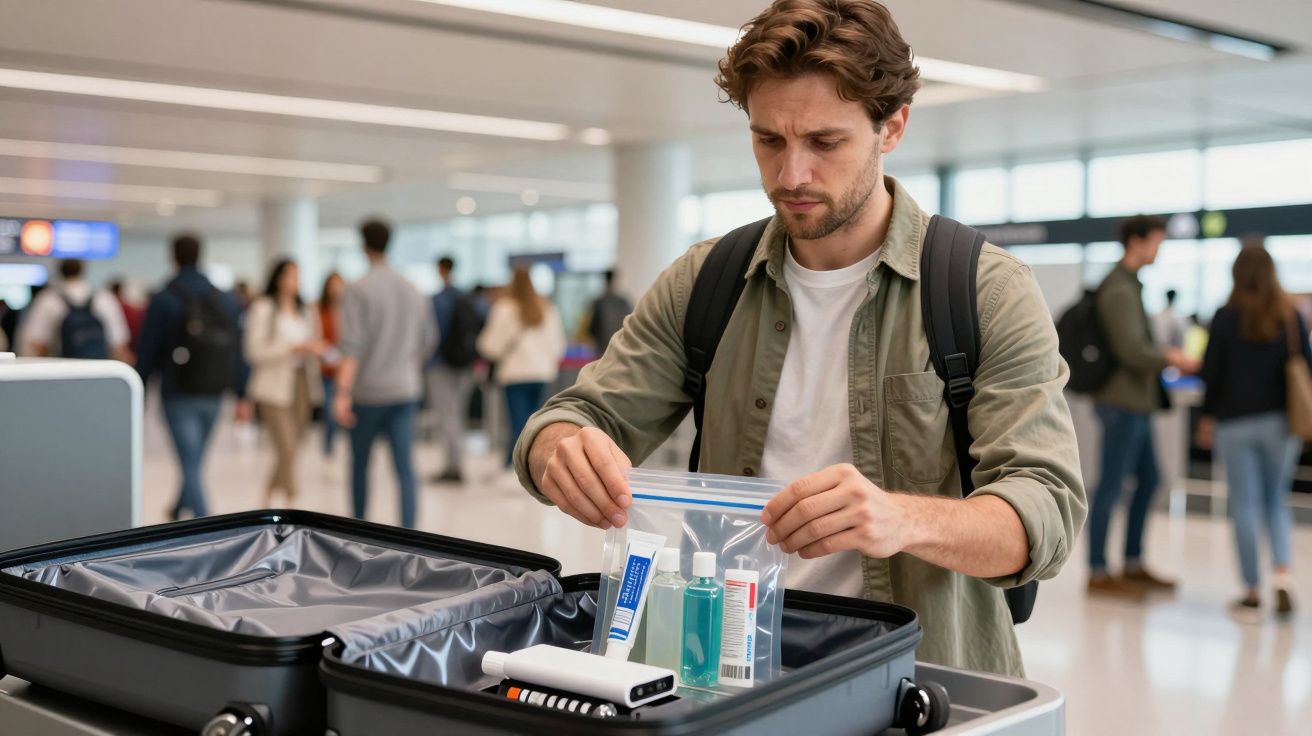
I only noticed how fragile “carry‑on rules” really are the day my bag got pulled aside and the queue behind me started to sigh. It was one of those moments where you remember the internet’s most unhelpful refrain - of course! please provide the text you would like translated. - while you’re silently pleading with the staff to let you keep the thing you packed on autopilot. Meanwhile, your mate is messaging, of course! please provide the text you would like me to translate., as if the problem is a language barrier, not a 100 ml limit and a bottle you forgot existed.
You can do everything “right” and still get caught by a tiny detail: a sharp corner you didn’t clock, a battery you packed loose, a liquid you assumed counted as a solid. The rules are simple until they’re suddenly not, and that’s when they become expensive.
The bit nobody tells you: carry‑on rules are enforced at the worst possible moment
Airlines and airports don’t enforce cabin baggage rules in a calm, chatty way. They enforce them when you’re late, under bright lights, surrounded by trays and strangers, with your passport out and your brain already on the other side of security.
That’s why the same item can feel “fine” on ten trips and then become a problem on the eleventh. It’s not always that the rules changed; it’s that enforcement varies by airport, by shift, by how busy the lane is, and by how your bag looks on the X‑ray.
Carry‑on rules are less like a syllabus and more like a pop quiz you sit while wearing a coat and holding a coffee.
What actually trips people up (it’s not just liquids)
Most people know the headline basics - 100 ml containers, one clear bag, sharp objects out. The traps are in the grey zones: the stuff that isn’t obviously banned, until it is.
The usual “I didn’t know that counted” items
- Large gels and pastes: hair wax, moisturiser, suncream, toothpaste, lip gloss. If you can spread it, expect it to be treated like a liquid.
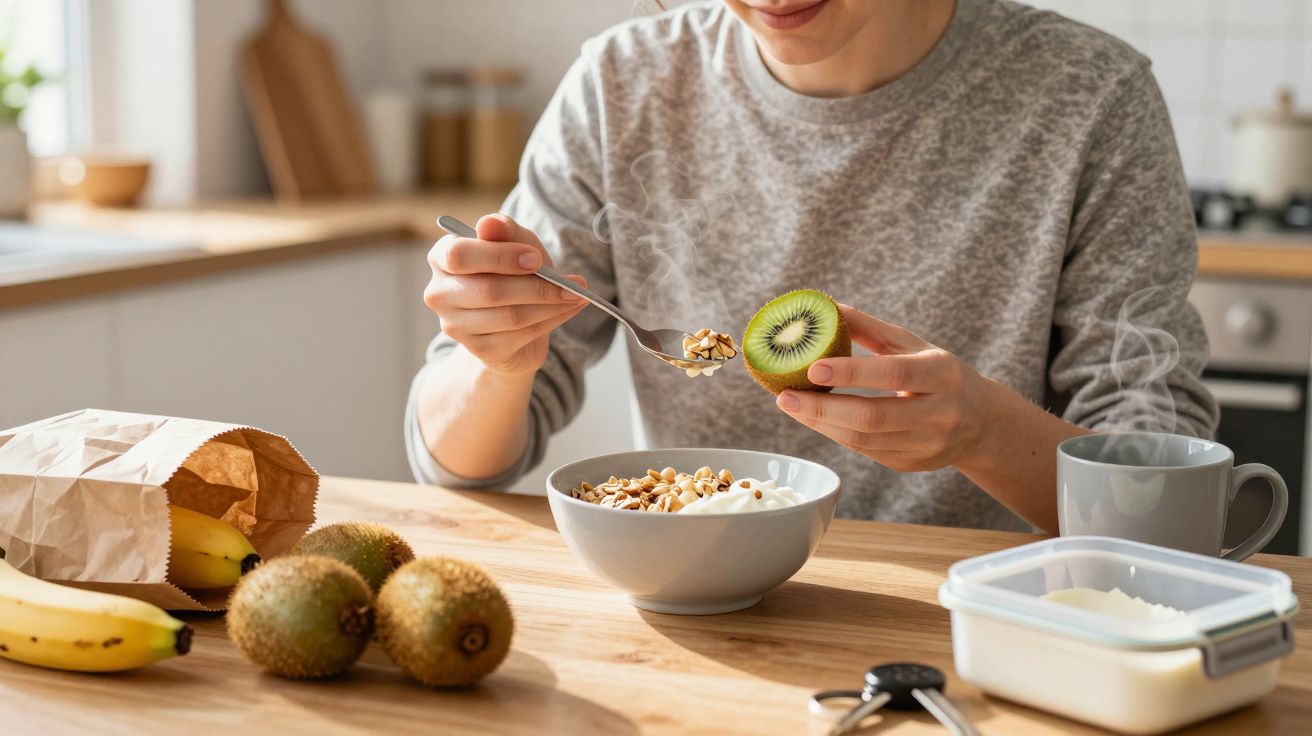
- Food with a wet centre: hummus, yoghurt, soup, jam, soft cheese. It’s the texture that matters, not whether you call it “food”.
- Duty free transfers: buying a bottle after security is fine, until you have a connection and it’s not sealed in a compliant bag with a receipt.
- Tools that look harmless: mini scissors, craft blades, some corkscrews, tweezers with a sharp point. They’re small, but they read as “sharp”.
Then there’s the sneaky category: things that are allowed, but only if packed correctly. Spare lithium batteries are the classic. Many airlines require them in cabin baggage, but not rattling around loose with keys and coins. A staff member who sees a bare battery can stop you even when the battery itself is permitted.
Size limits: the rule is about the bag you actually bring, not the one you imagine
People plan carry‑on like a theoretical exercise: “My suitcase is cabin size” and “My tote is personal item size.” The problem is that airlines don’t check your intentions; they check your bag on the day, including what it becomes when it’s full.
Soft bags balloon. Wheels and handles count. Coats tied around the top turn a neat case into a chunky shape that won’t drop into the sizer without a shove. And that’s when the conversation shifts from polite to transactional.
A quick reality check before you leave home
- Measure it packed, not empty. If you can’t zip it without leaning on it, it’s bigger than you think.
- Know your airline’s two numbers: cabin bag size and personal item size. They aren’t interchangeable.
- Assume a gate check is possible on busy flights, even if nobody mentioned it at check‑in.
The pain isn’t just the fee. It’s the scramble: pulling out power banks, medication, laptops, anything you don’t want separated - while the line behind you compresses like a spring.
Liquids: the clear bag is only half the story
The clear bag rule is meant to be simple: everything liquid goes in one bag, containers up to 100 ml, bag sealed. What complicates it is that airports interpret “liquid” broadly, and security staff are trained to treat uncertainty as risk.
If you’ve ever watched someone negotiate over a 125 ml bottle that’s “only half full”, you’ve seen the rule’s actual logic: it’s the container size, not the amount inside. Once you accept that, packing gets easier, even if it feels unfair.
The easiest way to stop losing toiletries
- Decant into proper 100 ml bottles with the volume printed on them.
- Keep a pre‑packed liquids bag that lives in your wash kit, not assembled at 5 a.m.
- Don’t bring “maybe” items. If you’re not sure you’ll use it, it’s not worth a bin‑side decision.
That last point is the one nobody wants to hear. Carry‑on is about certainty.
Electronics and batteries: you’re usually compliant, until you’re not
Airports want electronics visible because they want a clear scan, but the bigger issue is power. Lithium batteries are treated differently from other batteries because they’re a fire risk, and the safest place for most of them is in the cabin where crew can respond quickly.
Common mistakes aren’t dramatic; they’re messy. A power bank loose in a pocket with coins. A spare camera battery with exposed terminals. An e‑cigarette packed in hold baggage because it “looked like a pen”.
If you take one habit from this article, make it this: treat batteries like liquids - organise them, isolate them, make them easy to present without rummaging.
A small packing system that prevents big arguments
The goal isn’t to memorise every rule. It’s to reduce the moments where a stranger in a hi‑vis vest has to interpret your bag at speed.
Try this split:
- Grab pouch (top of bag): passport, boarding pass, phone, meds, a pen.
- Security pouch: liquids bag + small battery case + charging cables.
- Flight layer: headphones, jumper, snacks that are clearly solid (crisps, biscuits, sandwiches without sauces).
It sounds fussy until you watch someone unpack their whole life onto a grey tray because they can’t find a single tube of toothpaste.
| Problem at security | What it usually is | Fast fix |
|---|---|---|
| “This needs to come out” | Liquid/gel not in the clear bag | Keep all toiletries pre-bagged |
| “Bag is too big” | Packed dimensions exceed sizer | Travel with a slightly smaller bag |
| “Loose battery” | Exposed terminals/power bank | Use a small battery case or sleeve |
FAQ:
- Do liquids have to fit in one clear bag? Yes, in most UK airport security lanes you’re expected to put liquids in a single resealable clear bag and present it separately.
- Does ‘half full’ make an oversized container acceptable? No. It’s the container size that matters, not how much is left in it.
- Are power banks allowed in carry‑on? Usually yes, and often they must be in the cabin - but keep them protected, not loose, and check your airline’s watt‑hour limits.
- Can I bring food through security? Often yes for solid foods, but spreads and wet foods (like hummus or yoghurt) are commonly treated as liquids/gels.
- Why did it pass last time but not now? Enforcement varies by airport and even by lane. Pack as if the strictest interpretation will be applied.




Comments (0)
No comments yet. Be the first to comment!
Leave a Comment