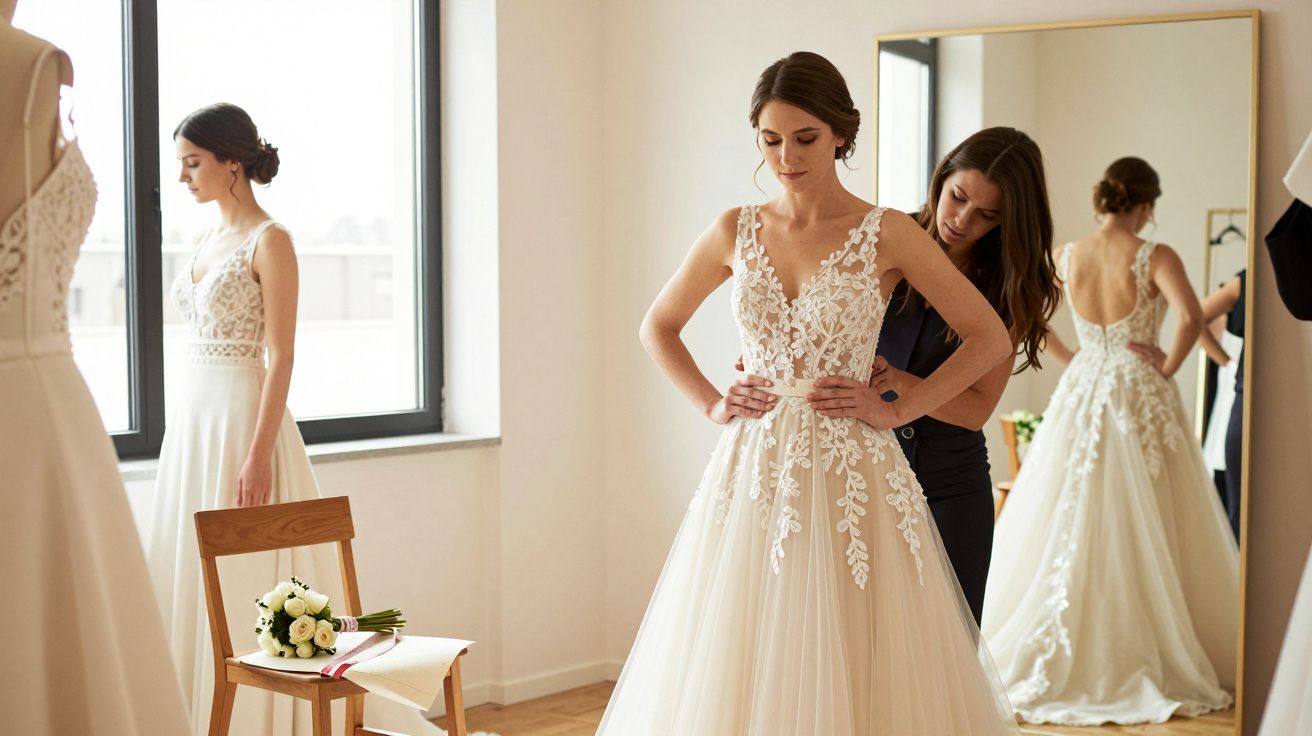
You can walk into a fitting for custom-made bridal gowns and watch the mirror do its magic: the neckline is perfect, the waist is snatched, the train moves like a film scene. Then body awareness taps you on the shoulder with a quiet, inconvenient fact - you don’t feel like yourself in it. That moment matters, because a wedding dress isn’t only meant to photograph well; it has to hold you steady through hours of breathing, hugging, eating, dancing, and being looked at.
I’ve seen it happen in the pause after the stylist clips the back and everyone goes silent. The room decides it’s “the one”, and you’re trying to locate the small panic rising under the boning. My smile was saying yes. My ribs were saying no.
The dress can be right - and your body can still disagree
A gown can be flawless on paper and wrong in your nervous system. Not because you’re ungrateful or “too picky”, but because your body reads fit and movement faster than your brain reads compliments. It notices the strap that tugs when you lift your arms, the fabric that rasps when you walk, the weight that changes your posture by a degree you can’t un-feel.
The tricky part is that “wrong” rarely arrives as a dramatic red flag. It arrives as little data points: shallow breaths, a clenched jaw, a constant urge to pull the bodice up, the sense that you’re performing rather than inhabiting.
What “feels wrong” usually means (and how it hides)
Most discomfort isn’t mysterious; it’s specific. It just gets drowned out by excitement, opinions, and the pressure of a timeline.
Here are the repeat offenders I see people mistake for “just nerves”:
- Restricted breathing from a waist that’s technically your measurement but unforgiving after lunch, speeches, and a full day of standing.
- Arm and shoulder trap: sleeves, straps, or an off-the-shoulder band that punishes you every time you hug someone.
- Neckline anxiety: you keep checking for gaping, slipping, or a sense of exposure you didn’t expect.
- Weight distribution: a heavy skirt that drags on your lower back, or a train that makes you walk like you’re carrying a secret.
- Sensory irritation: scratchy lace, stiff tulle, seams that land exactly where you sweat.
A stunning dress can also feel wrong for quieter reasons: it looks like someone else’s taste, someone else’s version of you. When the gown is wearing you, your shoulders rise and your voice changes without you noticing.
“If you can’t drop your shoulders in it, your body is doing the review your eyes won’t.” - a seamstress once told me, while pinning a bodice that photographed beautifully and felt like armour
A simple fitting test: read your body like evidence
Borrow a page from any good process: slow down, change one variable at a time, and look for patterns. You’re not hunting for perfection. You’re checking whether your body can live in the dress.
Try this in the fitting room - no theatrics, just quiet checks:
- Take five full breaths. If you can’t expand into your lower ribs, note it. Tight can look polished; tight can also make you dizzy by the canapé hour.
- Lift both arms above your head like you’re fixing your hair, waving, hugging. If the bodice shifts, digs, or exposes more than you want, it’s data.
- Sit down for two minutes. Not a perch - a real sit. Notice where the dress pushes, rides up, or cuts in.
- Walk fast, then slow. Does the skirt lead you, or do you lead it? Can you turn without thinking?
- Do a “real day” simulation: hold a bouquet (or your phone), turn sideways for photos, and try a gentle dance step.
If you’re relying on constant micro-adjustments, your future self will be doing that for ten hours. That isn’t a moral failing; it’s a design or fit mismatch.
Where custom-made bridal gowns help - and where they can mislead
Custom is powerful because it can solve problems that off-the-peg can’t: odd strap placement, asymmetric shoulders, a bust that needs support without a plunge, a waist-to-hip ratio that never matches standard sizing. The best custom work feels like ease disguised as structure.
But custom-made bridal gowns can also mislead when the brief is built on a picture rather than a body. If the goal is “make me look like that photo”, you may end up with a dress that hits visual checkpoints while ignoring how you move, stand, and self-regulate under attention.
Three practical questions to bring to your designer or seamstress:
- “Where is the support actually coming from?” (Boning, inner corset, cups, waist stay - and how it behaves when you sit.)
- “What changes after two hours?” (Heat, swelling, food, posture fatigue are real. Plan for them.)
- “What can we soften without losing the look?” (Lining choices, strap width, ease at the waist, a different lace placement.)
Small alterations that change everything (without changing the dress)
Relief often lives in small, unglamorous tweaks - the kind you feel more than you see. If you’re close to “yes” but your body keeps objecting, these are common fixes:
- Add a waist stay so the bodice rests on your waist rather than your ribs.
- Swap to a softer lining where lace or beading scratches.
- Rebuild the bust with better internal support (so you’re not relying on tightness).
- Adjust sleeve/strap angles so you can raise your arms freely.
- Reduce skirt weight with different underlayers or a smarter bustle plan.
None of these are about lowering standards. They’re about making “stunning” sustainable.
How to tell nerves from a genuine no
Pre-wedding nerves exist, and fitting rooms are weird little stages. The difference is consistency.
Nerves tend to fade once you move, breathe, and get used to the look. A genuine “no” repeats itself: every time you sit, every time you lift your arms, every time you imagine greeting people at the door. Your body doesn’t argue once; it keeps filing the same complaint.
If you want a quick gut-check, ask yourself: would you wear this dress if no photos existed? If the answer is no, listen.
| Signal | What it often points to | What to try next |
|---|---|---|
| You can’t take a deep breath | Waist/rib restriction, overly rigid corsetry | Add ease, waist stay, adjust boning placement |
| You keep fidgeting or pulling | Slipping neckline, strap tension, sensory irritation | Strap/neckline redesign, softer lining, better support |
| You feel “on display” in a bad way | Neckline/shape mismatch with your comfort | Raise neckline, add illusion, shift proportions |
FAQ:
- Can a dress feel wrong just because it’s new? Yes. Give yourself a few minutes to acclimatise, then run movement and breathing tests. If the discomfort persists in the same places, it’s not just novelty.
- Do I need to “break in” a wedding dress? Not in the way you break in shoes. You can get used to weight and volume, but pain, restricted breathing, and constant adjusting usually mean alterations are needed.
- Is it normal to feel pressured into saying yes? Very. Bring one trusted person, ask for quiet moments, and remember you can pause. A good atelier prefers a thoughtful yes over a rushed one.
- What if everyone loves it and I don’t? That’s a useful signal, not a personal failing. You’re the one wearing it for the entire day, and your comfort will show more than anyone’s opinion.
- How late can I change my mind with a custom gown? It depends on the build stage. Ask your designer what’s still flexible (neckline, sleeves, lining, support) and what’s locked (base pattern, fabric cuts) before you panic.




Comments (0)
No comments yet. Be the first to comment!
Leave a Comment