
Wedding dress sizing often lives in a parallel universe to the clothes you wear every day, and the gap shows up fast once you start trying gowns on. Boutiques lean on standard measurements to keep ordering simple, but bodies don’t come in neat, matching columns. Knowing how that system works saves you stress, money and the quiet panic of thinking you’ve “changed size” overnight.
This isn’t vanity, and it isn’t you getting it wrong. It’s a manufacturing language, and you’re learning it in a fitting room with bright lights and a deadline.
Why bridal sizes feel brutally “small”
Most bridal brands don’t use the same size blocks as high-street fashion. Many run a different chart, different ease (the extra room a garment gives you), and different assumptions about where the dress should hug. If you walk in as a UK 10 in jeans, a bridal 12 or 14 can be completely normal in that label.
The shock happens because the number is presented like a verdict. In reality it’s closer to a part code: it tells the factory which pattern to cut, not what you look like.
Bridal sizes are not a moral score. They’re a production shortcut tied to a chart, not a mirror.
Standard measurements: what they are, and what they miss
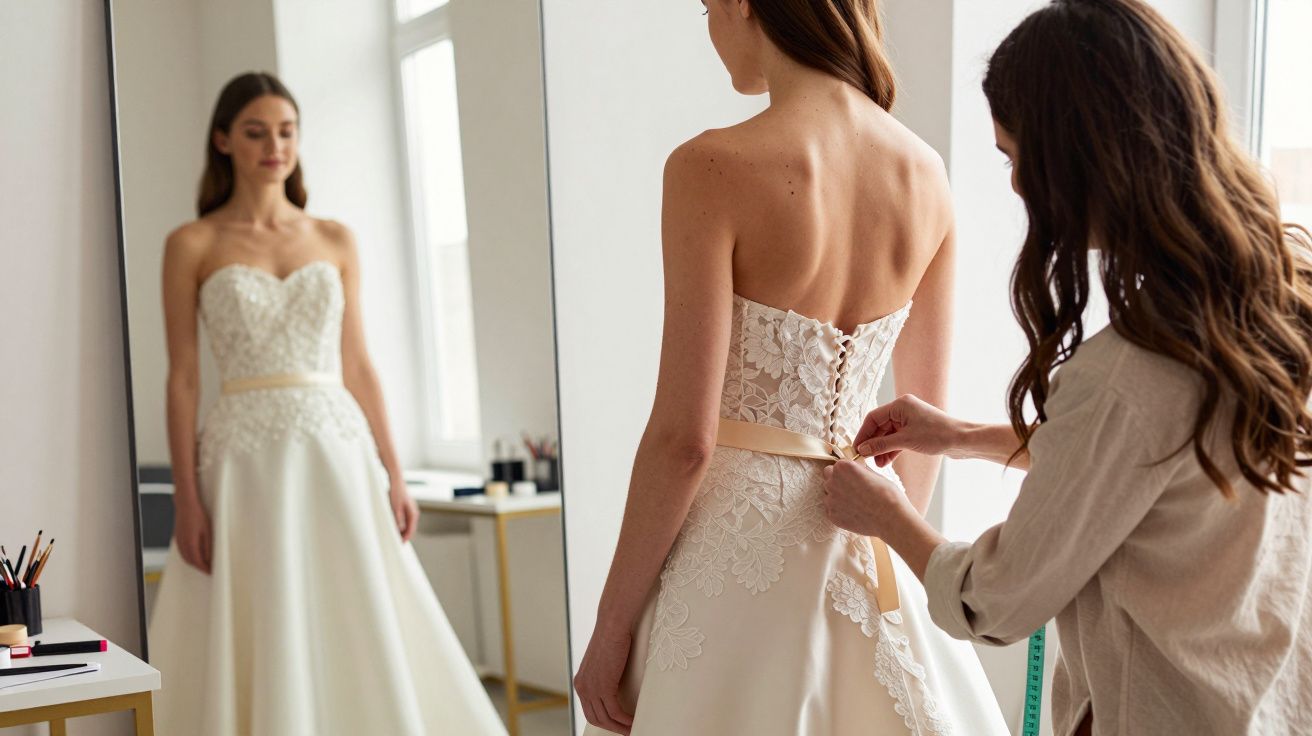
Boutiques typically take three core numbers: bust, waist and hips. Those standard measurements get matched to the designer’s size chart, then the gown is ordered to the nearest size that can be altered down.
What gets missed is everything that makes a body real:
- Ribcage shape and bra band size (huge for structured bodices)
- Shoulder width and posture (forward shoulders change how straps sit)
- Torso length (where the waist seam lands)
- Hip shape (fuller high hip vs fuller low hip)
- Softness and compression (how your body behaves in boning and satin)
A dress can “fit” in the bust and still fight you at the ribs. It can match the hip measurement and still pull because the fullness sits higher than the pattern expects.
The one-number problem
Many gowns can only be comfortably altered down by a limited amount in certain areas, especially if there’s lace, beading, or a corseted bodice. That’s why boutiques often say, “We order to your largest measurement.” It’s not to upsell; it’s to avoid a dress that cannot be let out.
The boutique rule that actually protects you
A reliable shop will measure you, compare you to the brand chart, and explain the call in plain English. They’ll also tell you what’s realistically alterable and what isn’t.
Look for this workflow:
- Measurements taken over the right underwear, standing naturally
- Size choice based on the designer’s chart (not guesswork)
- A clear note of which area drove the size (often waist or hips)
- A plan for alterations, with likely pinch points flagged early
If you get hand-wavy reassurance (“Oh you’re definitely an 8 in our dresses”), ask to see the chart. Numbers are calmer than vibes.
Order for the body you have today, then tailor for polish. Betting on future weight loss is where budgets get bruised.
Where clashes happen most: real examples in the fitting room
1) Your waist is one size, your bust is another
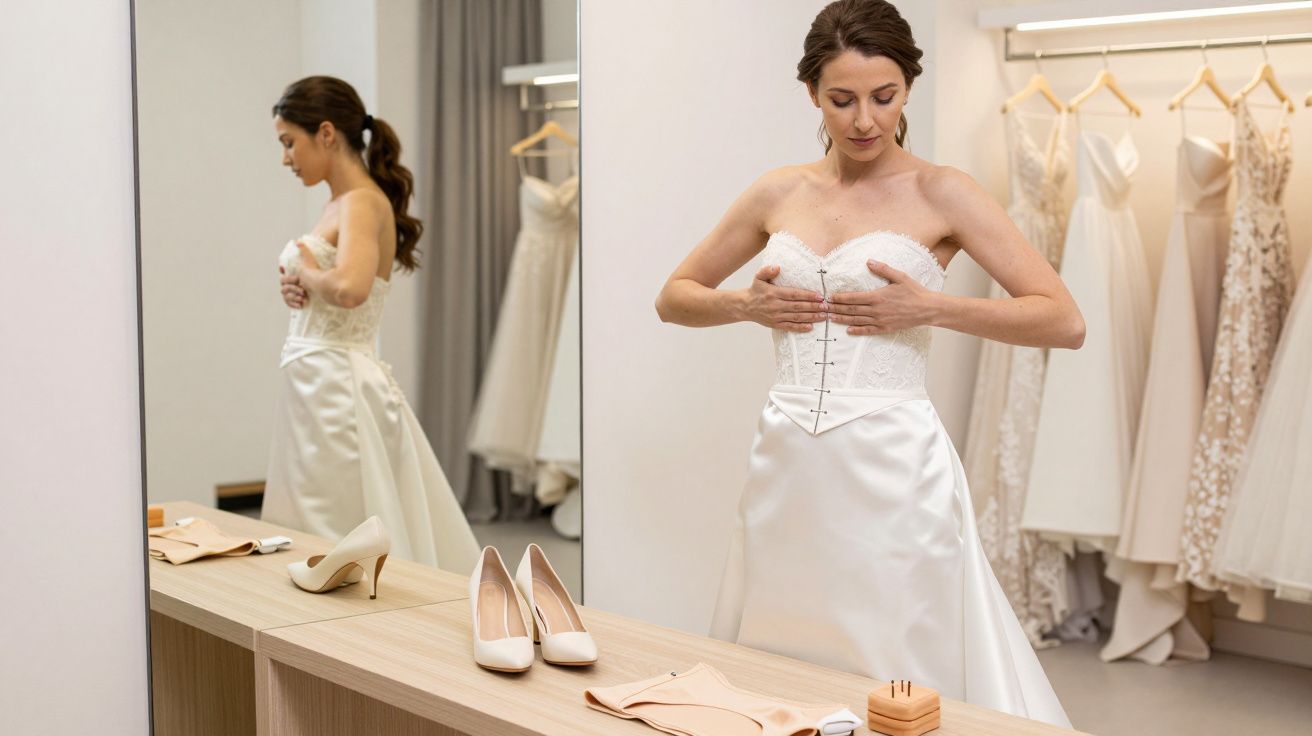
This is common, and it’s not a “problem body”. It’s how humans are built. Strapless and heavily boned dresses are least forgiving here because they need grip at the ribcage and waist to stay up.
What helps: cups, internal corsetry, and skilled bodice alterations. What rarely helps: ordering smaller and hoping it stretches.
2) Your hips fit, but you can’t sit down
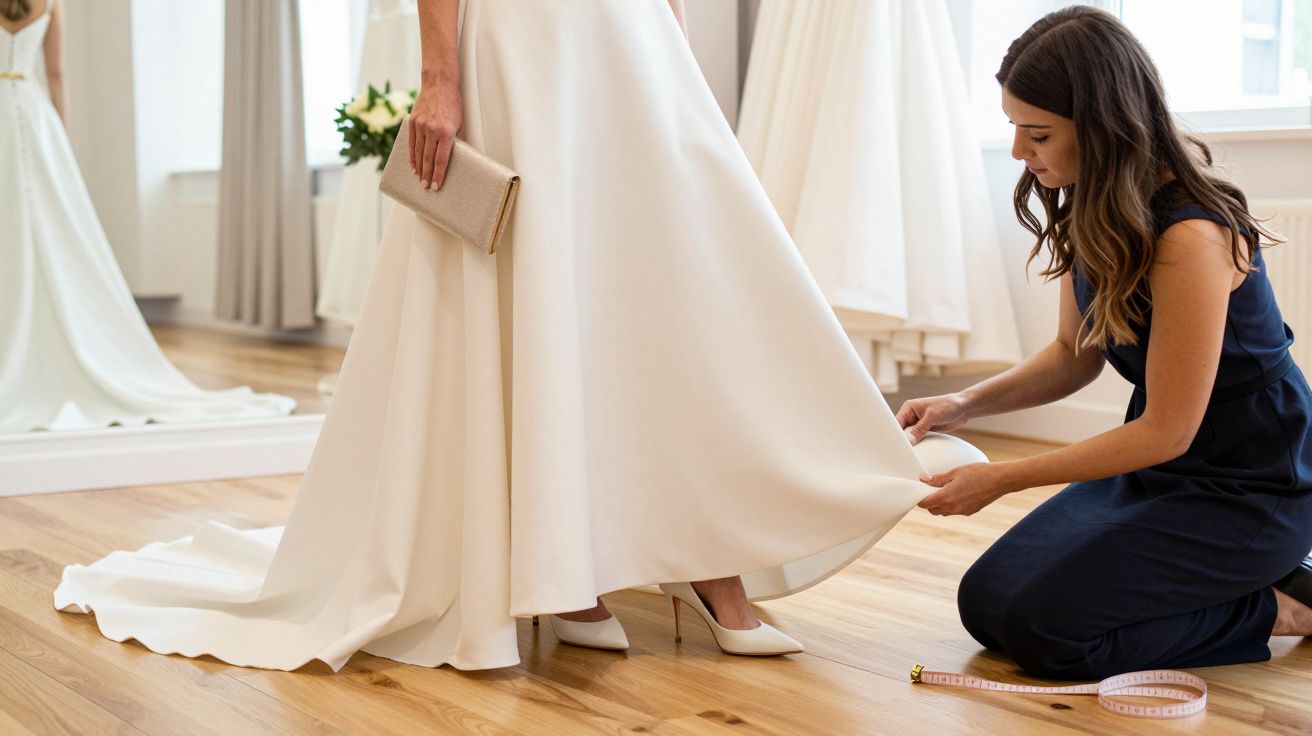
Fitted skirts can feel fine standing still, then turn into a vice on a chair. Movement requires ease, and bridal fabrics don’t always give it.
What helps: checking seated comfort in the sample, adding a split, or choosing a cut with more skirt room from the start.
3) The dress “fits” but the neckline gapes
Gape can be size, but it can also be posture, shoulder slope, or a long torso. The dress is built for an average that may not be you.
What helps: strap shortening, darting, and reshaping at the neckline-not simply going down a size.
A calmer way to choose your size, step by step
You’re not trying to win the smallest number. You’re trying to buy the most alterable starting point.
- Get measured once, properly, in the underwear you’ll wear for fittings if possible.
- Match to the designer’s chart, not your usual clothing size.
- Order to the largest critical area, especially if the gown is fitted there.
- Ask what can be let out (seam allowances vary; “not much” is a valid answer).
- Plan alterations time and cost early, before you fall in love with a dress that needs major re-engineering.
If the boutique seems reluctant to talk alterations, consider it a yellow flag. The fitting room should be honest, not mystical.
What you can ask your boutique (without sounding awkward)
These questions keep it practical and collaborative:
- “Can I see this designer’s size chart you’re using?”
- “Which measurement is driving the size you recommend?”
- “How much can this style be taken in or let out at the waist and hips?”
- “Does the sample have clips or panels that change how it feels?”
- “If I’m between sizes, what’s the safer option for this fabric and bodice?”
Good boutiques love these questions because they reduce remakes, rush fees and disappointment.
A quick guide: size choice vs outcomes
| Choice | Best for | Typical risk |
|---|---|---|
| Order to largest measurement | Fitted dresses, structured bodices | Needs taking in elsewhere |
| Order smaller “to motivate” | Almost nobody | Can’t zip, costly rebuild |
| Order bigger “just in case” | If major changes expected | Alterations can distort design |
If the number stings, name what’s really happening
Bridal sizing can feel personal because you’re in a high-emotion purchase, often being photographed, often with an audience. The label number lands like feedback, when it’s actually just a mapping between your body and a brand’s pattern.
A better frame is this: the boutique is translating your body into a dress that can be tailored. When they do it well, you leave with a plan, not a judgement.
FAQ:
- How far can a wedding dress usually be altered? It depends on construction and fabric, but taking a dress in is generally easier than letting it out. Beaded lace, corsetry and complex seams limit what’s realistic.
- Should I buy the size that fits my bust or my hips? Many boutiques order to the largest key measurement for the style, because you can usually reduce other areas. If the skirt is fitted, hips often win; if the bodice is rigid and strapless, waist/ribcage may be the limiting factor.
- Do standard measurements mean my dress will fit perfectly when it arrives? No. They get you into the right starting size for that designer, then alterations refine fit to your posture, proportions and movement.


Comments (0)
No comments yet. Be the first to comment!
Leave a Comment