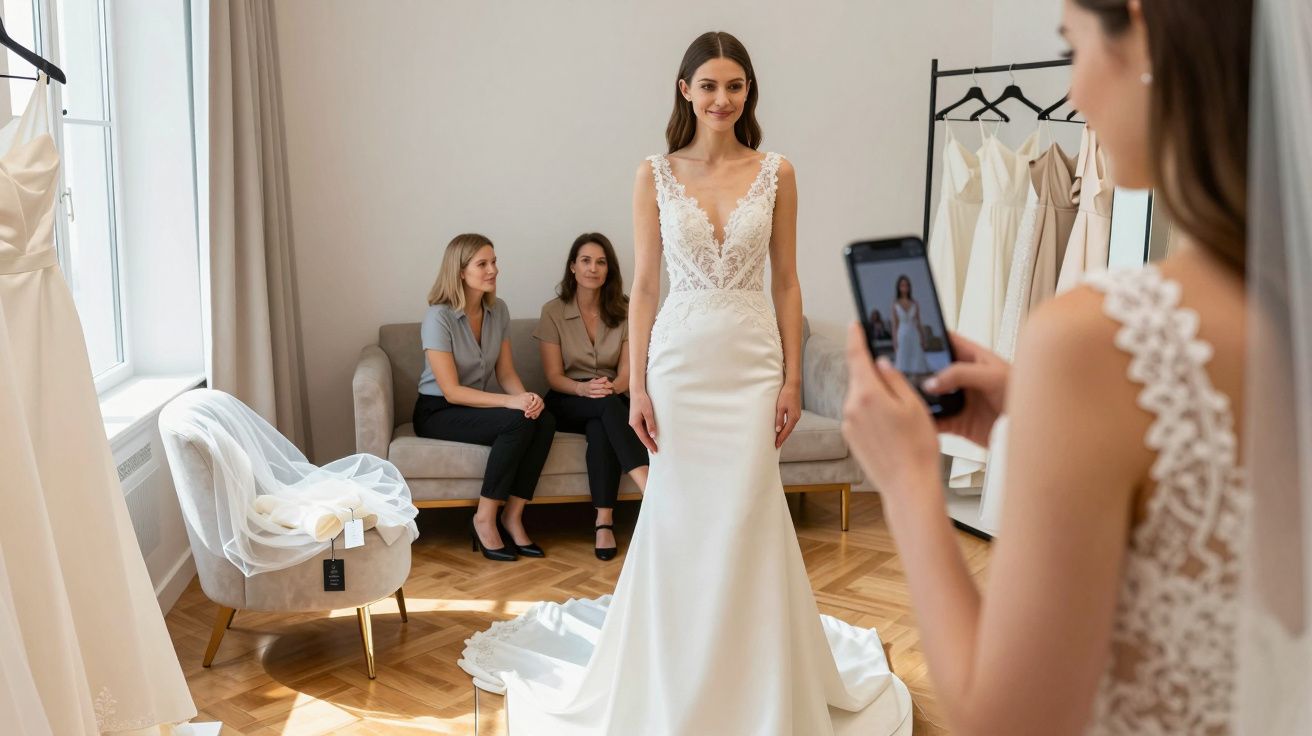
The bridal dress decision is rarely just a private choice made in a boutique mirror; it’s a social object that gets handled by other people’s hopes. External pressure doesn’t always arrive as orders or insults-more often it slips in as “helpful” comments, budget reminders, and a well-timed frown from someone you love. If you’re planning a wedding, this matters because tiny opinions can steer you miles away from what you actually wanted, without anyone noticing it happen.
It usually starts innocently: a group chat ping, a mum saying she’s “only thinking practically”, an aunt offering to pay for the veil. You’re not being weak if you feel swayed. You’re being human in a moment that’s designed to be witnessed.
The dress, after all, is the most photographed piece of fabric most people will ever wear. That makes it magnetic-not just to your taste, but to everyone else’s idea of what a bride “should” look like.
The quiet way a dress stops being yours
In the fitting room, the assistant clips the bodice and you stand straighter without meaning to. Someone says you look “so grown up”, another person says “very you”, and you try to read between the words because compliments are rarely just compliments in a family. Your brain starts doing maths: whose opinion carries weight, who’s paying, who will sulk later, what will show up in pictures for the next thirty years.
That’s the first shift. The dress becomes a negotiation, not a feeling.
External pressure is often polite. It arrives with a soft voice and a hard outcome: “It’s beautiful, but would you be comfortable in that?” “That’s a lot of cleavage for a church.” “You’ll regret anything too trendy.” Nobody is trying to be a villain. They’re trying to protect you from judgement they’ve been trained to fear.
And the bride learns the same old trick many of us learn in families: adjust yourself until the room relaxes.
How “help” turns into a steering wheel
There are a few common levers, and once you see them, you can’t unsee them.
The money lever
If someone contributes financially, the contribution can come with invisible strings. Even kind people can slip into a buyer’s mindset without meaning to: they’re not purchasing your joy, but they may feel entitled to veto.
Sometimes the deal is explicit (“If we’re paying, it needs sleeves”). More often it’s said with a sigh and a glance at the price tag, as if you’ve personally offended the concept of sensible spending.
The tradition lever
Tradition can be lovely when it’s chosen. It becomes a trap when it’s used to close down conversation.
Phrases like “In our family…” can sound warm and still function like a lock. So can venue rules, religious expectations, and that heavy line: “Your gran would have hated that.” People who don’t even wear the dress can end up curating it for a guest list.
The identity lever
This one is the most tender, because it comes from people who genuinely think they know you. “You’re not a princess dress kind of girl.” “You always wear simple things.” “That’s too sexy for you.”
They’re not describing you. They’re describing the version of you that makes sense to them.
The moment you realise you’re performing
Most brides can name the exact second it clicked.
It’s when you hear yourself saying, “I like it, but…” and the “but” isn’t yours. It belongs to a future dinner conversation, a family photo, a relative who will raise an eyebrow in the pew. You start imagining the dress as a press release: safe, tasteful, non-controversial, broadly approved.
And yet approval has a cost. The cost is that small, private deflation when you look back at photos and recognise a compromise you didn’t fully consent to.
This isn’t about stubbornness or being “difficult”. It’s about the weird reality that weddings drag family dynamics into daylight. If you’ve ever been the peacekeeper, the “easy one”, the daughter who doesn’t make a fuss, dress shopping can feel like a test you’ve been training for your whole life.
A practical way to protect the choice (without a family war)
You don’t need a dramatic speech. You need a few quiet boundaries that are designed for real life, where you still want people in your corner.
Here are tactics that work because they reduce friction rather than raising it:
- Decide what kind of feedback you’re inviting. Say it plainly: “I’m choosing between these two silhouettes,” or “I’m only looking for comfort notes today.” People handle limits better when they know the job.
- Separate “coming along” from “having a vote”. Attendance can be emotional support, not decision-making power. That distinction saves relationships.
- Take photos late, not early. Photos turn feelings into evidence, and evidence turns into debate. Let yourself decide in the mirror first.
- Use one trusted translator. Choose one person who understands your taste and can filter family noise: “She hears you, but this is her line.”
- Name the non-negotiable. One thing. A neckline, a sleeve, a vibe. When you anchor one element, compromise stops swallowing the whole dress.
If money is involved, it helps to make the unspoken contract spoken, gently: “Your contribution means a lot. I need to be clear that the final choice is mine, because I’m the one wearing it.” Kind people usually respond to clarity. If someone doesn’t, that’s information.
The dress isn’t just fabric; it’s a boundary rehearsal
Weddings have a way of making old roles flare up. The anxious parent tries to control outcomes. The outspoken sibling tries to claim expertise. The family peacemaker tries to keep everyone happy, even if it means disappearing a bit.
A bridal dress decision can become your first chance to practise a new pattern: staying close to people without handing them the steering wheel. Not with cruelty, not with drama-just with calm ownership.
If you feel guilty, remember this: the point isn’t to prove you’re independent. The point is to feel like yourself when you walk into the day.
A small checklist for the fitting room
When the opinions start to stack up, run this quick internal check. It’s quiet enough to do while someone is zipping you in.
- Would I choose this if nobody saw it but my partner?
- Am I editing for comfort, or editing for approval?
- Do I feel more like myself, or more like a “bride” costume?
- If I’m compromising, what am I getting in return-peace, money, belonging-and is it worth it?
- What will I regret more: disappointing someone now, or not recognising myself later?
You don’t need perfect answers. You just need to notice when you’ve drifted.
What changes when you choose with your own voice
Something soft happens when a bride stops auditioning. She relaxes inside the dress, and that relaxation reads as beauty in every photo, even if the style isn’t what anyone else would have picked. The room might still have opinions, but the decision feels settled, like a click you can’t quite hear.
External pressure doesn’t vanish, because families don’t suddenly become uncomplicated. But it loses its grip when the bride’s preference is treated as fact, not a proposal.
And that’s the real win: not a perfect gown, but a choice that still feels like yours when the day is over.
FAQ:
- How do I tell my mum I’m choosing a dress she doesn’t like? Keep it specific and calm: “I hear you. I’ve decided on this one because I feel comfortable and like myself in it. I’d love you to support me even if it’s not your taste.”
- What if someone is paying and expects a say? Acknowledge the gift, then clarify the boundary: “Your help means a lot, but I need the final decision to be mine.” If that can’t be agreed, consider reducing the contribution or paying for the dress yourself if possible.
- Is it normal to feel confused after too many opinions? Yes. Too many inputs create decision fatigue. Take a 24-hour pause, look at photos alone, and return with one trusted person or none.
- How can I include family without losing control? Give them a defined role: veil shopping, accessories, shoes, or helping you find comfort options-areas where their taste won’t overwrite the main silhouette.
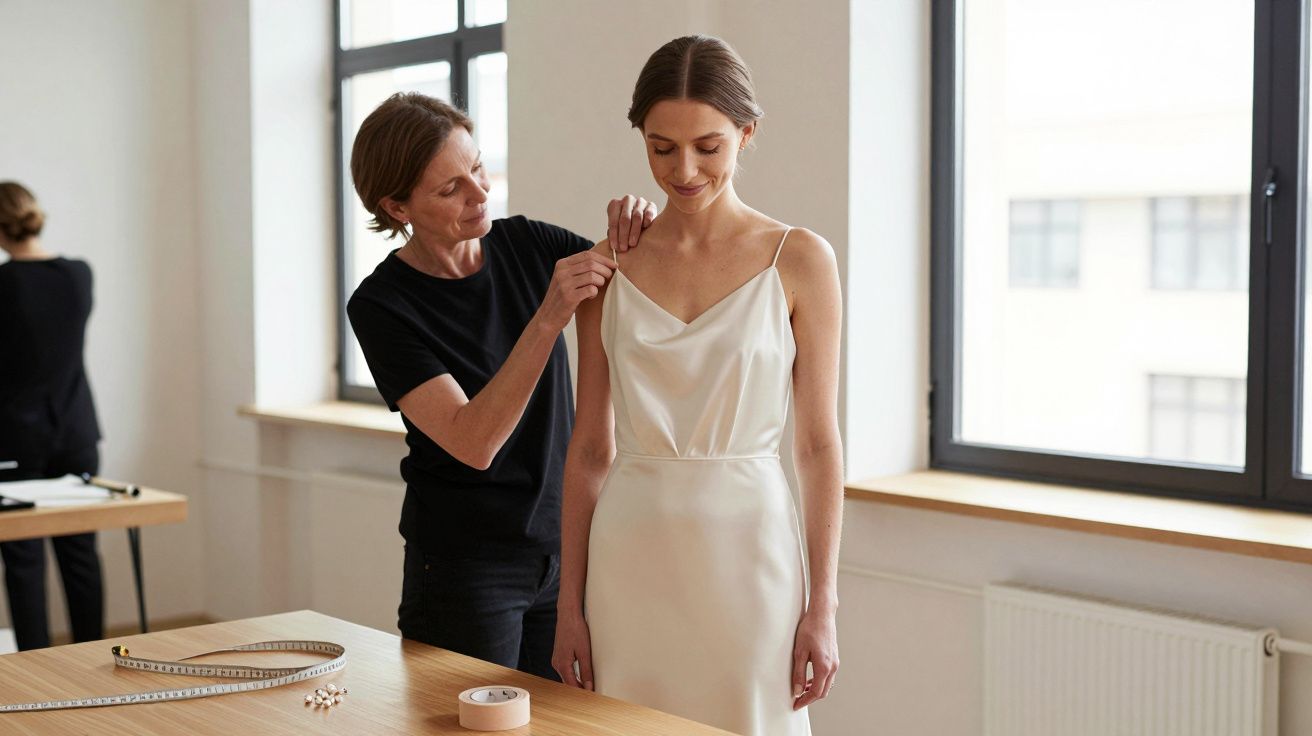
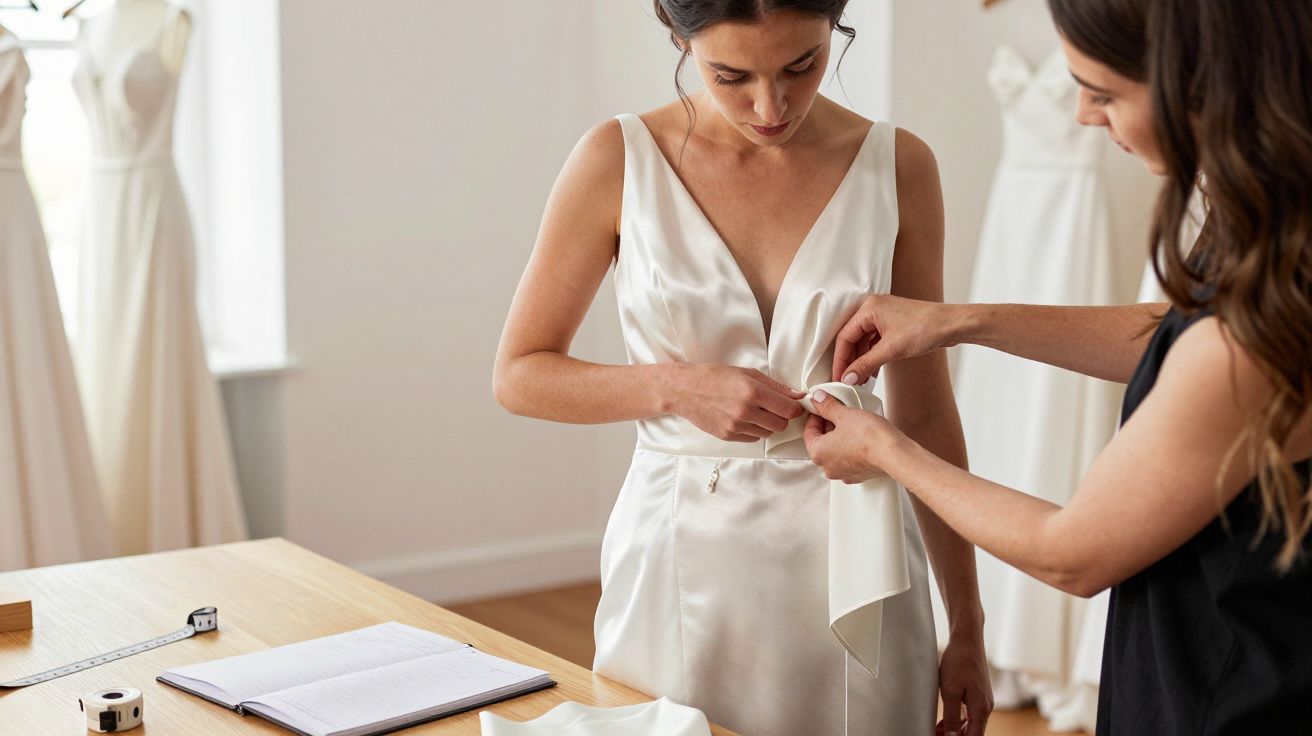
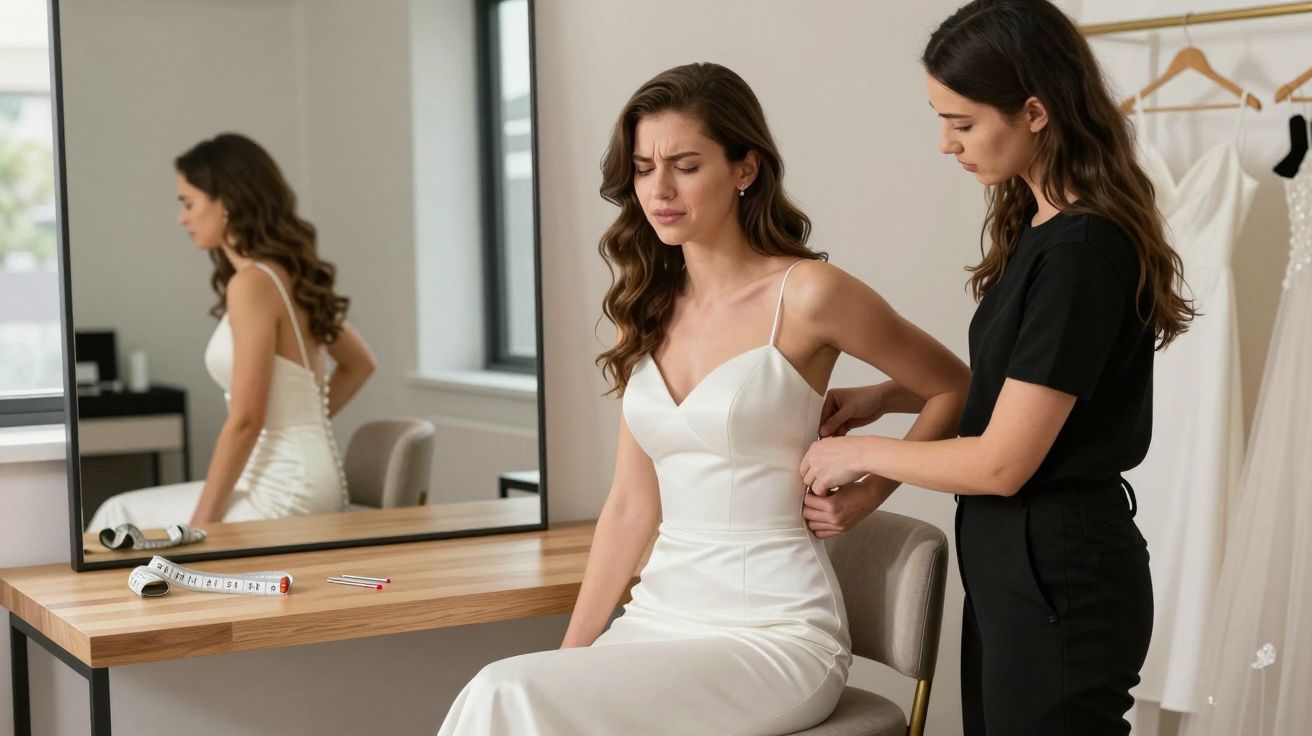
- What if I regret choosing the “approved” dress? Start with small corrections: tailoring, different accessories, changing the neckline with a modesty panel removal, or swapping the veil. Regret often signals you want more “you” in the final look, and that’s usually fixable.



Comments (0)
No comments yet. Be the first to comment!
Leave a Comment