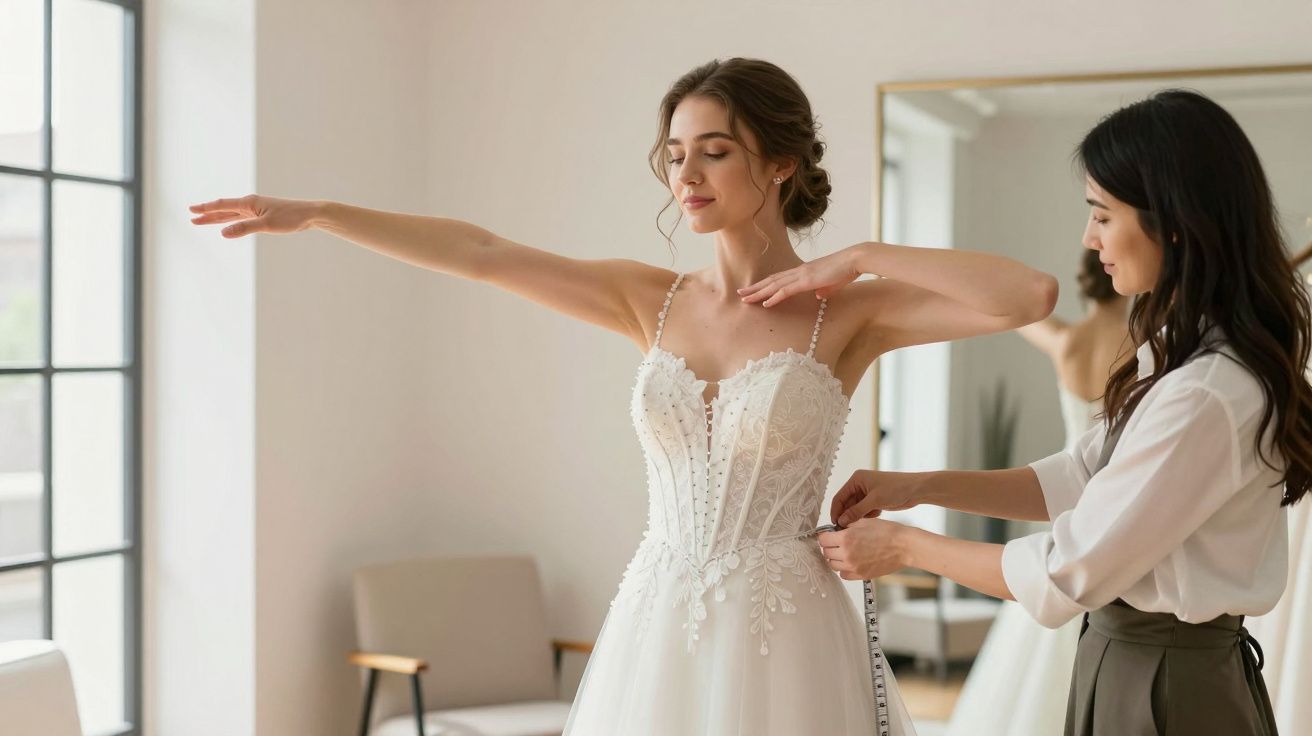
The wedding dress fit can be technically perfect and still leave you bracing - shoulders up, jaw tight, breath stuck high in your chest. That’s where body awareness matters: it tells you whether the dress is supporting you, or whether you’re quietly fighting it. On a day built around hugs, photos, food and movement, comfort isn’t a “nice extra”; it’s the difference between wearing the dress and enduring it.
It usually shows up in the fitting room as a small, confusing gap between numbers and nerves. The seamstress pins, everyone nods, and yet you feel like you’re holding yourself in. You start wondering if it’s you - posture, confidence, the pressure of the day - when sometimes it’s simply that the fit is right on paper and wrong in the body.
The moment you realise: “It fits, but I’m not settling”
There’s a particular type of tension that arrives when you look beautiful but feel managed. You can sit, technically, but only if you perch. You can breathe, technically, but only if you don’t laugh too hard. You can lift your arms, technically, but only if you accept the bodice tugging you back into place like a stern hand.
Fittings are bright and busy. You’re watched from three angles, you’re asked questions, you’re expected to decide quickly, and your body does what bodies do under attention: it tightens. The trick is to separate performance tension from fit tension, because only one of those can be solved with stitches.
A quick check-in that tells the truth
Forget the mirror for a minute. Stand in the dress and do three normal-life things that your wedding will demand.
- Take one slow breath in through the nose, out through the mouth. Notice if the inhale meets resistance at the ribs.
- Sit fully back on a chair, then stand up without using your hands. Notice if the skirt drags you forward or the bodice digs at the waist.
- Raise both arms as if you’re hugging someone you love. Notice if the neckline bites, the straps migrate, or the back pulls.
If your body immediately starts negotiating - “I can, but…” - that’s information. Body awareness here isn’t mystical; it’s practical. It’s your nervous system reporting, in plain language, what the photos won’t.
Where tension hides in a wedding dress fit
Most “it feels fine” dresses feel fine when you’re still. Weddings are not still. A wedding dress fit needs to work for walking, eating, hugging, dancing, and the odd unexpected sprint to the loo.
The usual culprits
- Bodice too firm at the ribs: you can’t breathe low, so you live in shallow breaths and tight shoulders.
- Waist sitting a touch high or low: it makes you grip your stomach or arch your back to compensate.
- Armholes/straps that are “secure” but restrictive: you lose natural movement and start moving like you’re protecting the dress.
- Neckline pressure: even light pressure near the throat can make you feel panicky, especially under heat and attention.
- Skirt weight distribution: a heavy skirt can feel fine until it drags from one point, pulling your posture off-centre.
None of this means the dress is wrong. It means the fit may need to be tuned for a body that plans to live a whole day inside it.
The difference between support and restriction
A good fit holds you without asking you to hold yourself. You should feel lifted, yes - but not braced. The dress should guide your posture, not replace your breath.
A simple reframe helps: if the dress requires constant self-correction, it’s not finished. That’s not drama, it’s tailoring. Fit is not only “snug enough to stay up”; it’s “forgiving enough to let you be a person”.
“If you can’t take a full breath, you’re not just uncomfortable - you’re less present,” one bridal seamstress told me. “And presence is what you’ll remember.”
What to ask for at alterations (without apologising)
Brides often minimise their discomfort because they’ve been trained to treat it as normal. You don’t have to arrive with a technical solution. You can arrive with a clear description of the feeling.
Try phrases like:
- “When I sit, I feel pressure here and I start holding my breath.”
- “When I lift my arms, the bodice shifts and I tense up.”
- “I need the dress to let me eat and laugh without feeling squeezed.”
- “I love how it looks. I need it to feel calmer on my body.”
Specific sensations are more useful than vague dislike. A skilled fitter can translate “I feel trapped” into practical adjustments: easing at the ribs, tweaking strap placement, shifting boning, rebalancing the skirt, adding a touch of give where you actually move.
The nervous system factor no one talks about
Sometimes the dress isn’t the only trigger. Body awareness can also flag when you’re in a stress response: you’re clenching because you’re being observed, because the wedding has become a public performance, because you’re running on too little sleep.
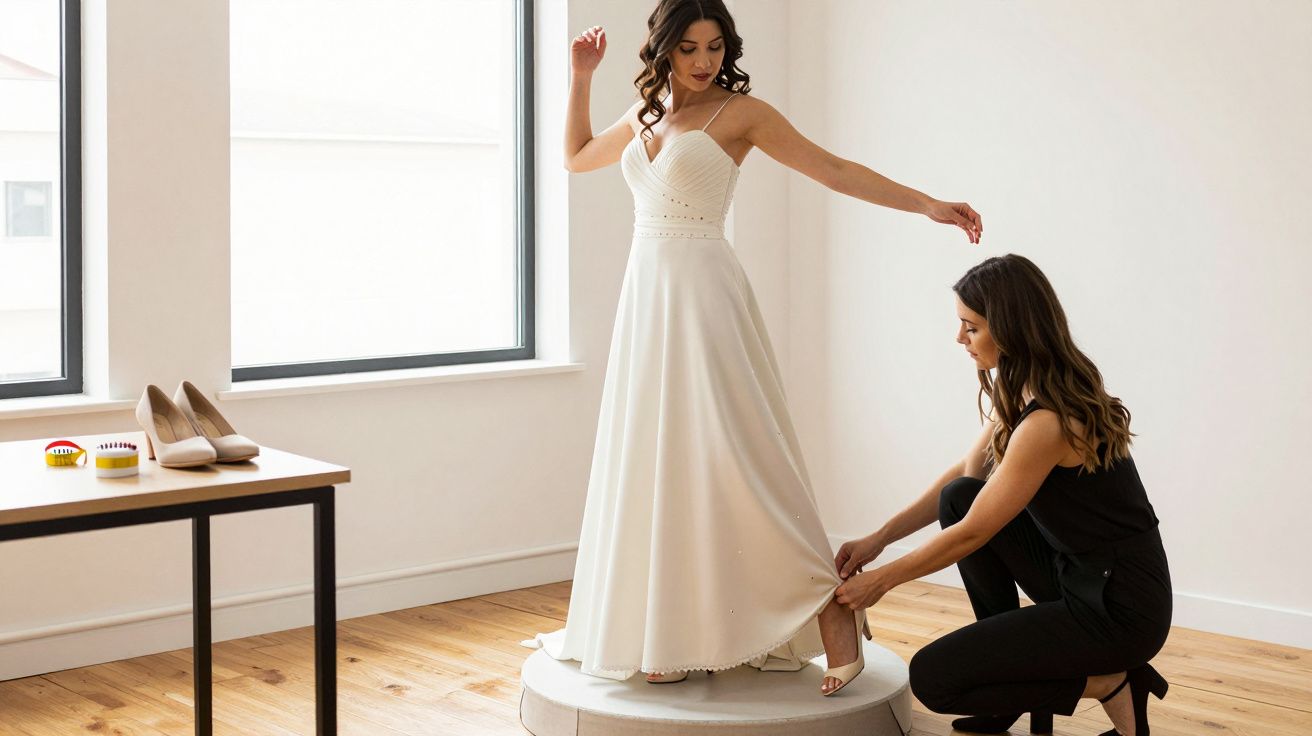
That doesn’t mean you ignore the fit. It means you test again when your system is calmer. If you can, book a fitting at a time of day you’re not rushing, eat beforehand, and bring shoes that match the heel height. Comfort is hard to measure when you’re hungry, late, and balancing on a heel you’ll never wear again.
A small “wear test” that saves the day
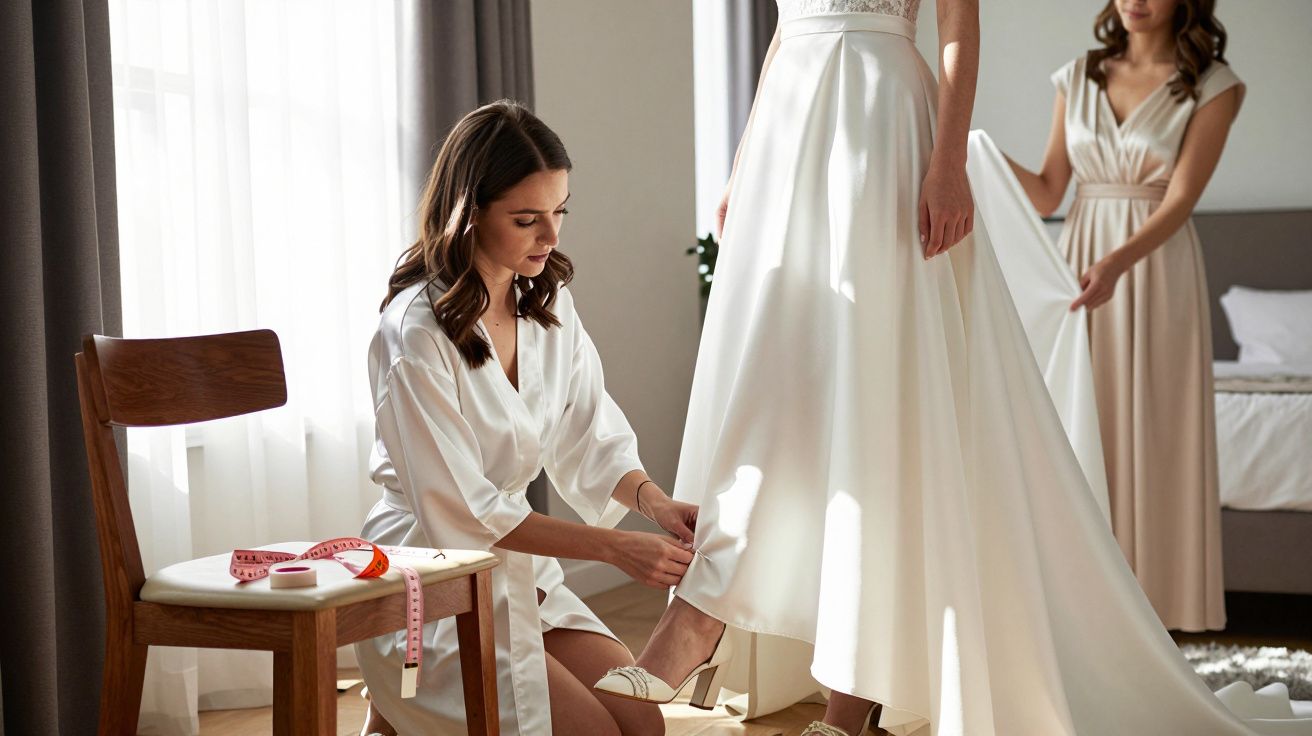
Do one short rehearsal at home once alterations are close, not perfect. Put on the dress (or as much of it as you can), the right bra/underwear, and the shoes. Set a timer for 20 minutes and do normal things.
- Walk up and down stairs.
- Sit and write a few cards.
- Hug someone.
- Drink a glass of water slowly.
- Put your arms up and pin your hair (or pretend).
If you feel yourself getting sharper, quieter, more careful - that’s the body saying it’s managing the garment. The goal is the opposite: you forget the dress because you’re in your life.
When “tight” is actually a style choice - and how to make it kinder
Some silhouettes are meant to be close. That can still be comfortable, but it needs smart construction and honest expectations.
- Choose breathing room at the ribs, not just at the waist.
- Prioritise mobility at the armhole if you want dancing and hugging to feel natural.
- Consider lining and seam finishes that reduce scratch and heat; irritation reads as anxiety in the body.
- If you’re between sizes, remember: it’s easier to take in than to conjure fabric later.
There’s no virtue in suffering for a look. There’s only the memory of how the day felt in your skin.
FAQ:
- How do I know if it’s anxiety or the wedding dress fit? Test with movement and breath. If you can’t take a full ribcage breath, or sitting and hugging feel restrictive every time, it’s likely fit-related. If the tension fluctuates wildly with stress and attention, it may be both.
- Is it normal to feel tense in a fitted bodice? Common, yes; inevitable, no. Support should feel steady, not squeezing. You should be able to eat, laugh and raise your arms without bracing.
- What should I bring to fittings to improve body awareness? Your wedding shoes (or same heel height), the underwear you’ll wear, and a note of specific sensations (where it digs, when you hold your breath, which movements feel limited).
- Can shapewear cause the “trapped” feeling even if the dress fits? Absolutely. Shapewear can restrict breathing and sitting, and it changes how the dress sits on the body. Always test the full combination together, not separately.
The quiet aim: a dress that lets you show up
You’re not looking for a dress that never reminds you it exists. You’re looking for a wedding dress fit that doesn’t demand constant vigilance, so your body can soften into the day instead of armouring against it.
If the dress looks right but your system stays on alert, listen. That’s not fussiness. That’s your body asking for a little more ease - and you’re allowed to give it.




Comments (0)
No comments yet. Be the first to comment!
Leave a Comment