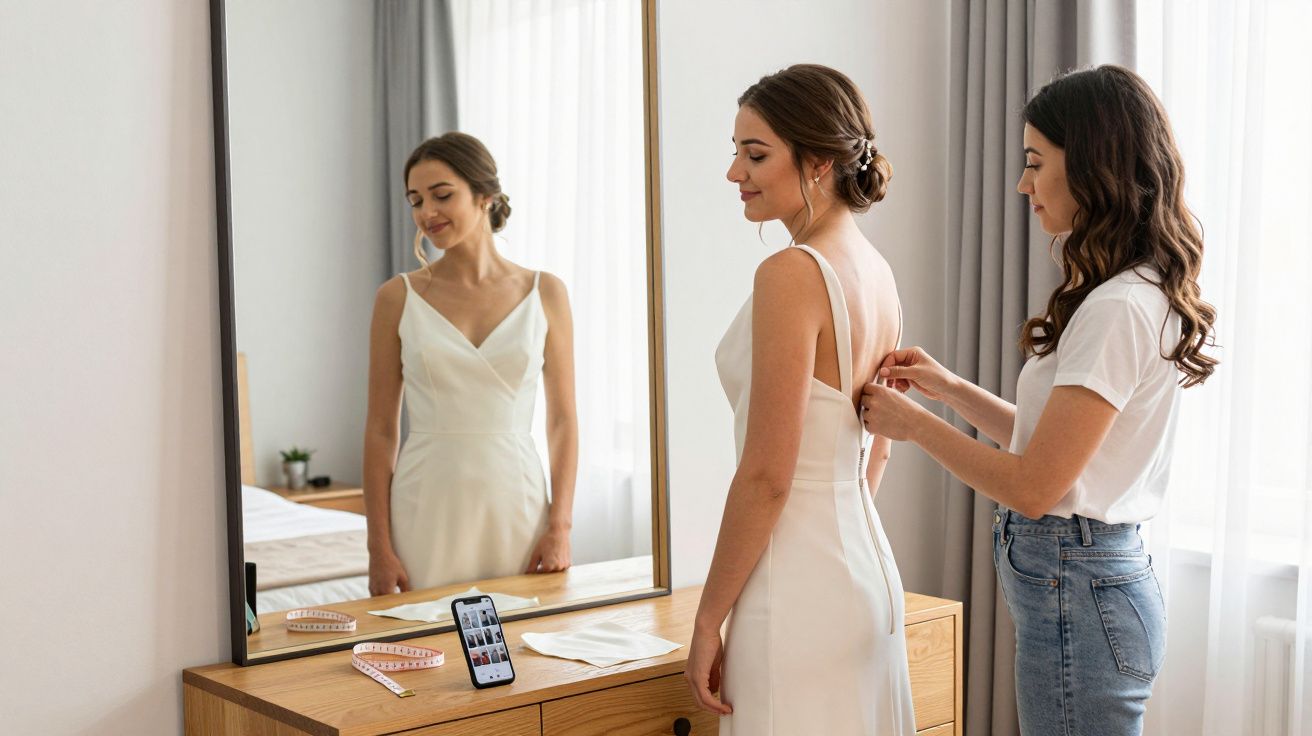
Wedding dress shopping is meant to be the fun bit, yet bridal dress anxiety can show up weeks before you walk down the aisle, right when the fittings are “basically done”. It often rides alongside anticipation stress: the mind’s habit of rehearsing every possible mishap so you feel prepared, even when it just makes you tense. This matters because it can steal sleep, skew how you see your body, and turn a dress you once loved into a problem you feel you have to solve.
It usually starts small. A mirror under harsh shop lighting, a bridesmaid’s offhand comment, a photo where you don’t recognise yourself. Then the thoughts get busy: the neckline, the straps, the weight of the fabric, the way you sit, the way you breathe.
The strange timing: why it hits after you’ve chosen the dress
Early planning has a kind of sparkle-protection. You’re imagining the day, collecting ideas, pinning inspiration, telling yourself there’s time. Once the dress is bought, the decision becomes real, finite, and very visible.
Your brain treats that as a deadline plus an identity moment. This isn’t just “a nice outfit”; it’s a garment that will be photographed, discussed, remembered. The closer it gets, the more your nervous system scans for threats to the story you want the day to tell.
A seamstress once said something that stuck with me: “Most brides don’t panic at the first fitting. They panic at the last one.” That’s the point where there’s less room to adjust, and the mind hates having fewer exits.
The quiet mechanics of bridal dress anxiety
Bridal dress anxiety is rarely only about fabric. It’s often about control, visibility, and the fear of regret, all compressed into one zip.
A few common engines run underneath it:
- Your body becomes a project. Not health, not strength-“fixing” becomes the goal, which is exhausting and never quite finished.
- The dress becomes a test. Of taste, of worth, of whether you’ll be “a proper bride”, whatever that means in your family or friendship group.
- Photos feel like evidence. Your brain forgets you’ll be moving, laughing, hugging, living. It focuses on frozen angles.
- Decision hangover kicks in. Once the money is spent and the dress is yours, second-guessing can show up as a delayed wave.
Anticipation stress adds fuel because it’s a forward-scanning mode. It convinces you that worrying is responsible. But it’s still just stress-loud, repetitive, and rarely accurate.
The “mirror trap” and why it warps what you see
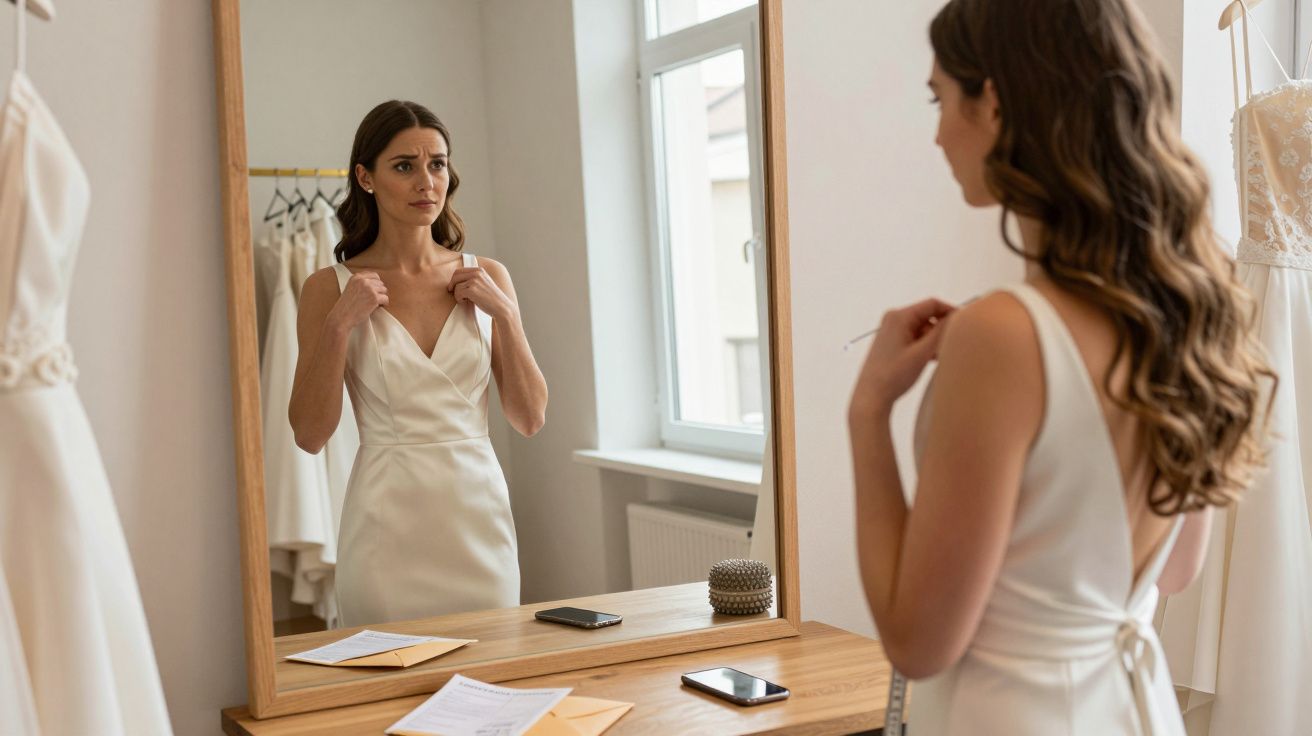
Here’s a pattern that repeats: you try the dress on, you feel okay, then you stare. You start correcting your posture, holding your breath, searching your reflection for certainty.
The longer you look, the less human you feel. Mirrors invite comparison-against your own photos, other brides, edited images, the version of you that exists only in your head. Under that pressure, even a well-fitting dress can suddenly feel “wrong”, because the goalposts have moved from comfort and joy to perfection and proof.
If you’ve been taking constant progress photos, it can make the trap deeper. It turns your body into a timeline you must “improve” before a date, which is a brutal way to live in the final stretch.
A small reset that helps: name it, narrow it, next step
You don’t need a full personality overhaul to calm this. You need a way to stop the spiral from eating the evening.
Try this three-part check-in when the dress thoughts start looping:
- Name it plainly. “This is bridal dress anxiety. It’s anticipation stress doing its thing.”
- Narrow the problem to something factual. “Is there an actual fit issue, or am I chasing a feeling?”
- Choose one next step only. Email the seamstress, eat dinner, go for a walk, put the dress away and stop looking at photos for 48 hours.
One step is not avoidance. It’s boundaries for a brain that’s running too many tabs.
When it is a practical issue (and not your mind being mean)
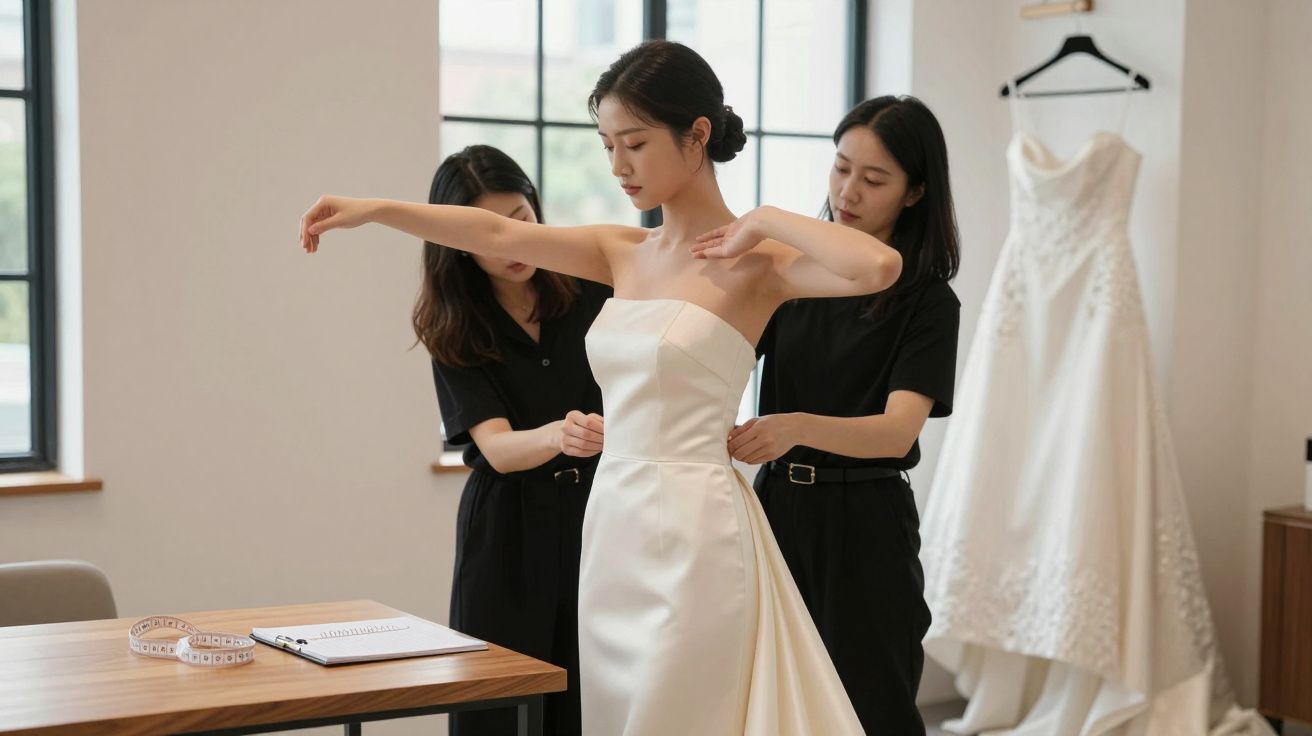
Sometimes the anxiety is a messenger. If something pinches, slips, rubs, or makes it hard to sit and breathe, that’s not vanity-that’s information.
Useful questions for a fitting:
- Can I sit comfortably for 20 minutes in this?
- Can I raise my arms without panic?
- Do I feel supported (bust, waist) without bracing?
- Will I be able to eat and still enjoy myself?
If the answer is “no”, that’s a tailoring conversation, not a self-criticism session.
What helps in the weeks before: protect your attention
The dress is one piece of the day, but it can swallow the whole calendar if you let it. Attention is a limited resource; spend it like it costs something.
A few habits that reliably lower the volume:
- Limit mirror time in the dress to what fittings require. No late-night re-trying on “just to check”.
- Choose one opinion-giver (partner, best friend, mum-whoever is steady) and mute the group chat commentary.
- Stop “researching” new dresses online once yours is in alterations. Browsing becomes comparison, comparison becomes doubt.
- Rehearse comfort, not perfection. Wear the shoes at home. Practise sitting. Practise a hug. Teach your body that the outfit is safe.
If you want a gentle coping tool in the moment, borrow a page from people who regulate stress with humour: one light line, then one honest sentence. “My brain is auditioning for a disaster film today. I’m actually just nervous and I want to feel like myself.”
The bigger reason it happens: the dress is standing in for the day
The dress is tangible. The day is enormous.
It’s easier to obsess over straps than to admit you’re scared about being perceived, about family dynamics, about vows, about money, about whether the day will feel worth it when it’s over. Bridal dress anxiety often spikes when there are other worries you don’t have clean language for, so the mind grabs the clearest object in reach: the garment.
That doesn’t make you shallow. It makes you human. Your nervous system is trying to hold a big moment in a small container.
| What the anxiety says | What it often means | A steadier reframe |
|---|---|---|
| “The dress is wrong.” | “I’m overwhelmed and running out of time.” | “I need fewer inputs and one clear plan.” |
| “Everyone will judge me.” | “I feel very visible.” | “I can’t control opinions, only my comfort.” |
| “I should look different.” | “I want to feel confident.” | “Confidence comes from support, fit, and rest.” |
When to get extra support
If the dress worry is keeping you from eating, sleeping, working, or enjoying anything in the run-up, that’s not “bridal nerves” to push through alone. Talk to someone-GP, therapist, or a trusted friend who won’t turn it into a debate about calories and photos.
You deserve to arrive at the day with a nervous system that’s been cared for, not battled.
FAQ:
- Why did I love my dress and now I hate it? This is common when anticipation stress ramps up close to the wedding. The dress becomes a target for general overwhelm, and repeated mirror-checking can distort how you perceive it.
- Should I lose weight before the final fitting? Only pursue changes that are health-led and sustainable, not panic-led. If your motivation is fear, pause and speak with your seamstress first; many “body worries” are actually support or fit tweaks.
- How do I know if it’s a real fit problem? If it hurts, restricts breathing, rides up/slips down, or makes sitting difficult, treat it as practical. If the issue changes each time you look, it may be anxiety looking for certainty.
- Is it normal to feel anxious about photos? Yes. A helpful rule is: plan for comfort and movement, and limit photo scrolling in the final weeks. You’ll look more like yourself when you feel like yourself.
- What if I genuinely chose the wrong dress? Before making big decisions, take a 48-hour break from looking at it, then consult your seamstress about realistic alterations. If you still feel distressed, talk it through with one trusted person-not a committee.


Comments (0)
No comments yet. Be the first to comment!
Leave a Comment