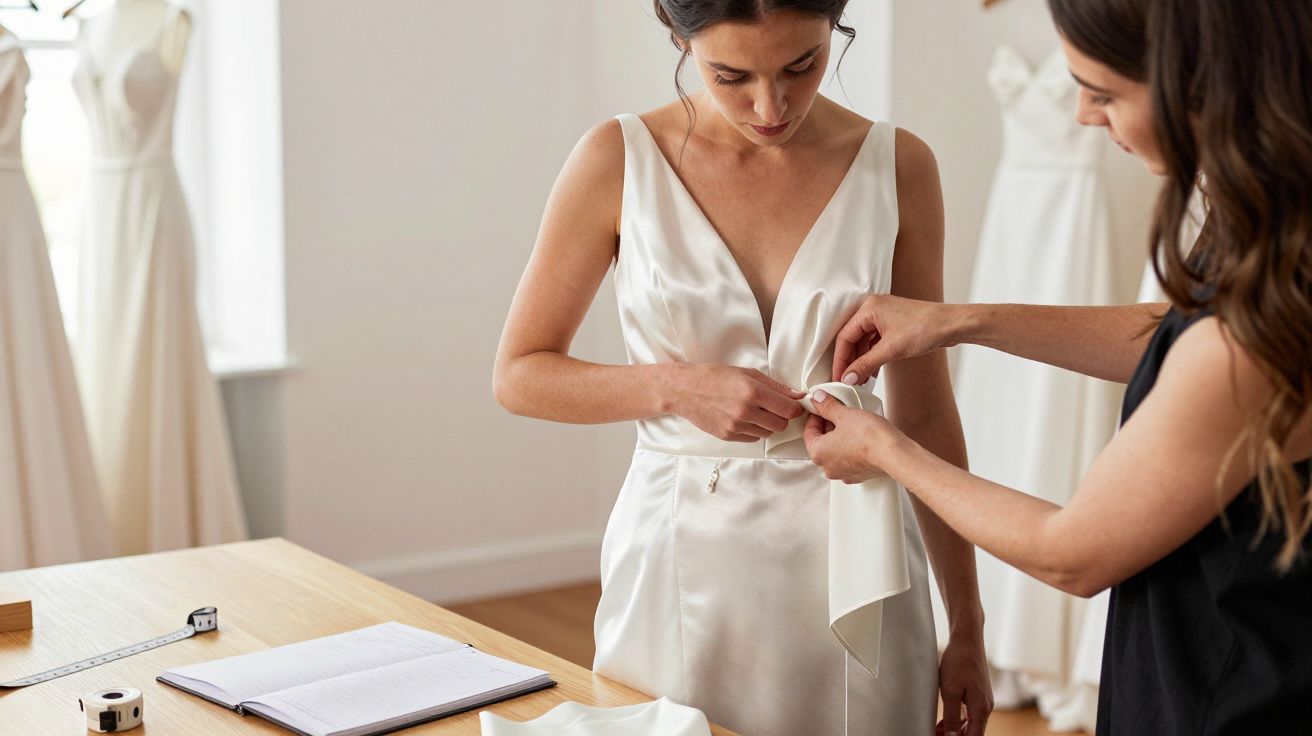
Wedding dress trends used to be a story told on hangers: silhouettes, necklines, a new sleeve here, a new lace there. Now, with the 2026 bridal shift, the bigger question brides are asking is how the dress was made - who cut it, what it’s made from, and what happens to it after the last dance. That matters because it changes the risk profile of the biggest outfit you’ll ever buy: cost, comfort, timing, and the feeling of wearing something you can stand behind.
You can hear it in the fitting room. A bride stands on the podium, the stylist pins the bodice, and instead of “Is it too plain?” she asks, “Is this polyester?” or “Can we alter this without it falling apart?” The mood isn’t anti-romance. It’s anti-mystery.
Something has shifted: the dress is still the symbol, but the process is becoming the point.
When the dream dress starts to feel like a black box
For years, bridal fashion ran on glossy certainty. You tried it on, you cried (the good kind), you ordered it, you trusted the timeline. The making of it was backstage, like the kitchen in a restaurant: you didn’t ask, because you didn’t need to.
But modern brides are shopping with a different kind of attention. They’ve seen enough “sustainable” claims on tags that don’t say anything concrete. They’ve watched friends panic as shipping delays compress months of fittings into weeks. And they’ve heard the quiet horror stories: gowns that can’t be properly altered, beadwork that snags, fabric that looks luminous under boutique lighting and unforgiving in daylight.
The result is a new reflex: don’t just fall for the look - interrogate the build.
The pressure point: a wedding dress is a product and a project
A wedding dress isn’t like a party dress with a return label and a spare weekend for tailoring. It’s a made-to-order garment with a deadline, multiple fittings, and usually no second chance.
That’s why the 2026 bridal shift looks less like a “trend” and more like a rebalancing of power. Brides are treating the purchase like project management: materials, lead times, contingency plans, and clear promises written down.
One boutique owner put it to me like this: brides used to ask for “princess” or “simple”. Now they ask, “What’s the composition, where is it made, and what happens if it arrives late?”
The new checklist brides are bringing to appointments
The questions aren’t meant to kill the vibe. They’re meant to prevent avoidable stress.
- What is the fabric content (and can I see it in writing)?
- Is it made-to-order, made-to-measure, or off-the-peg with alterations?
- Where is it constructed, and who does the finishing?
- What’s the realistic lead time including shipping and customs?
- What alterations are expected for this style (bustle, hem, bodice, straps)?
- What happens if my measurements change, or I’m pregnant?
This isn’t distrust. It’s realism - the kind that keeps you from crying in a bathroom two weeks before the wedding because the zip is fighting for its life.
What’s driving it: comfort, conscience, and control
Three forces keep showing up across wedding dress trends for 2026.
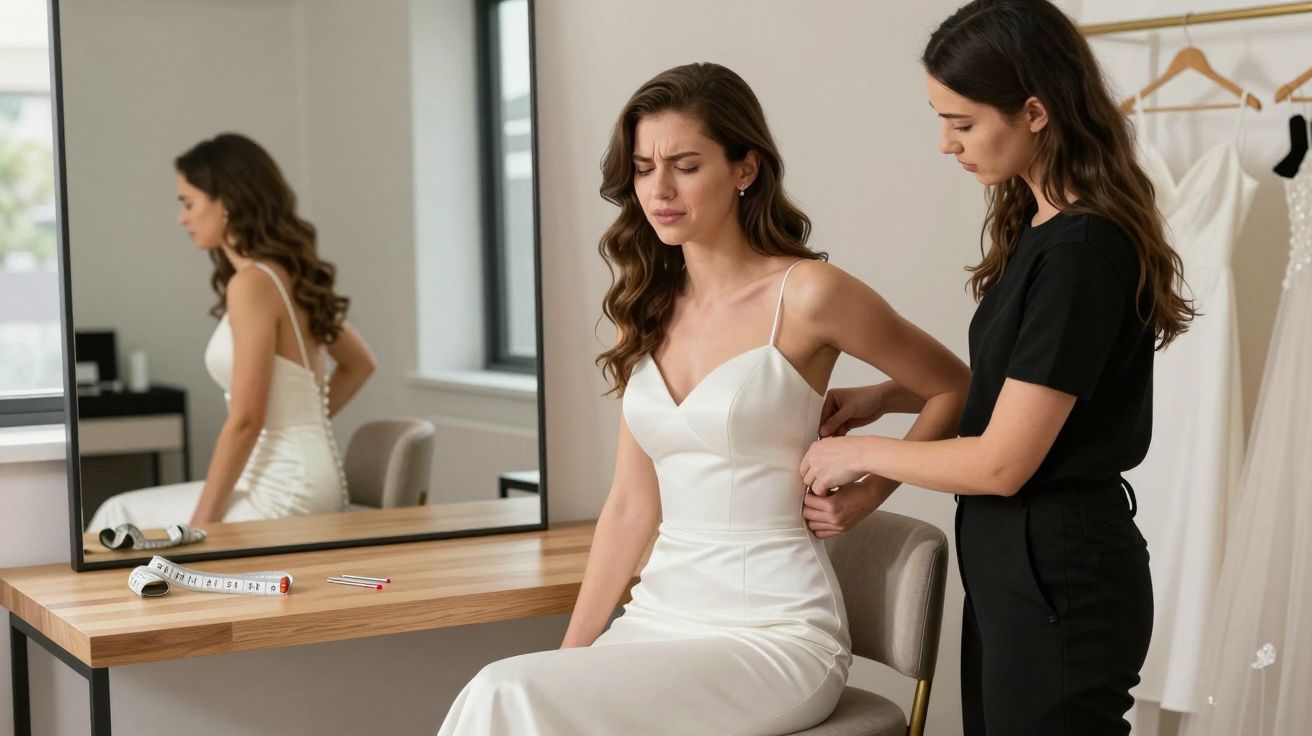
Comfort is no longer negotiable. Brides want to sit, eat, hug, dance, and breathe - and they’ve learned that the inner structure matters as much as the outer design. Boning, lining, seam finishes, and the weight of embellishment can make a dress feel like a dream or like a costume you’re surviving.
Conscience is louder than it used to be. Not every bride is looking for perfect sustainability, but many want fewer synthetic blends, less waste, and clearer labour practices. They’re also asking about afterlife: resale value, dye-ability, shortening for anniversaries, or redesign into separates.
Control is the undercurrent. A wedding is already a high-stakes event with a thousand moving parts. Brides are choosing dress-making routes that reduce unknowns: local makers, smaller collections, or modular designs that can be adjusted and repaired.
The three manufacturing routes brides are choosing instead
Not everyone is abandoning traditional bridal brands. But more brides are picking one of these paths because it answers the “how” question directly.
1) Made-to-measure with a local atelier
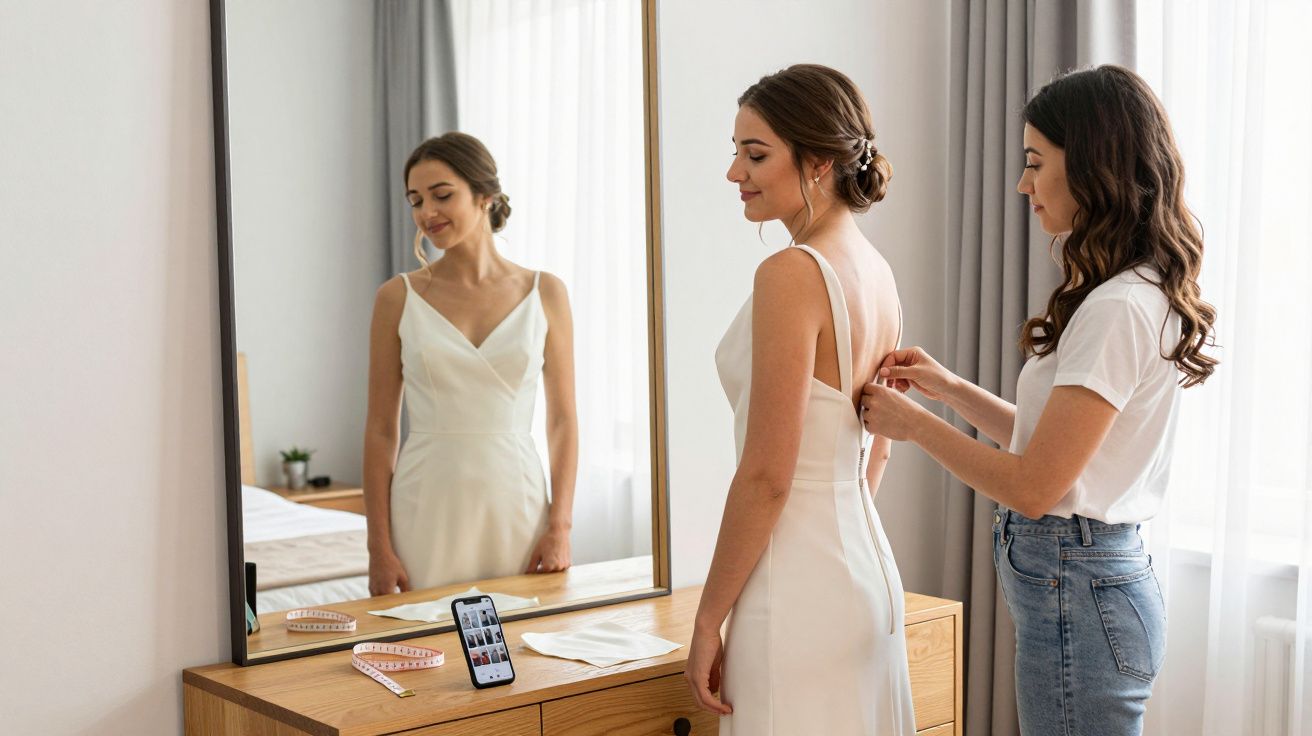
This appeals to brides who want transparency and adaptability. You see fittings in real time, you can tweak the neckline without “voiding” the design, and the timeline often feels more human.
It can be more expensive, and it requires decision-making earlier. But it reduces the nightmare scenario: a dress arriving wrong with nobody accountable.
2) Ready-to-wear + intelligent alterations
Some brides are stepping away from heavy, fragile gowns and choosing high-quality RTW bridal looks: silk dresses, structured corsetry pieces, tailored suits, or minimalist columns that a good seamstress can refine.
This route is less about “settling” and more about building a look that behaves like clothing. It also makes second-use far more realistic.
3) Modular, rebuildable design
Detachable overskirts. Separate corset and skirt. Sleeves that button on. Capes instead of trains. It’s not just styling - it’s a manufacturing philosophy: make parts you can adjust, repair, and wear again.
The clever part is emotional, too. You get a ceremony moment and a reception moment without buying two entire outfits.
A concrete example: the bride who didn’t want a landfill dress
Nadia (a 2026 bride I spoke to) had the classic Pinterest folder: clean satin, soft structure, nothing too fussy. Then she tried on a gown she loved and realised she was afraid of it.
Not of the neckline. Of the fragility. The boutique warned her the fabric “marks easily”, the beading “needs careful handling”, and alterations were “limited”. She imagined a whole day of being cautious: avoiding red wine, avoiding children, avoiding her own body.
So she changed approach. She commissioned a two-piece: a corset bodice lined in natural fibres, and a skirt designed to be shortened later. The budget was similar to what she would have spent anyway, but the feeling was different - less like borrowing perfection, more like owning a garment.
“I want to remember my wedding,” she said, “not remember managing my dress.”
The unglamorous detail that matters most: proof, not promises
If there’s one habit that keeps coming up in this 2026 bridal shift, it’s documenting the practical bits. Not because brides are trying to start a fight - because clarity prevents one.
Ask for the details in writing: fabric composition, delivery window, what’s included in the price, and what alterations are possible. If a boutique offers “rush options”, ask what that actually means (production priority, shipping class, or simply a tighter fitting schedule).
And when it comes to “sustainable” claims, look for specifics over slogans:
- deadstock or newly milled fabric?
- certified materials (and which certification)?
- where the garment is sewn and finished?
- repair options after the wedding?
A dress can be beautiful and still be built on vague language. Brides are learning to spot the difference.
What to look for in 2026: signs a dress is made to last (at least the day)
You don’t need a fashion degree. You need a few practical tells.
- Lining you can trust: smooth, breathable, not scratchy or plasticky.
- Internal structure: secure boning channels, supportive cups, stable waist stay.
- Finishing: neat seam allowances, secure closures, beads stitched (not glued).
- Alteration-friendly design: enough seam allowance, sensible hem, accessible layers.
- Weight balance: embellishment placed so the dress doesn’t drag or twist.
If you put it on and immediately start negotiating with your own comfort - holding your breath, lifting the skirt constantly, planning how not to sit - that’s a sign the making is doing too much work against you.
A quieter definition of luxury
Luxury used to mean drama: volume, sparkle, the big brand name in the label. In 2026, it’s starting to mean something less visible and more valuable: a dress that is honestly made, clearly explained, and designed for a real human body on a real day.
That doesn’t erase romance. It upgrades it.
Because the modern bridal fantasy isn’t just looking flawless. It’s feeling grounded - in your choices, your values, and the seams holding you together.

Comments (0)
No comments yet. Be the first to comment!
Leave a Comment