
Wedding dress trends are starting to read less like a moodboard and more like a plan for an actual day: sitting, hugging, eating, dancing, breathing. The 2026 bridal shift is where designers stop treating “comfort” as a hidden layer and start treating it as the silhouette itself, because brides are done paying for beauty with tension. If you’ve ever loved a gown in photos and hated it in your body, this is the year the industry admits that mismatch was never your fault.
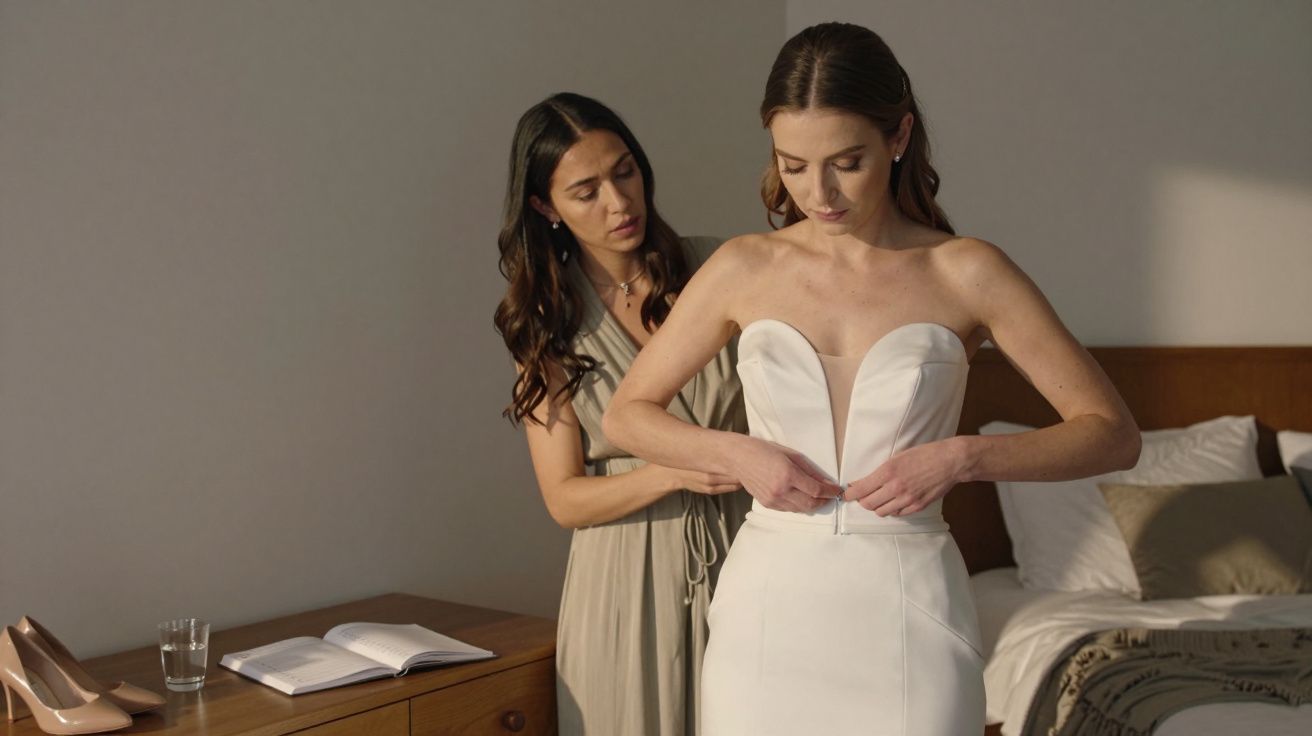
You’ll see it in fitting rooms first. The bride who used to practise “standing still beautifully” now asks, “Can I lift my arms?” The answer matters, because the bar has moved from can you endure it to can you live in it.
Comfort isn’t new. The definition is.
For years, comfort meant a few discreet cheats: a softer lining, a hidden elastic, a slightly lower heel. The dress still expected you to adapt, to hold your stomach in and your shoulders back and your breath up. That version of comfort was cosmetic-nice, but not structural.
In 2026, comfort gets redesigned as performance. Not “athleisure bridal” as a gimmick, but garments built around motion, heat, time, and nerves. It’s the difference between padding a shoe and rebuilding the sole.
“The goal isn’t to feel fine in the dress. It’s to forget you’re wearing it.”
The new priority: mobility, not just softness
The most visible change is where dresses allow movement on purpose. Designers are shifting seam placement, adding engineered ease, and cutting shapes that look clean while behaving like they’ve got permission built in.
Look for:
- Higher, smarter arm mobility: re-cut armholes, more forgiving sleeve heads, and straps that don’t saw into the body after two hours.
- Waists that flex without looking casual: internal corsetry that supports rather than constricts, plus strategic stretch in unseen panels.
- Skirts that clear the ground without losing drama: lighter under-structures, removable trains, and slits that read elegant rather than “bold”.
A simple test brides are doing now: sit down, exhale, then laugh. If the dress punishes any of those, it’s not a 2026 kind of “comfortable”.
Heat, texture, and the long day problem
Comfort isn’t only about tightness; it’s about temperature and skin. Ceremonies run late, venues run warm, emotions run high, and heavy fabrics amplify everything. The 2026 bridal shift treats overheating like a design flaw rather than a personal failing.
That shows up in fabric choices and construction details: breathable linings, lighter layers, and tactile finishes that don’t itch, scratch, or cling when you perspire. The dress doesn’t have to be thin; it has to be intelligent.
Common upgrades you’ll notice:
- Linings that feel cool and glide rather than grip
- Lace placements that avoid underarm rub and inner-elbow itch
- Boning and structure padded where your body actually meets it
“Support” replaces “squeeze”: a quieter kind of structure
Corsetry isn’t going away. What’s changing is the intention. Instead of locking you into a shape, more gowns are built to hold you gently in yours-like a well-made bra, not a punishment device.
This is where wedding dress trends get unexpectedly technical. Internal layers are doing more work so the outer layer can look effortless. You’ll see smoother bodices, fewer fussy adjustments in photos, and less of that end-of-night desperation to unfasten something in a toilet cubicle.
What to ask for at your fitting
Not “Is it comfortable?”-everyone says yes in the mirror. Ask questions that force the truth out into daylight:
- Can I raise both arms without the bodice travelling up?
- Can I sit for ten minutes without the waistline digging in?
- What happens when I eat a full meal in this?
- Can the hem be set for walking speed, not posing speed?
If the stylist looks relieved when you ask, you’re not alone. Brides are getting more practical, and designers are responding.
Modular comfort: the dress that changes with the day
The most telling 2026 move is modularity. Not costume “two looks” for the sake of it, but real adaptability: detach what gets heavy, loosen what gets tight, swap what gets hot. Comfort becomes a timeline.
Expect more:
- Removable sleeves for ceremony-to-party temperature shifts
- Convertible trains that unhook cleanly (no awkward bunching)
- Second skirts or overlays that add drama early and freedom later
It’s not indecision. It’s acknowledging the day has chapters, and your body doesn’t stay the same through all of them.
What’s driving the change (and why it sticks)
Part of this is social: brides are less interested in suffering quietly, and more willing to name what doesn’t work. Part of it is cultural: more outdoor weddings, longer celebrations, more travel, more movement. But the deepest shift is psychological-people want presence, not performance.
Comfort, done the 2026 way, isn’t about lowering standards. It’s about re-aiming them: toward ease that looks like confidence, and design that respects a living body.
| 2026 comfort focus | What it changes | What you feel |
|---|---|---|
| Mobility-first cut | Armholes, waists, skirt mechanics | Freedom to move naturally |
| Temperature + skin feel | Linings, layers, placements | Less overheating and irritation |
| Modular design | Detachable/convertible elements | Comfort across the whole day |
FAQ:
- Is the 2026 bridal shift just “simple dresses”? No. It’s about engineering and wearability; gowns can still be ornate, structured, and dramatic-just built to move.
- Does comfort mean giving up a snatched waist? Not necessarily. The trend is toward support-first structure that shapes without harsh pressure, using smarter internal construction.
- What’s the easiest comfort upgrade if I love a rigid dress? Ask about a softer lining, adjusted boning/padding, and a reception change (skirt, train removal, or a second look) so you’re not stuck in endurance mode.
- How do I tell if a dress will feel worse later? Wear it for at least 15 minutes in the boutique: sit, walk, lift arms, and breathe deeply. If you start negotiating with your body, it will escalate on the day.





Comments (0)
No comments yet. Be the first to comment!
Leave a Comment