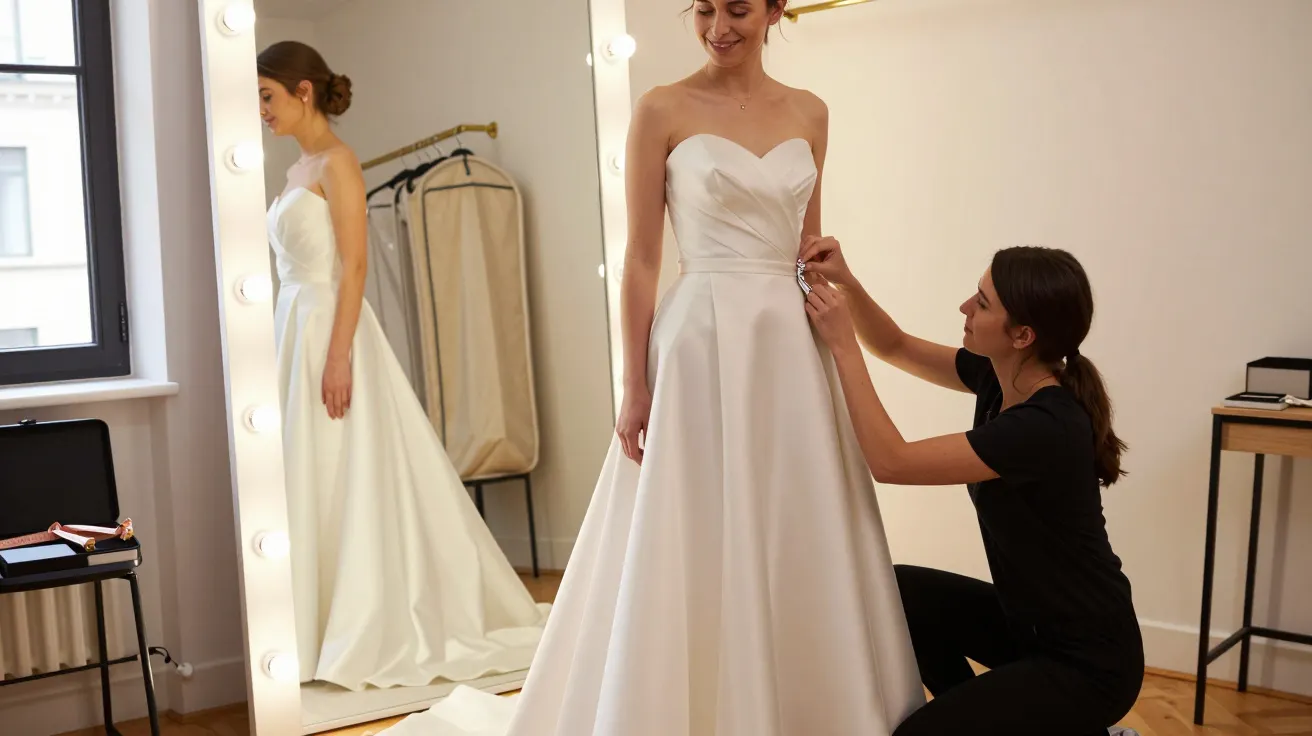
A small ritual happens in bridal boutiques when the mirror lights warm up and the clips come out: the stylist reaches for an A-shape first. a-line wedding dresses have a knack for proportional balance, even on days when your hair is doing its own thing and you’ve slept badly. They’re relevant because real weddings are messy-last-minute fittings, surprise bloating, a bra that suddenly doesn’t behave-and the dress still has to look like it was always the plan.
You step onto the platform, the skirt drops clean from the waist, and something in your posture unclenches. The bodice can be tweaked, the waist can be pinned, and the skirt just… keeps its promise. It feels like being helped rather than judged.
The forgiving geometry hiding in plain sight
An A-line is simple: fitted through the top, then widening gradually from the waist down. That shape is doing quiet work for you, because it creates a clear “centre line” for the eye-face, neckline, waist, hem-without demanding perfect symmetry everywhere else.
Where other silhouettes magnify tiny shifts (a hip that’s a centimetre off, a hem that catches, a waistband that bites), an A-line disperses them. The skirt’s volume is controlled, not clingy, so it doesn’t broadcast every curve, seam, or underlayer. You get structure without surveillance.
There’s also a practical perk people don’t name: the dress has somewhere to go. Extra fabric means you can move, sit, eat, and breathe without the whole look tightening into a live commentary.
What it forgives: the “common wedding-day errors” list
Most “mistakes” aren’t mistakes; they’re normal human variables. A-line wedding dresses are built to absorb those variables without looking like they had to.
- A body that changes across the day. Travel swelling, hormones, or a big breakfast don’t read as “problem areas” when the skirt floats away from the body.
- Imperfect shapewear (or none at all). Because the silhouette doesn’t rely on compression to be smooth, lines and seams are less likely to print.
- Slight fit drift at the waist and hips. A millimetre-too-tight sheath becomes a headline; an A-line usually becomes a footnote.
- Uneven posture and “photo angles”. The gentle flare restores proportional balance, so a turned shoulder or twisted torso is less punishing in pictures.
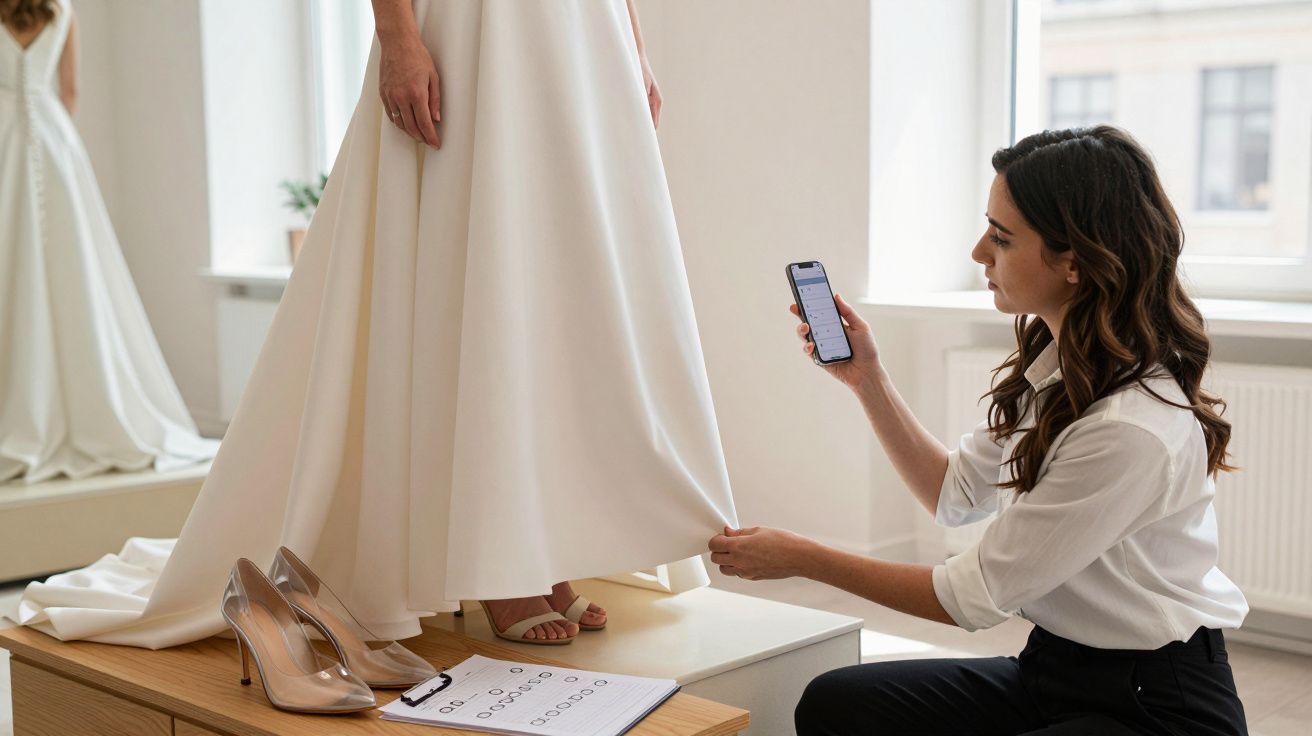
- Shoes you change at the last minute. A hem that’s 1–2 cm higher than planned is less obvious when there’s movement and volume.
You still want good tailoring, of course. The point is that the silhouette doesn’t collapse when reality shows up.
Why proportional balance matters more than “being slim”
People talk about “flattering” as if it means “smaller”. In practice, proportional balance is what reads as polished: a bodice that relates to your shoulders, a waistline that looks intentional, and a skirt that finishes the story without clinging to every chapter.
A-lines tend to create that balance automatically because the widest point sits lower than your natural waist and higher than your ankles. That middle widening-neither too tight nor too dramatic-keeps the eye moving. It’s why an A-line can make a petite bride look taller, a curvy bride look streamlined, and a broad-shouldered bride look harmonised, all without changing who they are.
The dress isn’t “fixing” you. It’s setting the frame so you don’t have to.
The fit zones that matter (and the ones that don’t)
Think of an A-line as two parts: the precision zone and the forgiveness zone. The trick is knowing where you can be picky.
Precision zone (get this right): - Neckline and straps/sleeves: they control comfort and confidence. - Bust support: internal structure beats wishful thinking. - Waist placement: high waist = legs for days; natural waist = classic; dropped waist = more fashion, less forgiveness.
Forgiveness zone (breathe a bit): - Hips and thighs: the skirt skims rather than clings. - Lower tummy: room for sitting, laughing, and eating. - Seat and back-of-thigh fit: less “pull” means fewer stress wrinkles in photos.
If you remember one rule, make it this: tailor the top like a jacket; let the skirt do its job.
How to choose an A-line that stays forgiving
Not all A-lines behave the same. Fabric and construction decide whether the skirt floats, swishes, or fights you.
- Crepe A-lines look modern and clean, but need a well-made bodice; cheap crepe can cling.
- Mikado and satin A-lines hold shape and disguise creases better than you’d think, but they show shine and fingerprints under harsh light.
- Tulle A-lines are the most “forgiving” visually-soft, airy, photo-friendly-though they can snag and gather debris outdoors.
- Lace overlays add texture that hides minor wrinkles and underlayers, but busy patterns can swallow petite frames if the motifs are too large.
A small, underused hack: walk, sit, and lift your arms in the fitting room. A-line wedding dresses should keep proportional balance in motion, not just at the mirror.
“If the bodice stays put when you breathe and the skirt doesn’t argue when you walk, you’ve found the one that will behave all day,” a seamstress told me, tugging a waist stay into place like it was a seatbelt.
What changes when you stop fighting your silhouette
When the dress isn’t demanding perfection, you make better decisions. You choose shoes you can actually stand in. You stop obsessing over your stomach in every reflection. You eat, you dance, you hug people without thinking about seam tension.
The payoff isn’t just comfort; it’s presence. A-line wedding dresses give you enough structure to feel “bridal” and enough ease to stay yourself, which is the rare combination most other silhouettes charge extra for.
| Detail | What it does | Why it forgives |
|---|---|---|
| Defined waist + gradual flare | Creates a stable outline | Hides small fit changes and posture shifts |
| Structured bodice | Holds the top in place | Reduces gaping, slipping, and photo fidgeting |
| Controlled skirt volume | Adds movement without clinging | Softens lines from underwear, shapewear, and sitting |
FAQ:
- Do A-line wedding dresses suit every body type? They suit most because the silhouette builds proportional balance: a defined top and a skirt that doesn’t cling. The key is waist placement and bodice support.
- Will an A-line hide my tummy? It usually softens it rather than “hiding” it. A supportive bodice and a skirt that starts flaring from the right point do most of the work.
- Are A-lines easier to alter than mermaid or sheath styles? Often, yes. The bodice and waist are the main tailoring areas; the skirt has more tolerance for small changes.
- What fabric is most forgiving on the day? Tulle and textured lace overlays are very forgiving in photos. Mikado holds shape well, while thin crepe can be less forgiving if it clings.
- How do I stop the bodice slipping? Look for boning, a waist stay, and correct cup support. Fit the top like a fitted garment; the skirt will take care of the rest.





Comments
No comments yet. Be the first to comment!
Leave a Comment