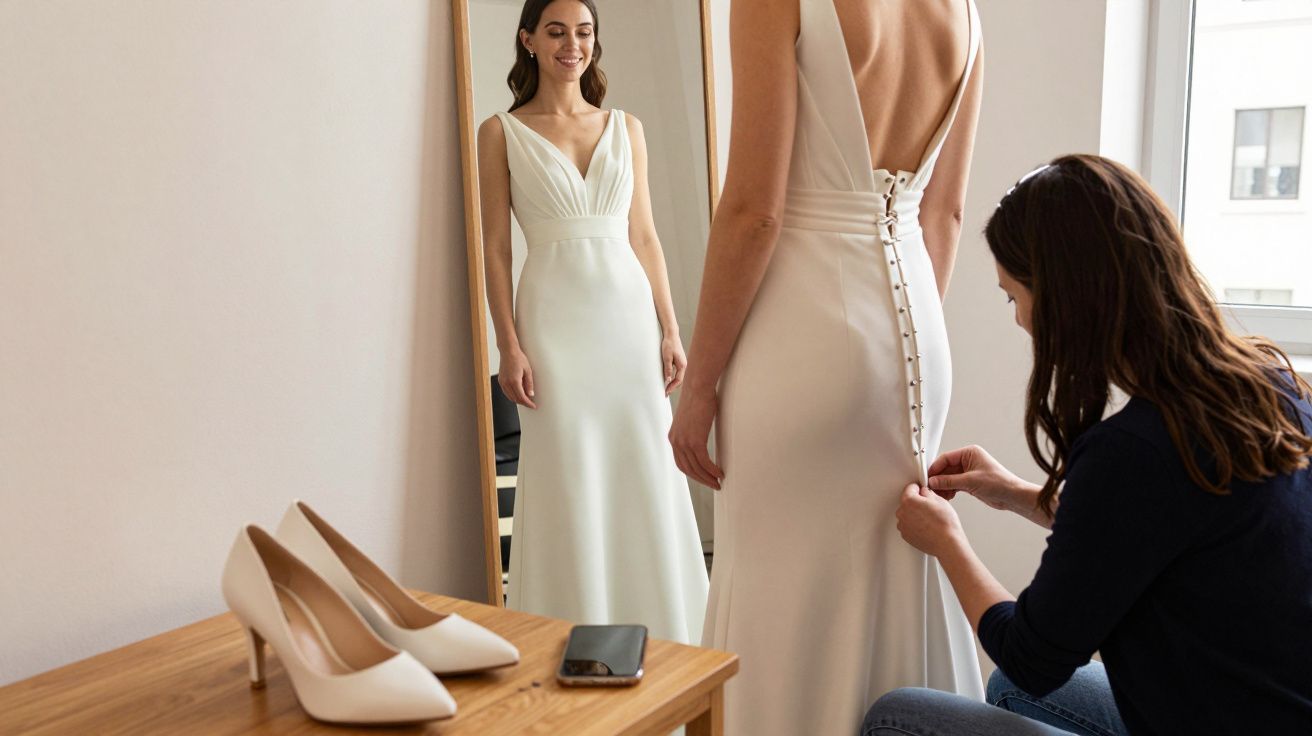
The last pins go in, the hem sits where it should, and suddenly wedding dress completion stops being a vague project and becomes a real, wearable thing. That’s why so many brides experience an emotional release after the final fitting: it’s the first moment the dress feels finished enough to carry the day, not just the idea of it. If you’ve been holding your breath through alterations, timelines, and “what if it doesn’t work?”, this is the appointment where your body finally notices it can exhale.
The funny part is how physical it can feel. Shoulders drop. Hands unclench. People who rarely cry get glassy-eyed in the mirror and can’t quite explain why. It isn’t only about looking good. It’s about the end of a long, quiet pressure cycle.
The tiny stress you don’t realise you’re carrying
A wedding dress isn’t just fabric. It’s the one object in the wedding that has to fit your body precisely, on a specific date, while you’re living a normal life that keeps changing your body by millimetres.
Until the final fitting, there’s always a mental asterisk:
- If the bust still gapes.
- If the straps keep slipping.
- If the zip fights every time.
- If my shoes change the hem.
- If I gain or lose weight.
Each “if” is small, but they stack. The brain treats unfinished tasks like open tabs. When the dress is still in progress, your nervous system stays on low-level alert, checking and re-checking the outcome.
What actually happens in a final fitting (and why it soothes the brain)
A final fitting is not the same as trying a dress on in a boutique. This is the moment the adjustments stop being theoretical and become locked in.
Typically, you’re confirming the details that have been moving around for weeks:
- Hem length with the real shoes (and the real posture you’ll have on the day)
- Bust, waist, and hip fit when you breathe, sit, hug, and lift your arms
- Strap tension, neckline placement, and how the dress behaves when you turn
- Bustle points and whether you can walk and dance without thinking
You’re also often taught the practical choreography: who does the buttons, how the bustle hooks, where to hold the skirt on stairs. That instruction matters because uncertainty is tiring. Knowing the steps turns “I hope this works” into “we have a plan”.
The final fitting is proof, in fabric, that the day is no longer hypothetical.
The relief isn’t vanity. It’s closure.
People assume brides feel relieved because they finally look “right”. Sometimes that’s true, but the bigger shift is psychological: the dress stops being a risk.
Before completion, the dress can still surprise you. After completion, it’s a solved problem. You can stop running disaster scenarios at 2am where a seam splits, the hem drags, or you spend the whole day yanking a bodice up.
There’s also a deeper identity piece here. Wedding planning asks you to make dozens of choices that say something about you-style, tradition, family, budget. The dress is the loudest of those choices. When it’s complete, you stop auditioning versions of yourself.
You don’t have to keep deciding.
Why tears show up in the mirror
Crying at a final fitting can feel confusing, especially if you’re not an emotional person. But the body doesn’t only cry from sadness. It cries when tension releases and there’s nowhere else for it to go.
A few common triggers sit underneath that “out of nowhere” emotion:
- Delayed processing. You’ve been functioning on logistics; the fitting forces you to be present in your body.
- Grief for the build-up. The months of anticipation are ending, and endings-even good ones-sting.
- Pressure leaving the room. Once the dress is done, one of the biggest wedding unknowns disappears.
- Feeling seen. A properly fitted dress changes posture and silhouette; it can be the first time you recognise yourself in the role.
It’s also often the first appointment where someone isn’t asking you to decide or pay. They’re just making it work. That dynamic-being taken care of, competently-can hit harder than expected.
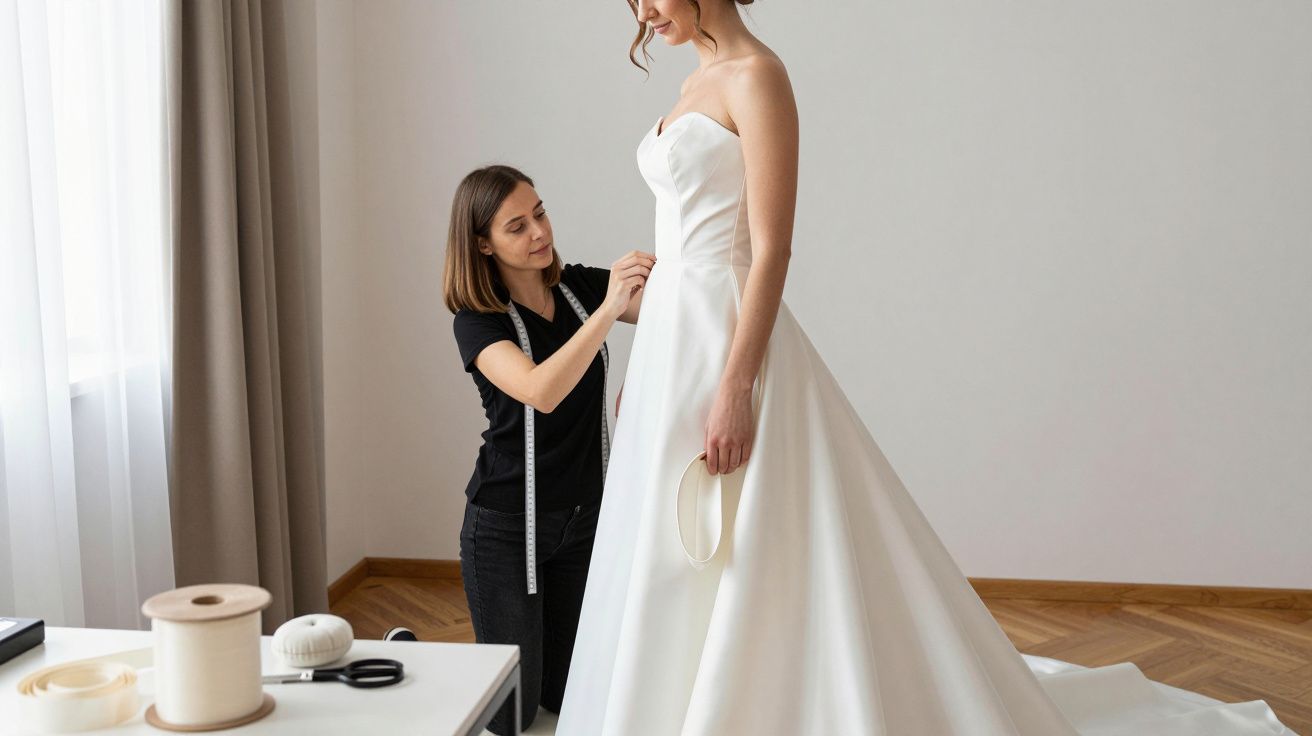
The quiet work the seamstress does that no one talks about
From the outside, alterations look like a few nips and tucks. In reality, they’re a chain of tiny engineering decisions that protect your comfort on a long day.
A good final fitting resolves things you might not have the words for:
- Preventing rubbing under the arms
- Stabilising a bodice so you’re not readjusting it every ten minutes
- Distributing weight so the dress doesn’t drag on shoulders or hips
- Securing linings so they don’t twist in photos
- Making the bustle usable by someone who isn’t a professional dresser
This is why wedding dress completion can feel like a safety net snapping into place. Your mind trusts it because your body stops fighting it.
A simple way to make the relief last until the wedding
Relief can fade if you leave the fitting and immediately start worrying again. You don’t need a new system. You need a small handover ritual that tells your brain, “this is done”.
Try this:
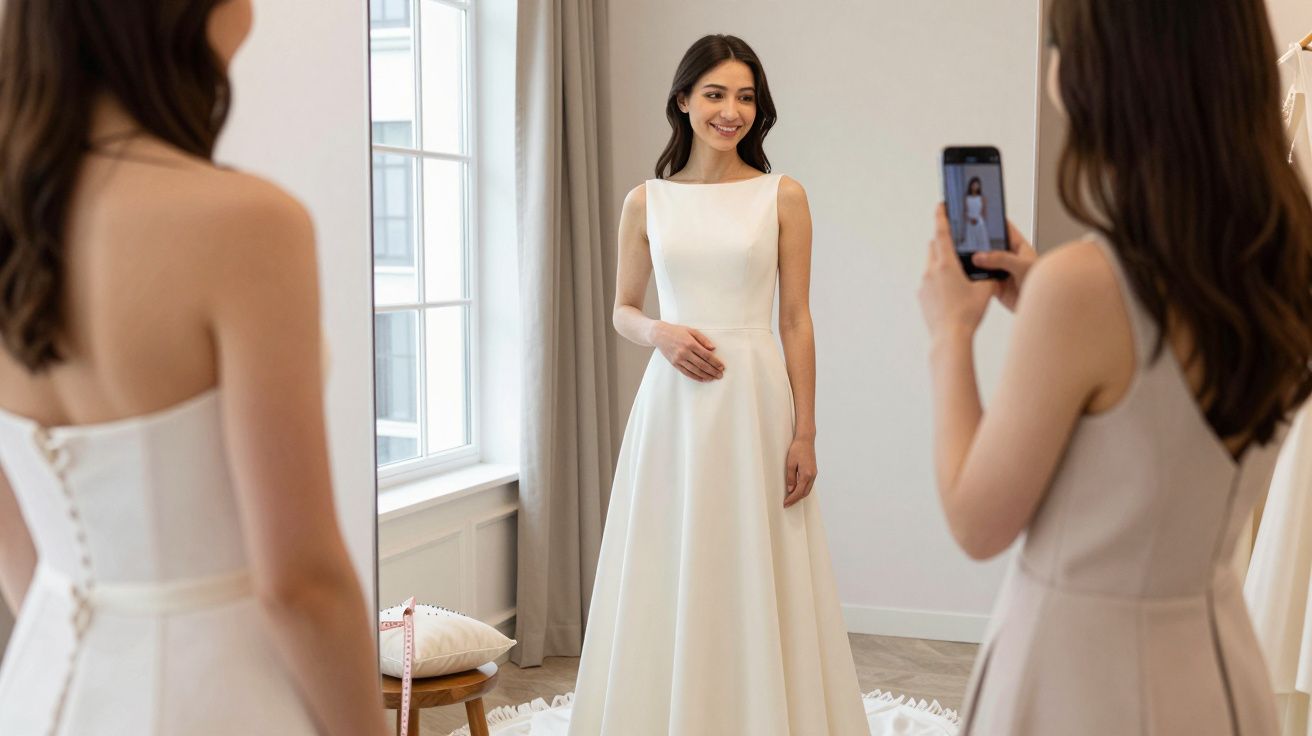
- Take a short video walking, turning, and sitting in the dress (with shoes).
- Photograph the bustle points and any fastenings from close up.
- Write down who will help you get dressed, and send them the bustle video.
- Put every dress-related item in one place: shoes, jewellery, undergarments, steamer plan.
The goal isn’t perfection. It’s removing the little decisions that reopen the tab.
You don’t just want a finished dress. You want a finished question.
When relief doesn’t come right away
Sometimes the final fitting doesn’t deliver the expected wave of calm. That doesn’t mean something is wrong with you, or with the dress.
A few reasons it can lag:
- You’re exhausted, and your body can’t feel anything until it sleeps.
- The wedding pressure has shifted to something else (family dynamics, speeches, money).
- You’re mourning the end of planning more than you anticipated.
- You’re still not comfortable in the dress because the day feels exposed, not glamorous.
If that’s you, treat it as information. Comfort issues are practical and solvable; emotional ones are real and deserve space. The fitting ends the alterations, but it doesn’t end the meaning you’ve attached to the day.
Fast checks that reassure you on the way out the door
Before you leave the final fitting, make sure you can do these without thinking too hard:
- Walk at a normal pace and take stairs (even if it’s just the shop step)
- Sit down and stand up smoothly
- Lift your arms as if hugging someone or dancing
- Breathe deeply without pain or slipping
- Bustle the dress once with the person who will likely do it on the day
If all of that works, relief isn’t naïve optimism. It’s your nervous system recognising competence and closure, and letting the emotional release do its job.
FAQ:
- What if my weight changes after the final fitting? Small fluctuations are normal; many dresses have a bit of tolerance built in. If you expect a bigger change, tell your seamstress before the final appointment so they can plan accordingly.
- How close to the wedding should the final fitting be? Often 1–3 weeks before, but it depends on your schedule and travel. The aim is close enough that fit is accurate, with enough buffer for any tiny tweaks.
- Is it normal to feel panicky even if the dress fits? Yes. A perfect fit doesn’t automatically calm wedding stress. The dress can be “done” while your brain is still bracing for the day itself.
- Who should come to the final fitting? Ideally the person who will help you get dressed and bustle the gown. Extra opinions can add noise at the exact moment you need clarity.


Comments (0)
No comments yet. Be the first to comment!
Leave a Comment