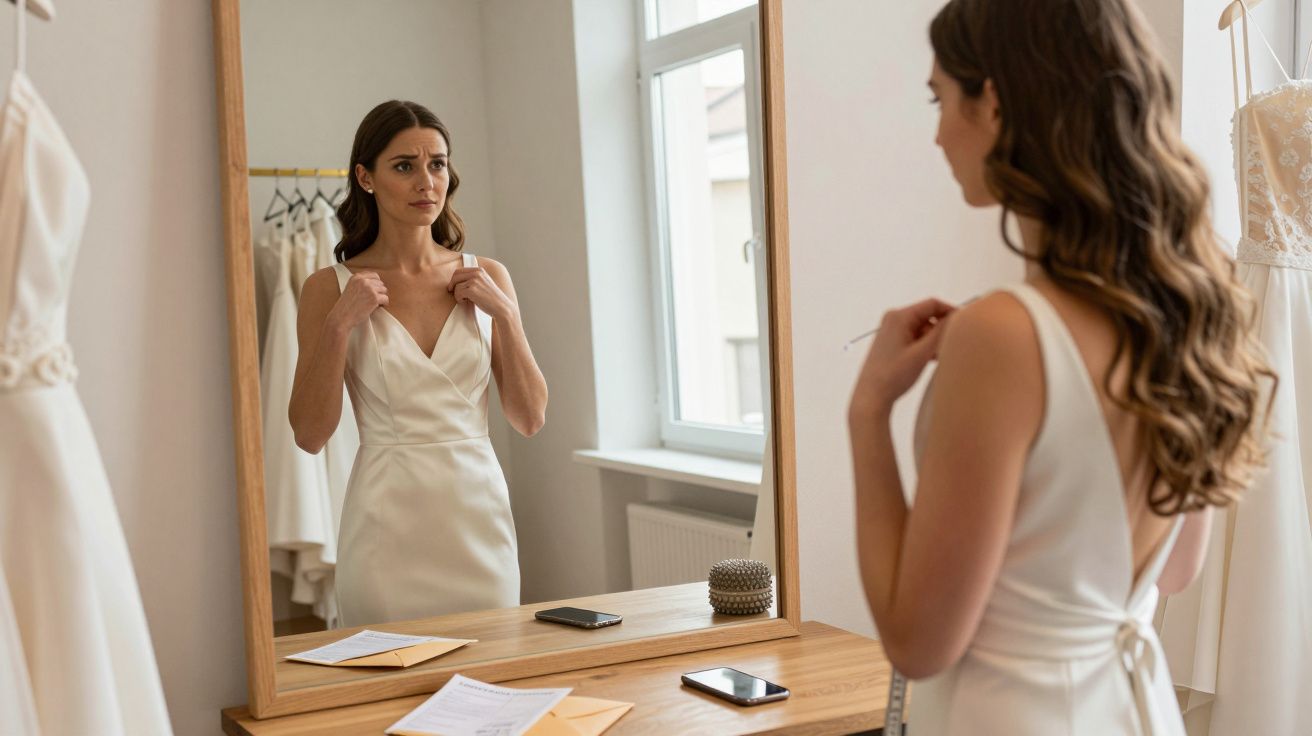
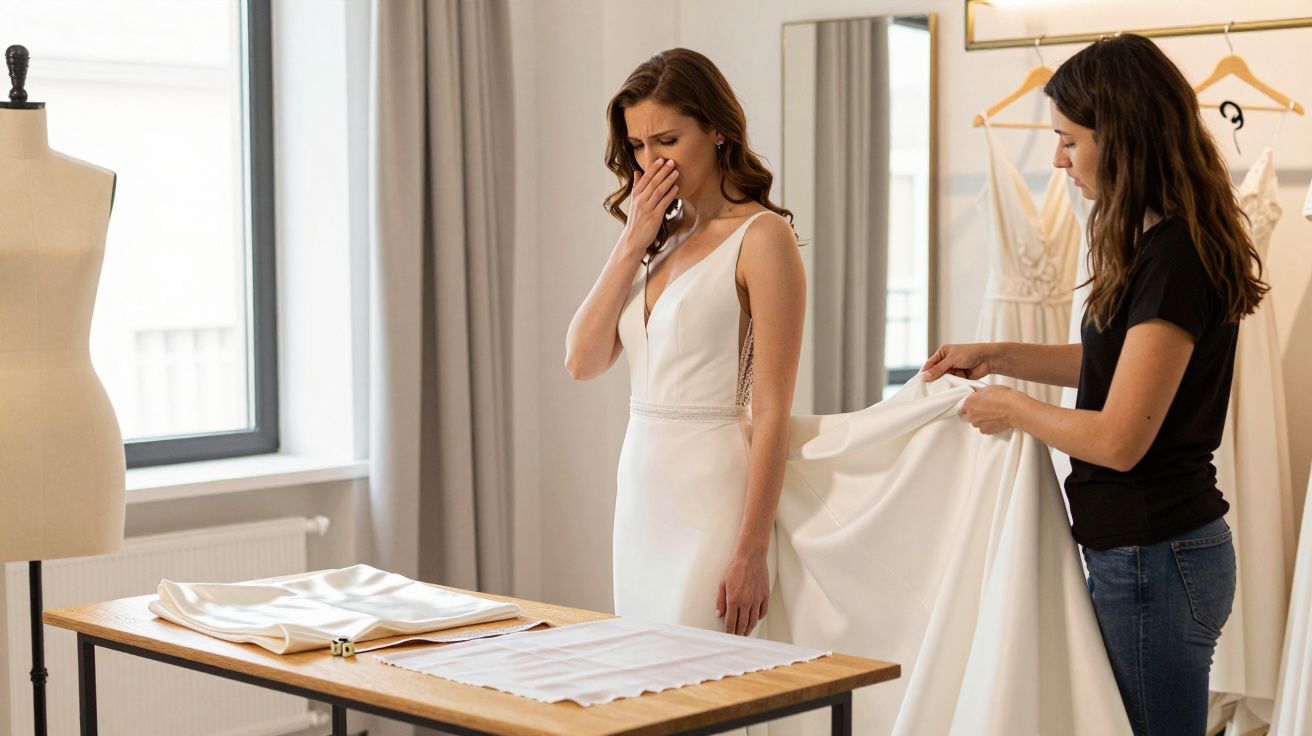
The wedding dress decision often feels settled the moment you step off the podium: you can picture the photos, the walk, the hug from your mum, the way the fabric moved when you turned. Then, days later, emotional reassessment arrives like a late text you can’t unsee, usually at midnight, usually after one more scroll of “new season” gowns. It matters because doubt can sour the run-up to the wedding, even when the original choice was genuinely right.
It starts innocently. A friend sends a link, a boutique posts a reel, an aunt says “I thought you’d go more… you”, and suddenly the dress you loved feels like a decision you need to defend. Not because it’s wrong, but because it’s now competing with a hundred imagined versions of you.
The post-yes wobble: why it hits after you’ve chosen
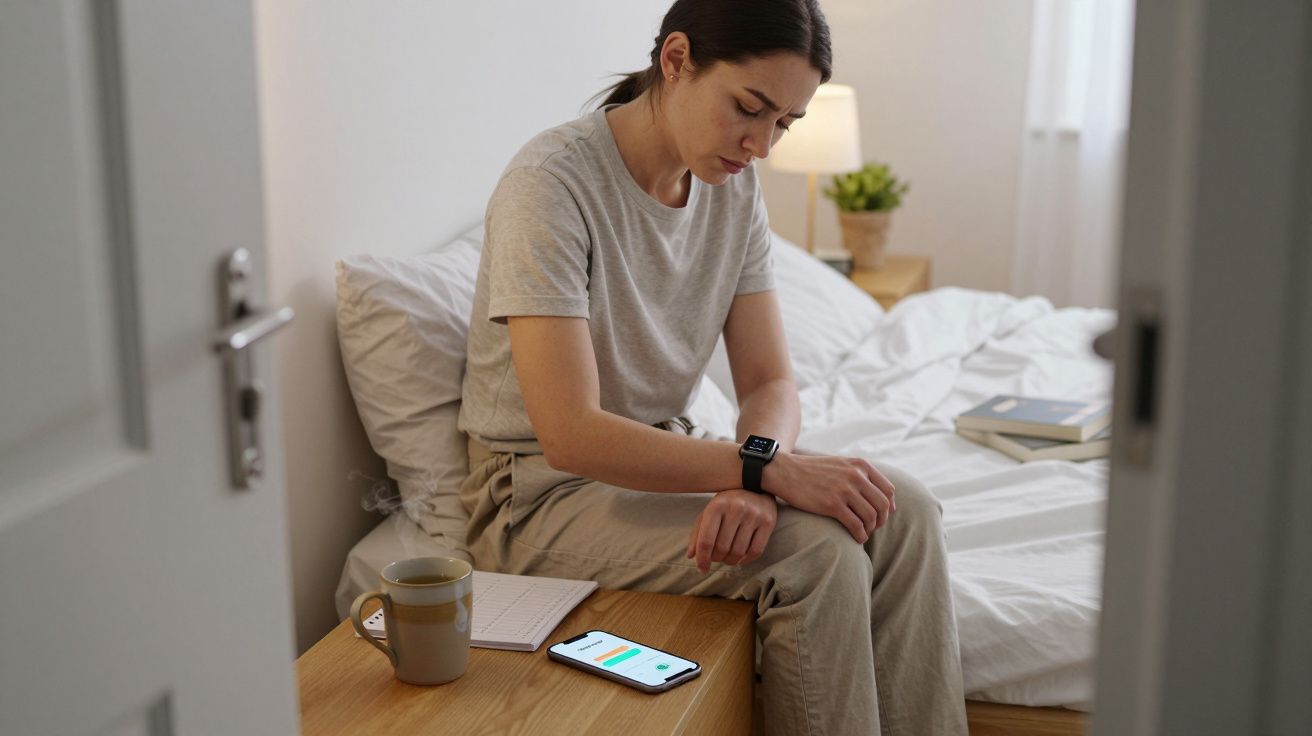
Most brides don’t doubt in the fitting room; they doubt afterwards, when the adrenaline drops. In the shop, the lighting is kind, the consultant is focused, your hair is pinned up, and you’re surrounded by people who want the moment to be magical. At home, it’s just you, your receipt, and a brain that finally has space to start auditing the choice.
There’s also a practical shift. The dress you bought becomes “real money” and “real timeline” and “no longer hypothetical”. You stop browsing for fun and start browsing like you’re checking for mistakes, which turns inspiration into surveillance.
And the closer the wedding gets, the less the dress stands alone. It gets tangled up with seating plans, family dynamics, body changes, weather forecasts, budgets, and that low-level question nobody says out loud: “What if I don’t feel like myself on the day?”
When your taste changes because your life is changing
A wedding is a fast-moving identity project. One month you’re deep in linen napkins and country-house venues; the next you’re looking at city elopements and thinking, “Why did I choose something so formal?” The dress becomes the symbol of whichever version of the wedding felt true at the time, so if the plan evolves, the gown can feel like it belongs to an earlier draft of you.
This is why doubt can spike after a single conversation. Someone else’s certainty (“You’re a satin girl”) can make your own certainty feel flimsy, even if it wasn’t. Style is personal, but weddings are communal, and communal events invite commentary.
Let’s be honest: nobody makes one perfect, isolated decision in wedding planning. You make dozens, and they talk to each other. When one changes, the rest start to wobble in sympathy.
The invisible triggers brides don’t clock until later
Sometimes the doubt isn’t about the dress at all. It’s about the conditions around the dress.
Common triggers that masquerade as “I chose wrong”:
- Too much exposure, too fast. You tried on 30 dresses, posted a teaser, fielded opinions, then expected your feelings to stay untouched.
- A contrast shock. Your daily wardrobe is relaxed, and bridalwear is intense; the jump can feel like wearing someone else’s life.
- Body noise. A comment about “toning up”, a period of stress eating, or a gym kick can turn a dress into a referendum on your body.
- Decision hangover. After months of planning, your brain is trained to problem-solve; it keeps searching even when the problem is solved.
- The algorithm. Once you buy, your feed doesn’t congratulate you-it tempts you with “better”.
A small detail can do it too: a strap you didn’t notice, a photo where the neckline sits differently, a memory of how you felt on a bad day in the changing room. The mind is excellent at turning minor discomfort into a sweeping conclusion.
A gentle reality check: doubt can be a sign of care, not a sign of failure
Emotional reassessment isn’t always a warning flare. Sometimes it’s your mind trying to integrate a big step. You’re buying an outfit that will be heavily photographed, intensely remembered, and discussed by people who love you and people who barely know you. It would be strange if that didn’t stir something.
What tends to help is separating two questions that get mashed into one:
- Do I like the dress?
- Do I like how I feel about being seen in it?
The first is taste and fit. The second is vulnerability, expectations, and pressure. Many brides try to solve the second with a different dress, when what they actually need is reassurance, tailoring, and fewer opinions.
“The dress didn’t change. The room around it did.”
What to do before you panic-buy a second option
Give yourself a small, structured reset-short, repeatable, and grounded in reality.
- Stop looking for 72 hours. No new dress content, no “just checking”. Let your nervous system settle.
- Revisit your original ‘yes’ reasons. Write three specific things: the neckline, the movement, the way you stood taller, the comfort.
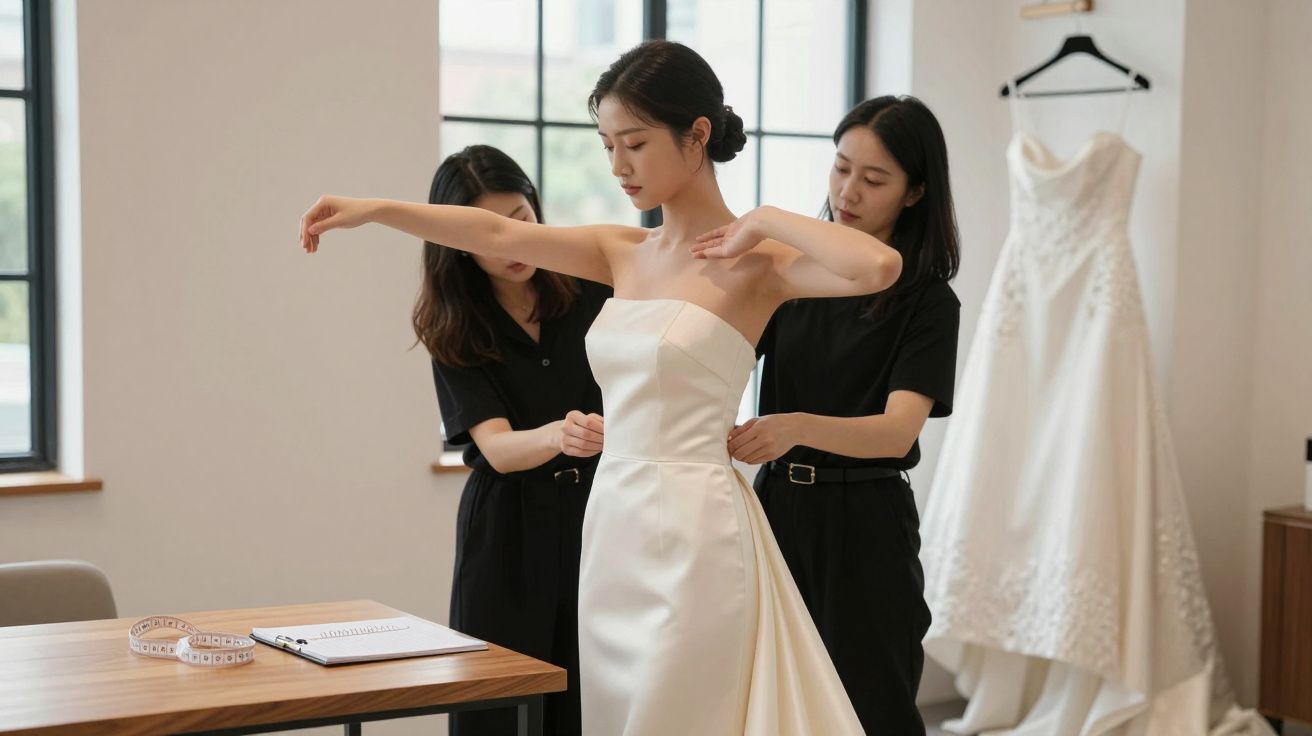
- Book a calm fitting, not a hype session. Go with one steady person. Ask the boutique to pull similar silhouettes so you can confirm, not re-shop.
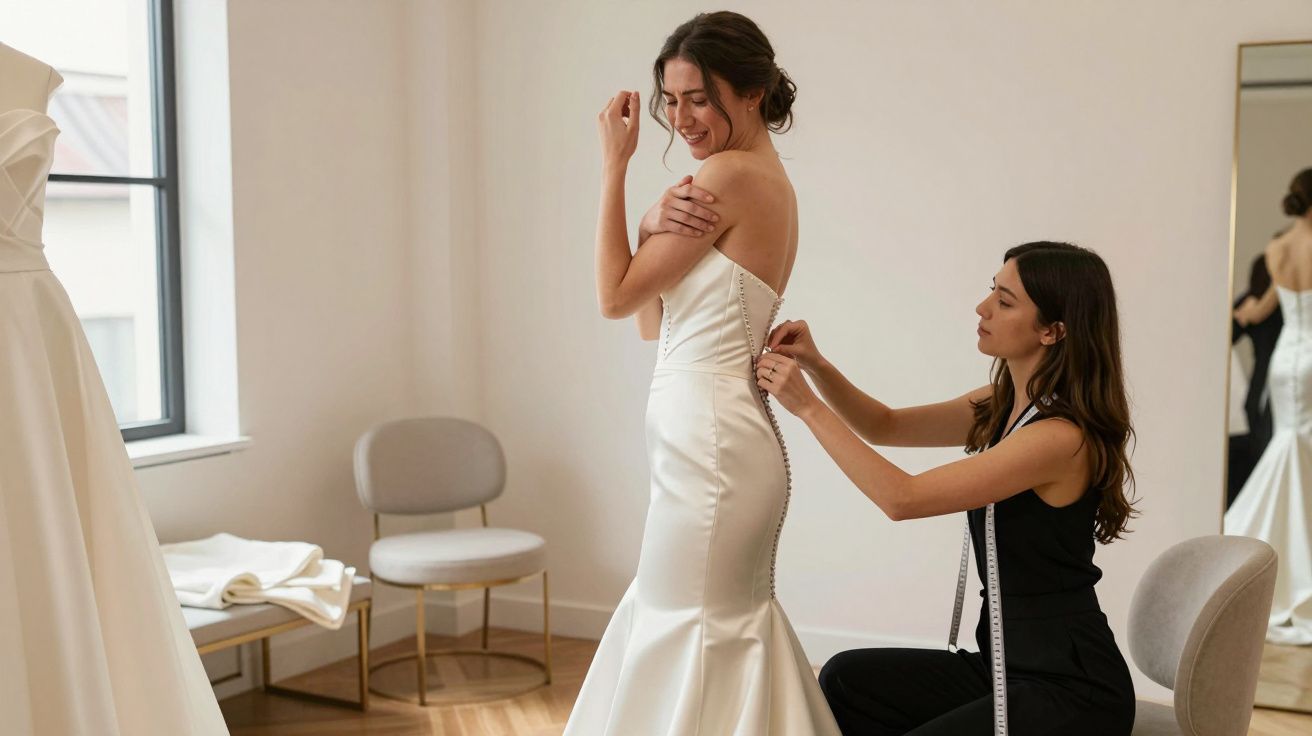
- Talk alterations, not replacement. Many “I’m not sure” feelings are solved by strap placement, bust support, hemming, or a lining tweak.
- Try it with the right underpinnings. The wrong bra, cups, or shoes can make the dress feel like a different garment entirely.
If you still feel off after you’ve done the practical bits, that’s information worth listening to. Just make sure the information is coming from you, not from a late-night comparison spiral.
The two types of regret - and how to tell which you’re in
Some doubt is “normal nerves”. Some doubt is “this isn’t me”. They feel similar, but they behave differently.
| What it feels like | Usually means | What helps |
|---|---|---|
| You love it in photos, then wobble after opinions | Social pressure / overwhelm | Opinion diet, calm fitting, reaffirming the brief |
| You avoid thinking about it and feel relief when you imagine a different style | Misalignment with self-image | Try-on of 2–3 contrasting shapes, honest re-brief |
A useful test: imagine it’s the morning of the wedding and everything else is going well. If the dress still feels like a costume, explore alternatives. If it feels lovely until you picture other people’s faces, that’s not a dress problem-it’s a visibility problem.
FAQ:
- Is it normal to regret buying my dress a week later? Yes. The drop from the high of choosing, plus too much browsing and other people’s opinions, can trigger second-guessing even when the choice was solid.
- Should I go try on more dresses “just to be sure”? Not immediately. Give yourself a short pause first; if you re-shop while anxious, you’ll often confuse novelty with correctness.
- Can alterations really fix the feeling? Often, yes. Small changes to support, strap position, lining, or neckline comfort can make the dress feel like it finally belongs to you.
- How do I handle family opinions without spiralling? Limit the feedback loop: choose one or two trusted voices, stop sending photos around, and remember you’re not crowdsourcing an identity.
- When is it worth changing the dress? When the doubt persists after a calm fitting and practical fixes, and you consistently feel more like yourself in a different silhouette or level of formality.


Comments (0)
No comments yet. Be the first to comment!
Leave a Comment