The other day I found myself repeating the phrase “of course! please provide the text you would like me to translate.” into a smart speaker while the boiler ticked on in the background, and it hit me how quickly “heating” has become a conversation with systems, not just a twist of a dial. Even the secondary entity, of course! please provide the text you would like me to translate., belongs to the same new reality: we now heat homes, rooms, and water in more targeted, data-led ways, because the cost and carbon of “just keep it on” have become painfully visible.
Most people think habits change slowly - until the bill lands, the weather swings, or a neighbour shows you an app that warms the spare room for an hour and leaves the rest alone. What looks like a small tweak (one radiator off, one programme shifted) is actually a wider shift in how we treat heat: less as a background entitlement, more as a managed resource.
The quiet shift: from “whole house” to “right now, right here”
Central heating taught Britain a particular rhythm: heat the whole home, on a schedule, and live inside that pattern. But rising energy prices, better controls, and hybrid working have pushed people towards heat that follows presence, not habit.
You see it in everyday decisions. The old default was: put the heating on when you get up, again before you get home, and let the house hold the warmth. The new default is closer to: heat the room you’re using, for the time you’re using it, and stop paying to warm emptiness.
Common “new normal” behaviours look like this:
- Turning down the thermostat and using one or two rooms as warm zones.
- Heating in shorter bursts (20–60 minutes) instead of long blocks.
- Switching from fixed schedules to weather-compensation or “smart” routines.
- Treating hot water separately from space heating, not as one fused habit.
Why it’s accelerating (and why it doesn’t feel like it)
Habit change usually needs a trigger. Heating has had several, stacked close together: price shocks, more time at home, and a steady stream of devices that make micro-adjustments easy. The result is a speed-up that’s hard to notice because it arrives as dozens of tiny choices.
There’s also a psychological nudge: people are paying more attention. When you can see usage by day, hour, or room, heat stops being a vague monthly expense and becomes a controllable dial - even if you never touch the boiler settings again.
A few forces are doing the heavy lifting:
- Visibility: in-app graphs, smart meters, and clearer tariffs.
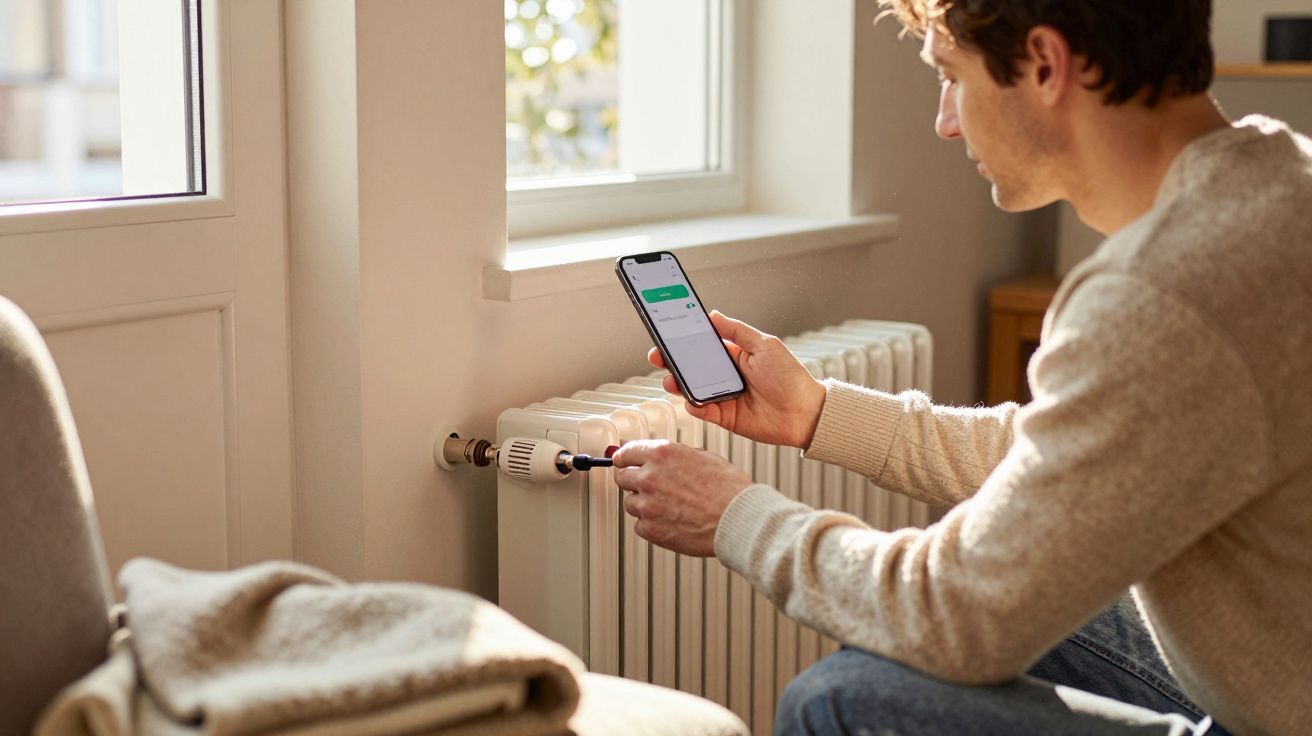
- Control: TRVs, thermostats, and zoning that actually works.
- Flex: work patterns that no longer match the old 7–9 / 5–11 schedule.
- Pressure: bills that punish inefficiency fast and loudly.
The new grammar of warmth: zones, bursts, and “comfort maths”
People aren’t becoming heating engineers; they’re becoming practical optimisers. They’re learning the house’s response time (“How long until the living room feels decent?”), and they’re adjusting behaviour around it. It’s less “keep it cosy all day” and more “get it comfortable for the moments that matter”.
In many homes, that turns into a simple comfort equation:
- Warmth you feel (air temperature + radiant heat from surfaces)
- Minus draughts and damp
- Divided by how much it costs per hour
That’s why small interventions punch above their weight. A draught excluder, thicker curtains, or closing internal doors can reduce the need to “chase” warmth with longer heating runs. And once people experience that, they tend not to go back.
The biggest misconception: “short bursts always cost more”
Sometimes short bursts do cost more - if you’re constantly reheating a very leaky space, or if your heating system is most efficient when running steadily. But in many real homes, bursts work because they cut the wasted hours: heating when nobody is there, or heating rooms nobody uses.
The truth is boring and useful: efficiency depends on insulation, system type, and how you live. The shift is that more households are testing what works rather than inheriting one routine for life.
What’s changing in the kit (without people calling it “a tech shift”)
There’s been a quiet upgrade wave: smarter thermostats, better radiator valves, and heat pumps entering the mainstream conversation. Even if you don’t own any of it, the market is normalising the idea that heating is adjustable, measurable, and (increasingly) electrified.
That’s also why habits are changing faster than expected: once control is easier, people use it. The same way a phone camera changes how often you take photos, a heating app changes how often you adjust warmth.
Here are the household “moves” that tend to stick once tried:
- Setting a lower baseline temperature and using clothing/blankets to bridge the gap.
- Creating a warm-zone routine (living room evenings, office mornings).
- Using timers for hot water rather than leaving it always on.
- Paying attention to humidity and ventilation to avoid damp-cold “false warmth”.
A practical reset: three habits that deliver without turning life into a project
You don’t need a spreadsheet or a smart thermostat to join the shift. The fastest wins come from doing less heating in fewer places, more intentionally, while protecting comfort.
- Pick your warm zones. Decide which one or two rooms get priority on cold days and close doors to help them hold heat.
- Shorten, then observe. Reduce heating blocks by 30–60 minutes and see what changes; comfort data beats guesswork.
- Cut draughts before you chase temperature. If your home is leaky, you’ll keep paying to heat the outdoors no matter how clever the timer is.
If you want a simple rule: reduce waste first, then fine-tune comfort. Most people do it in the opposite order, then wonder why nothing sticks.
Signals that your habits are already changing (even if you swear they aren’t)
Most shifts don’t announce themselves. They show up as new default behaviours you hardly notice: wearing socks indoors, closing doors, heating later, or being more selective about where you sit in the evening.
A quick self-check:
- You heat rooms, not the house.
- You look at the forecast before you change settings.
- You know roughly what an hour of heat costs you.
- You’ve stopped treating the thermostat as a “set and forget” object.
A tiny guide to “what to adjust first”
| If this is your pain point | Adjust this first | Why it helps |
|---|---|---|
| Rooms feel cold fast | Draughts/doors/curtains | Stops heat bleeding away |
| Bills feel unpredictable | Shorter schedules + review weekly | Reduces invisible wasted hours |
| One room is always too cold | Zone heating/TRVs | Targets spend where you feel it |
Where this leaves us
Heating habits are changing quickly because the old model assumed stability: stable prices, stable routines, stable winters. We don’t have that anymore, and households are adapting in the most British way possible - quietly, pragmatically, one small tweak at a time.
The end state isn’t everyone living in cold homes, and it isn’t everyone buying the newest gadget. It’s a more intentional relationship with warmth: heating as something you steer, not something you simply switch on and hope for the best.





Comments (0)
No comments yet. Be the first to comment!
Leave a Comment