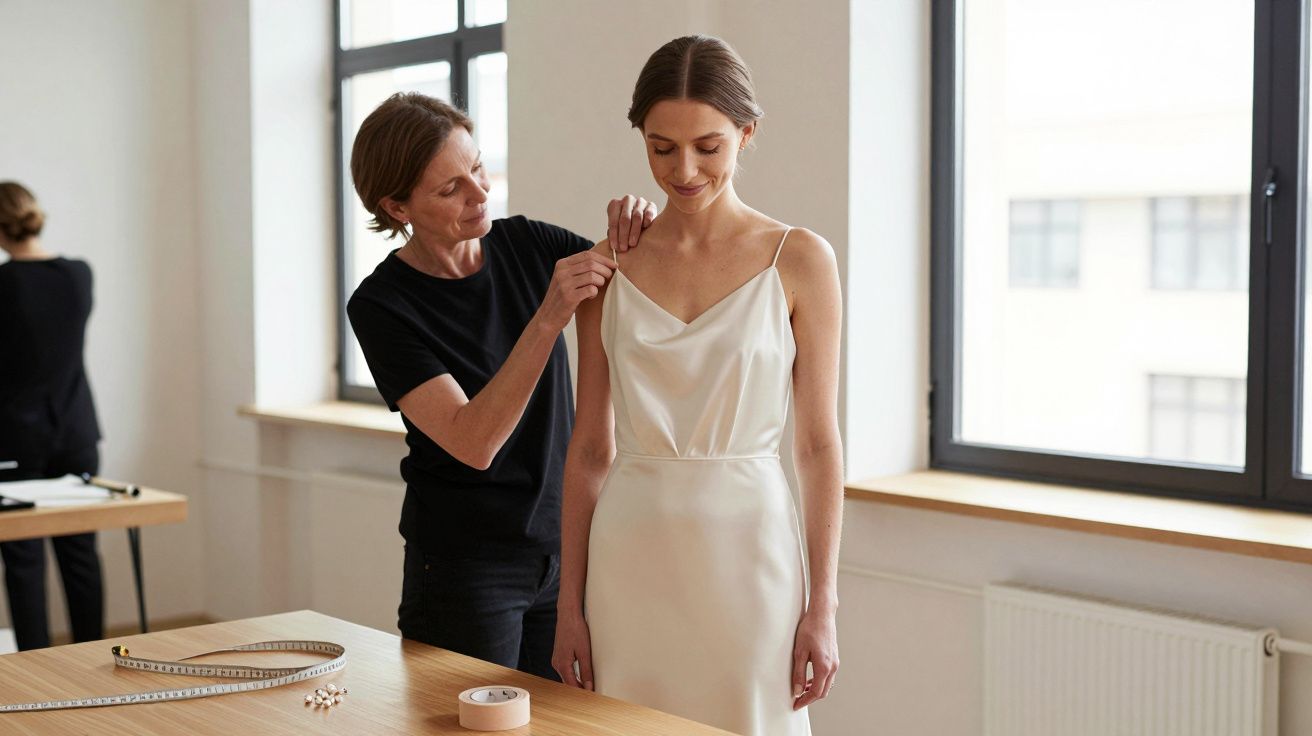
It usually happens between the mirror and the first proper hug. Silk wedding dresses feel steady on the hanger, then the fabric movement starts the second you breathe, sit, and walk, and suddenly you’re adjusting a neckline you thought was “done”. It matters because that shifting isn’t a sign your dress is wrong-it’s often the physics of silk meeting a real human body over a long day.
I learned this watching a friend in a fitted silk slip-style gown at a registry office in Islington. Standing still, she looked sculpted. Ten minutes later, after stairs, photos, and an enthusiastic auntie squeeze, the dress had travelled a few centimetres and the whole mood changed from “effortless” to “why is it doing that?”.
The slippery truth: silk is smooth, but it’s not static
Silk’s surface is naturally low-friction. That’s part of why it feels so luxurious against skin, and why it drapes instead of holding crisp angles. But low friction also means it’s more willing to slide over whatever is underneath-skin, lotion, shapewear, even the lining-when your body moves.
There’s also weight. Many silks used for bridal-silk satin, silk charmeuse, silk crepe-have enough fluidity that gravity is constantly “rearranging” the fall. On a hanger, that rearranging looks elegant. On a body that is talking, laughing, dancing and lifting arms, it can look like migration.
If you’re expecting silk to behave like a structured mikado or a corseted taffeta, it can feel like the dress has a mind of its own. It doesn’t. It’s just doing what it’s designed to do: move.
Why the dress shifts more once it warms up
A silk gown doesn’t meet your body at room temperature for long. Between nerves, warm venues, and hours of contact, the fabric warms and softens, and the surface underneath changes too.
A few quiet culprits make fabric movement more noticeable:
- Body heat and natural oils slightly reduce grip between layers.
- Moisture (even a little) increases sliding, especially under arms and at the small of the back.
- Skincare and SPF can turn skin into a smooth base. Great for photos, not always great for staying put.
- Hair and jewellery snag points can pull silk in tiny, repeated tugs you only notice later.
This is why a dress can feel perfect in a 20-minute fitting, then different after a full ceremony and reception. Time is part of the fit.
It’s rarely “the size” - it’s the cut, the grain, and where the weight hangs
People blame sizing first because it’s the easiest story: “It’s too big, it’s sliding.” Sometimes that’s true. Often, it’s more specific than that.
Silk shows you exactly how a garment is engineered. If the dress is cut on the bias (common in minimalist silk wedding dresses), it’s designed to skim and stretch slightly around curves. That gives that liquid, body-following look-but bias-cut garments can also relax as they hang and as you wear them, especially through the hips.
Then there are stress points:
- Straps take the whole load of the dress. A millimetre of strap length can equal centimetres of drop at the neckline.
- A heavy skirt gently tugs the bodice down with every step.
- A low back has less “anchor area”, so the dress relies on friction and strap tension to stay placed.
- Side seams and darts matter more in silk because the fabric won’t hide imbalances; it will drift until tension feels even.
A bridal seamstress in East London put it to me like this:
“Silk doesn’t forgive lazy balance. If the weight isn’t distributed right, it will find its own level.”
The underlayer you choose can either help or make it worse
The secret life of silk is that it’s not only interacting with your body. It’s interacting with the layer beneath it. And the wrong base layer can turn gentle drape into full-on slip.
If you want less shifting, think in terms of controlled friction:
- Matte, firm shapewear often grips better than silky slips.
- A proper lining (or an added half-slip) can stop silk from catching on thighs, which reduces upward “ride” at the waist.
- The wrong bra can create a moving “platform” that the dress slides over, especially with strapless styles.
Also: avoid last-minute product changes. If you did your fittings with one brand of body lotion and then switch to an oil on the wedding morning, you’ve changed the dress’s environment. Silk notices.
What you can do (without turning your wedding day into a wrestling match)
Most fixes are small, not dramatic. The goal is to give the dress a couple of gentle anchors so it can drape, not roam.
A practical checklist many brides actually stick to:
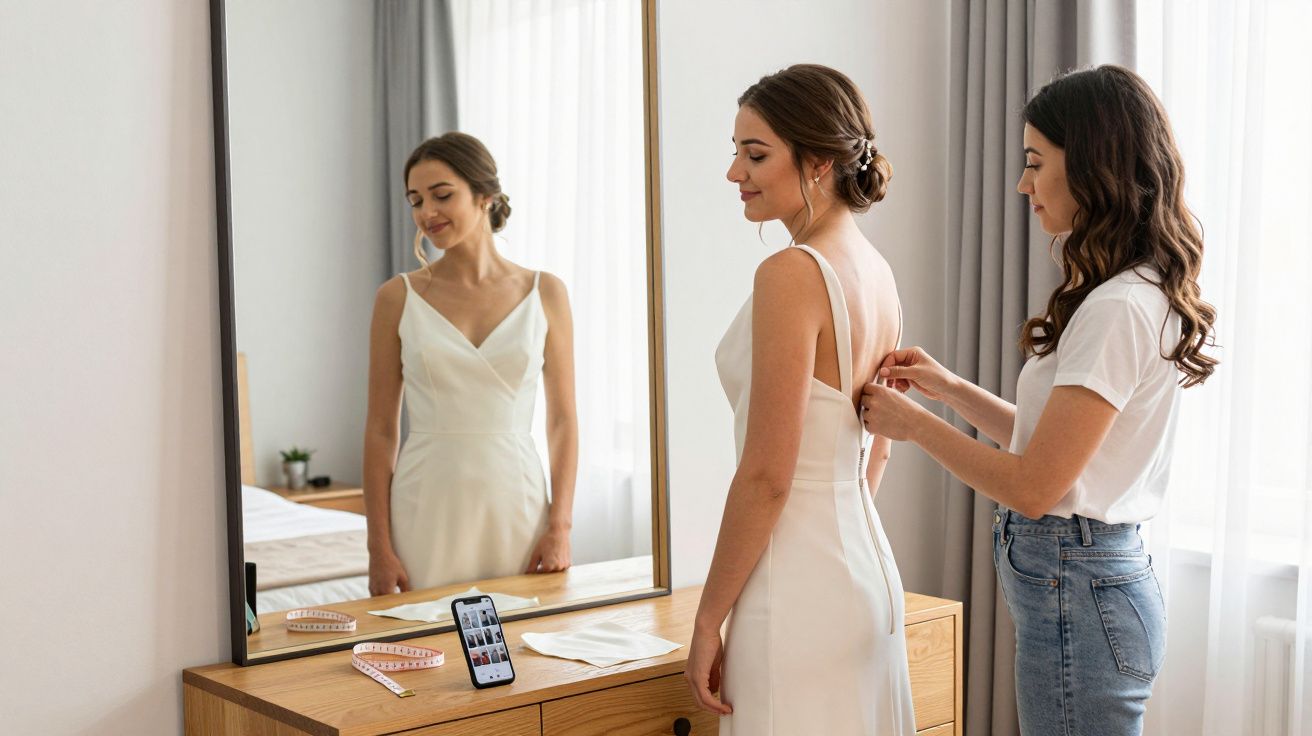
- Do a full wear-test at home for at least 60 minutes: sit, climb stairs, lift arms, hug someone, dance for a song. Note where it travels.
- Adjust straps before you adjust anything else. Tiny changes here often solve neckline shifting.
- Use discreet anchoring, like:
- fashion tape at the neckline or side bust (test it-some tapes don’t love silk),
- waist stay or hidden ribbon inside the dress,
- small lingerie loops to keep straps aligned.
- Choose a base layer on purpose (not just what’s comfortable at 8am). Bring it to alterations.
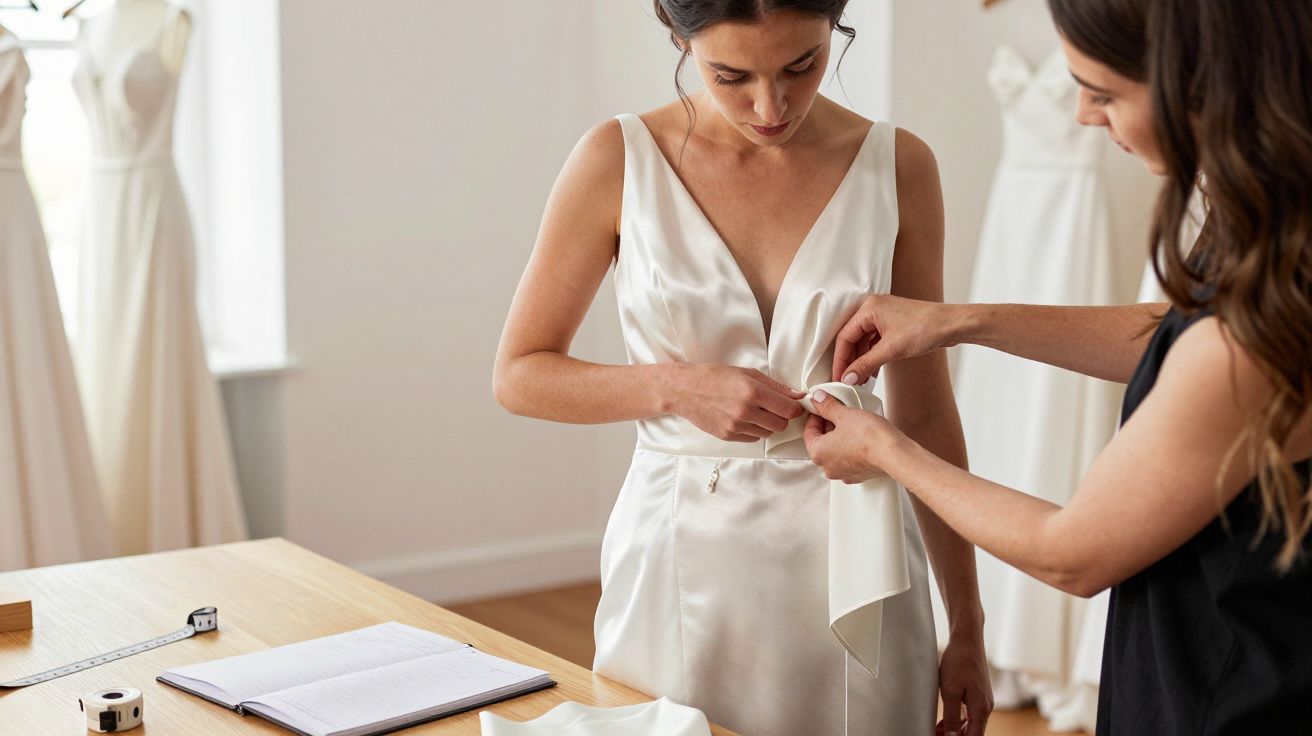
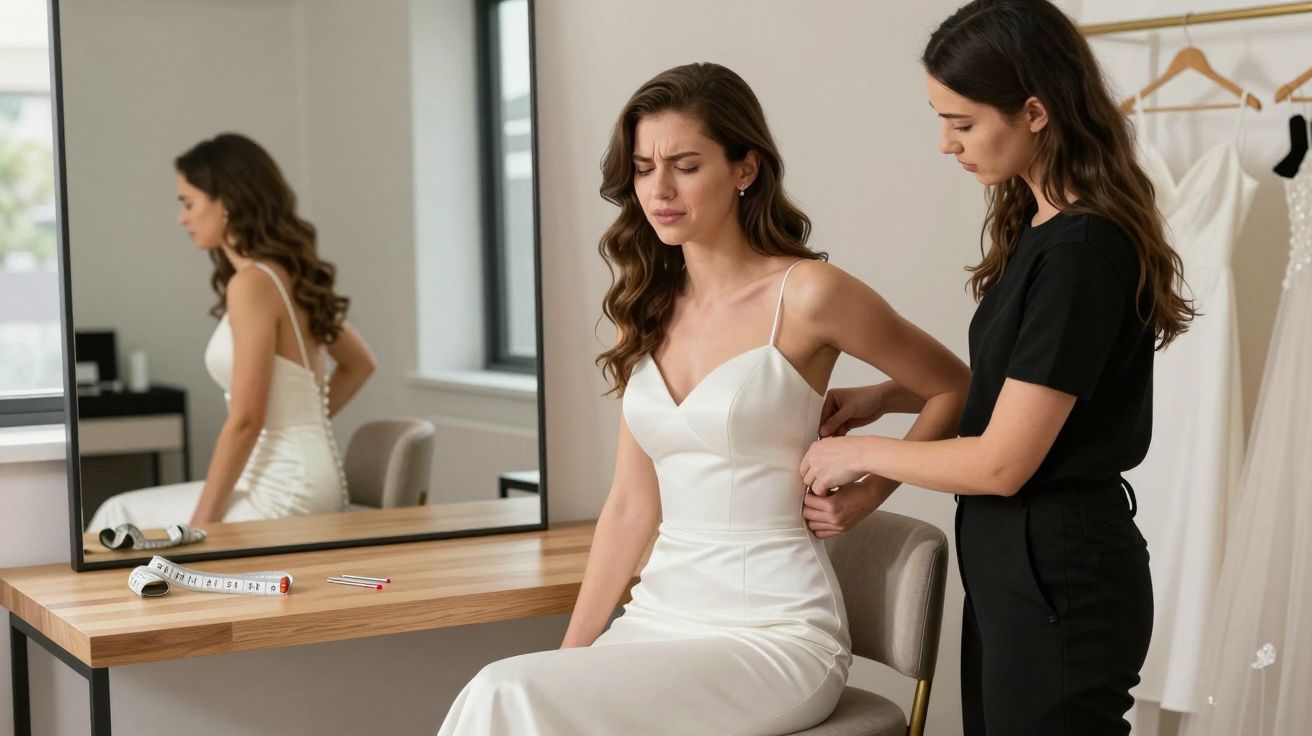
- Ask for “balance checks” in fittings, not just “take it in”. A good alterations specialist will look at grain, hang, and where the dress is pulling.
If you’re wearing a pure silk slip gown and you want that “barely there” look, accept a little movement as the cost of the aesthetic. The win is knowing what’s normal, and controlling what’s not.
| What’s happening | Why it happens | What helps |
|---|---|---|
| Neckline drops over time | Strap load + low friction + body heat | Strap tweak, tape, hidden waist stay |
| Skirt pulls bodice down | Weight hangs from shoulders/upper bodice | Better distribution in alterations, lining support |
| Dress twists slightly | Bias relaxes, tension seeks “evenness” | Balance check, seam adjustment, correct underlayer |
FAQ:
- Is shifting a sign my silk wedding dress is the wrong size? Not automatically. Silk often shifts due to low friction, bias cut relaxation, and strap/weight distribution. Sizing is only one part of it.
- Do I need shapewear to stop fabric movement? Not always, but the right shapewear can add grip and stability. Very slippery slips under silk can make movement worse.
- Will fashion tape damage silk? It can if used aggressively or removed roughly. Patch-test on an inside area (or spare fabric) and remove slowly, supporting the silk with your hand.
- Can alterations fully “lock” a silk dress in place? They can usually reduce shifting a lot-especially with strap, balance, and waist-stay adjustments-but silk is meant to drape, so some movement is normal.
- When should I do my final fitting? Close enough to the wedding that your body and underlayers are the same, but with enough time for tweaks-typically 2–4 weeks out, depending on your seamstress’s schedule.



Comments (0)
No comments yet. Be the first to comment!
Leave a Comment